
An invitation
The Nam Ou
2027
Fourteen days, with options to extend to 17 or 21+. Make your own way to Hanoi. We fly out of Vientiane. Everything in between is ours to know and yours to find out.
The invitation
What We Are Doing
The shape of it is our own version of Race Across the World. We cannot replicate that faithfully in the time we have, and we will inevitably share the same road transport from place to place. Over several sections, though, there is genuine opportunity to race.
The fastest paddlers will have an edge. The rules are written so that is not the whole story. You can earn reductions on your elapsed time, and pick up penalties, in ways that credit the most adventurous rather than the strongest. Stopping in a village will often be worth more than another hour of paddling.
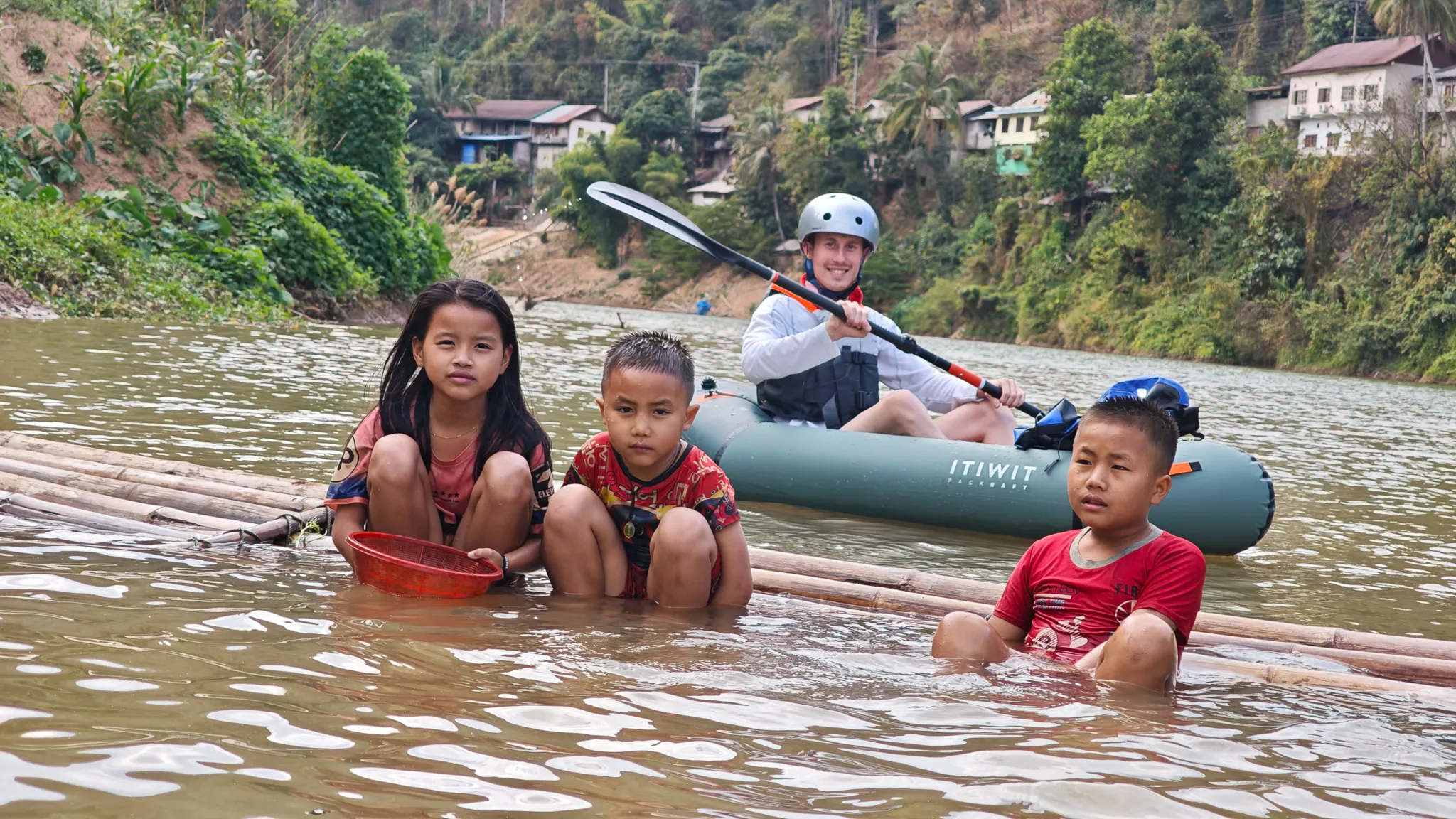
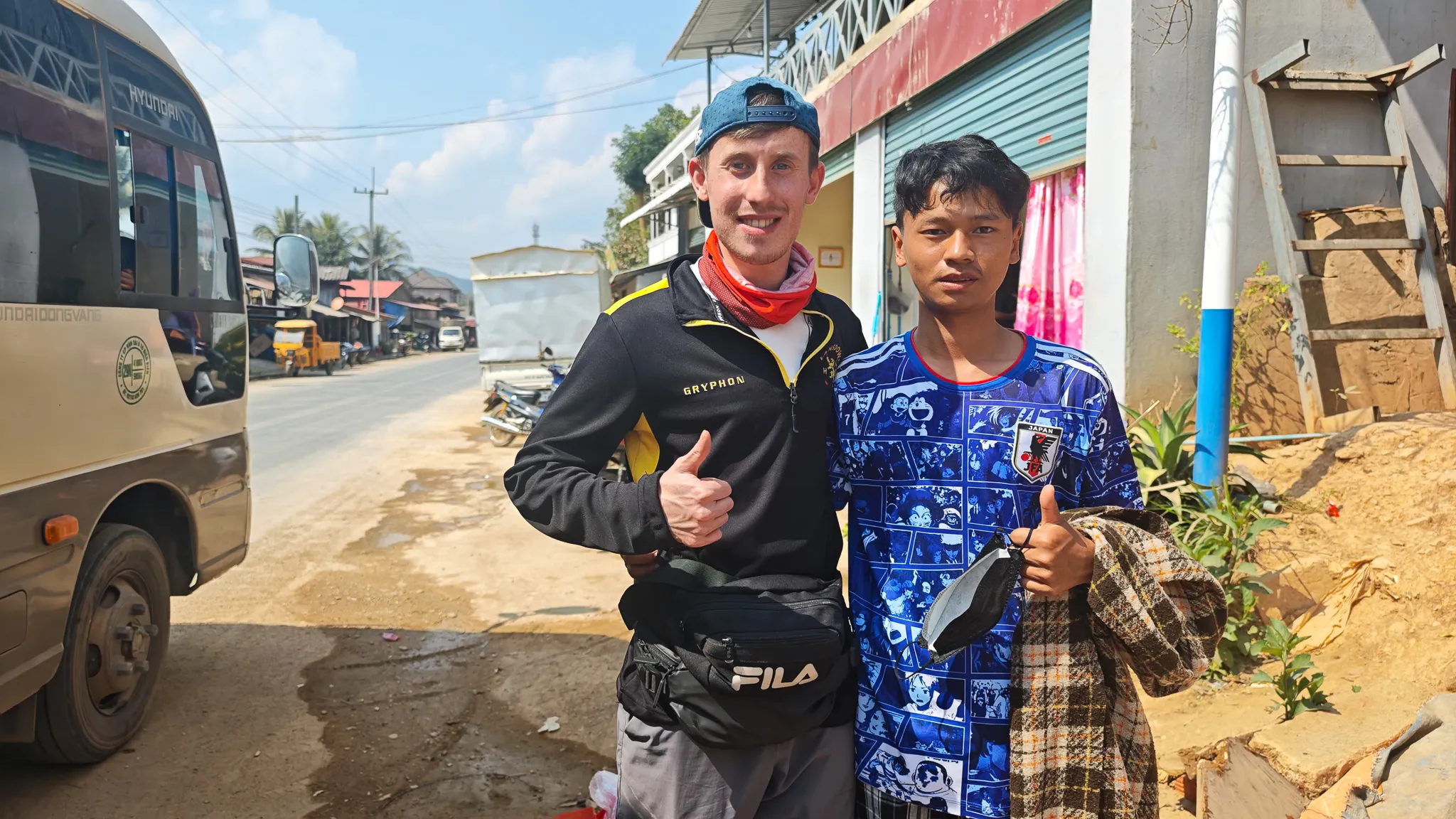
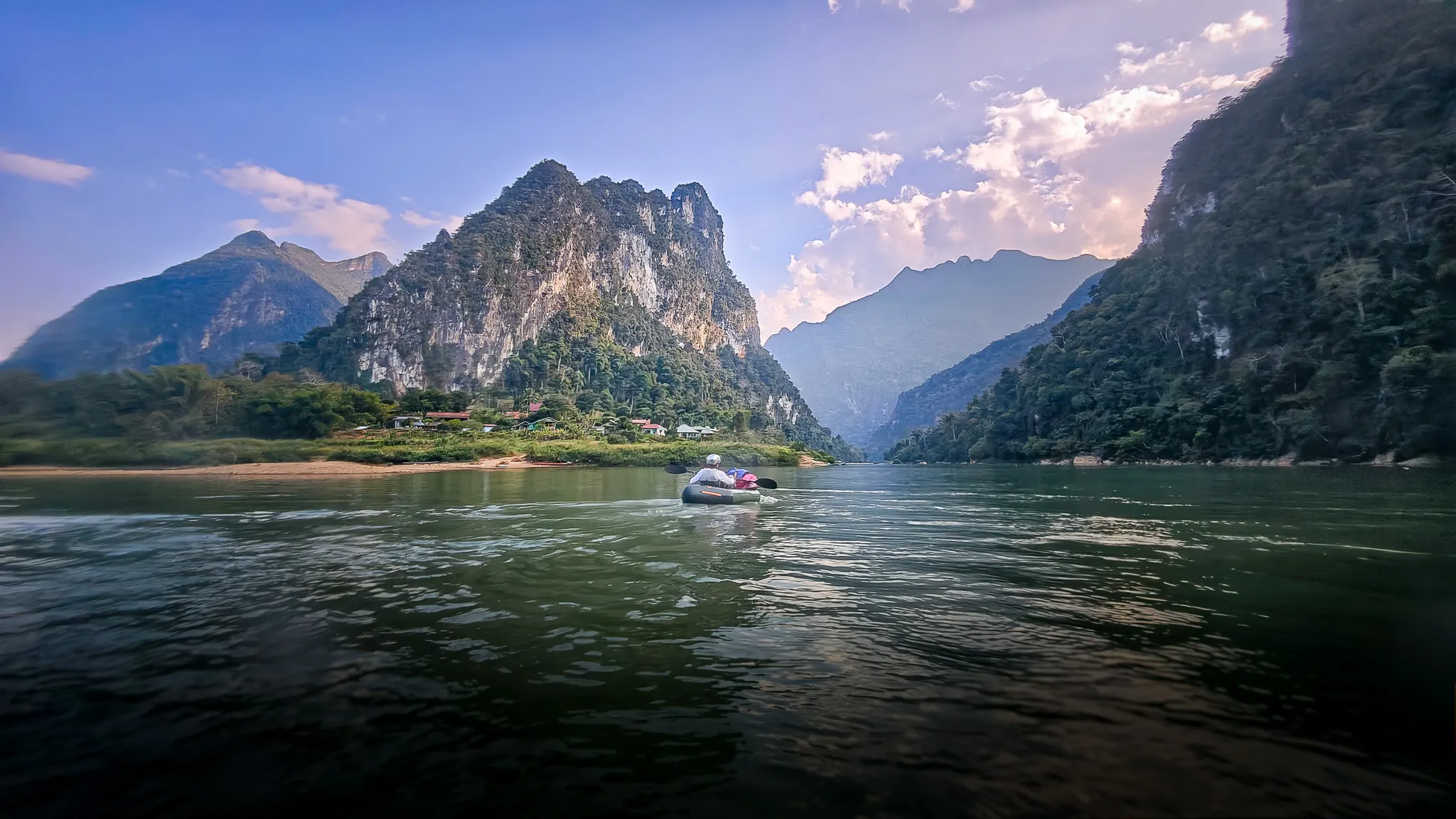
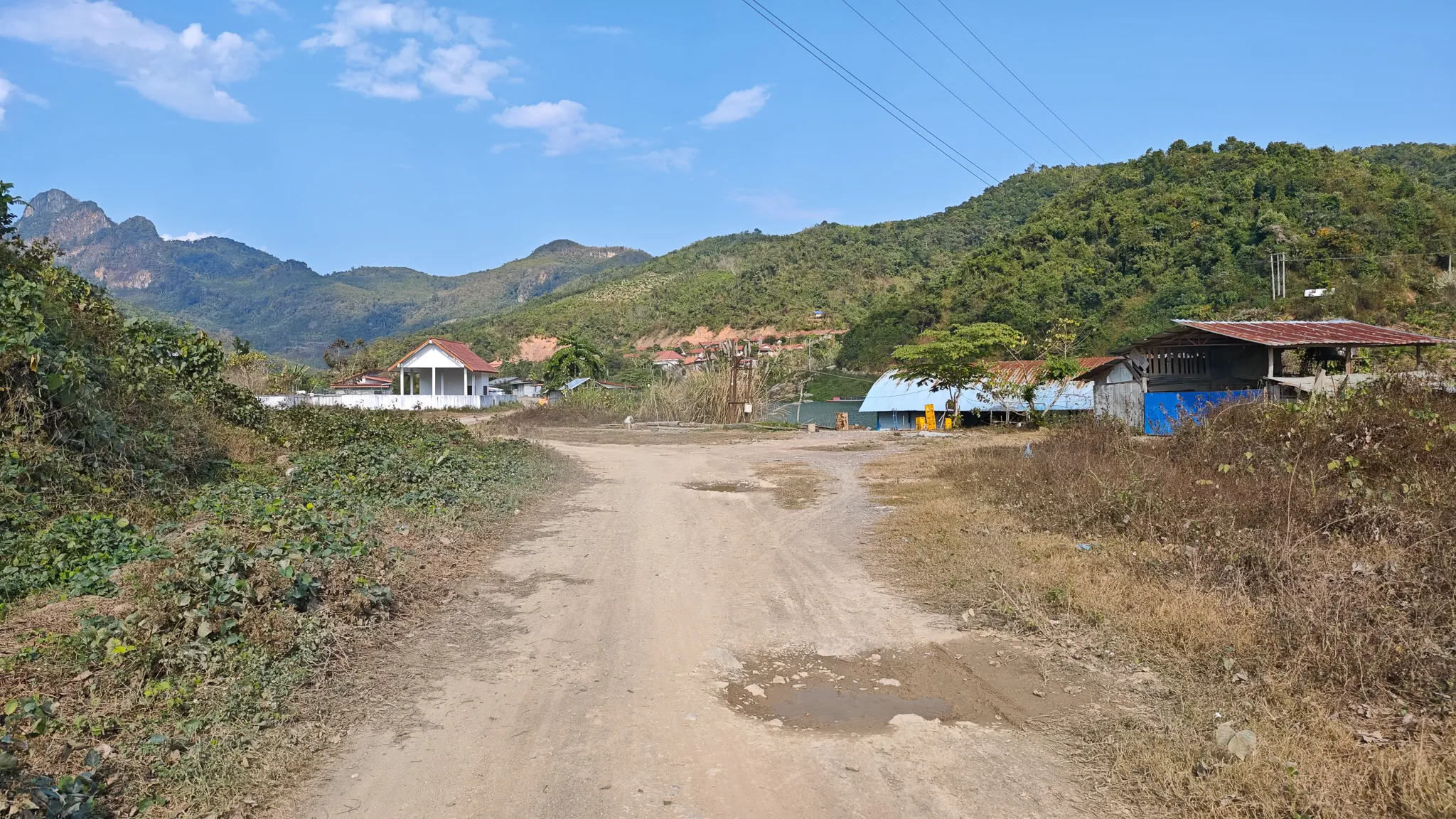
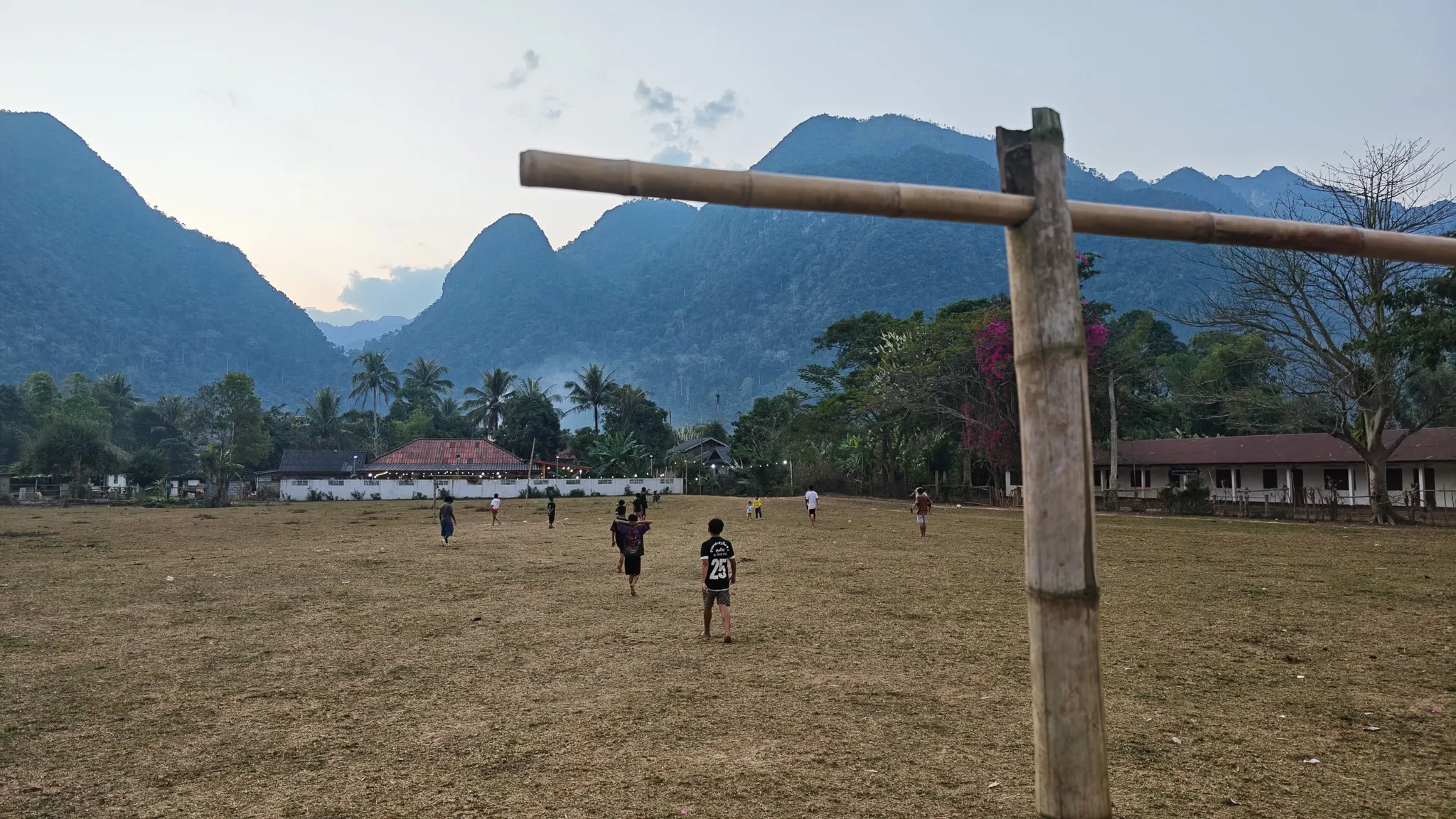
You will be properly remote. Parts of this are reachable only by boat. You will meet communities living much as they always have, and the format is built to make you spend time with them rather than pass through.
We want to build volunteering into this properly in future years. This time the window is too short, so expect micro opportunities rather than anything structured.
How it works
The Rules, Roughly
We are not publishing the scoring. Half the point is that you do not know what tomorrow asks of you. The principles are worth stating up front, because they should change who says yes.
Time Is the Currency
Everything converts into elapsed time. Reach the day’s point inside its window and you keep what you have. Arrive late and you carry a debit. The standings are one number, read out every evening, and they decide what time you push off in the morning.
You Can Buy Time Back
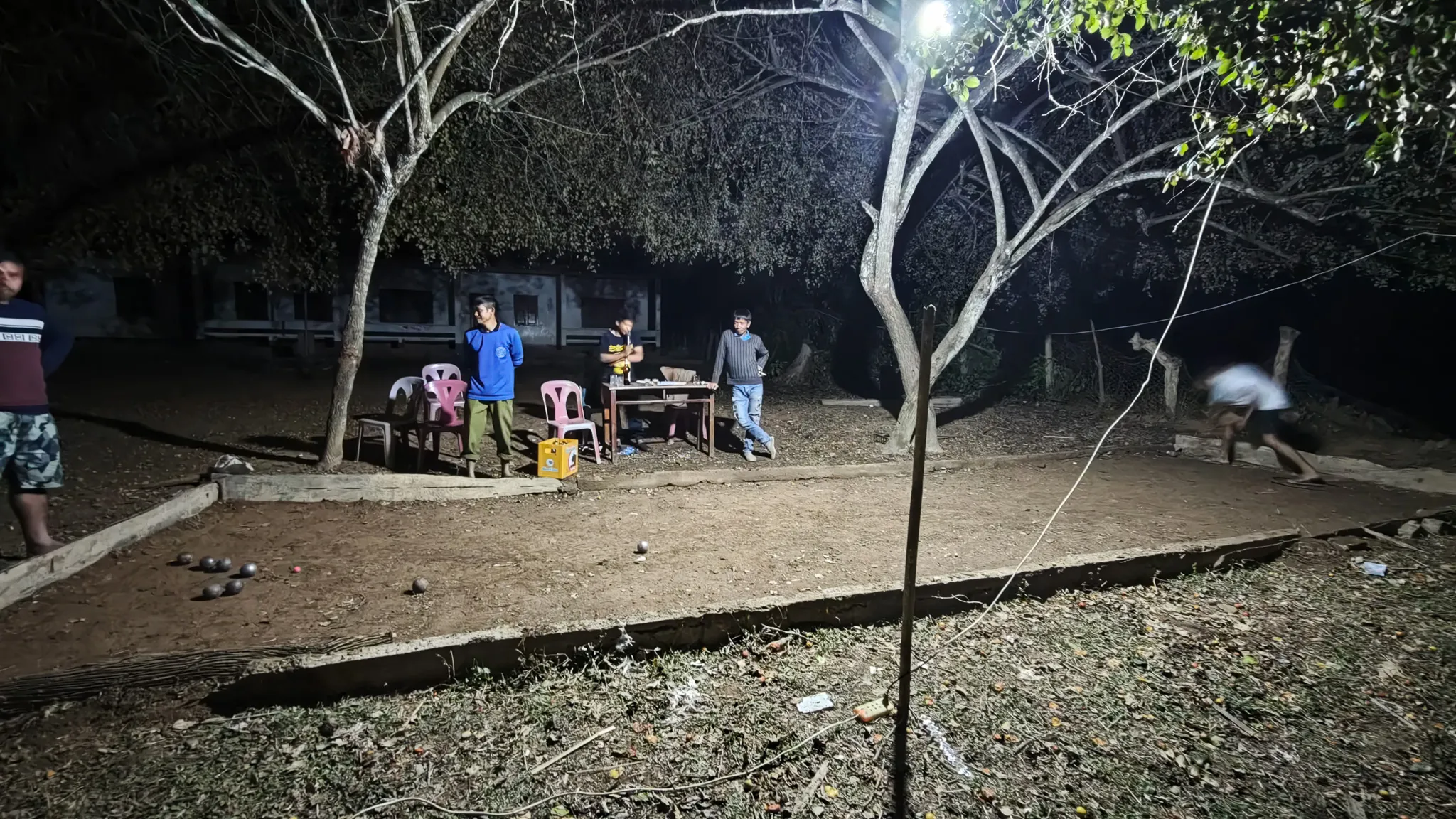
Not by paddling harder. By stopping. A night in a village that will have you, a meal you did not carry, a beer bought for someone, a game of petanque played to its conclusion. These are worth real time against your total, and they are the reason the strongest paddler will not necessarily win.
Off the Water by Mid-Afternoon
A hard rule, and the one that shapes every day. It is partly a safety rule: it is January, the water is cold, and you want daylight left to make camp. It is also the rule that forces the decision. Push on for the far point, or stop early where there are people. You cannot do both.
You Will Not Paddle With the Same Person Twice
Pairs are drawn fresh each day and scored individually. By the end everyone will have shared a boat’s length with everyone else, which is deliberate. It is not a trip for forming two camps.
Choosing
Fourteen, Seventeen or Twenty-One Plus
The extensions are at the front, not the end. Everyone finishes together. Take the length that matches the leave you actually have, without feeling you are getting a lesser trip: the core is the core, and it is the part we are building everything around.
| Option | What it adds |
|---|---|
| 14 days | The core. The river, the villages, the competition, and the run south to Vientiane. |
| 17 days | An extra stretch of river at the front that none of us has paddled, including us. Remote, committing, and not part of the scoring. |
| 21+ days | The above, plus room to breathe. More time in villages, more chance of the micro-volunteering, less time looking at a watch. There is no upper limit here: if you have the time, take it. |
Booking. You book your own flights. Fly into Hanoi, out of Vientiane, as a multi-city or open-jaw ticket rather than two returns. Confirm the exact dates with us before you book anything.
Money
What It Costs
This is pay as you go. You fund yourself the whole way: your flights, your bed, your dinner, your beer. We do the planning, the booking and the guiding, and charge one fee for it. Beyond that fee we are not holding your money.
Two lines carry most of the total, and both of them are yours to control: the flights you book yourself, and the nights you pay for as you go. Between them they come to rather more than our fee does. Work out your own number, and note that it opens on the median rather than the best case.
It opens on the median, not on the cheap end and not on a polite average. £30 a day is what we think you will actually spend.
That is because a good number of nights cost nothing at all. You are on a beach, or in a village house. Where there is a room to pay for, it is a one star guesthouse or a private room in a hostel. Not a shared dorm, and not anything you would describe to your mother as a hotel.
Indicative only, checked July 2026. Nobody is quoting you. Price your own flights before you commit to anything.
Why Longer Barely Costs More
The flight is the same flight. The fee is the same fee. The insurance moves a little. All the extra days actually cost you is the extra days, at £25 to £35 each, so the difference between the fourteen and the twenty-one is roughly one night out in London.
That is the argument for taking the longest option your leave allows. The marginal week is the cheapest week you will ever buy in Laos, and it is the week that buys you the reach nobody has paddled.
The Detail Behind Each Line
| Item | What to know |
|---|---|
| Flights | From about £320 out and £299 home, London to Hanoi and Vientiane to London, both via China. Check the multi-city price as well, it is sometimes cheaper than two singles. See the note on layovers below, it matters more than the fare does. |
| Internal flight | £40 to £80 for the hop from Hanoi towards the border, folded into the calculator above. Book this one first. It runs about four times a week and it is the leg everything else hangs off. |
| On the ground | £25 to £35 a day covers food, beds, boats and buses, with £30 the median. Most places you are in one star accommodation or paying nothing at all, and where you do book a room it is a private one rather than a hostel dorm. Laos is not expensive. The towns at the end, Luang Prabang especially, are where the daily figure actually goes. |
| Visa | Around £30. Arrange it in advance, see the note below. |
| Insurance | £60 to £120 depending on length. It must cover paddling and remote areas. This is not optional. |
| Packraft | Most of you already own one. If you do not, budget £650 for a boat, a four-piece paddle and a buoyancy aid you would actually trust. It is the one item worth getting right rather than cheap, and it is yours afterwards. |
| Namou fee | £750 a head, whichever length you take. What it covers is set out below. |
Everything in that table except the fee is money you spend yourself, when you spend it, mostly in cash across a counter. Where something has to be booked ahead, the Luang Prabang beds in high season, the odd charter, we will arrange it and you settle your share at the time.
What the Namou Fee Covers
It pays for the things that make this an expedition rather than eight people improvising. The reconnaissance, which matters more than it sounds: the dams have changed this river since the last guidebook was written, and working out where it actually goes now took real effort. Chartered transport on the legs where a public bus will not do the job. Group safety kit and a satellite messenger. A contingency fund, which where the nearest road is a day away is not a luxury.
Any contingency we do not spend goes into the volunteering fund for future trips, not back into our pockets.
Some of It Leaves the Trip
A share of the fee goes out as donations: to the villages that host us, and to local causes we have a relationship with. On the last trip that meant Big Brother Mouse in Luang Prabang, where you sit and practise English with Lao students who have come to do exactly that.
We keep the village donations deliberately modest, around $10 a head to each village that puts us up, on top of what we pay for beds and food. These are settlements of a few dozen families where very few outsiders come. A large sum landing in one of them does more distorting than it does good. Small amounts, given to every village that hosts us, is the version that actually helps.
Sleeping in someone’s home and leaving nothing behind is not how we want to travel.
The Benchmark
A guided operator, Tiger Trail, sells the river section you will be paddling, Muang Khua down to Nong Khiaw, at $1,006 a head for a group of six to eight. That is about £790. It buys eight days, with guides, kayaks, helmets, life jackets, a backup boat, accommodation, meals and every transfer included.
Be careful with that comparison, because it is not the one it looks like. Their £790 is the whole thing. Our £750 is the fee only, and once you add your own beds, food and internal travel you are at the number in the calculator above. Ignoring flights on both sides, theirs is the cheaper trip.
So we are not going to argue value on price. We would rather argue it on what you get: 14 to 21 plus days instead of eight, your own boat rather than a hired one, control of where you sleep and what you eat, and a stretch of river that is not on their programme or anybody else’s. If eight guided days on the known water is what you want, book them, and you will have a good time.
Nobody Sells This Trip
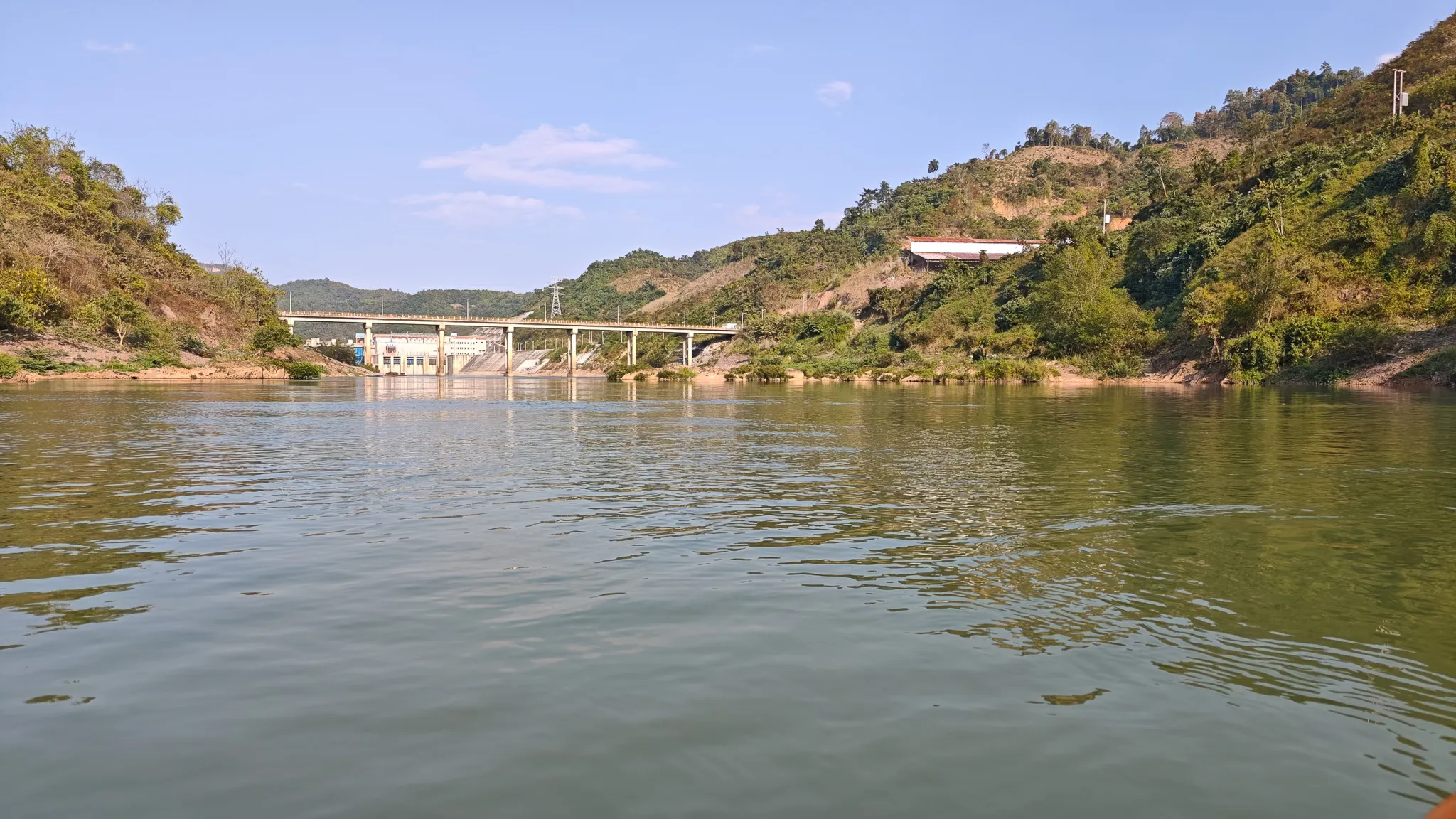
Tiger Trail’s eight days begin at Muang Khua and run south, which is the stretch already written up across this website. The reach above it, coming down from Phongsaly, is not on anyone’s programme. The reason is that finding out whether it still goes takes real work: a cascade of hydroelectric dams has rebuilt that river since the last guidebook described it, and most of what you can read online is describing water that no longer exists.
Working that out is the largest part of what the fee pays for. The rest is group safety kit and satellite communications, the transport we charter, the donations, and a contingency fund for a place where the nearest road can be a day away.
We will also say plainly that this is our second descent of the Nam Ou, not our twentieth. What you are buying is preparation and judgement rather than a slick operation.
Securing a Place
£250 of the £750 is due when you say yes, and it is not refundable. The balance falls due eight weeks before we fly.
The deposit exists for a reason worth stating. Six people racing is what makes the format work, the transport is priced on the group, and the kit is bought for a known number. A place held loosely costs everyone else, and we would rather ask for the commitment now than rearrange the trip in December.
Take the Long Layover
The cheapest routings east go through China, and the fare difference between a six hour layover and a twenty-three hour one is often a few pounds. Take the long one. A short layover typically lands you in Hanoi somewhere around one in the morning, having spent the night in a departure lounge. The long one gives you a day in the city you are stopping in and an evening arrival, which is a far better way to start.
If you are genuinely tight on time, take the short hop and lose a day at the front instead. Just know what you are buying.
Fly Home Overnight
The good departures out of Vientiane leave in the small hours and land in London the same afternoon. That is worth arranging deliberately: it means your last day is a real day in Vientiane rather than a morning spent waiting for a flight, and you do not pay for a final night’s bed. Aim for a departure after midnight and treat the evening before as part of the trip.
Check your transit visa position. If your routing stops in China, the visa-free transit rules have changed recently and depend on your nationality, your onward ticket, and the airport you land at. Confirm it against current policy before you book, not after.
Visas: sort this before you leave. We are crossing into Laos at a small land border, not an airport. Visa on arrival is not reliable there and reports conflict. Get your Lao visa in advance, and do not plan on fixing it en route.
The list
What To Bring
You need a packraft. There is no way round that, and it is the one item worth getting right rather than cheap. Everything else is standard multi-day river kit with one wrinkle: January in the northern mountains is genuinely cold at night, and the guesthouses are not heated.
Boat
- Packraft
- Four-piece paddle
- Buoyancy aid
- Repair kit and pump
Keeping It Dry
- Two dry bags, one for sleep kit
- Waterproof phone case
- Small dry bag for documents
Sleeping
- Bag comfort-rated to 5°C, not limit-rated
- Insulated mat
- Lightweight tarp or tent
Wearing
- Quick-dry layers you can paddle in
- Warm mid-layer for evenings
- Waterproof shell
- River shoes and camp shoes
- Sun hat and warm hat, you need both
Kit
- Head torch and spare batteries
- Power bank, there is no mains for days
- Water filter or purification
- Personal first aid
- Camera or a phone you are happy to use as one
Papers
- Passport, six months validity
- Lao visa, arranged in advance
- Insurance covering paddling
- Cash. Card machines are a lowland idea
Honesty
What This Is Not
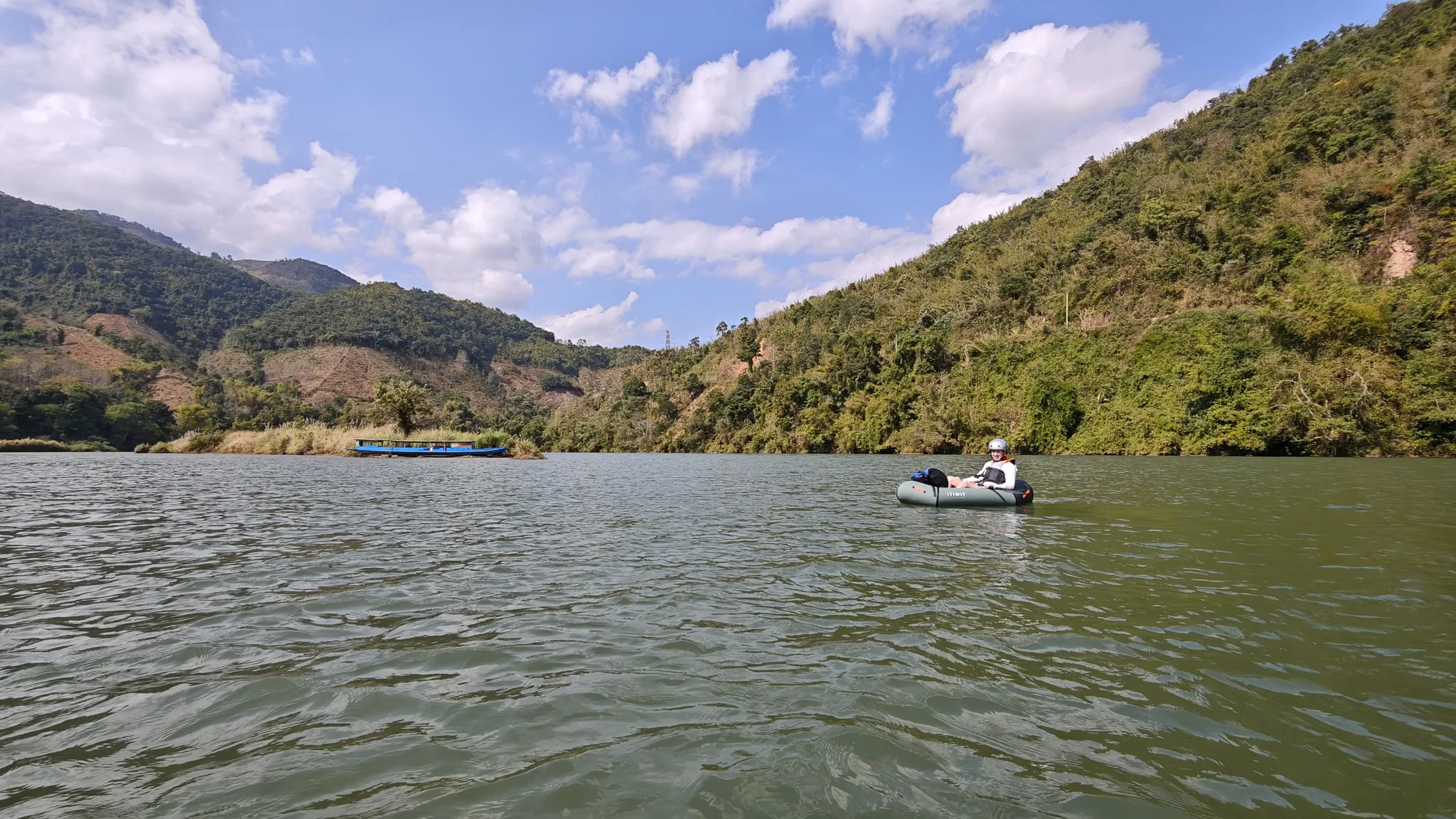
This is not a survival trip. Frankly it is more insurance and discomfort than anything heroic, and you do not need to be an expedition type to come. If you can paddle for five or six hours, carry your own kit, and stay cheerful when the day goes sideways, you are qualified.
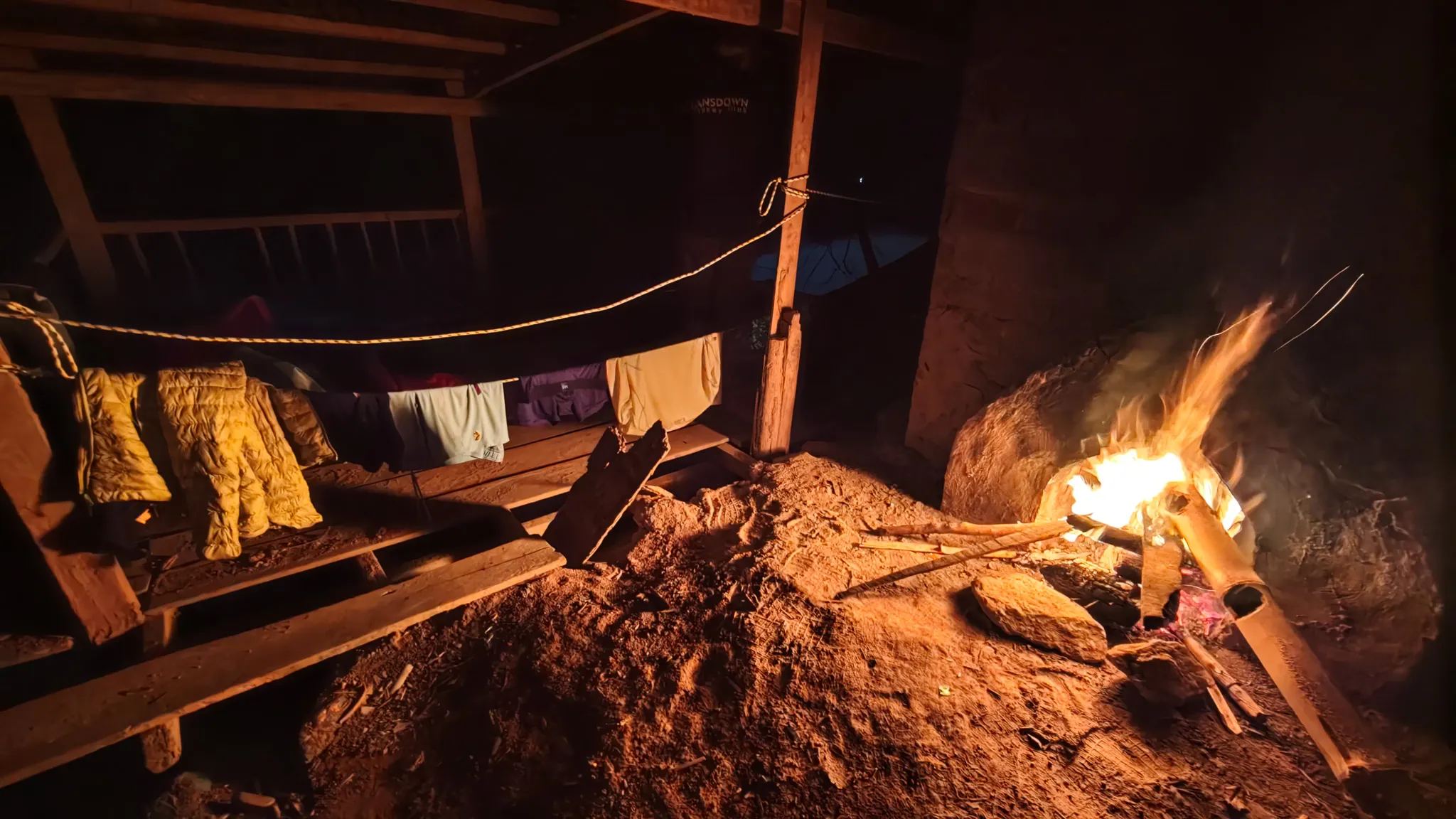
You will sleep wild, in abandoned settlements, and in homestays. Some nights will be cold. There will be days with no signal, no shop, and no option beyond the one you are in. That is the appeal, and it is also the thing to be honest with yourself about before you say yes.
The catch
What We Are Not Telling You
Almost everything. You know where you land and where you fly home from. You do not know the route, the daily distances, where you sleep, or what the scoring actually rewards. Each day’s target is set the night before, by us, based on where everyone actually got to.
That is deliberate. Half the pleasure of the last trip was not knowing, and a plan you can read in advance is a plan you can optimise, which turns an expedition into a spreadsheet.
The rest of this website will give you more than enough of a flavour of what we have in mind. Read the dispatches from last time. Then accept that we will mix it up, because we know you will have read them.
Before you say yes
Questions We Would Rather Ask Now
We will ask you these properly before you commit. They are here first because they are the things people wish they had known, and none of them is a test.
Some camps are a full day from the nearest road. If you decided on the third morning that you had made a mistake, you would still be paddling on the fourth.
There is no toilet for days at a time. There is a trowel.
You will wash in the river or not at all, and the river in January is cold.
You will be wet from the knees down from about eight in the morning until you make camp, every day.
In a homestay you eat what the house is eating. Rice whisky at breakfast has actually happened to us.
About a week with no phone signal, so anyone at home who needs you daily should know that now.
You do not pick who you paddle with, and the standings are read out every evening. On some of those evenings you will be last.
The awkward ones
Questions People Actually Have
We had this page read by people who were weighing it up rather than selling it. These are the questions they were left with, including the ones nobody wants to ask in a group chat. Where we do not have an answer yet we have said so instead of writing something that sounds like one.
Dates and time off
When is it, exactly?
January 2027. We are fixing the exact dates now and will confirm them before we ask anyone to book a flight. Nothing on this page is worth acting on until we do, which is why the sign-up asks for a commitment to the trip rather than to a date.
How many days off do I actually need to book?
More than the headline. Fourteen days is fourteen days on the ground. Add the long layover we recommend on the way out, and the flight home that leaves in the small hours, and the fourteen day option is about sixteen days door to door. Seventeen becomes about nineteen. Book your leave off that number, not off the one in the title.
If the extensions are at the front, how do I join a trip already in progress?
You do not have to find us. Everyone taking the core arrives together, at a place and time we will give you well in advance, and the group converges there before the main event starts. The extension group will simply have been on the water for a few days by then. From that point on, everyone is on the same trip and everyone finishes together.
Whether you can do it
What if I turn out to be the slowest?
The pairings are built to absorb that. Once everyone has paddled with everyone, we pair off the standings deliberately: whoever is leading goes with whoever is last, second with second last. It compresses the field, it stops the result being settled on day three, and it means a bad week does not also become a lonely one.
Time credits make more difference than speed does. Someone who stops in villages and is in no hurry can beat a strong paddler who does not, which is the whole point of the format.
Is the fitness bar really “five or six hours of paddling”?
Yes, and it is less brutal than it sounds because the river is doing some of the work and the rule is that you are off the water by mid afternoon. A typical day is 25 to 30 kilometres. The harder part is doing it again the next day, and the day after, while damp.
What genuinely matters more than fitness: being able to carry your own kit, being able to look after yourself when you are cold, and being reasonable company at the end of a long day.
The group and the format
Is it six places or eight? The page says both.
Eight people on the trip, six of them racing. Chris and Harry run it, paddle every day, and are not scored, which is why both numbers appear. Six racers is what the format is built around.
Are Chris and Harry racing?
No. They are in the field every day rather than driving ahead to time people in at checkpoints, which is exactly why a checkpoint is proved by a photograph rather than by an official standing on the bank. Nobody is being marked by someone who is also trying to win.
Will I genuinely never paddle with the same person twice?
Across the racing days, no. Six racers give fifteen possible pairs and we draw three a day, so the round closes cleanly and everyone has shared a boat’s length with everyone else. After that the draw switches to pairing off the standings, which is deliberate rather than a fudge.
What if I do not get on with whoever I am drawn with?
It lasts a day, and then it is somebody else. That is the reason the pairs are drawn rather than chosen. A trip like this splits into two camps within a week if you let people pick, and that is a far worse outcome than one awkward afternoon.
The secrecy
Is the mystery a gimmick, or do you genuinely not know?
Both, and they are two different things wearing the same coat, so it is worth separating them.
Some of it is withheld on purpose. A plan you can read in advance is a plan you can optimise, and that turns an expedition into a spreadsheet.
Some of it is genuinely unknown. A cascade of hydroelectric dams has rebuilt the upper river since the last guidebook described it, and we have not paddled that reach either. We will always tell you which of the two you are looking at, and we will never dress up the second as the first.
What do I tell people at home?
Everything they need. The country, the month, the two airports, how long you are away, and who to ring. The route is a surprise for you, not a secret from your family, and we would rather your household had more information than you do than less.
Money
Does the £2,055 include buying a packraft?
No. The calculator opens on “I have one” because most of the people coming already do. If you need to buy, switch that control and the figure moves to roughly £2,705. Use that as your real number, and remember the boat is yours afterwards rather than hired.
Does the fee go up for the longer options?
No. £750 whichever length you take. The extra days cost you the extra days and nothing else, which is the argument for taking the longest option your leave allows.
What exactly is pay as you go, and what runs through you?
The fee runs through us. Everything else is yours: you book your own flights, and you pay for your own beds, food, beer and local transport as you go, mostly in cash. Where something has to be arranged ahead, we will arrange it and you settle your share at the time. We are not sitting on a pot of your spending money.
Living on the river
Where do we actually sleep?
A mix, and the mix is the point. Some nights are wild, on a beach or a sandbar. Some are in village homestays, in someone’s house. Some are in a one star guesthouse or a private room in a hostel in the towns. Nothing is a hotel, nothing is a shared dorm, and a good number of nights cost nothing at all.
Am I carrying everything, every day?
Yes. Everything you have is in your boat with you, including on the portages around the dams. There is no vehicle shadowing us with the heavy bags. That is worth knowing before you buy anything, because it sets the ceiling on what you bring.
Do I have to drink?
No. Declining a drink politely is a normal skill in Lao villages and nobody will think anything of it. Buying a beer for someone else is worth time credit whether or not you have one yourself.
Honestly, the toilet situation?
In villages and guesthouses there is a toilet. On the river days between them there is not, and there is a trowel, and you walk away from the water. It is the single most common reason people decide this is not for them, and we would much rather you decided that now than on day four.
Not answered yet, and we are not going to invent one. Several people asked about safety qualifications, the evacuation plan, which insurers will actually cover a trip like this, what happens to your deposit if the trip does not run, whether helmets are needed, and exactly which boat to buy. Those deserve real answers rather than reassuring ones, and they are being written now. If you are weighing this up and any of them is your blocker, ask us directly and you will get a straight answer rather than a page.
Tell Us You Are In
Nothing to pay, and nothing decided. Put your name down and we will send you the dates the moment they are fixed, along with the safety, insurance and kit answers as they are written. If you would rather ask something first, use the same box.
Exact dates to follow. Do not book flights until we confirm them.