
Packrafting the Nam Ou
Muang Khua —
The Launch Point
A 33-person bus from Vietnam. A border crossing with a sleeping dog. A community party with lao-lao. Then two packrafts on the Nam Ou for the first time.
Last Morning in Vietnam
Visa Stamps & Street Omelettes
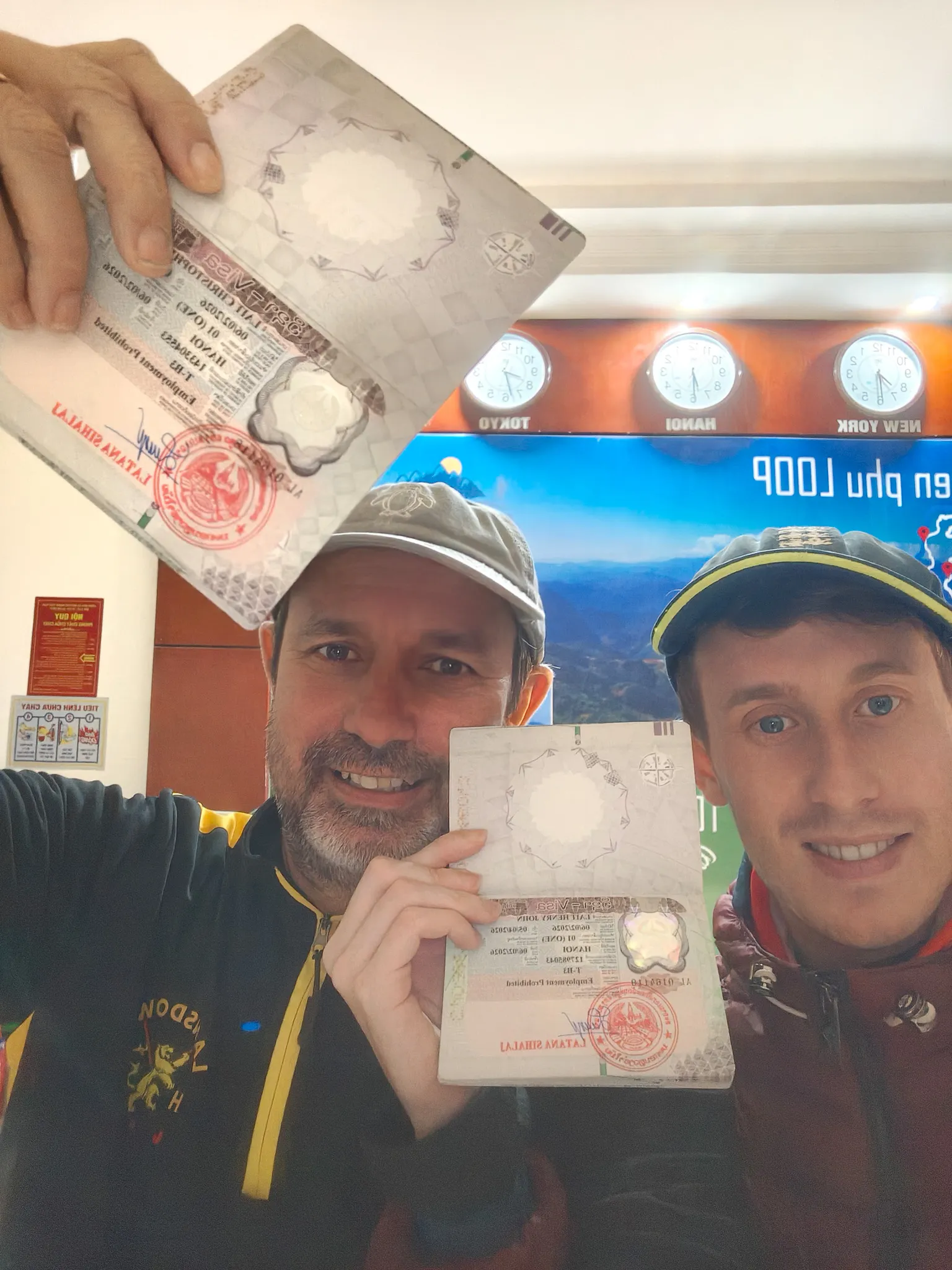
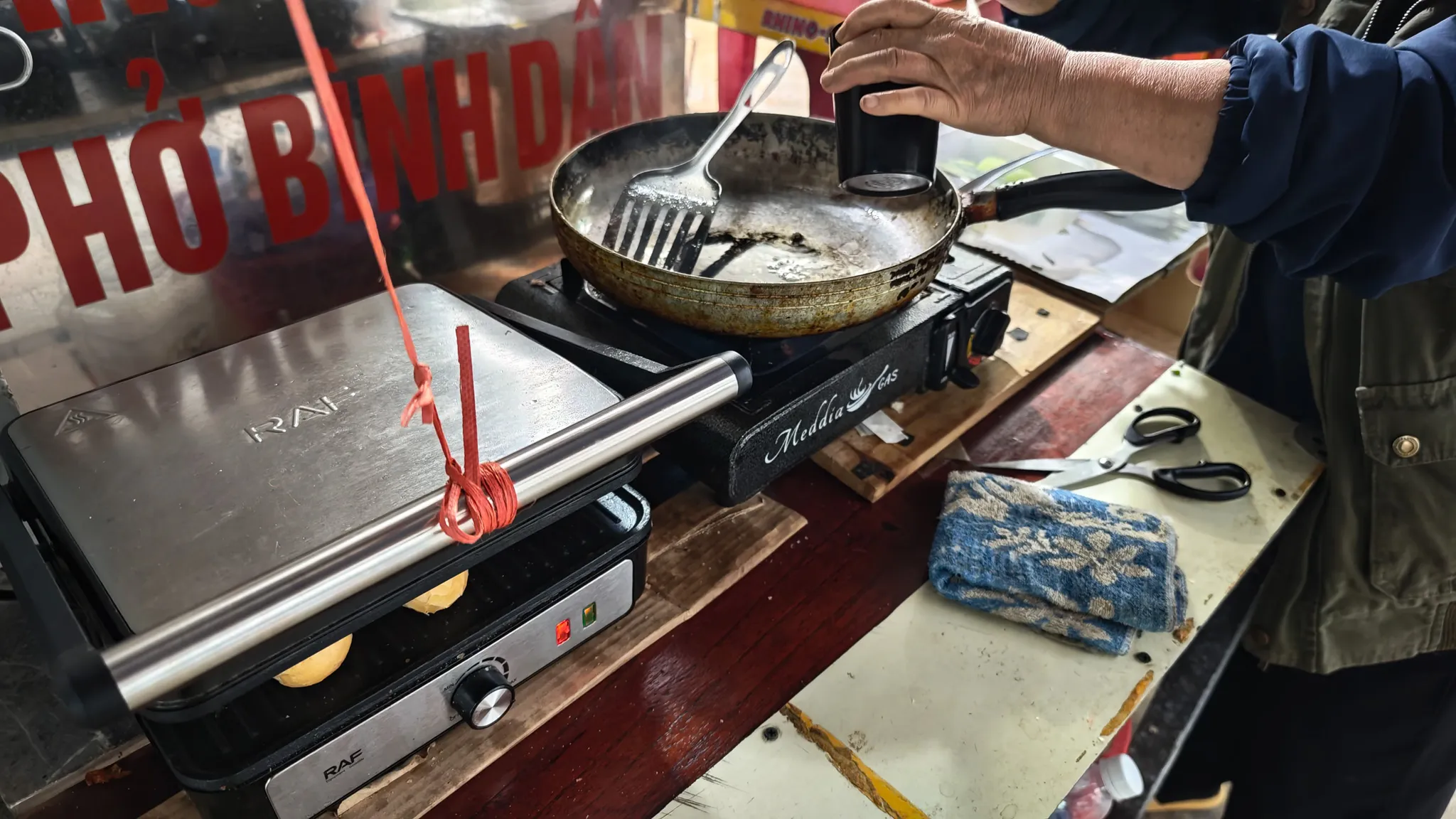
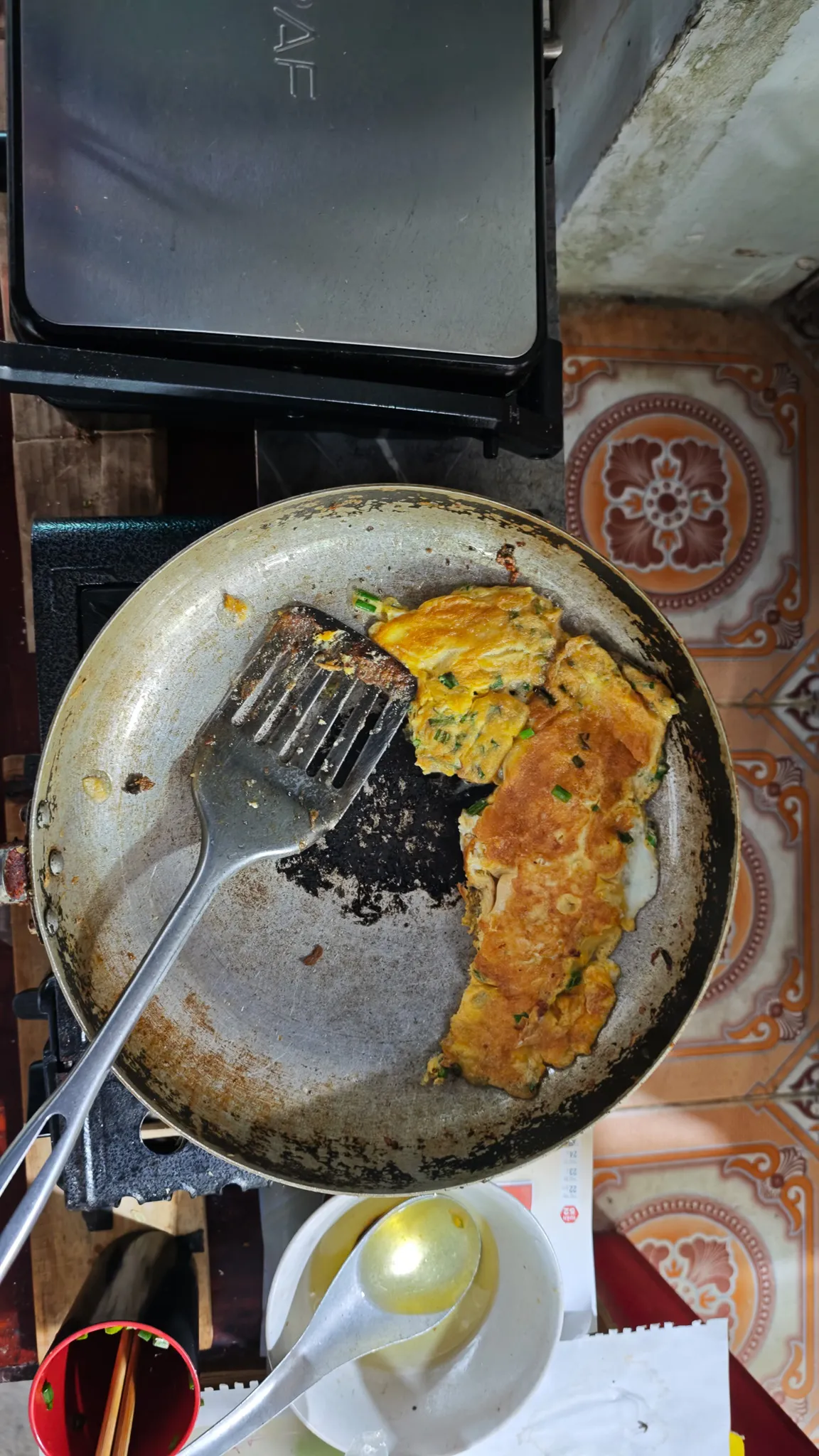
Dien Bien Phu at dawn. We checked our passports one last time — Vietnamese visa stamps, exit dates scrawled in biro. Outside the hotel, a woman was frying omelettes on a gas burner beside a panini press, spring onions sizzling in a blackened pan. This is bánh trứng — Vietnamese street omelette — and it costs about 15,000 dong (50p). You eat it standing up. You don’t need a fork.
It was the last Vietnamese breakfast we’d eat for three weeks.
The Road
33 People, One Hyundai
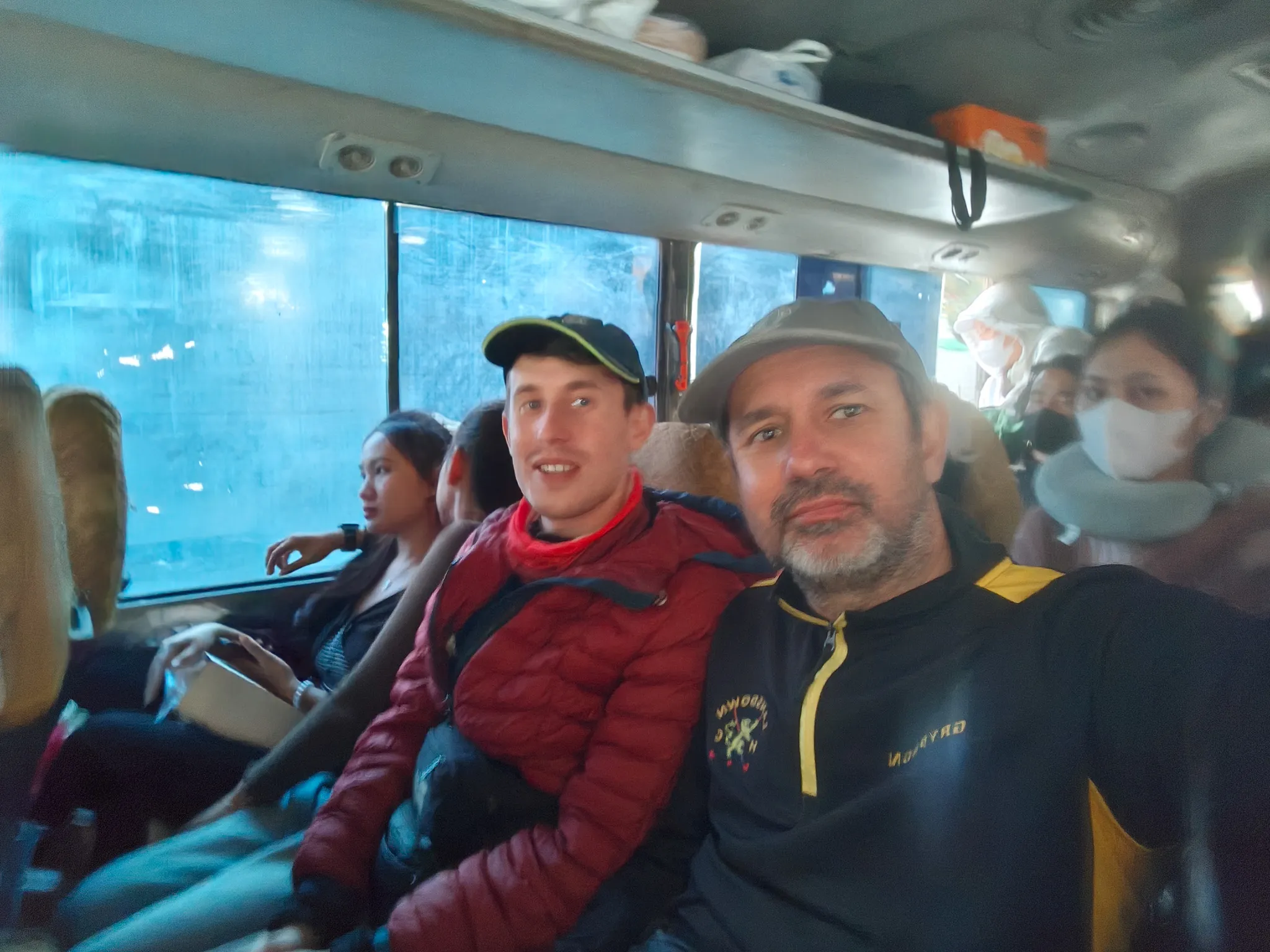
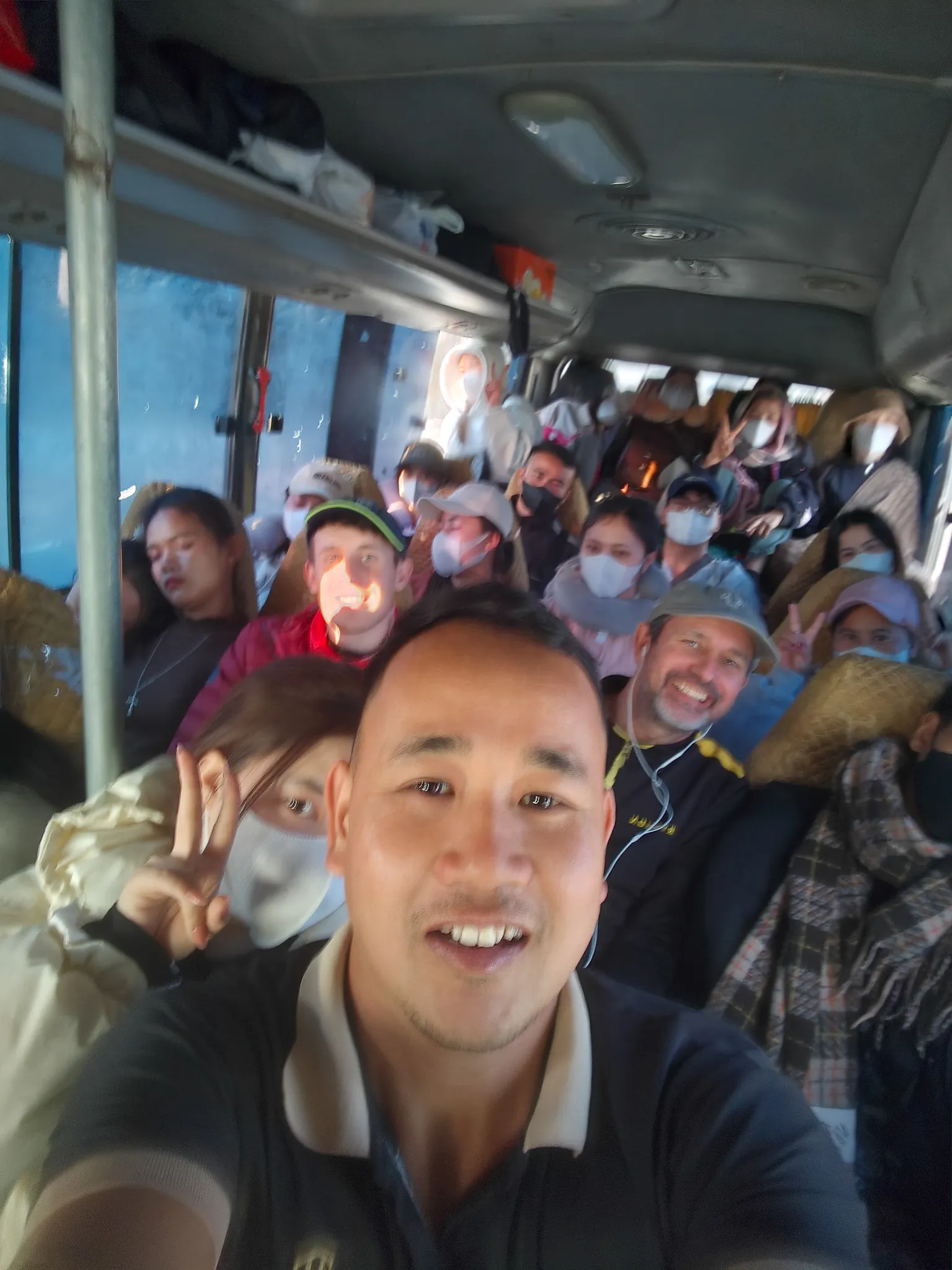
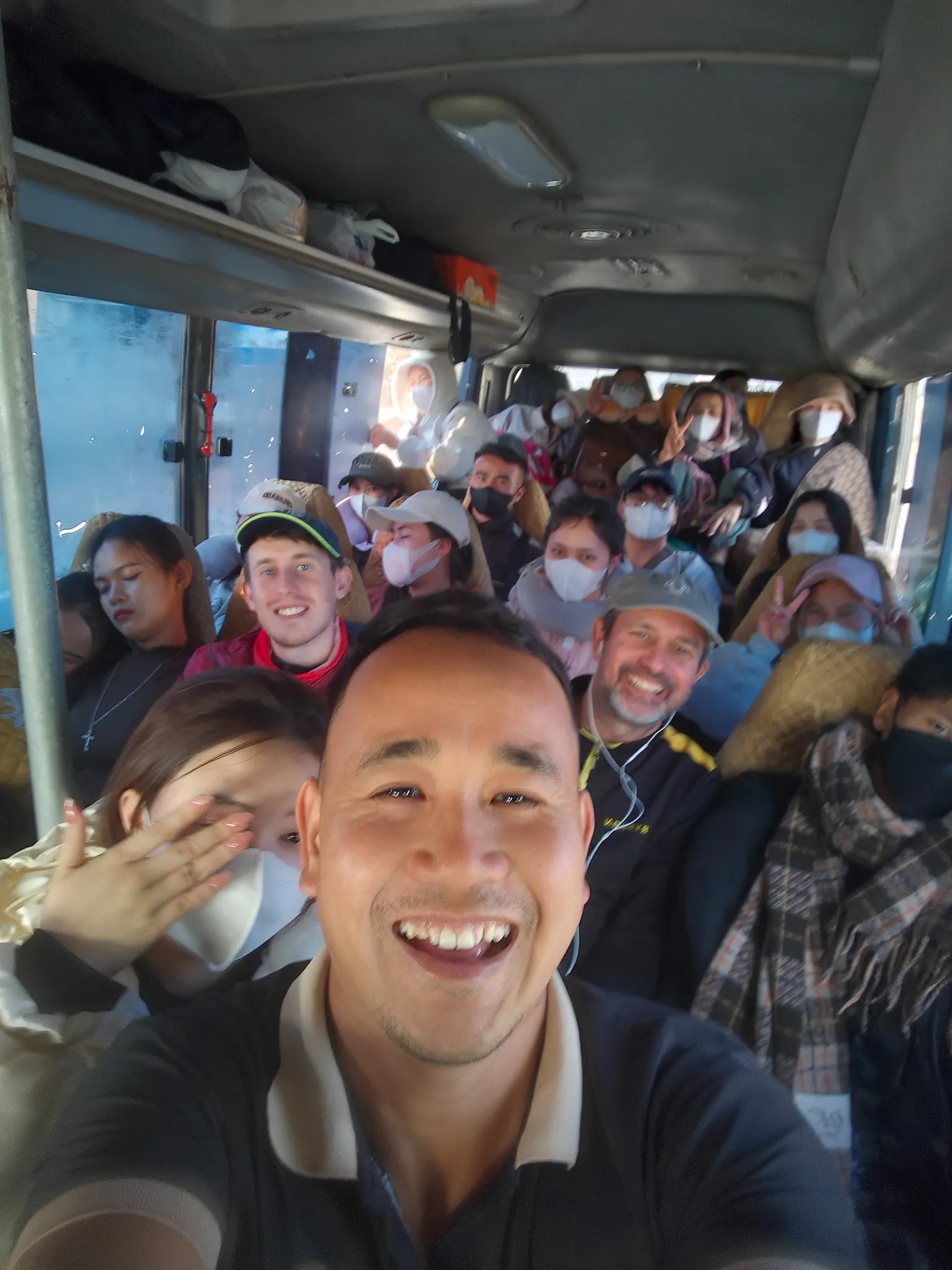
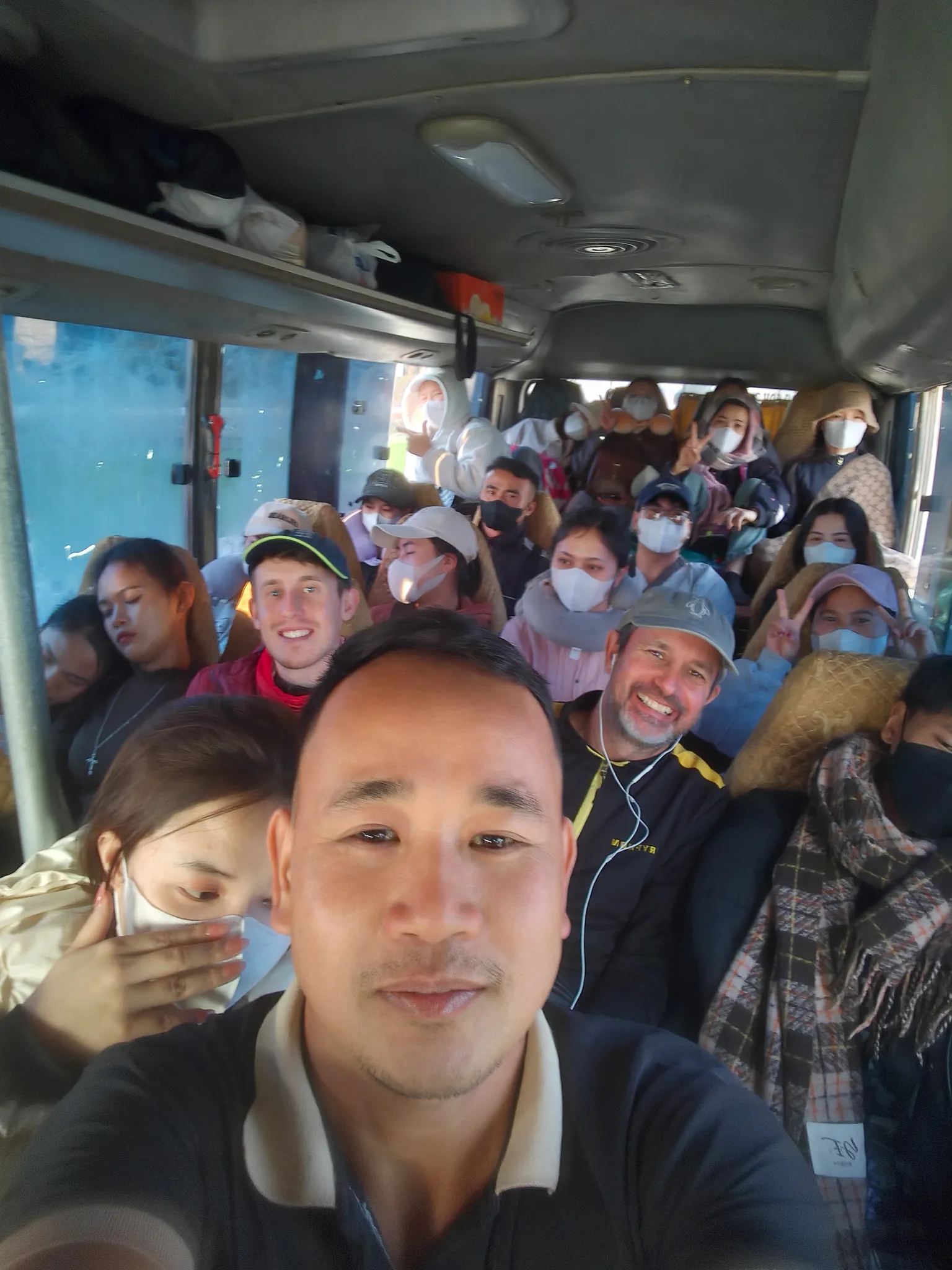
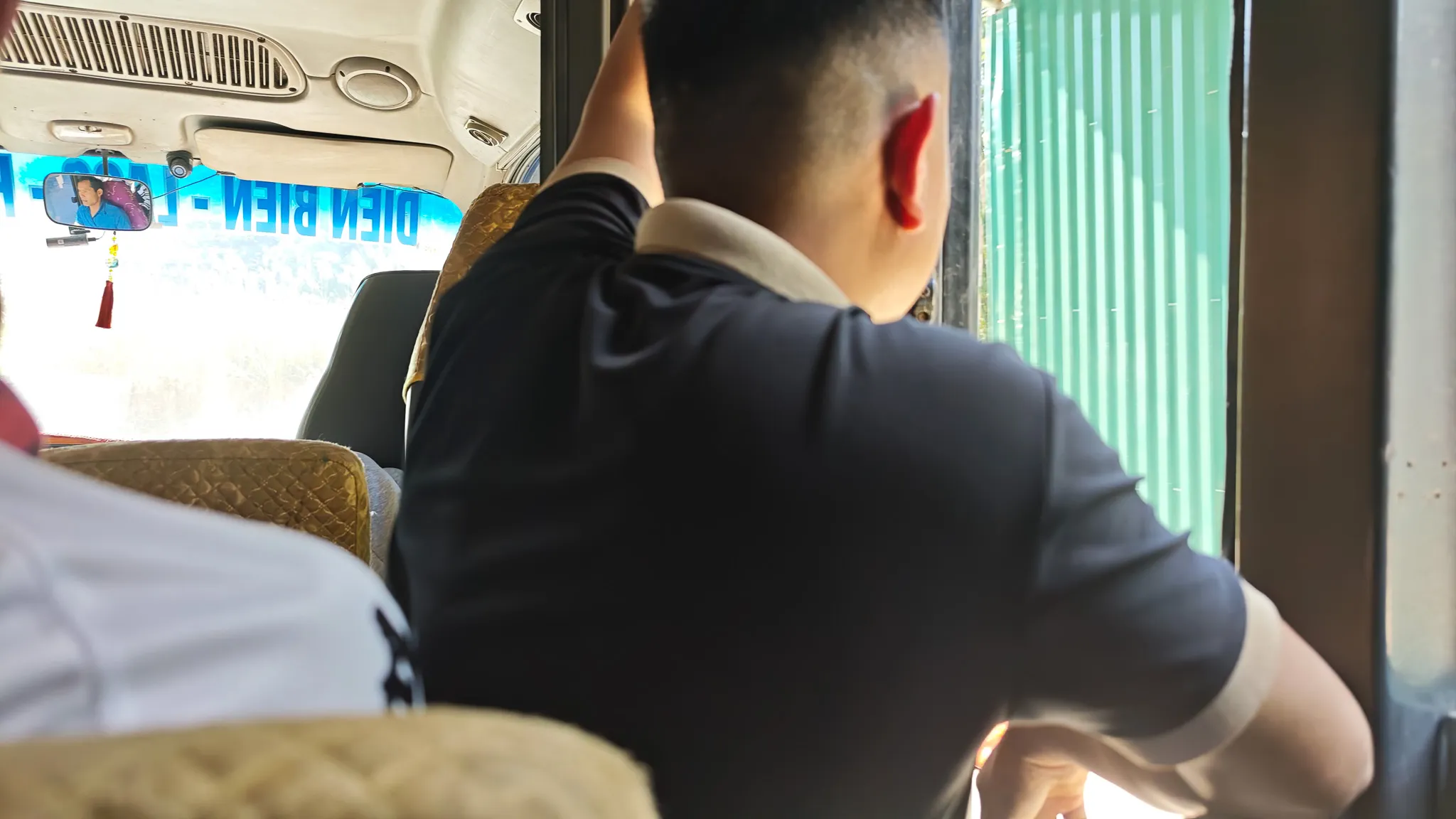
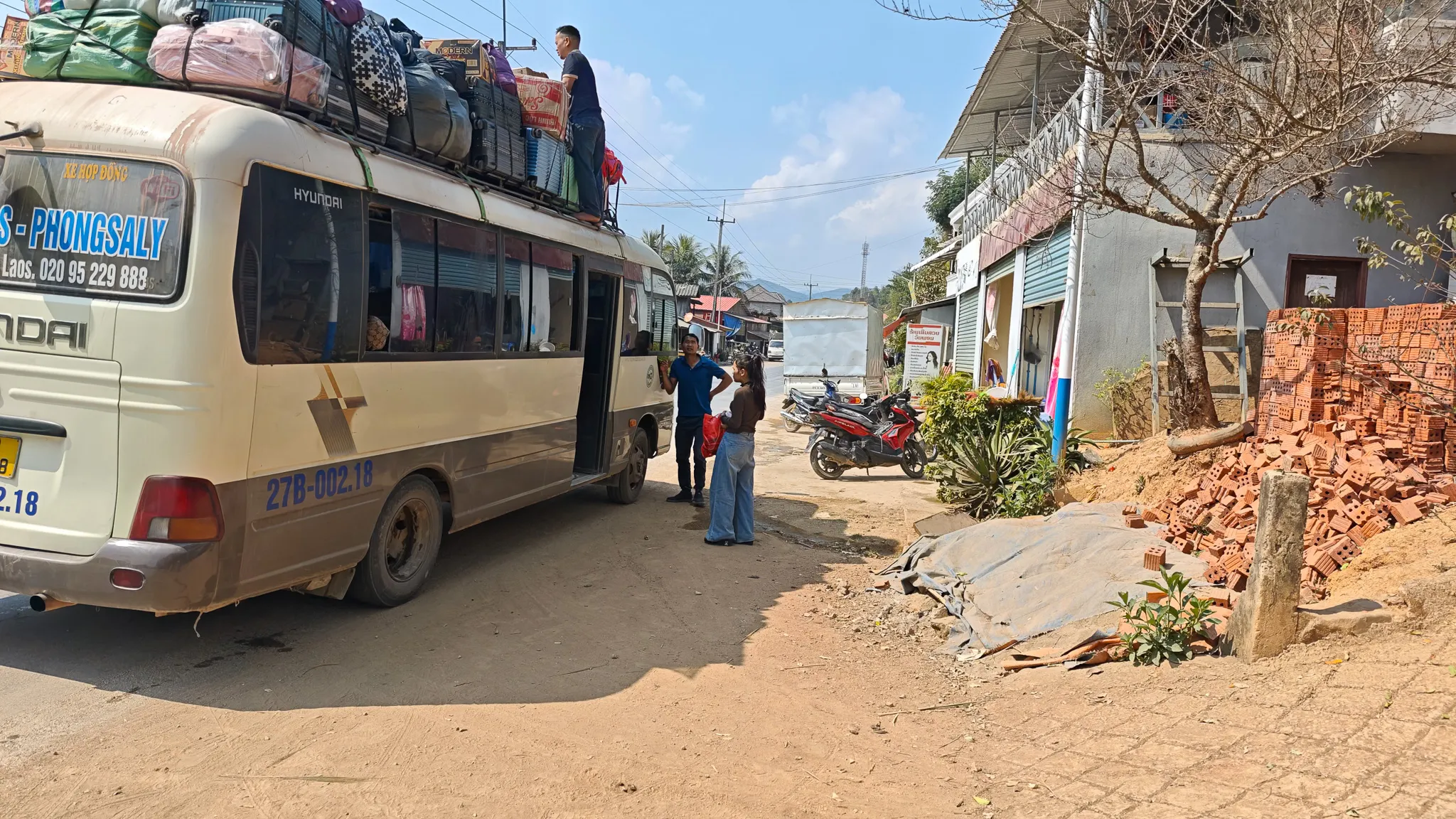
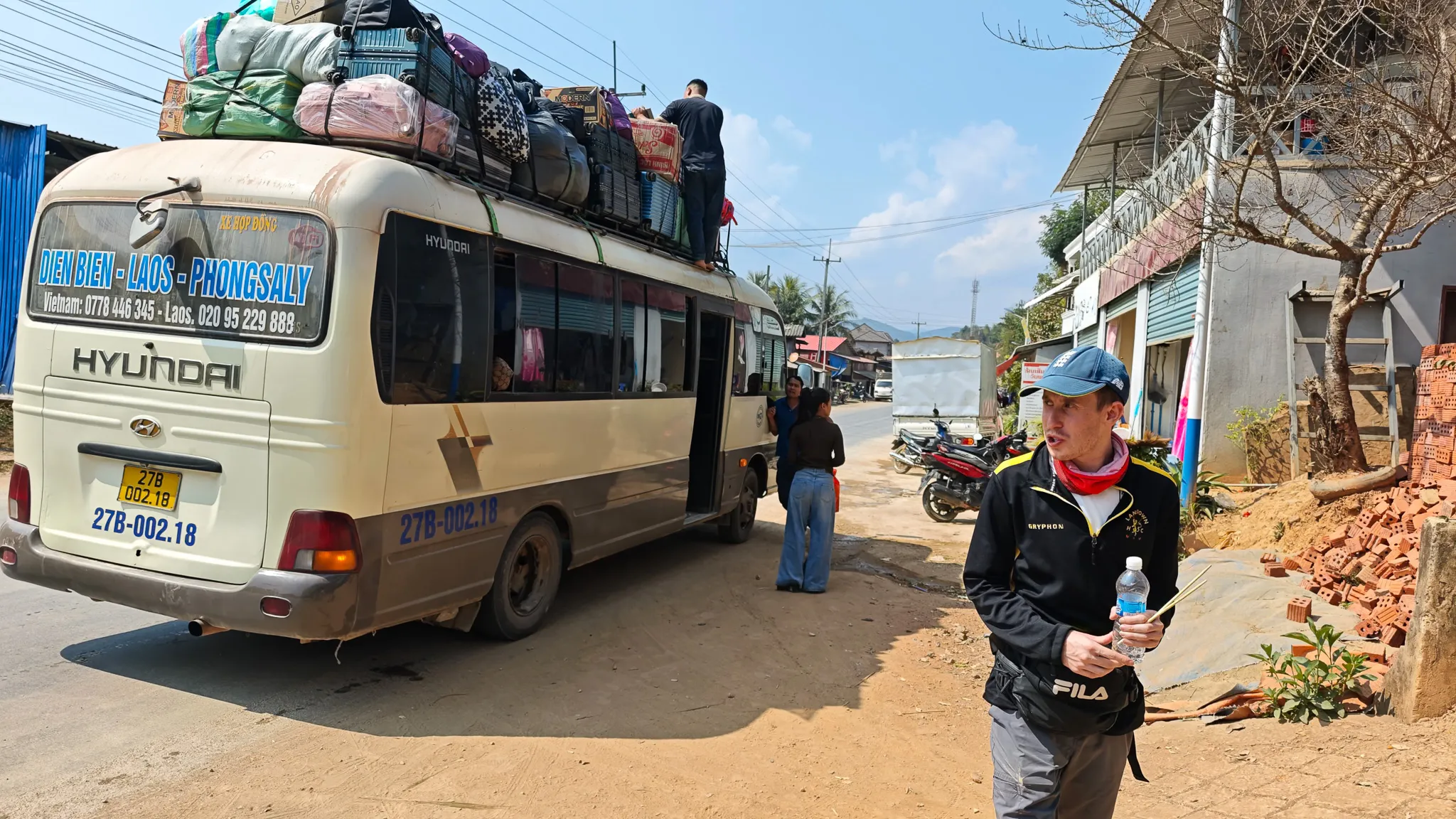
The bus from Dien Bien Phu to Muang Khua is a Hyundai minibus designed for about 16 passengers. Ours had 33. Luggage was roped to the roof rack until the bus sagged on its axles. People sat in aisles, on laps, on bags of rice. Face masks on. Windows down. The air smelled of diesel and someone’s breakfast noodles.
This is overland travel in Southeast Asia — the kind of journey where discomfort and camaraderie are the same thing. Strangers became friends by the second hour. By the third, people were sharing snacks and phone chargers.
The Border
Tay Trang — Sleeping Dogs & Stamps
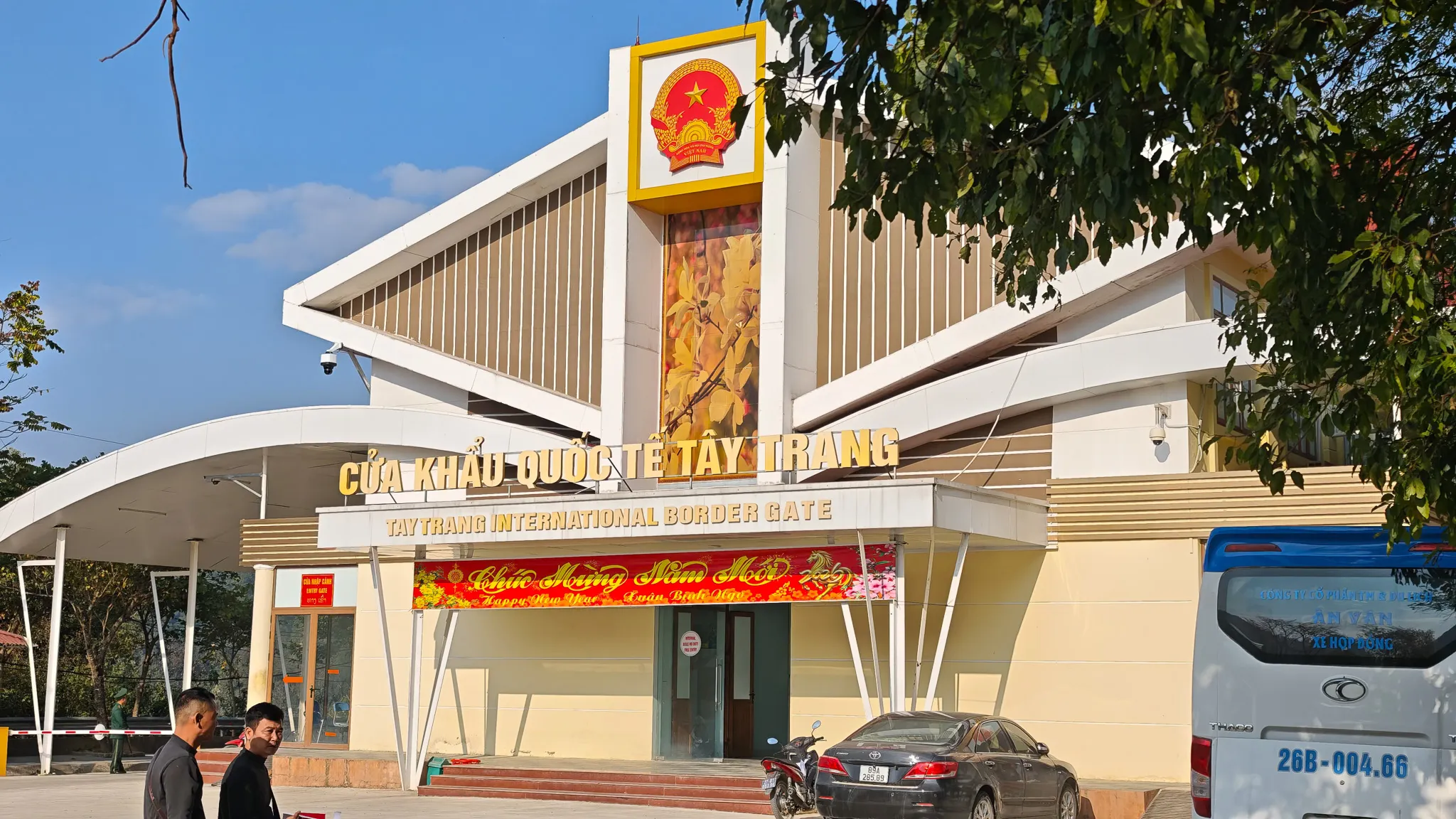
The Tay Trang International Border Gate sits at 1,050 metres elevation in the mountains between Vietnam and Laos. Opened to international travellers in 2007, it’s one of the quietest land crossings in Southeast Asia. The Vietnamese side has a concrete building with the national emblem and Lunar New Year decorations. The Lao side has a wooden hut and a sleeping dog.
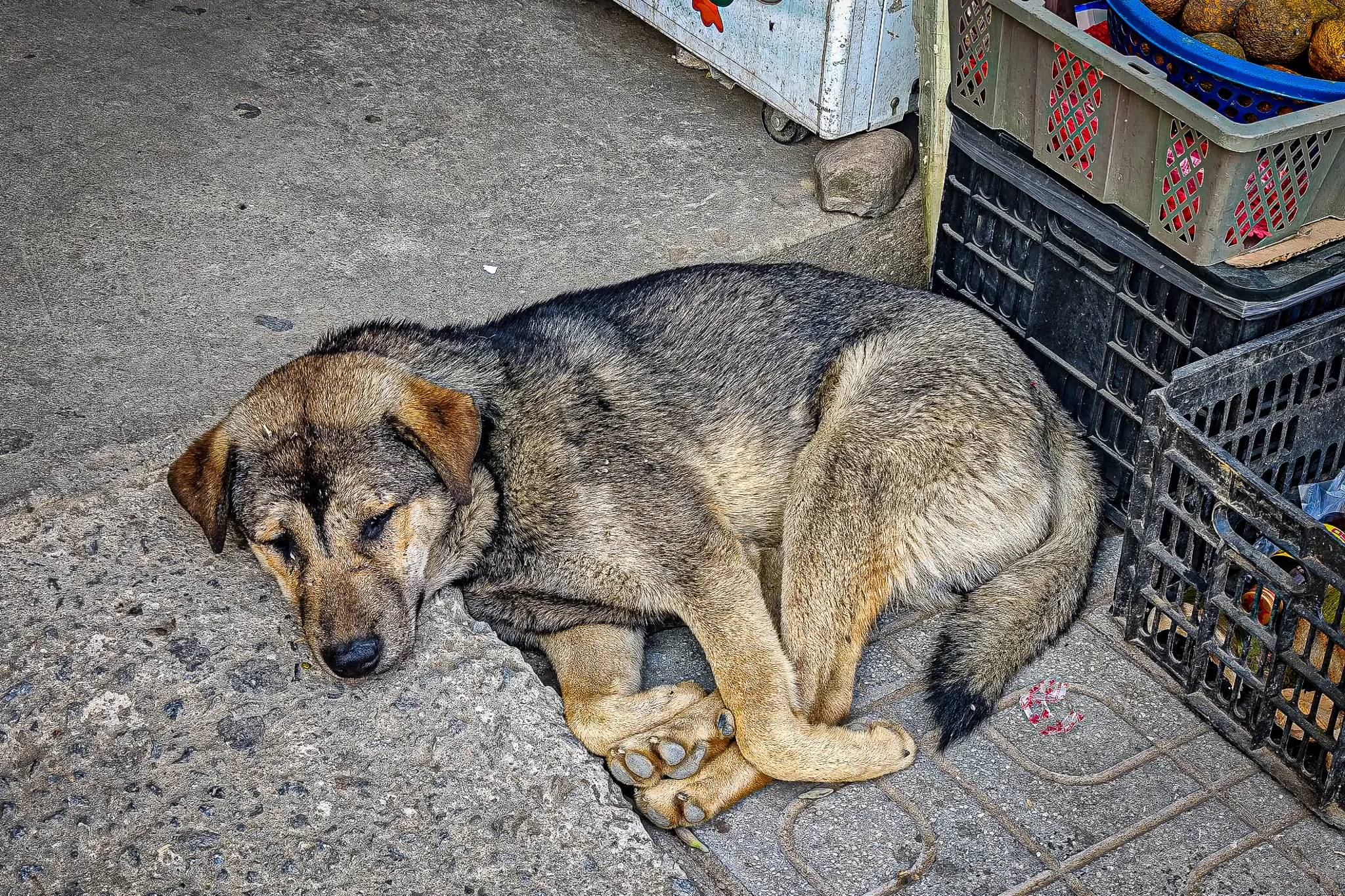
The dog didn’t move when we stepped over it. We took this as a good omen.
Into Laos
Mountain Roads & New Friends
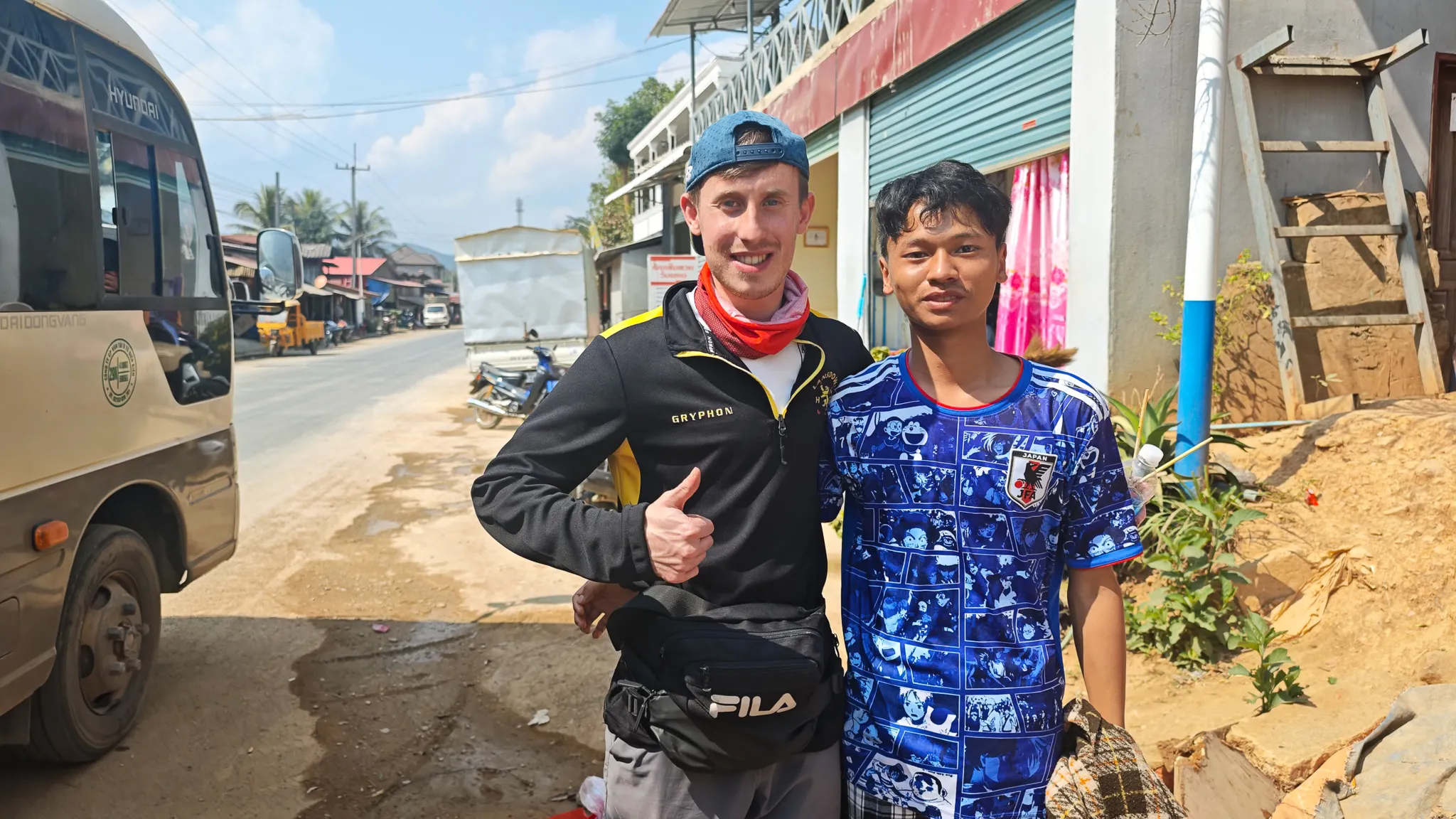
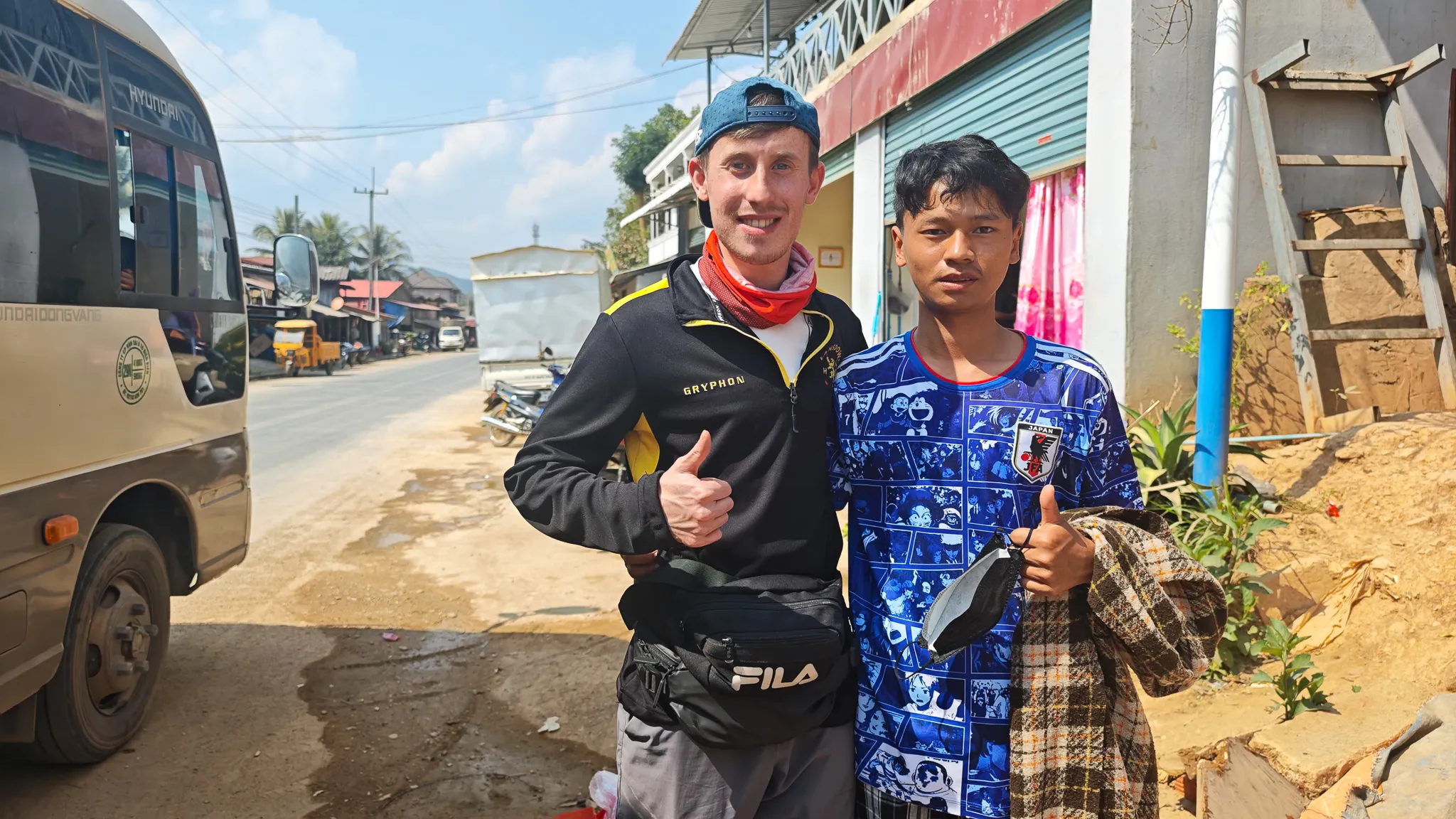
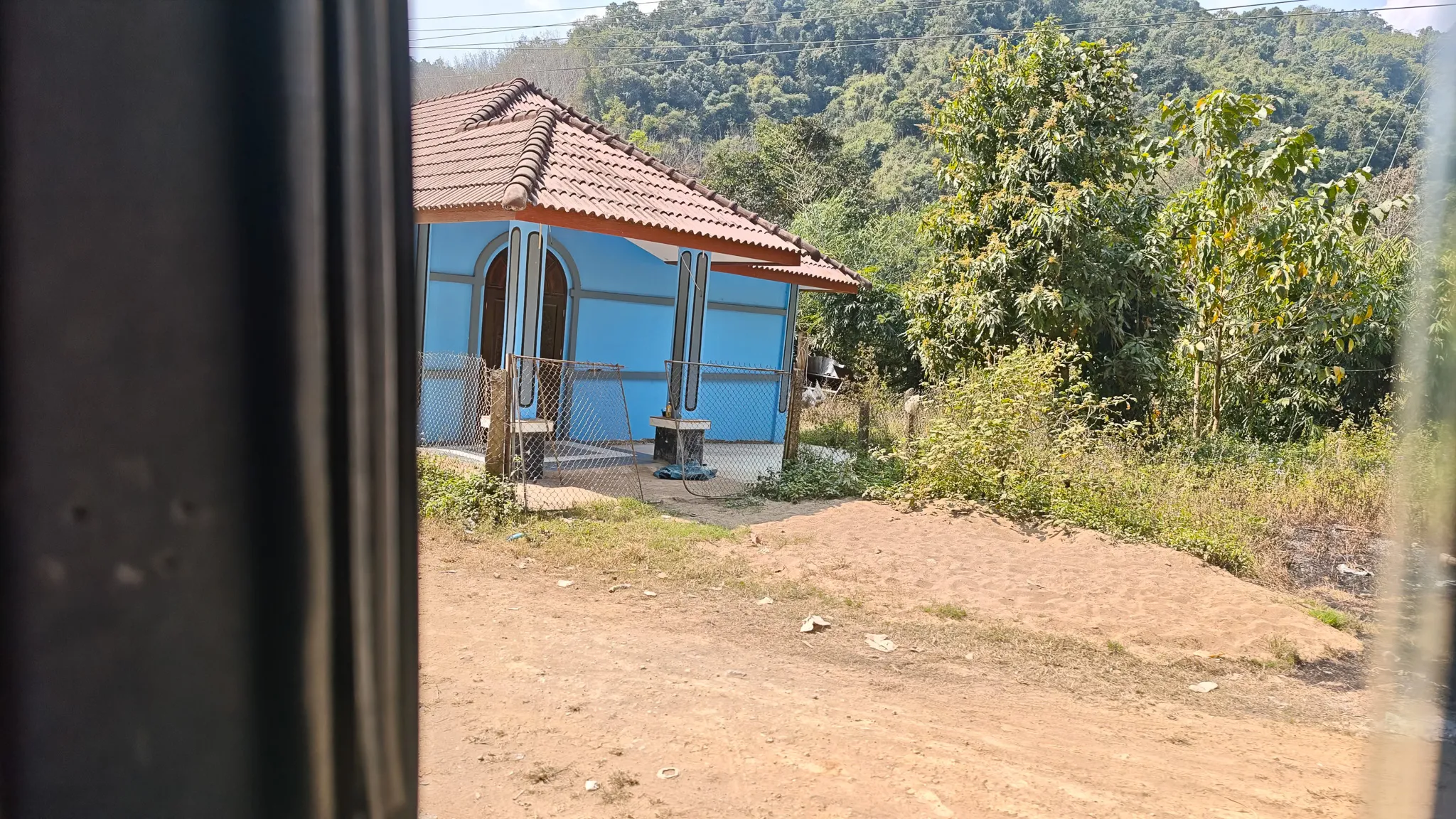
After the border, the road narrowed to a single lane of packed dirt and potholes. The landscape changed — denser forest, steeper mountains, villages of wooden houses with corrugated-iron roofs clinging to hillsides. The bus stopped in a village and we stretched our legs. A man in a Japanese football shirt gave us the thumbs up. We gave it back. This seemed to conclude the diplomatic formalities.
Sabaidee
The Community Party
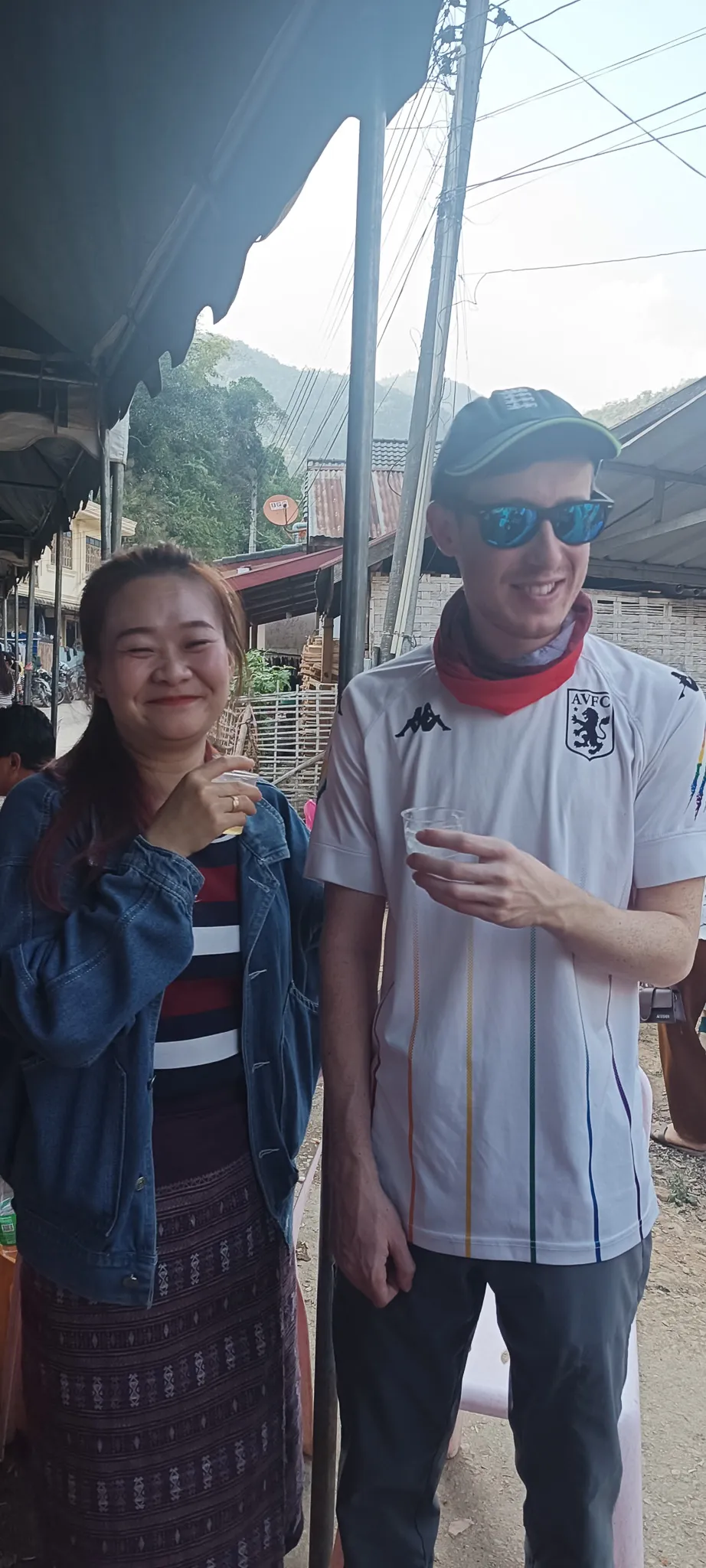
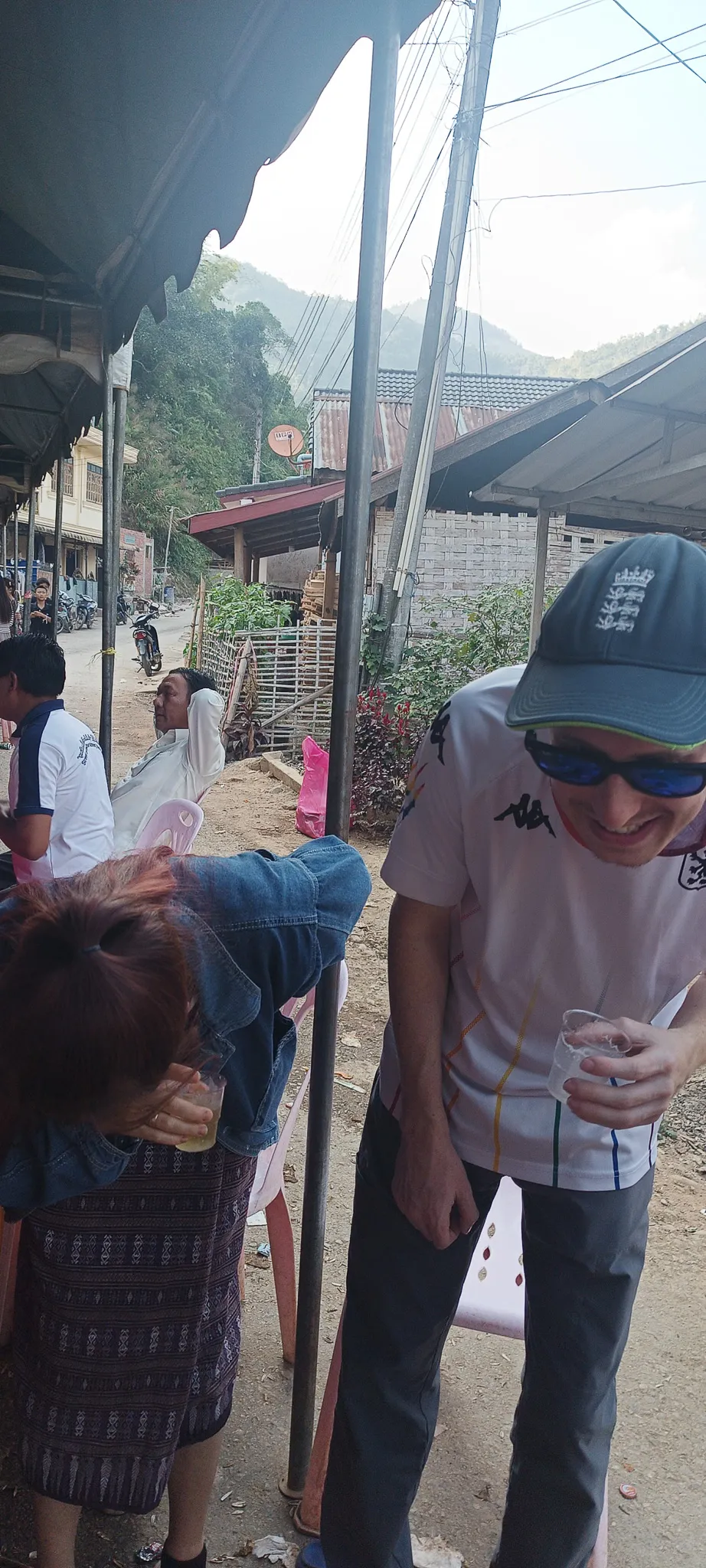
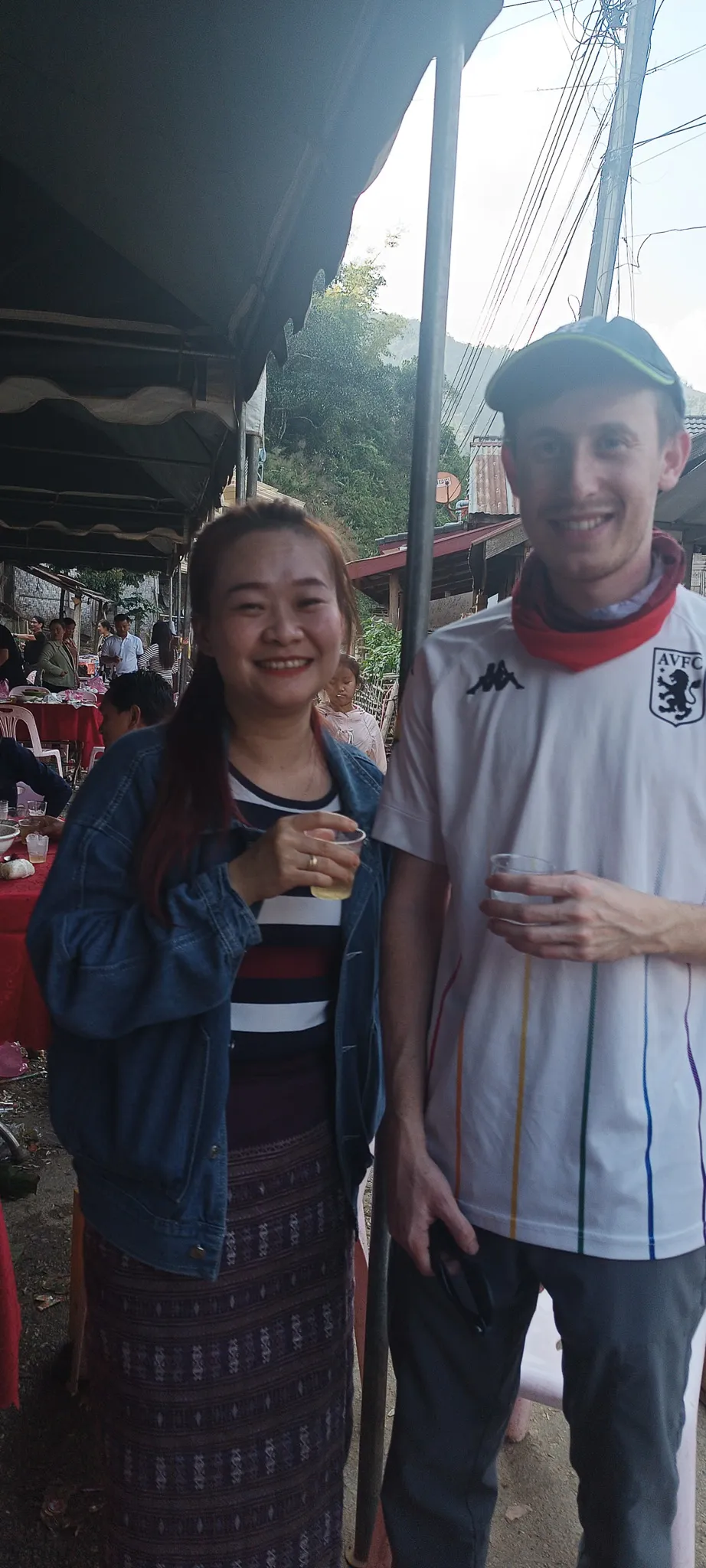
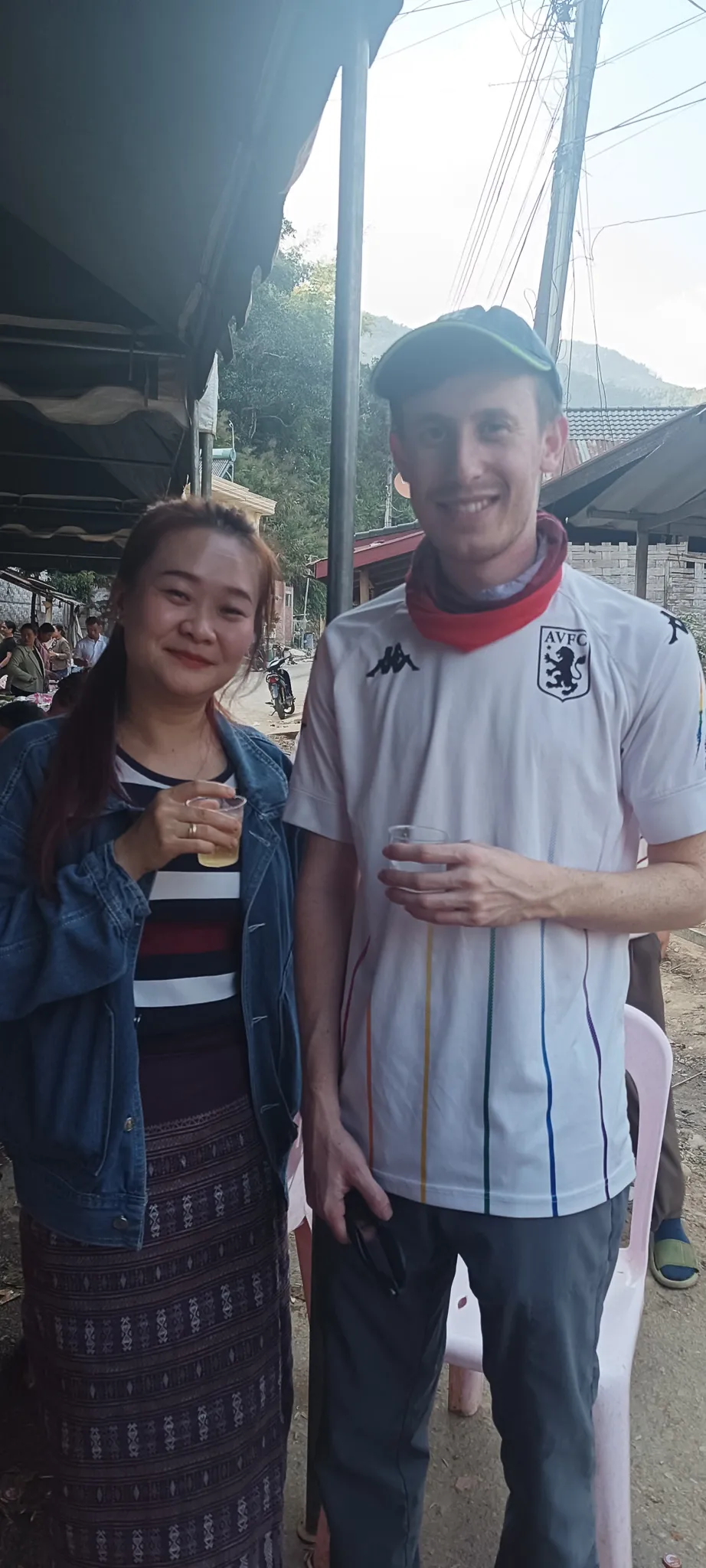
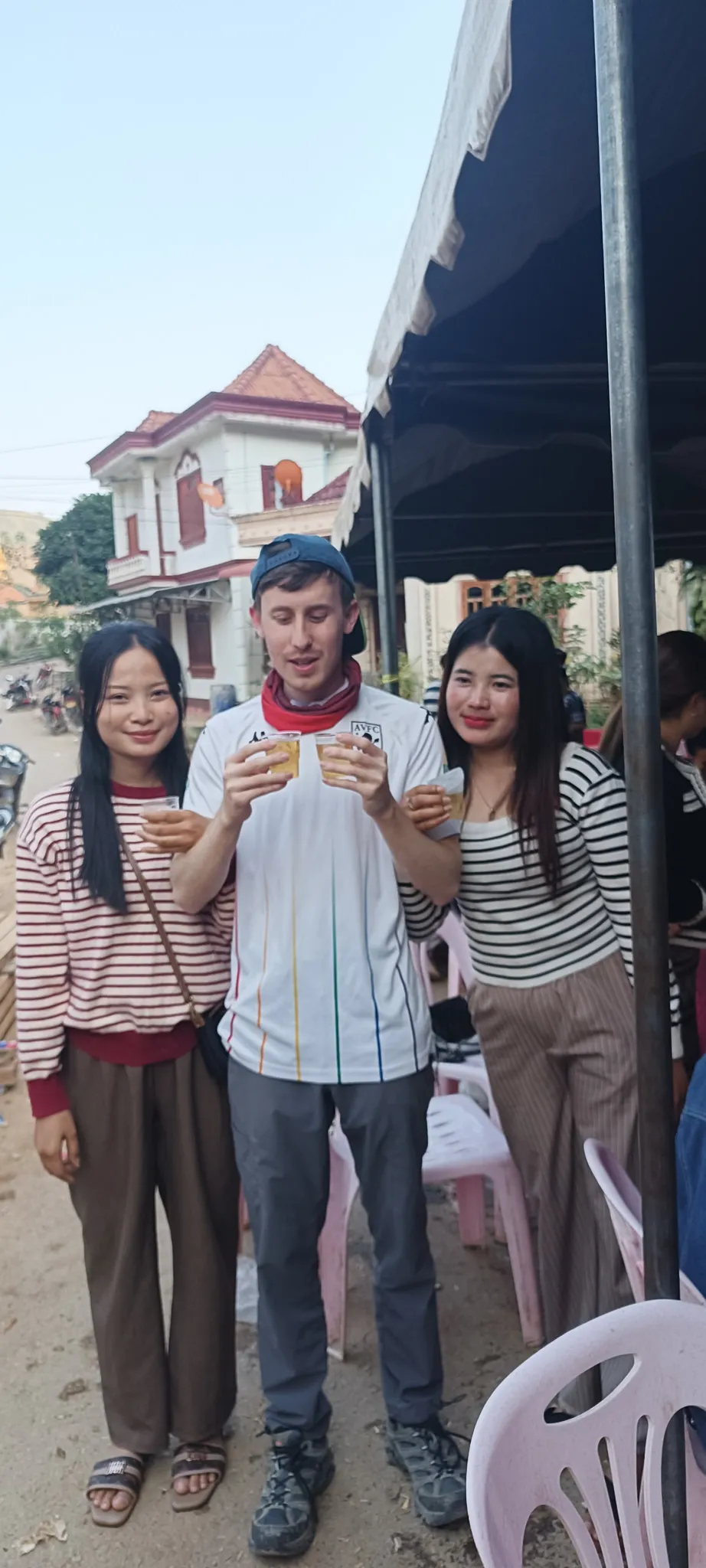
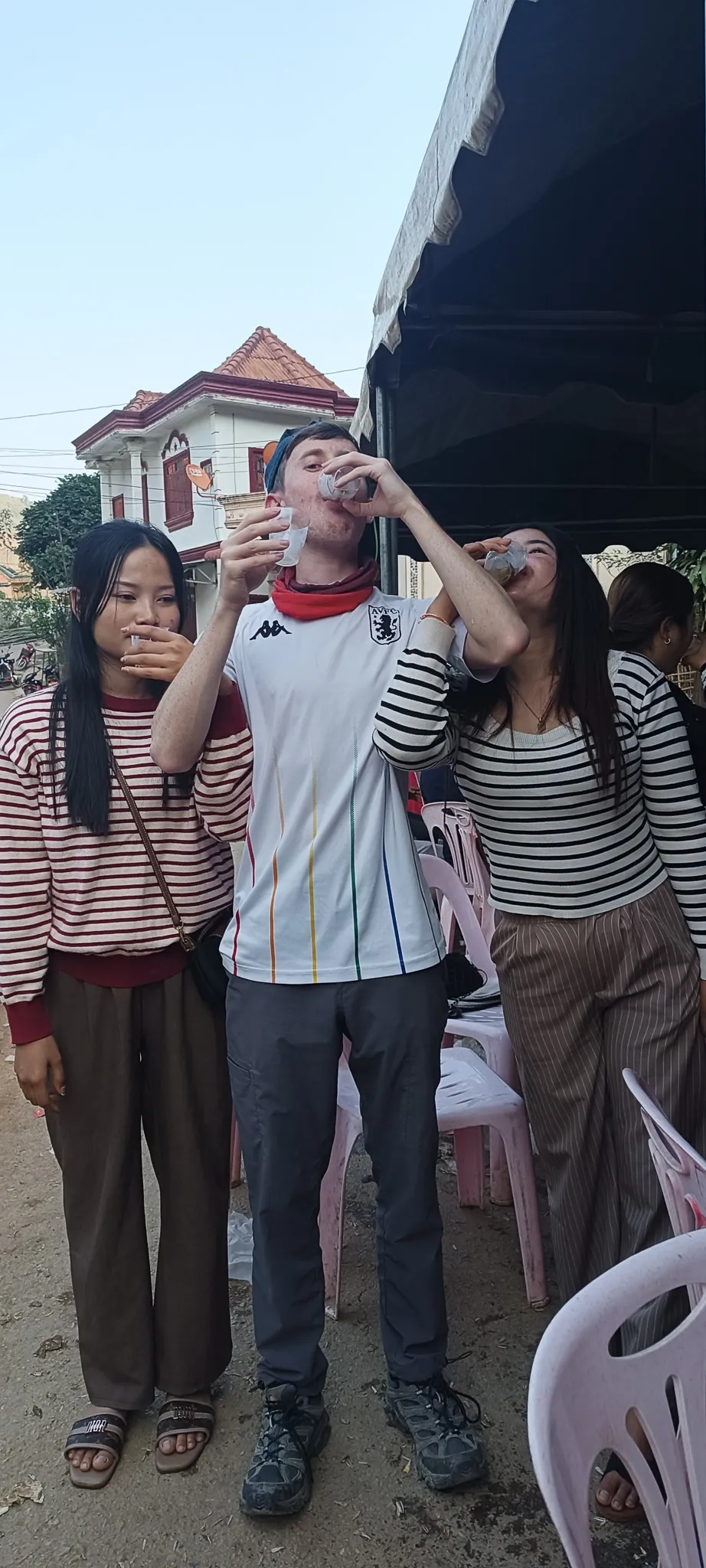
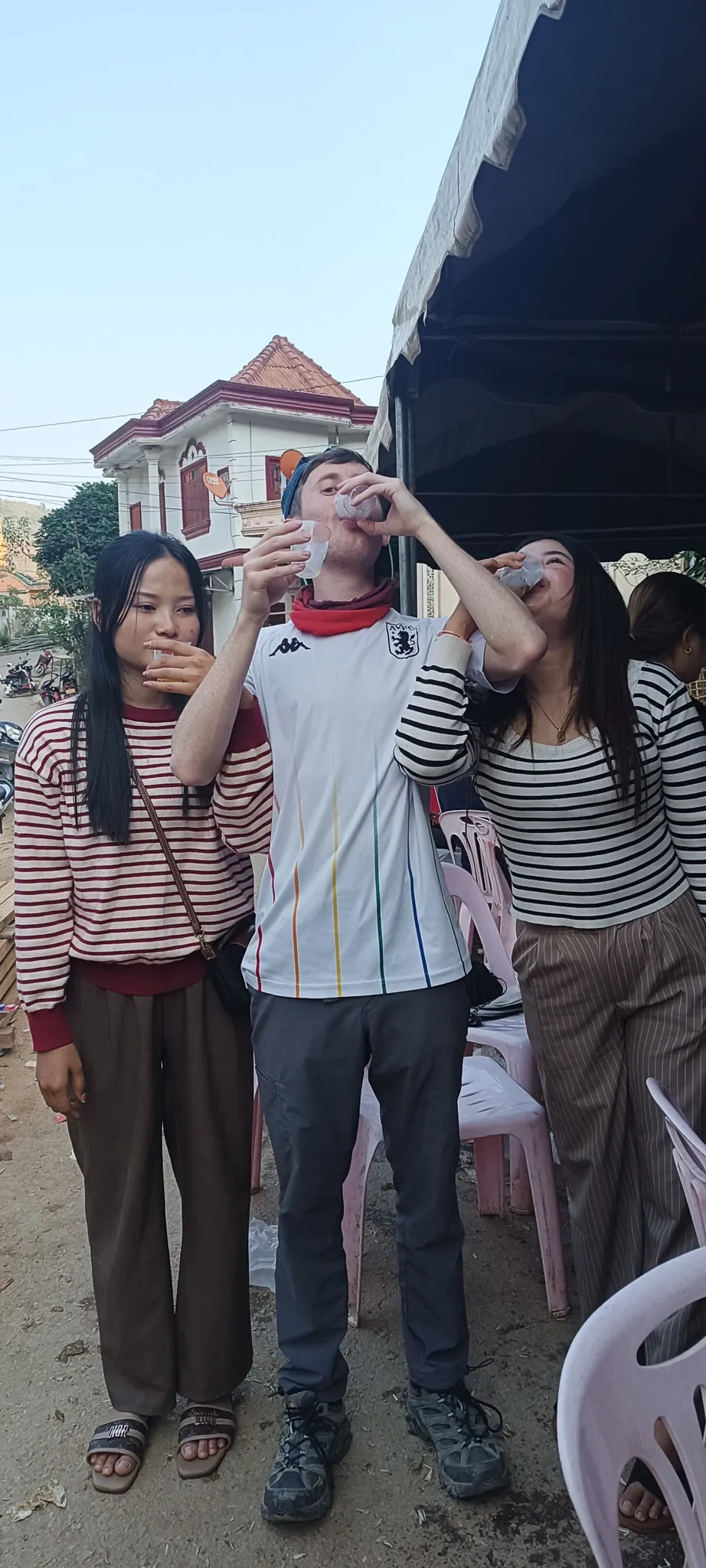
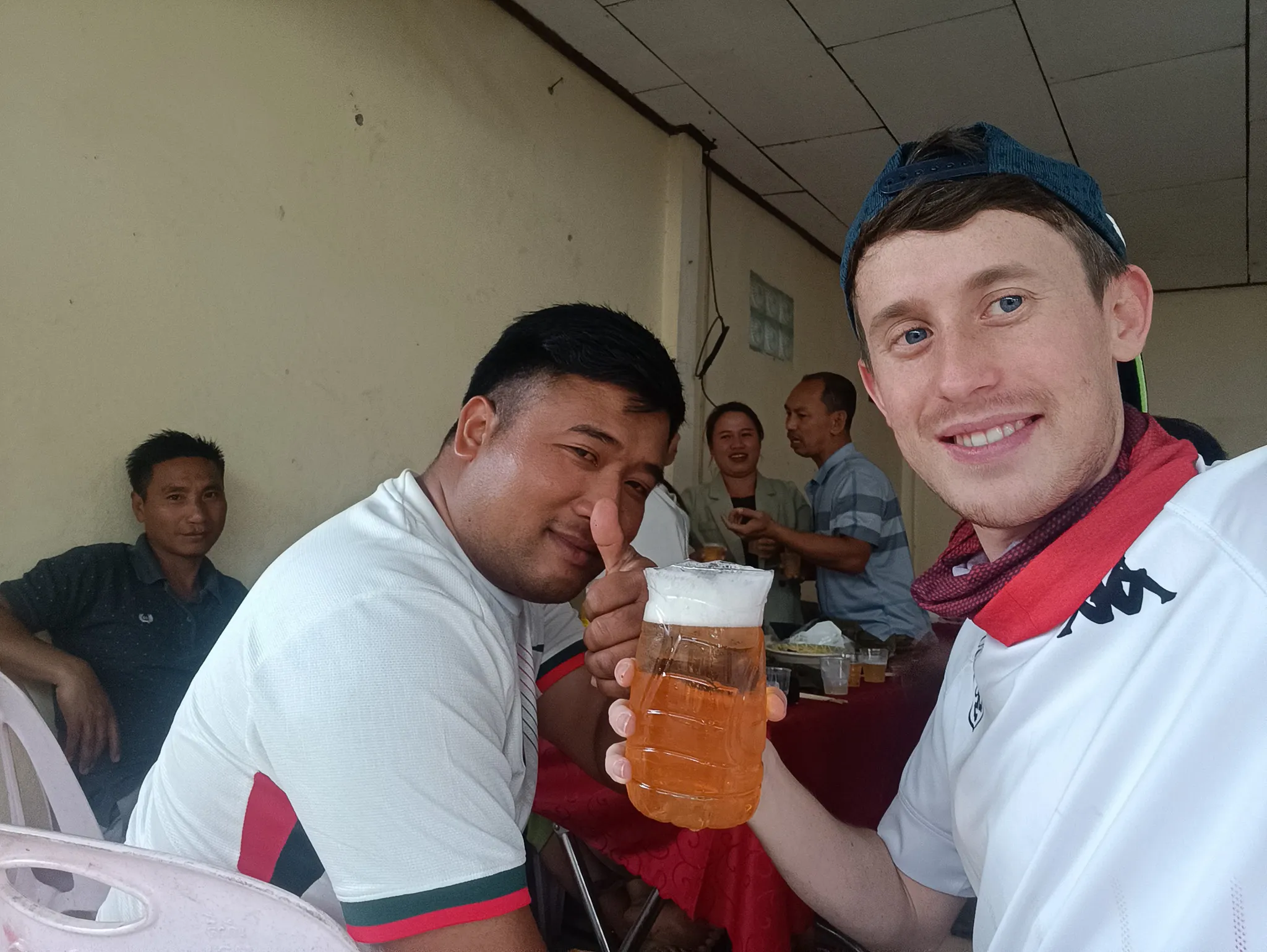
We arrived in Muang Khua to the sound of a party. Under a tarpaulin on the main street, a community celebration was in full swing — plastic tables, crates of Beerlao, and a woman pouring lao-lao from a recycled water bottle. Lao-lao is rice whisky, distilled in villages across the country. It’s clear, fierce, and offered with a warmth that makes refusal feel like bad manners.
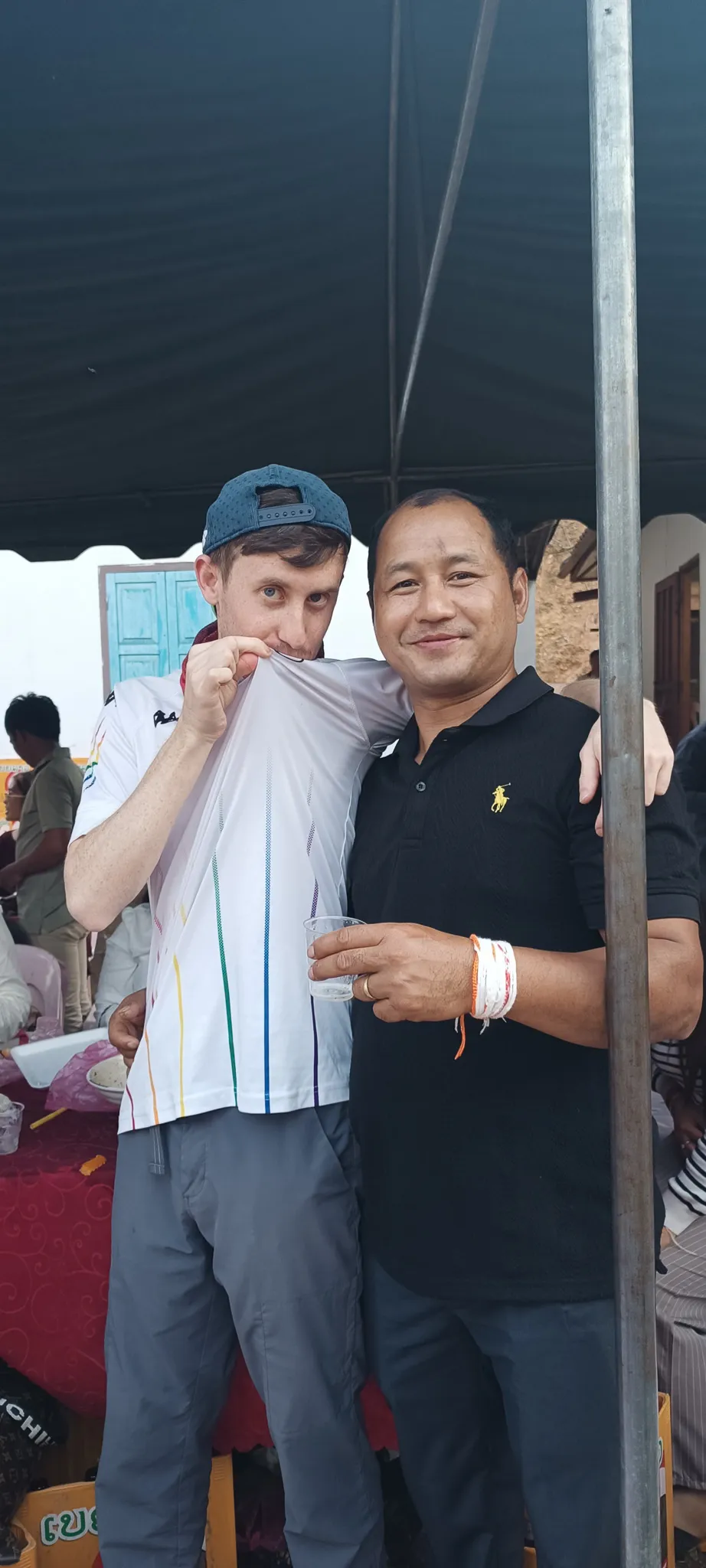
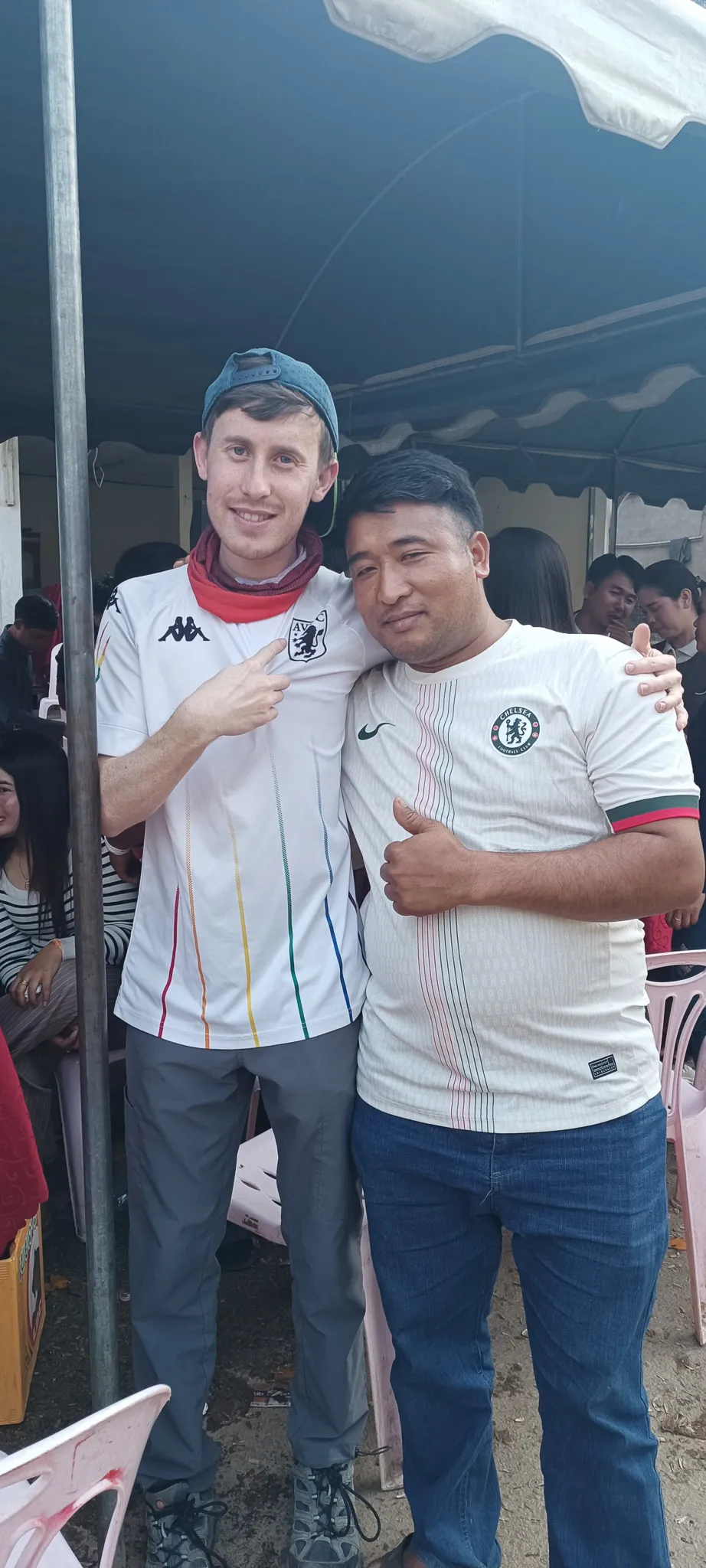
We were invited in within seconds. An Aston Villa shirt met a Chelsea shirt. Toasts were raised. Shots were downed. Languages didn’t matter. Football shirts, apparently, are a universal passport.
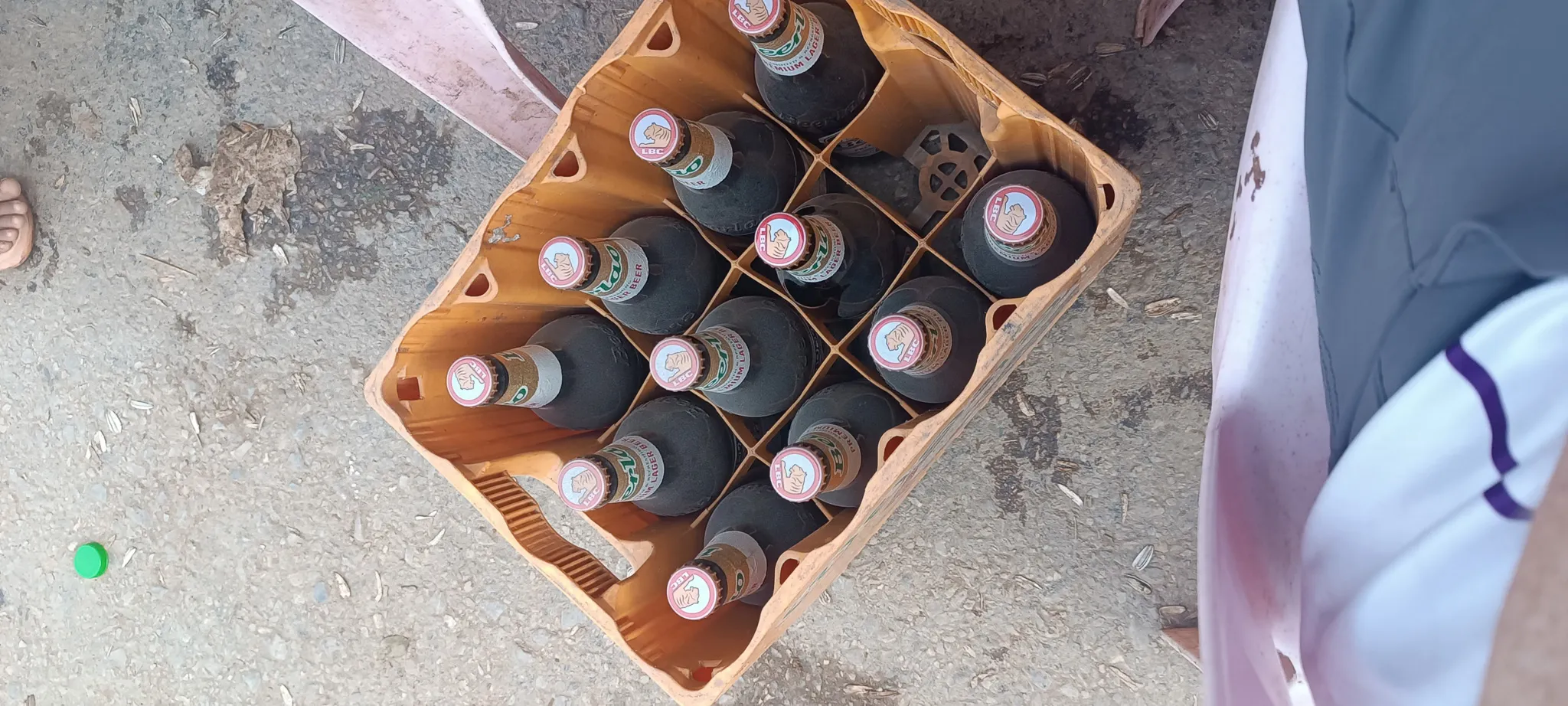
Lao-Lao
Football Shirts & Rice Whisky
The party rules were simple: someone pours, you drink. Someone toasts, you toast back. The lao-lao came in shot glasses, then beer glasses, then whatever was closest to hand. A Beerlao crate served as both furniture and proof of commitment. At some point, someone pointed at the Aston Villa crest and said something that made everyone laugh. We laughed too.
The Morning After
Beerlao on the Balcony
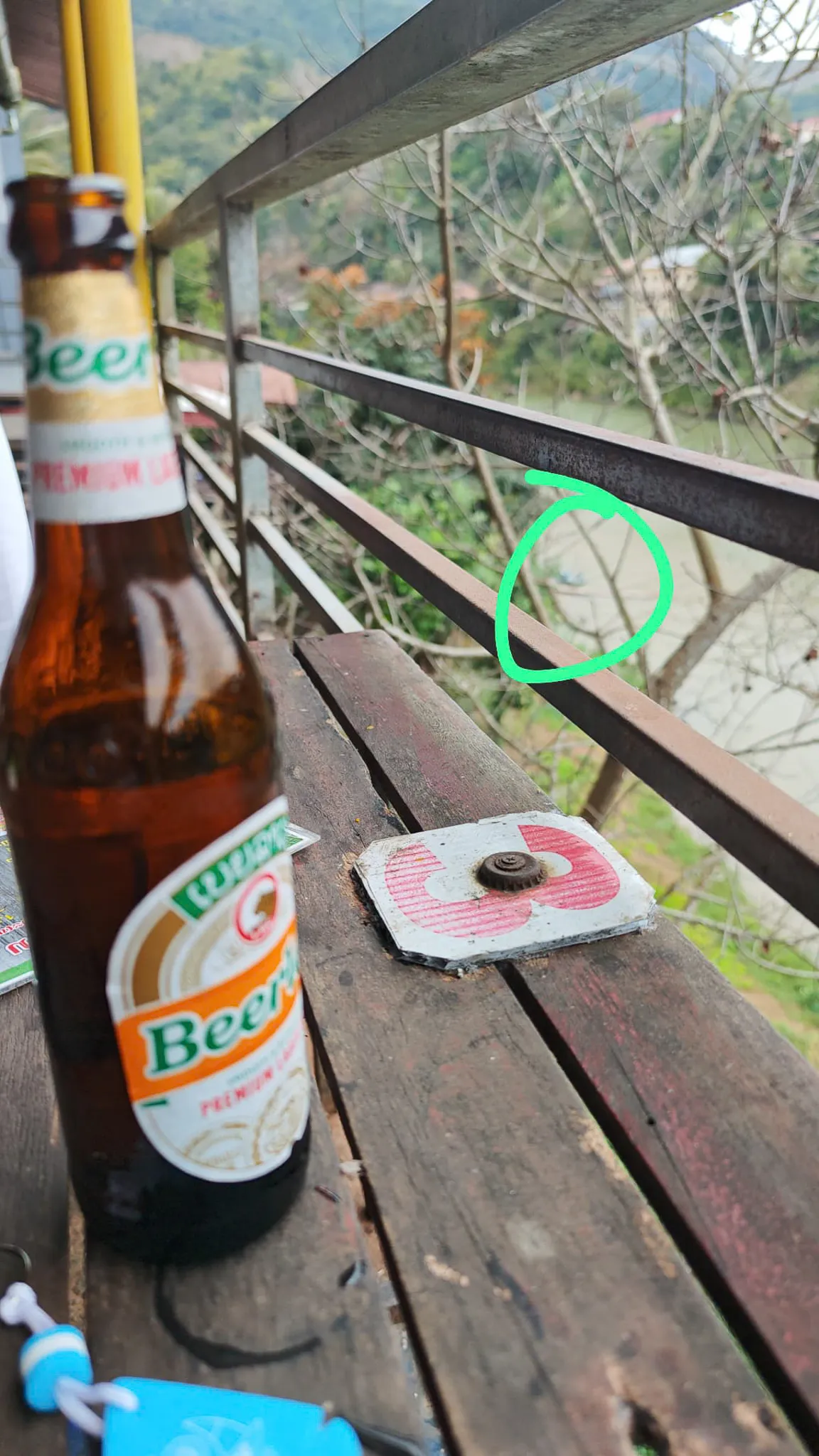
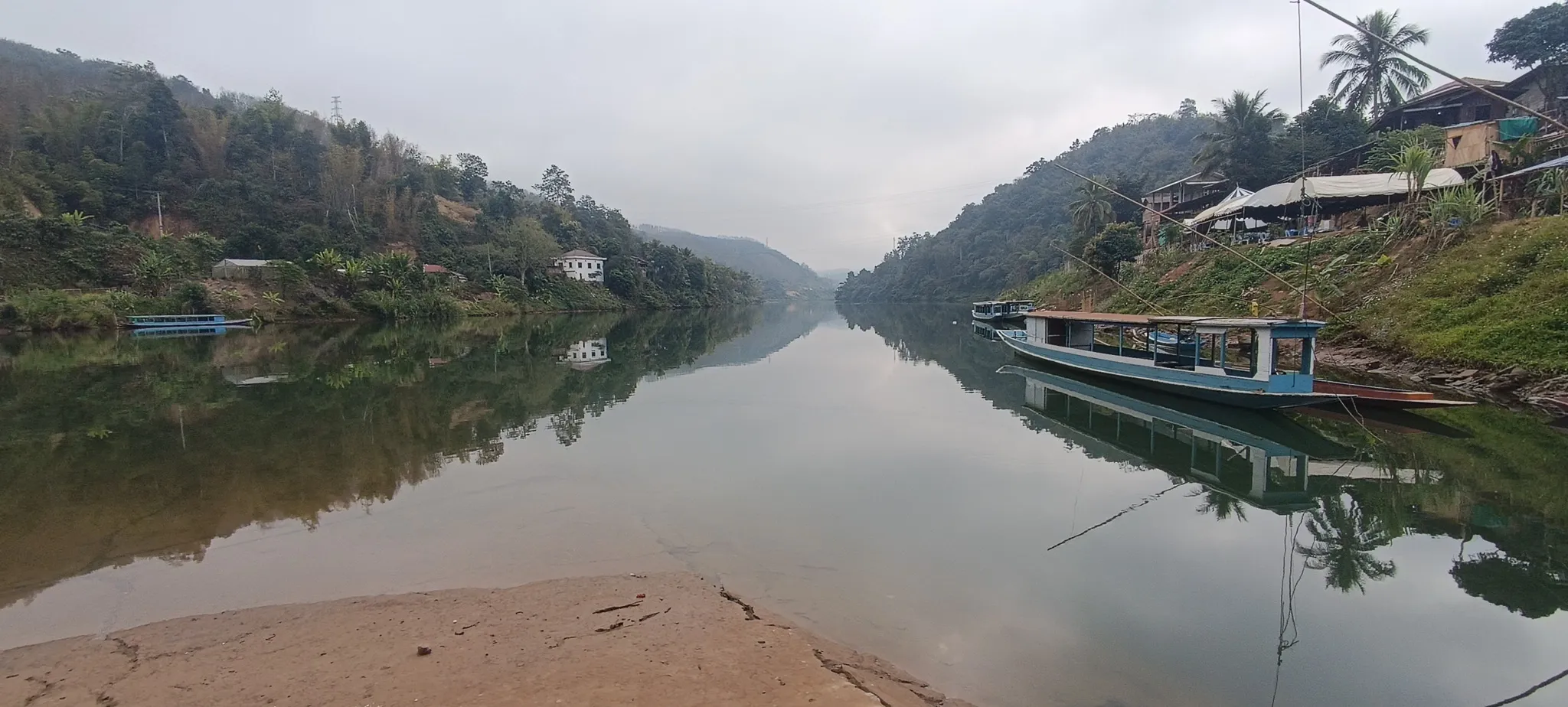
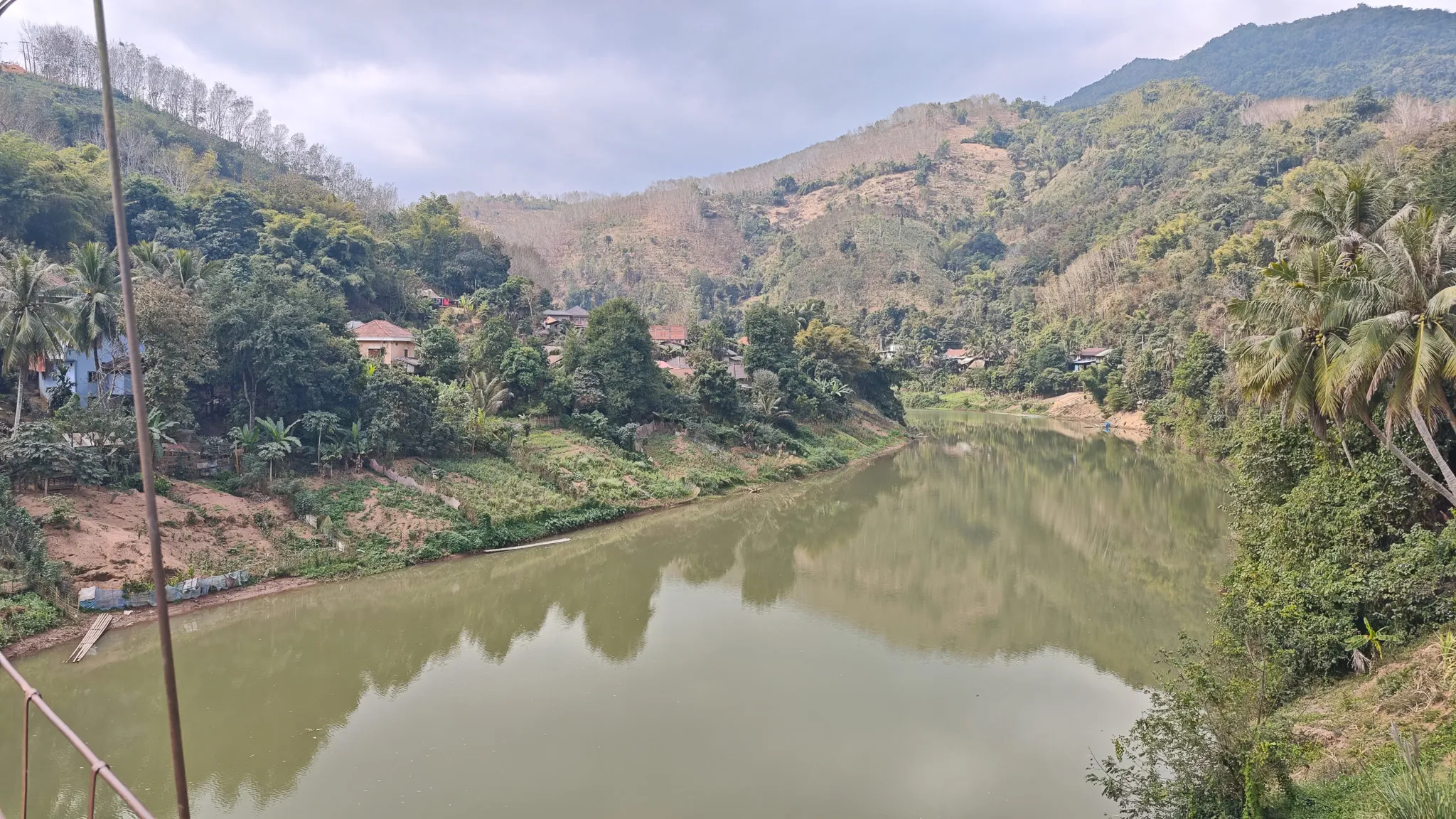
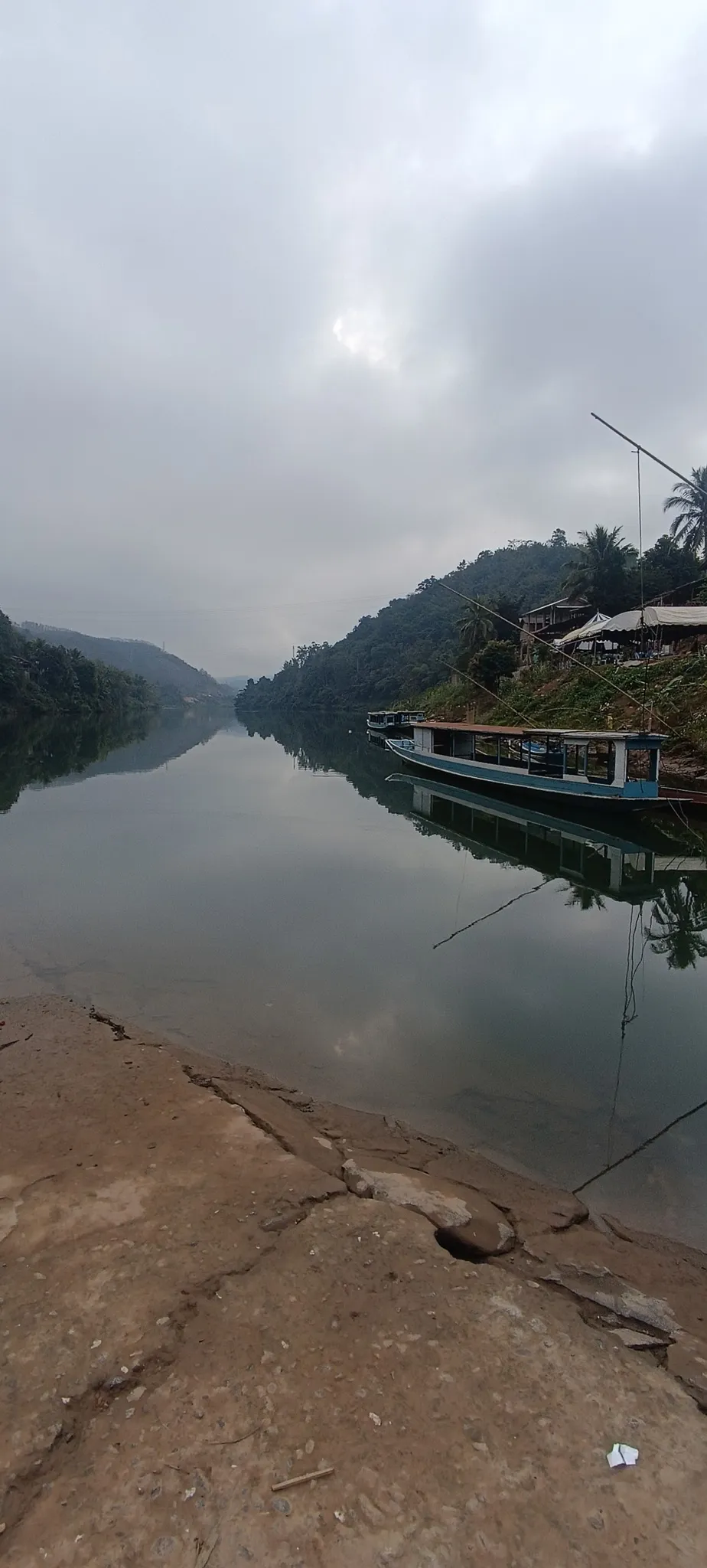
We woke up on a guesthouse balcony overlooking the Nam Ou. Two empty Beerlao bottles stood on the railing like sentinels. Below, the river slid past — brown-green, unhurried, heading south. Somewhere downstream were villages, rapids, dams, and Luang Prabang. But first: the view, the silence, and the mild headache that lao-lao leaves as a souvenir.
The Town
Market, Bridge & Longboats
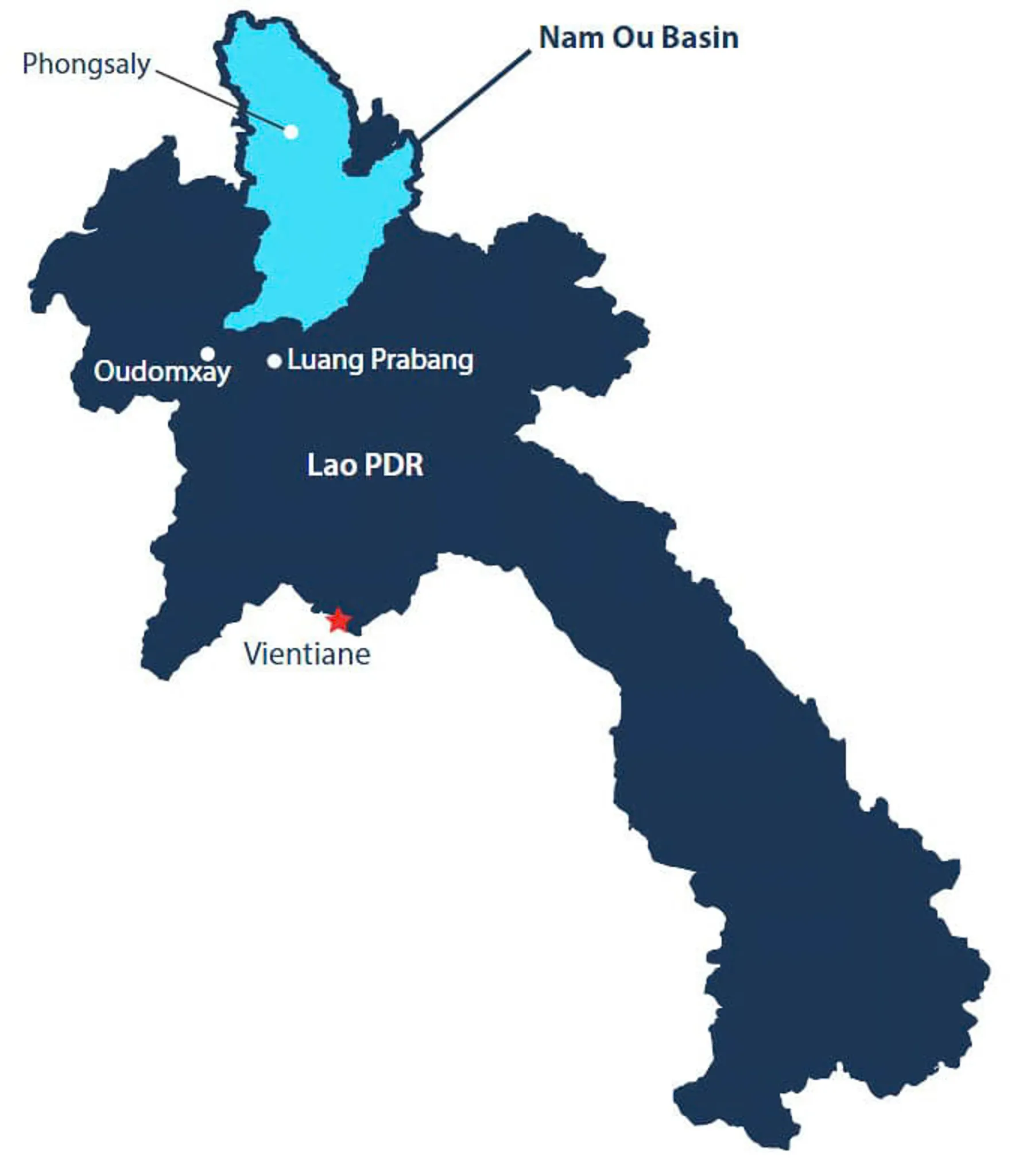
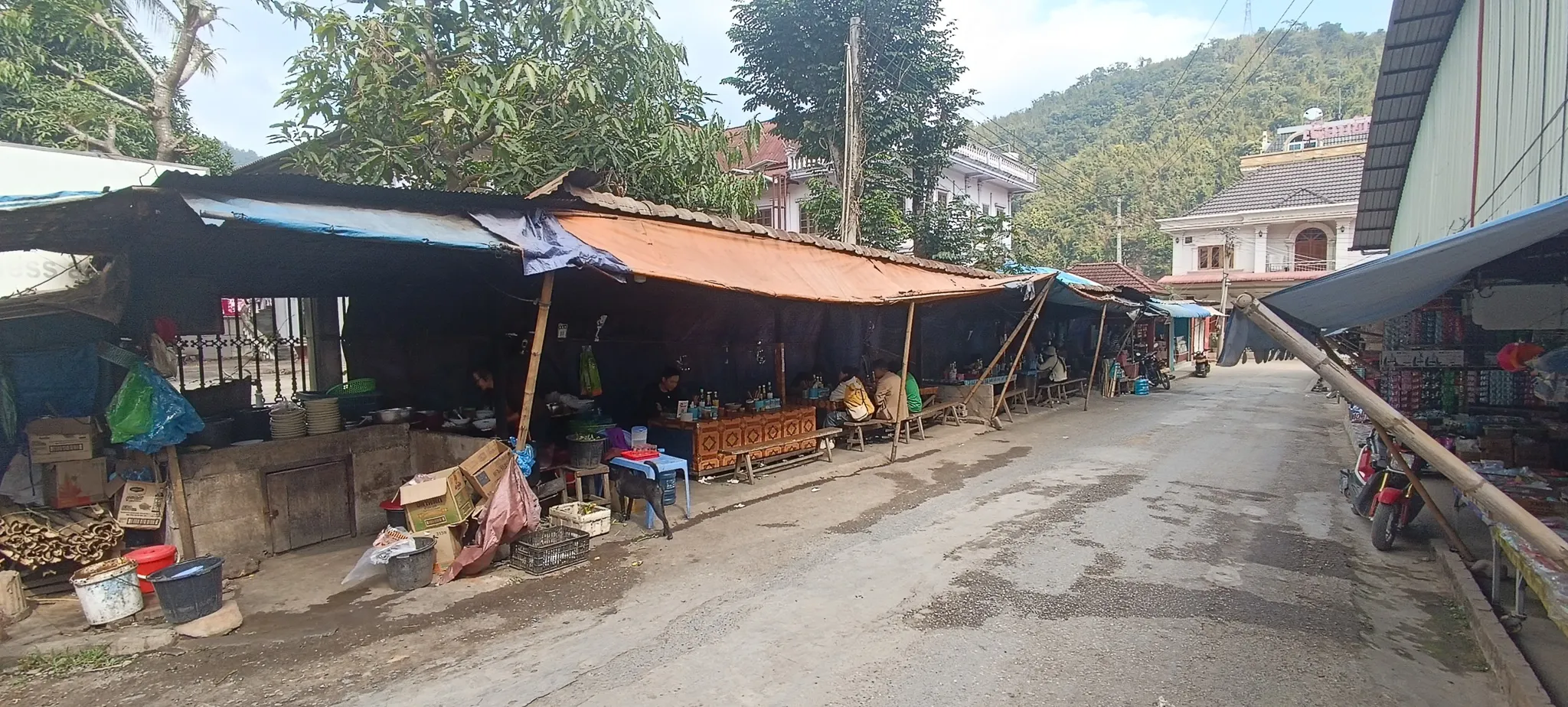
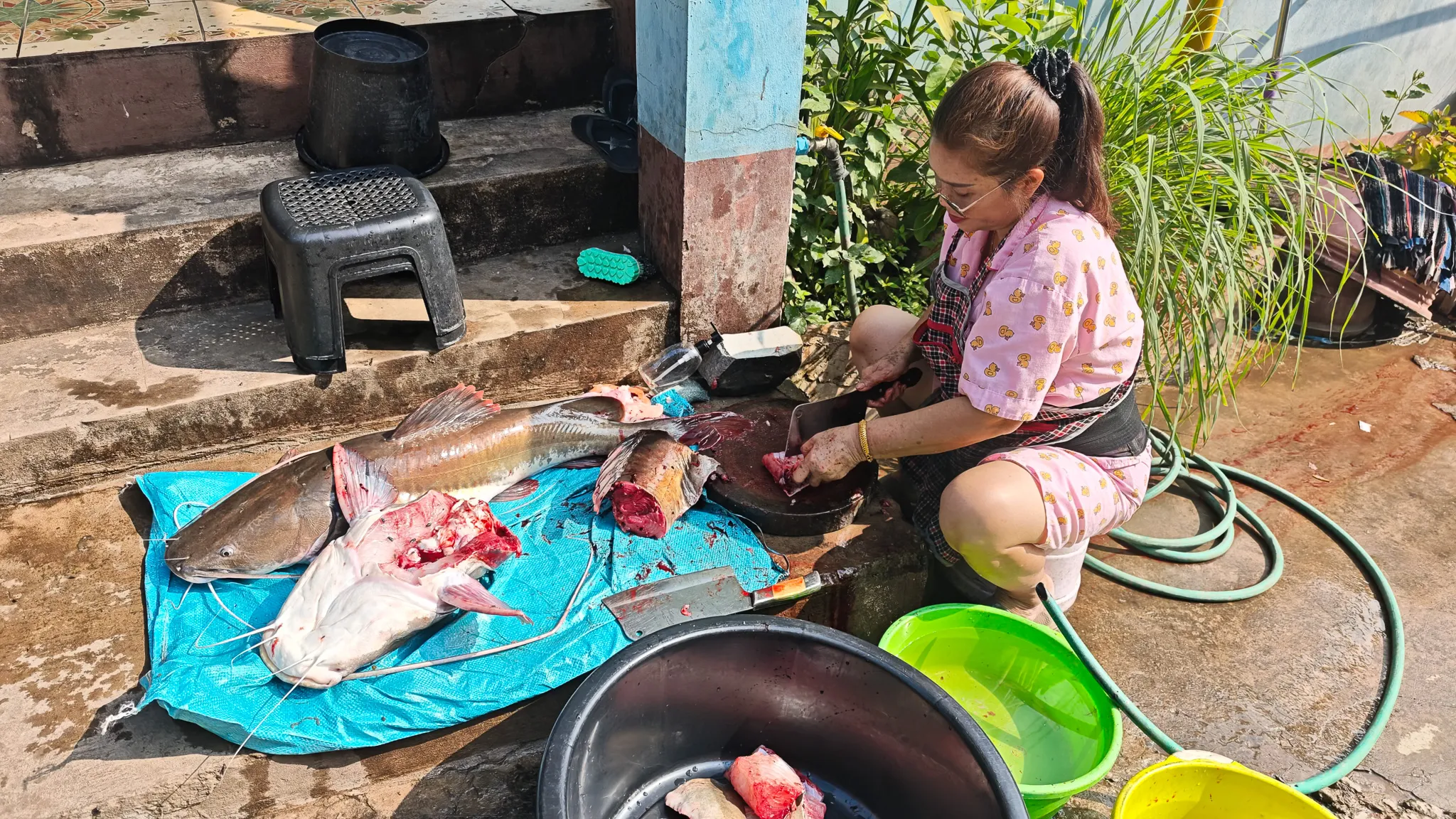
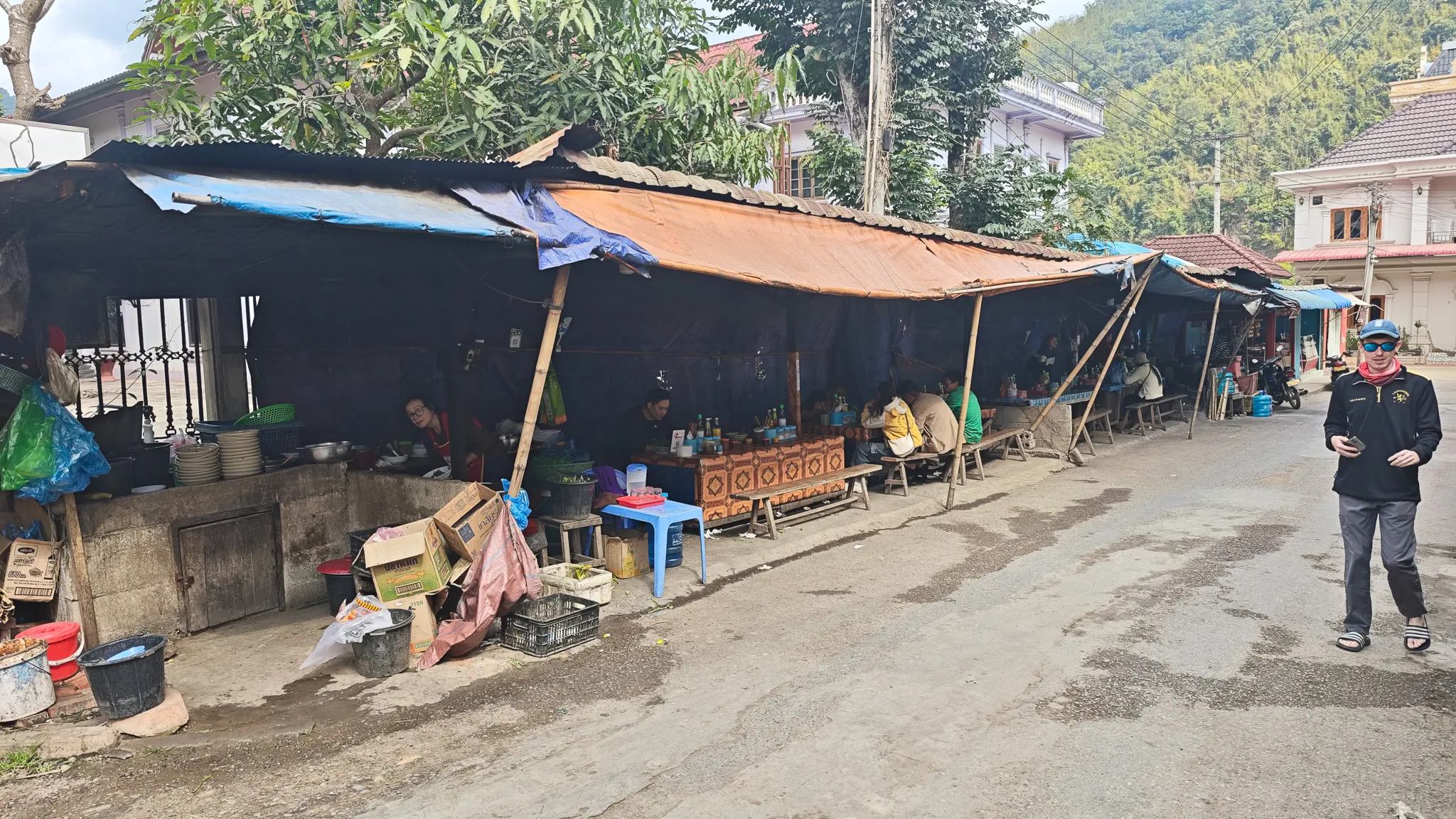
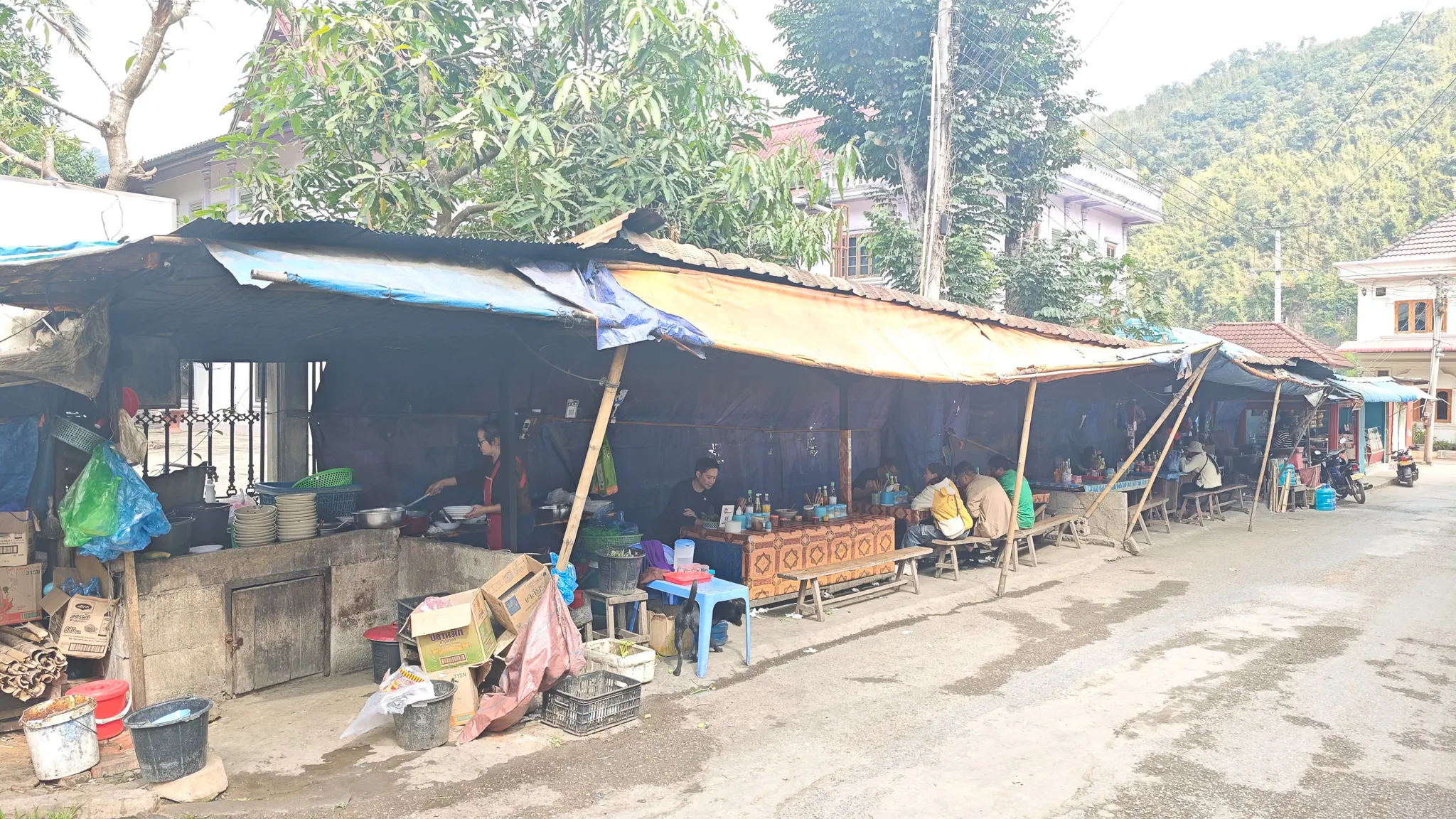
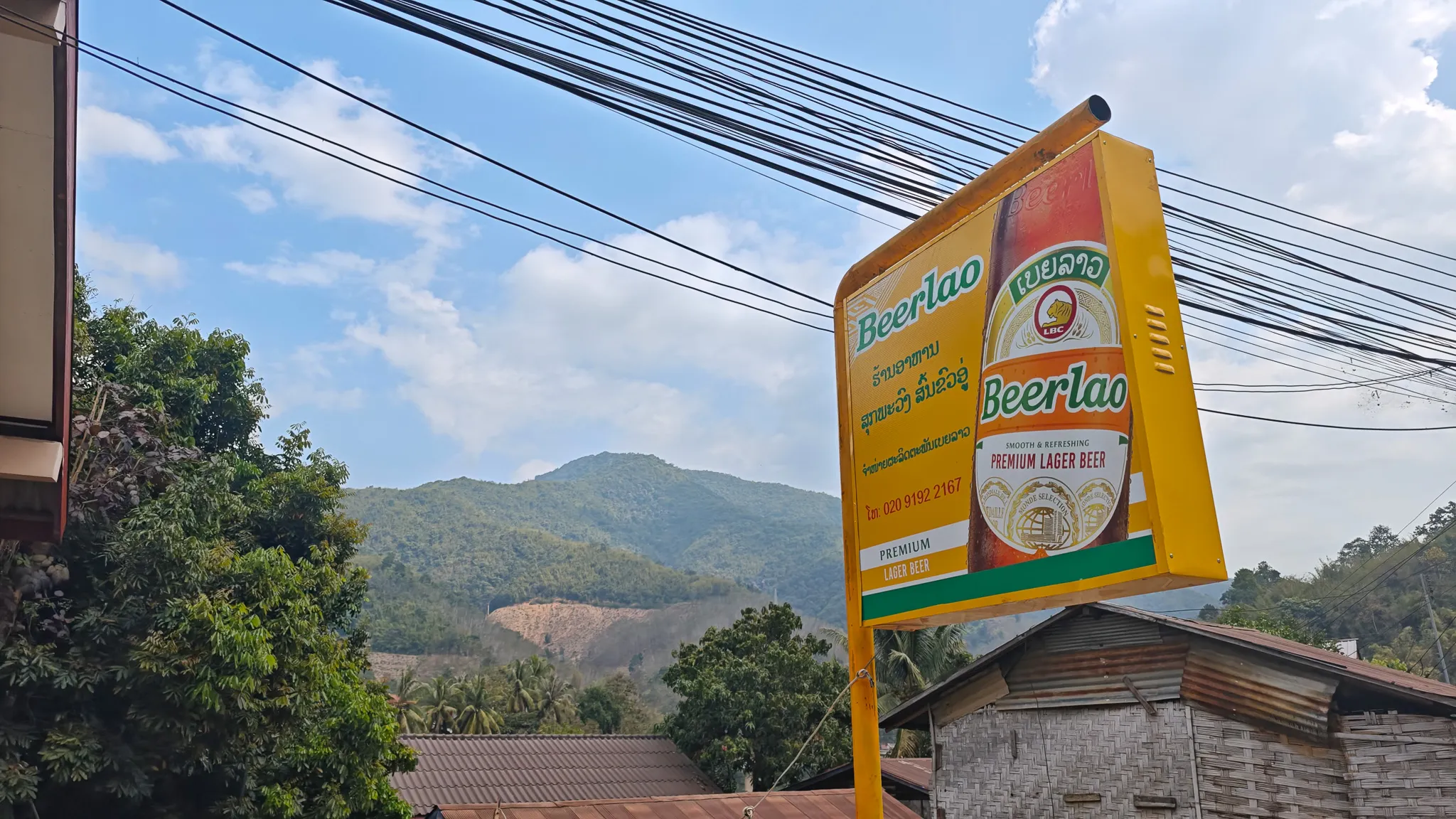
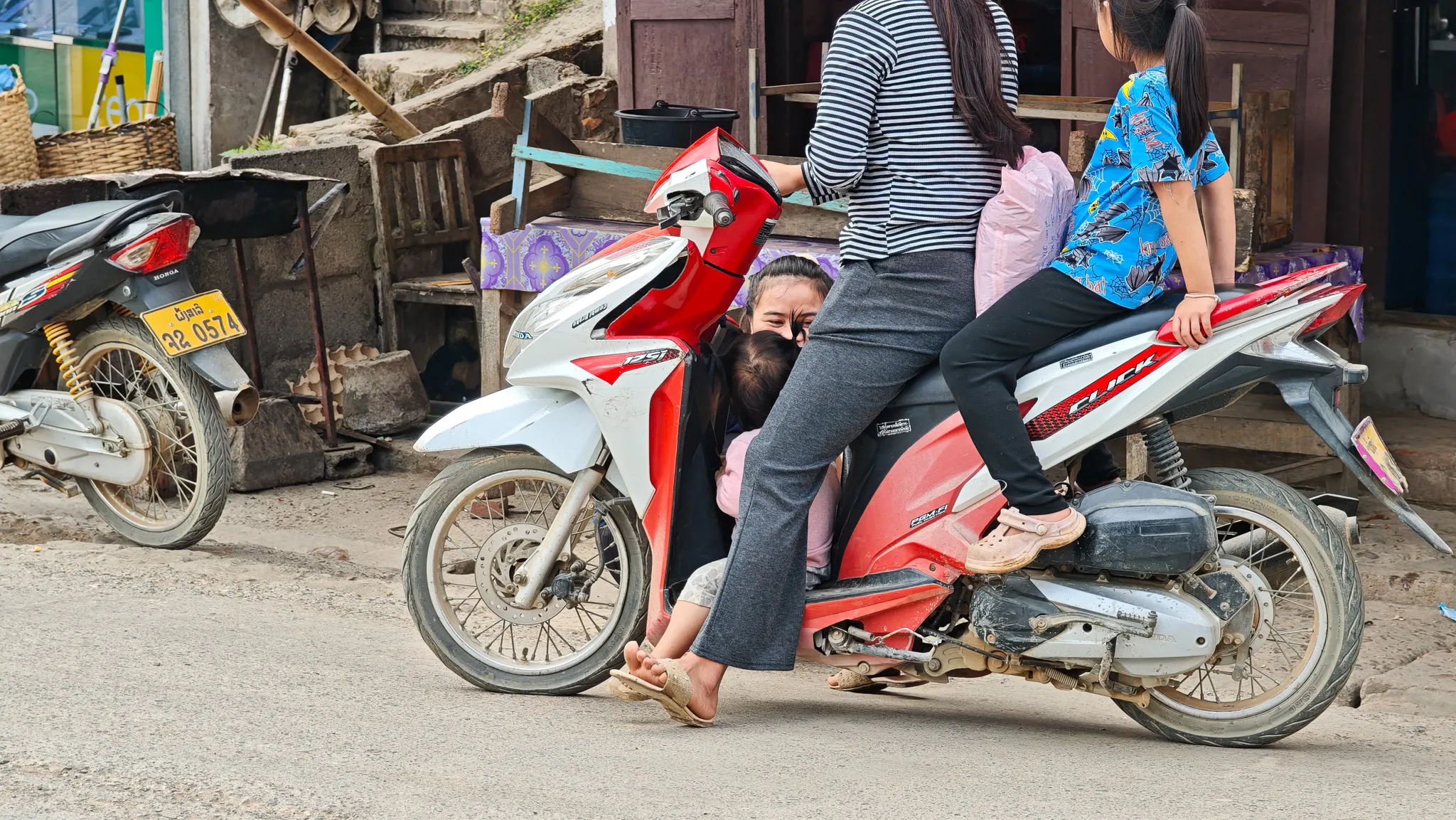
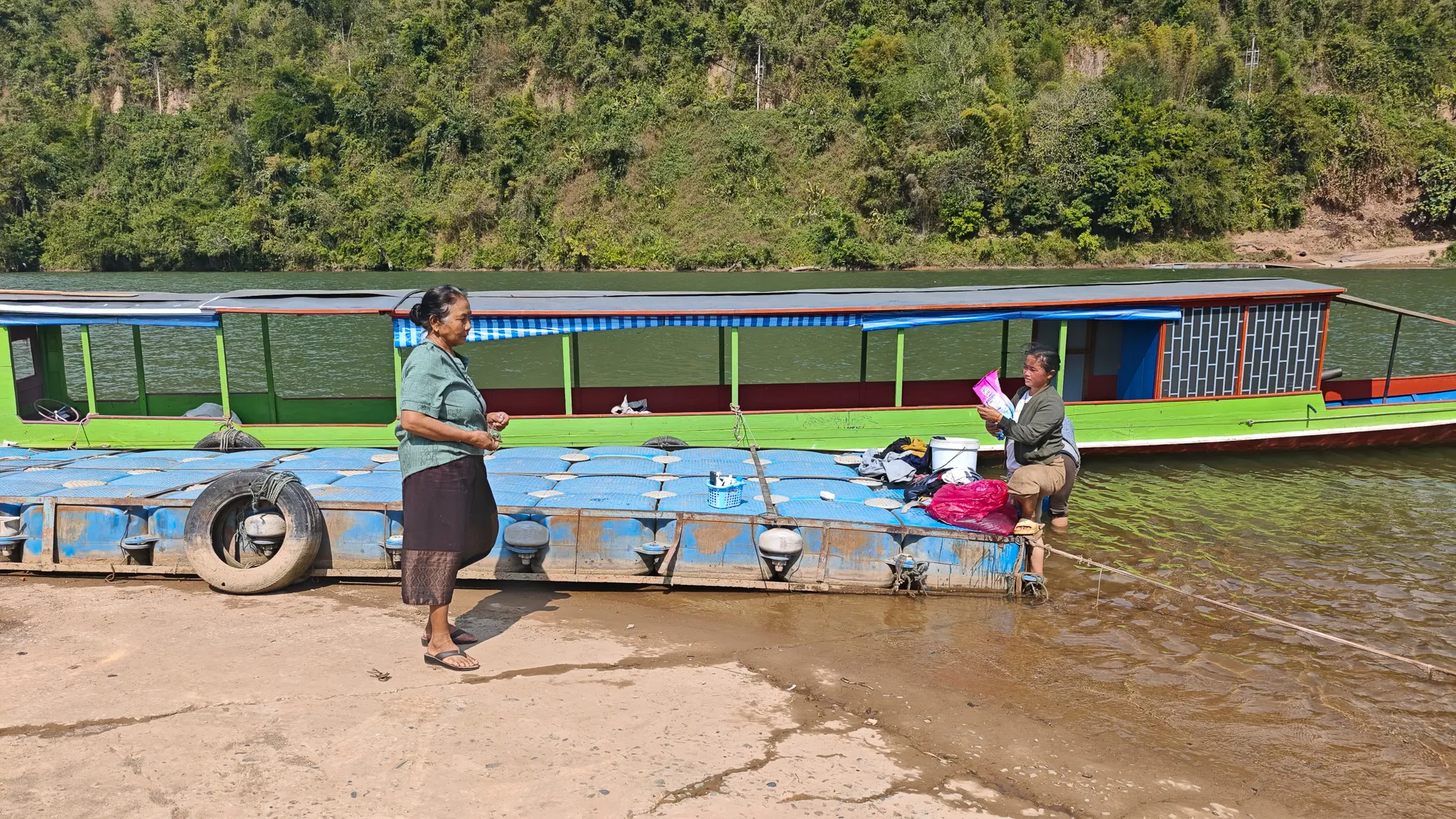
Muang Khua is the capital of Khua District in Phongsaly Province — a dusty river town of about 4,000 people where the Nam Ou and the Nam Phak rivers meet. The morning market lines the main street with tarpaulin-roofed stalls selling fresh fish pulled from the Nam Ou, sticky rice, and vegetables from the surrounding hills. A woman was gutting a fish the length of her forearm on the pavement. Three people rode past on a motorbike without helmets. A Beerlao sign stood against the mountains like an advertisement for the entire country.
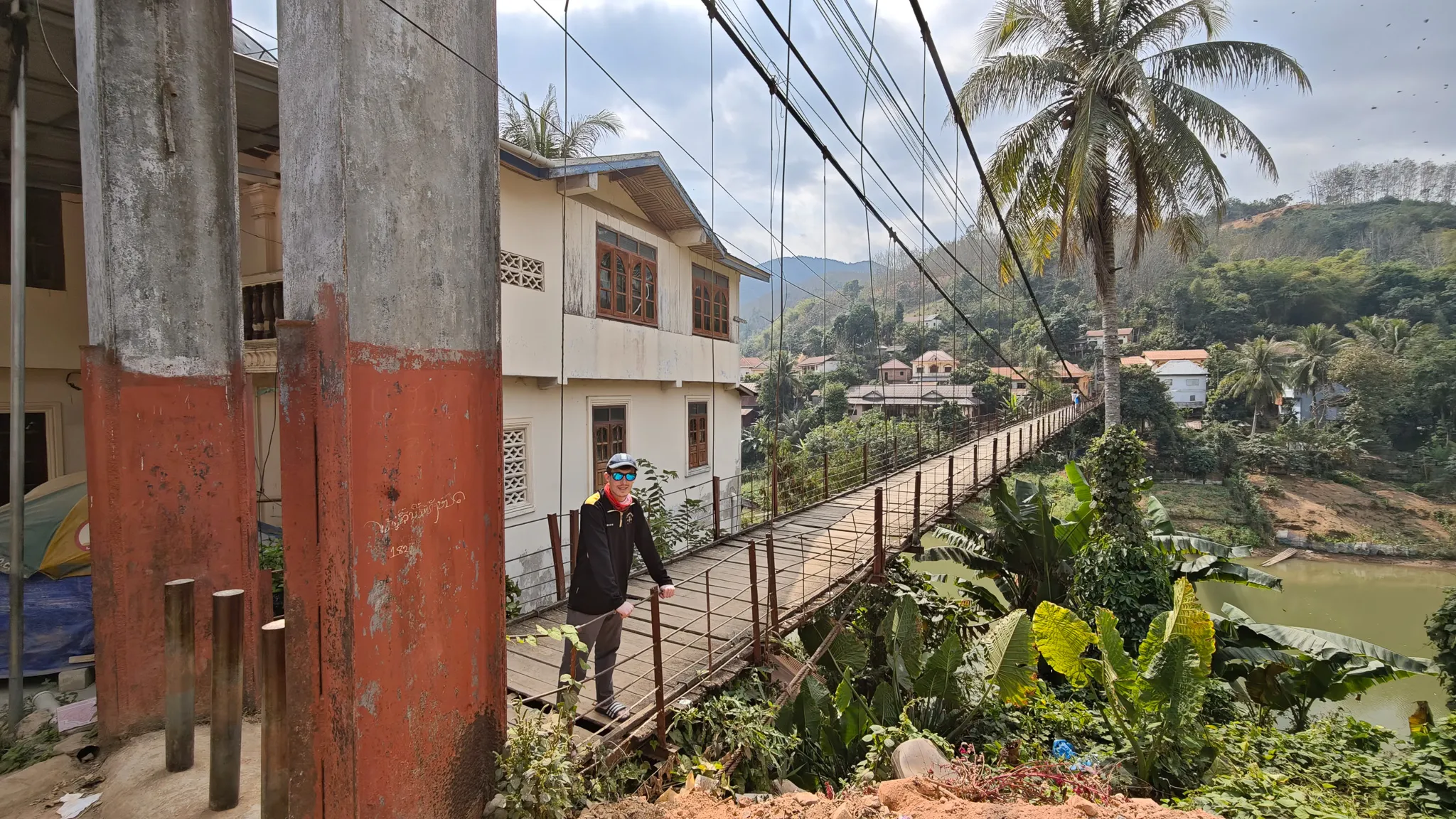
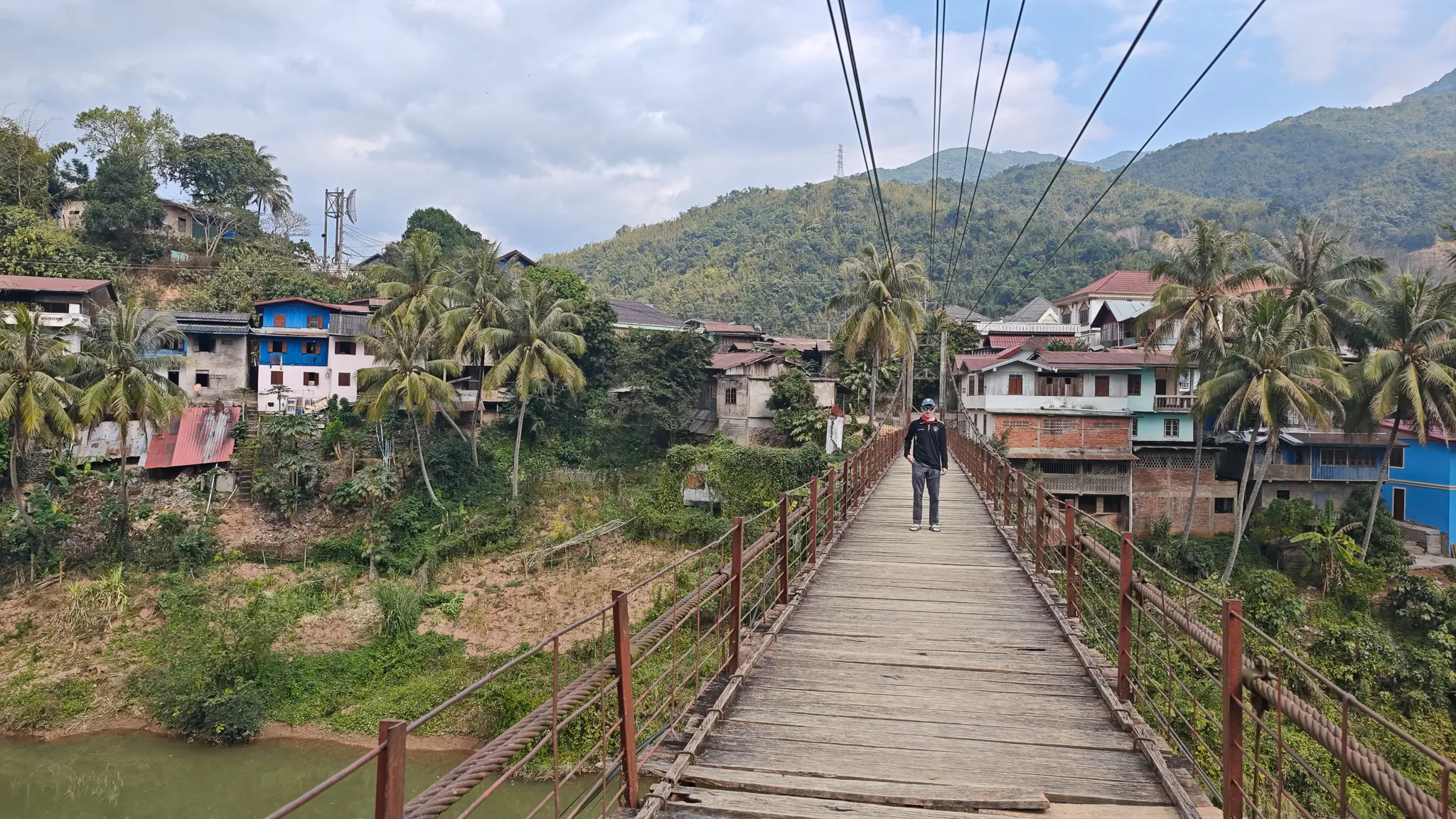
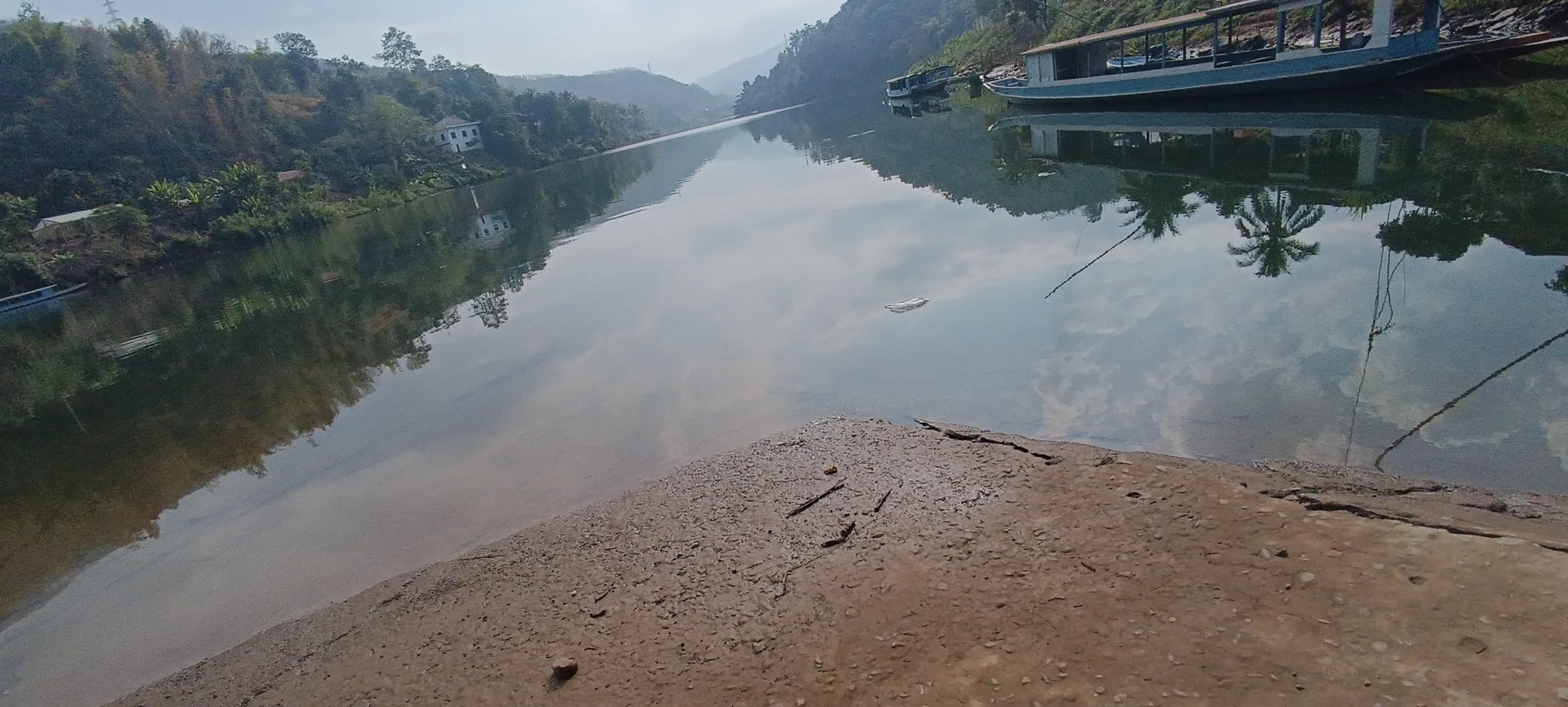
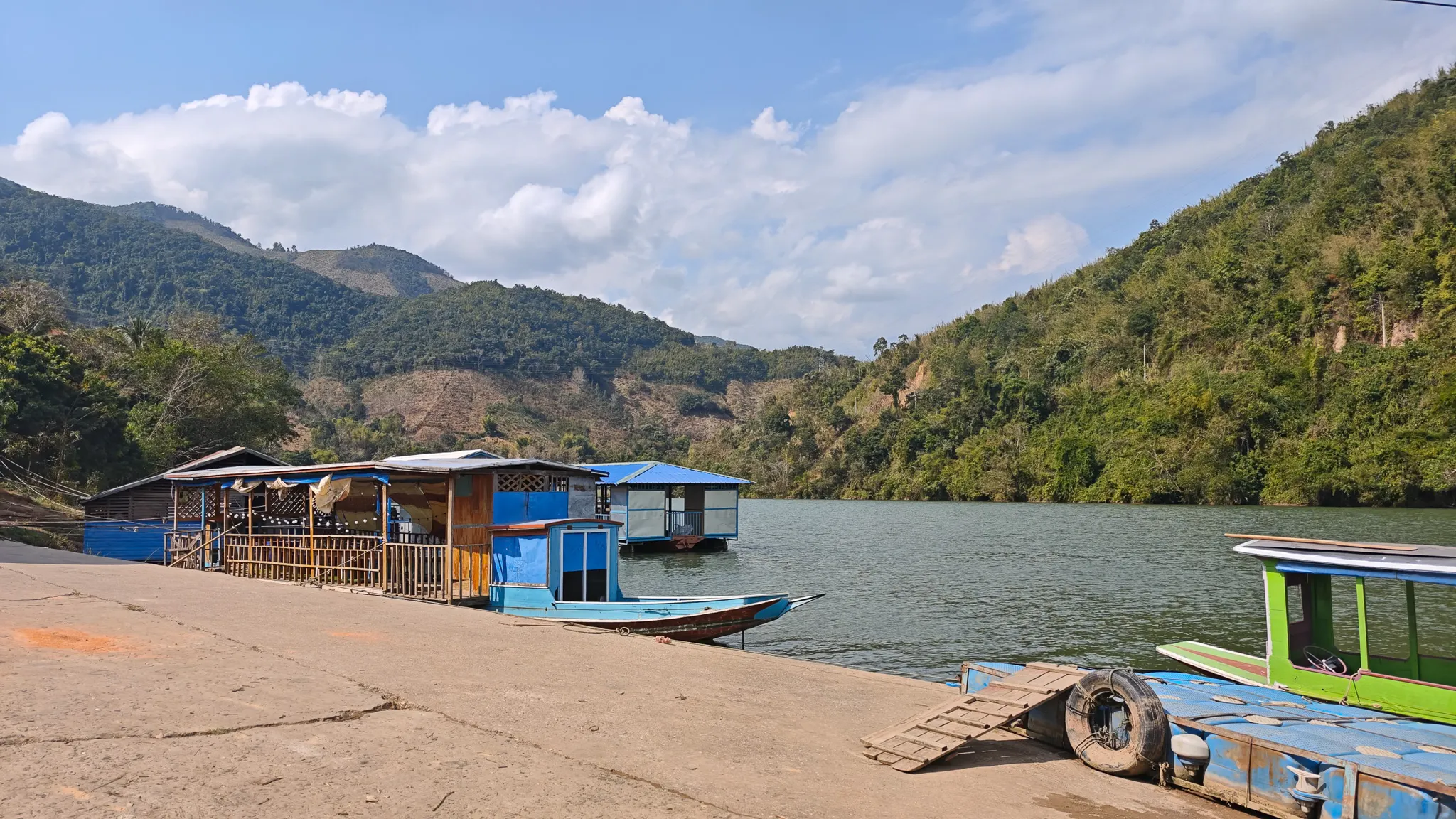
The suspension bridge — rusted cables, wooden planks, a gentle sway — connects the town to the villages on the far bank. Below it, traditional longboats are moored in the shallows, painted in fading blues and reds.
The Route
Mapping the Nam Ou
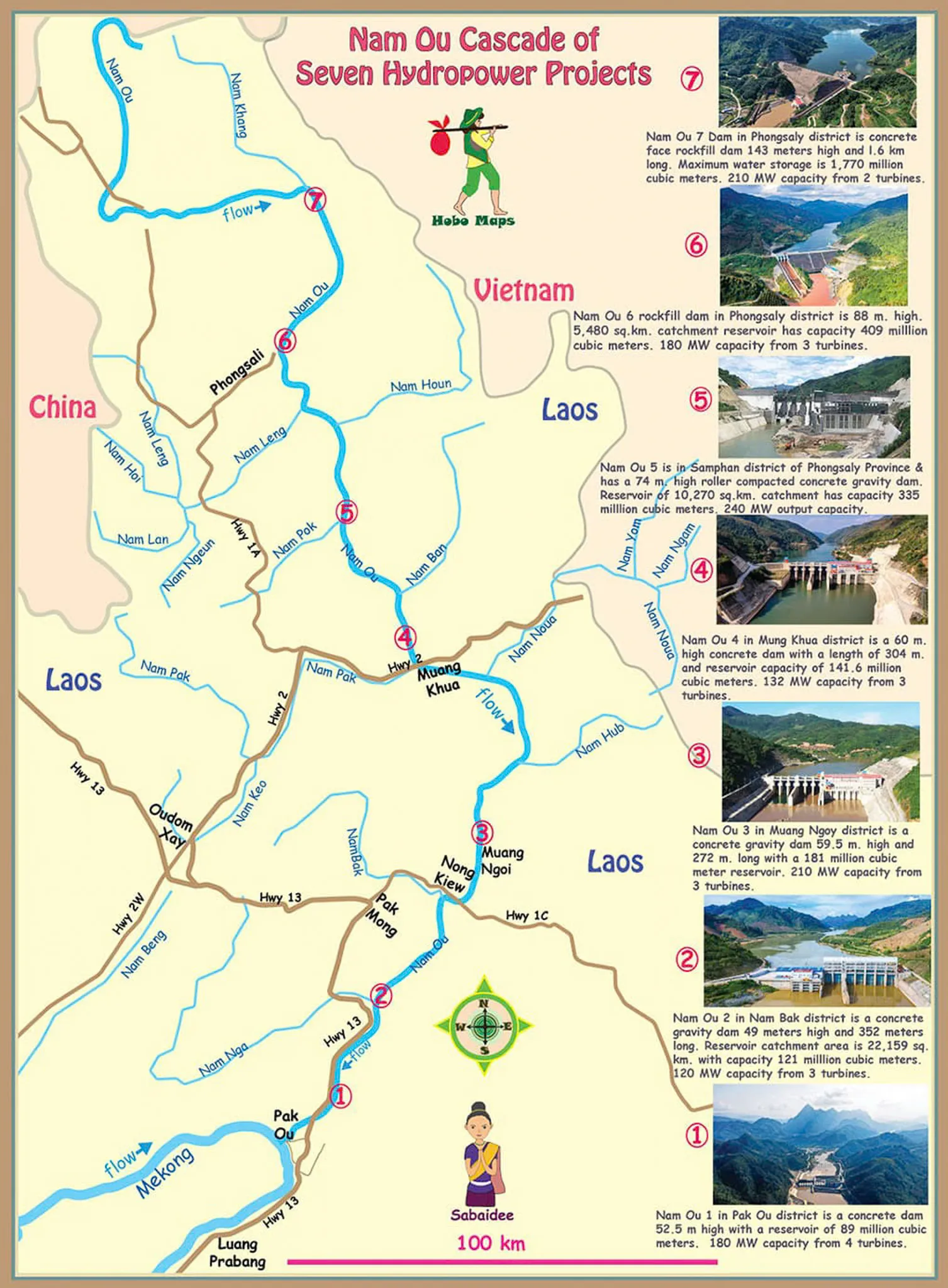
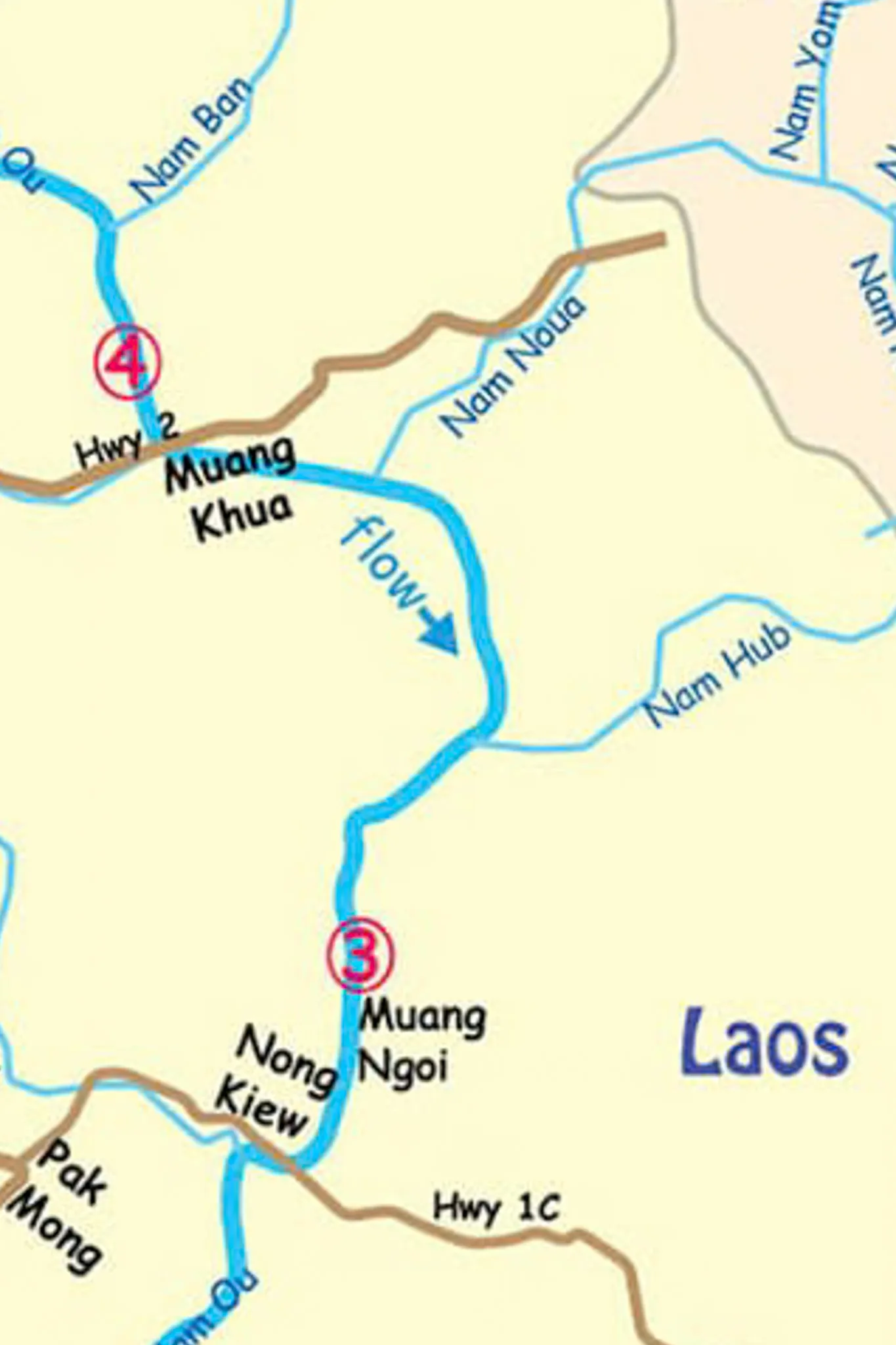
The Nam Ou flows 448 kilometres from the Chinese border in Phongsaly Province to its confluence with the Mekong at Luang Prabang. Seven Chinese-funded hydropower dams now interrupt its course — the Nam Ou Cascade project, built between 2012 and 2020. Some sections that were once navigable by longboat are now reservoirs. Others have been reduced to a trickle below dam walls. Packrafting it means navigating what’s left — the stretches between the dams where the river still behaves like a river.
Launch Day
Packrafts on the Nam Ou
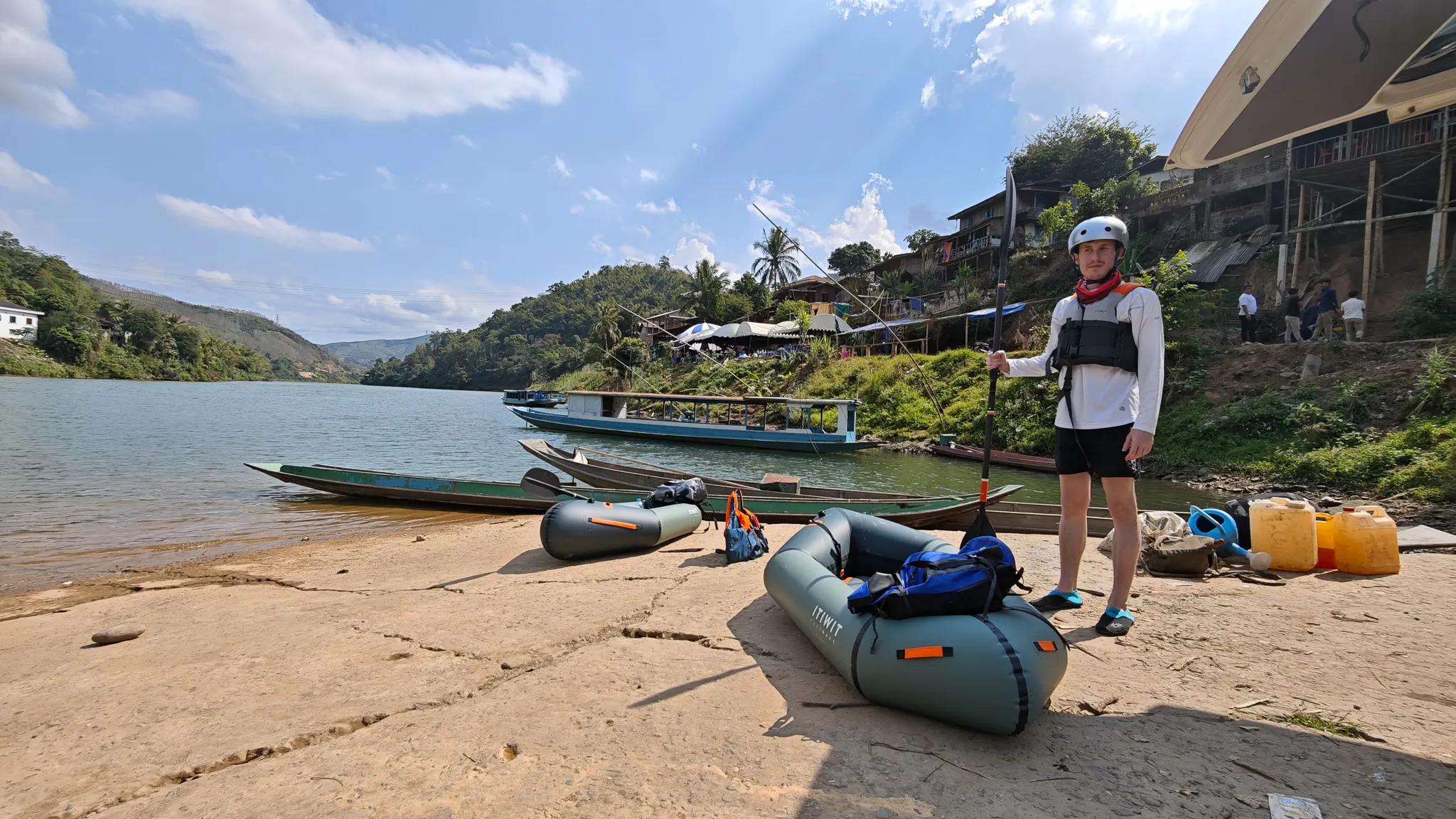
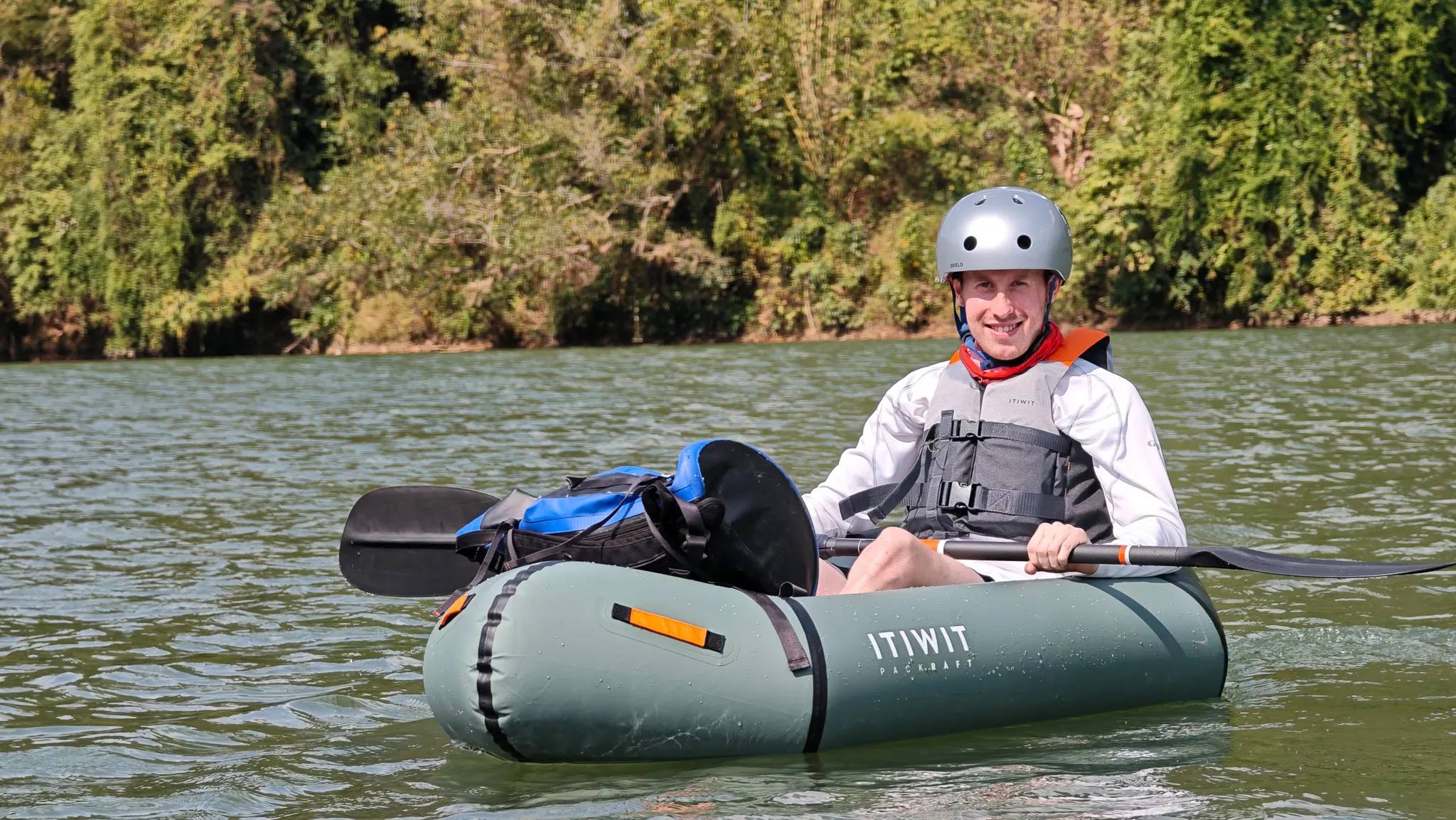
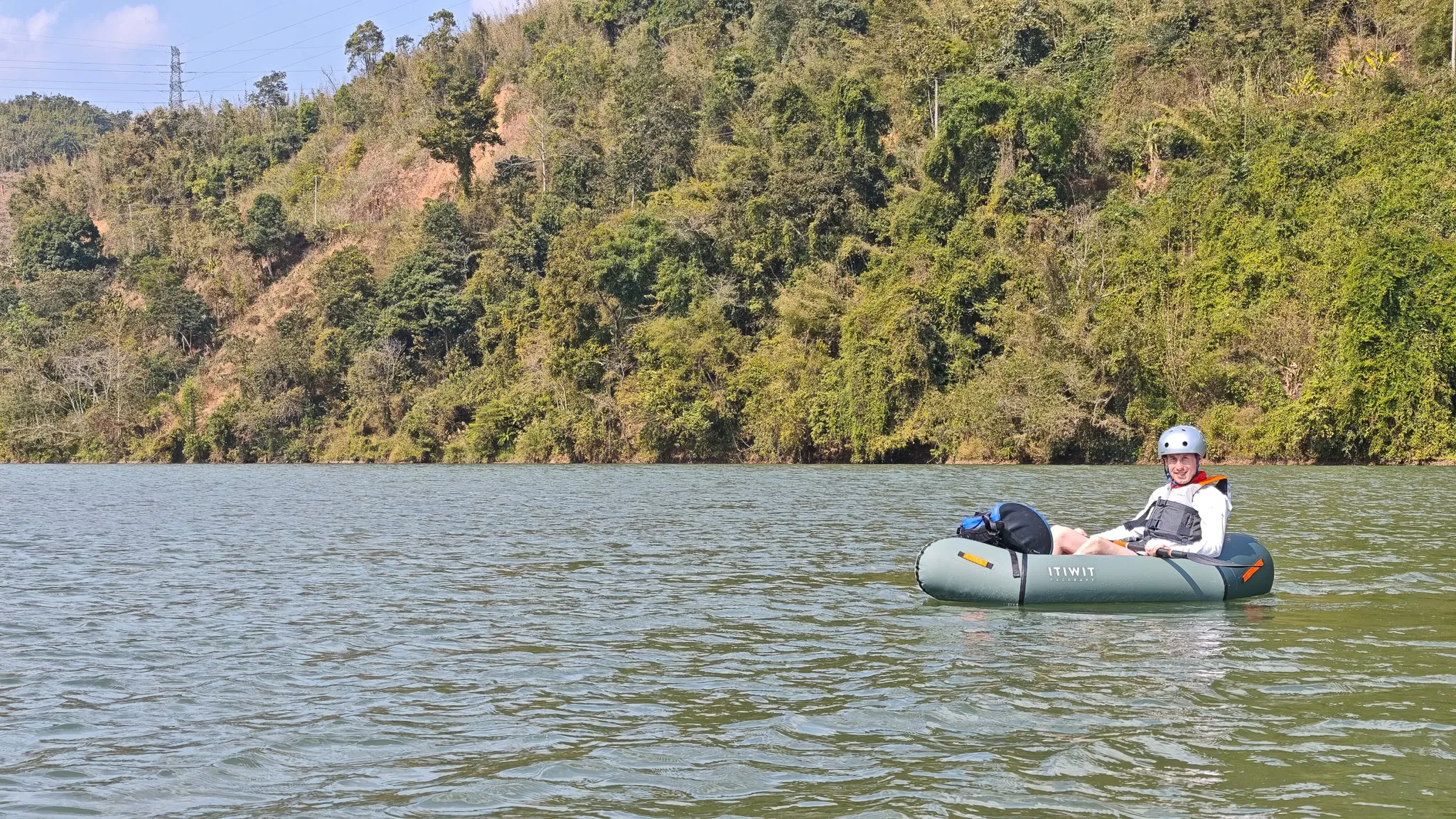
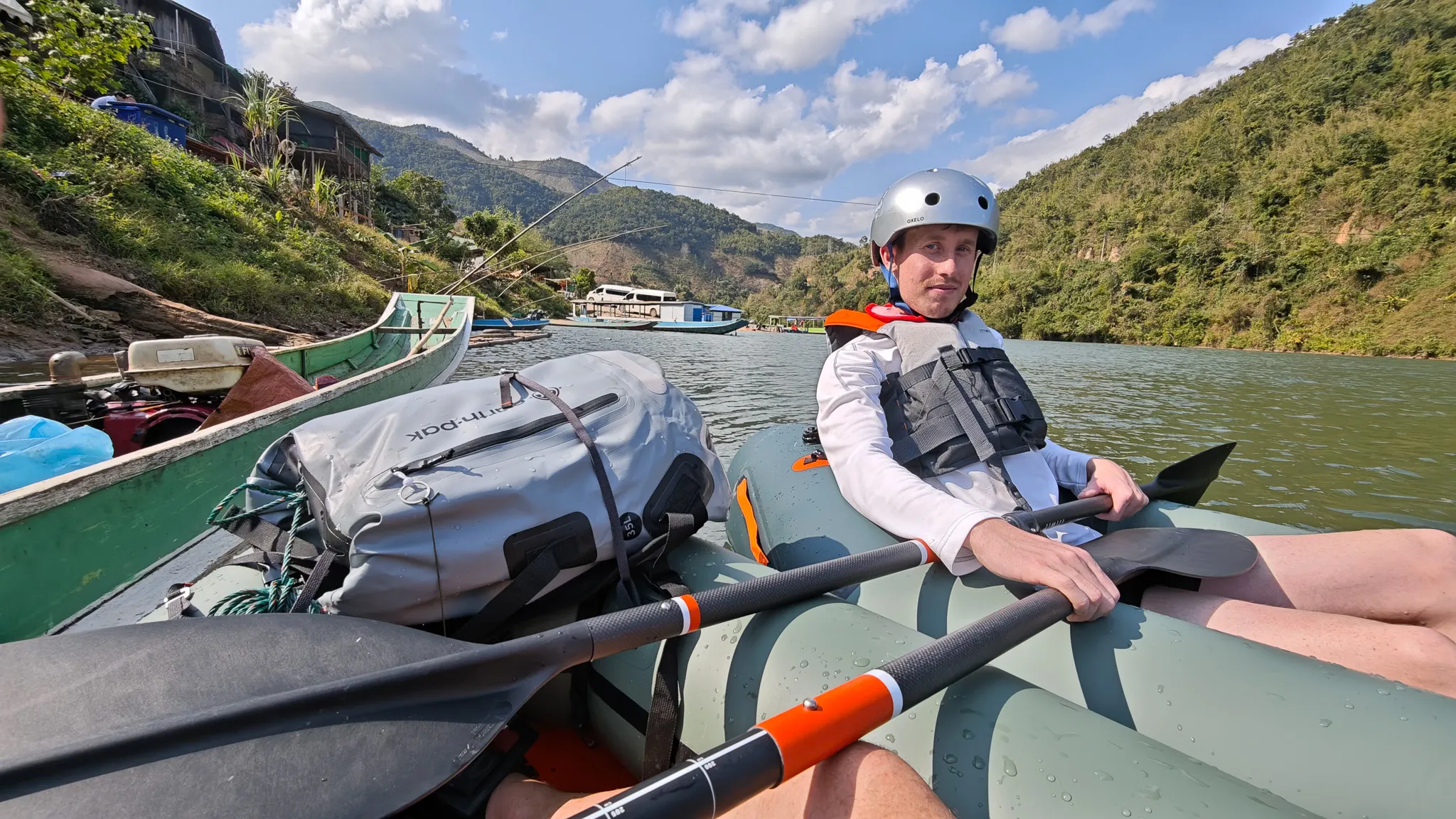
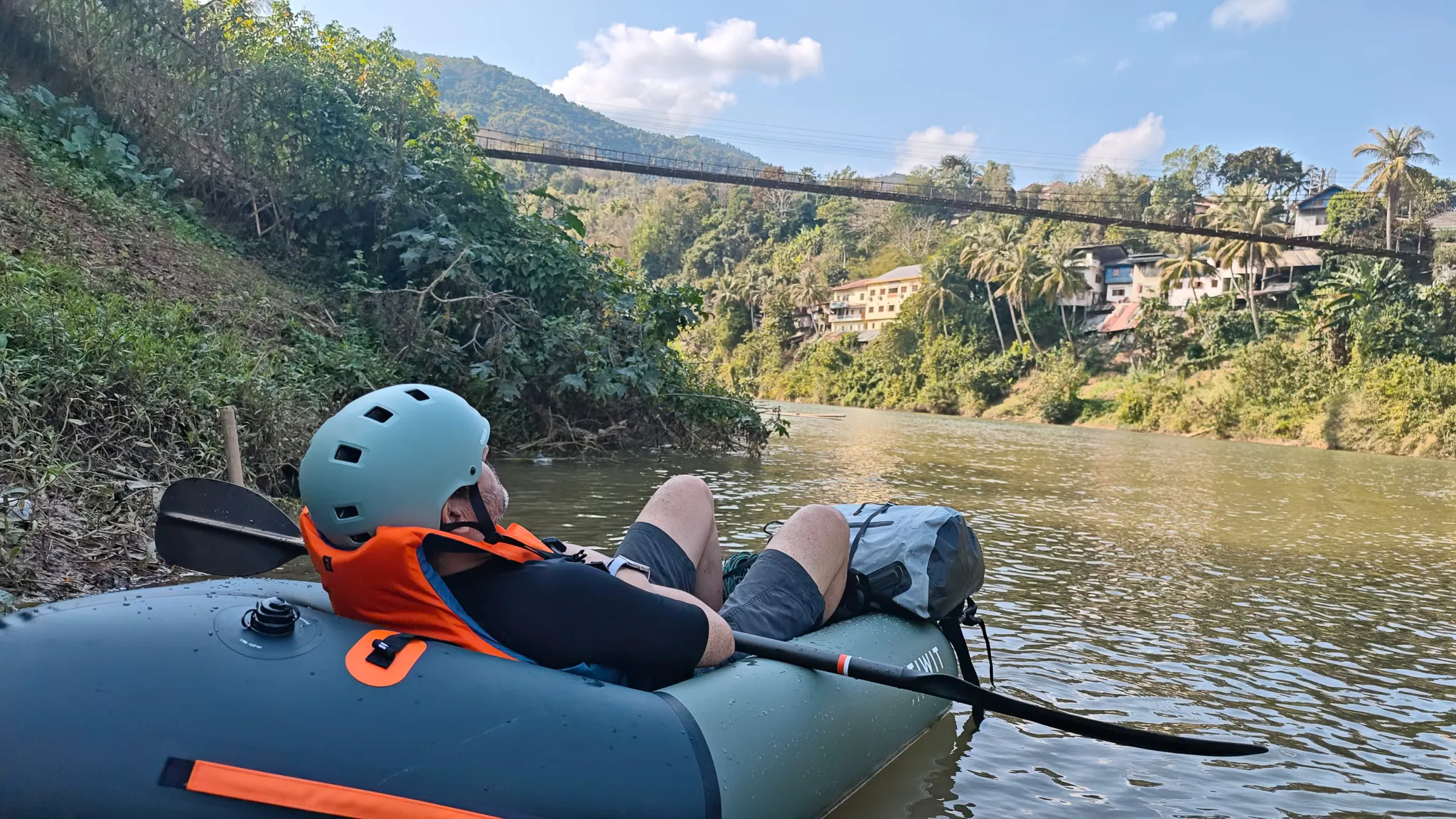
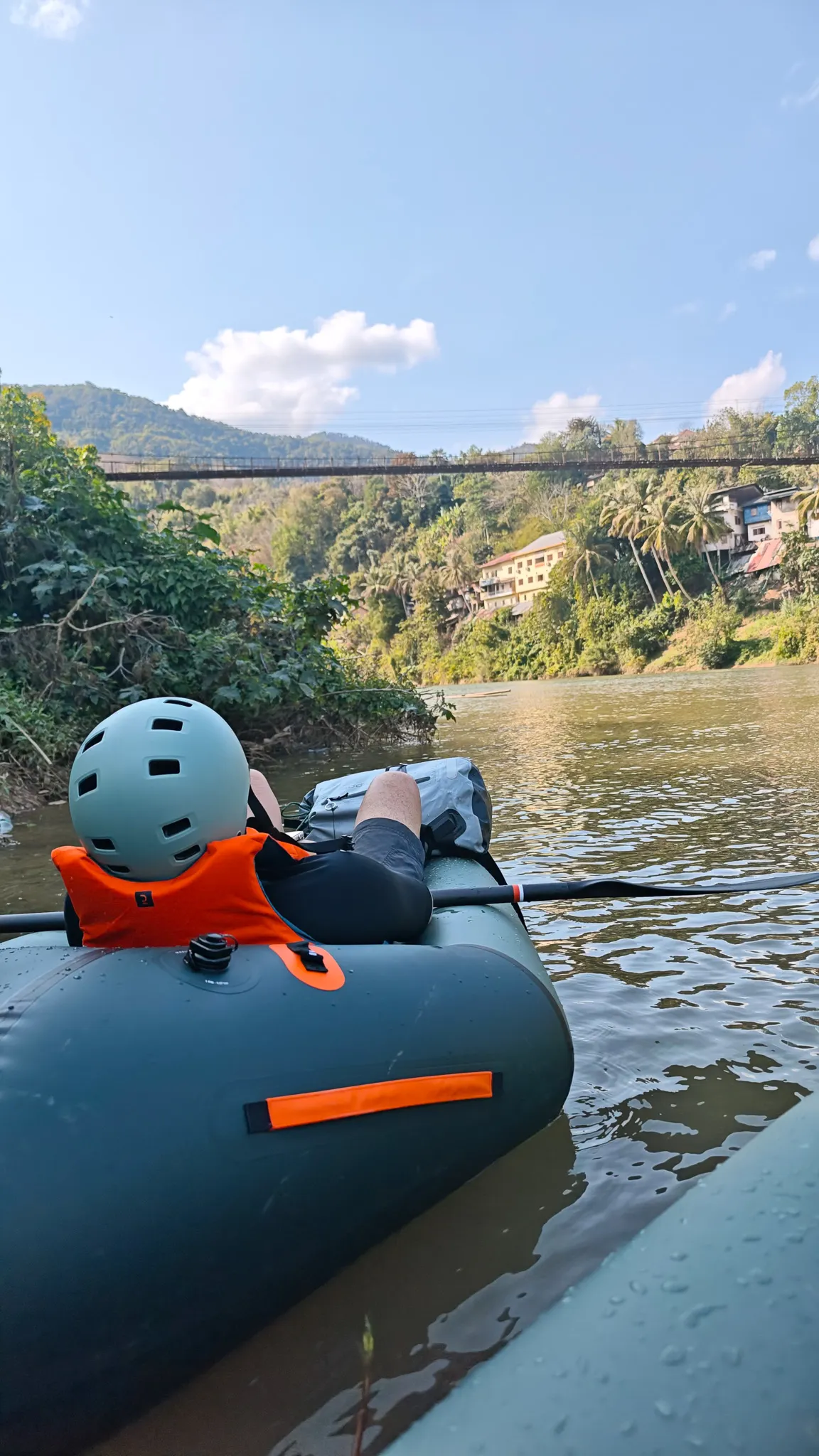
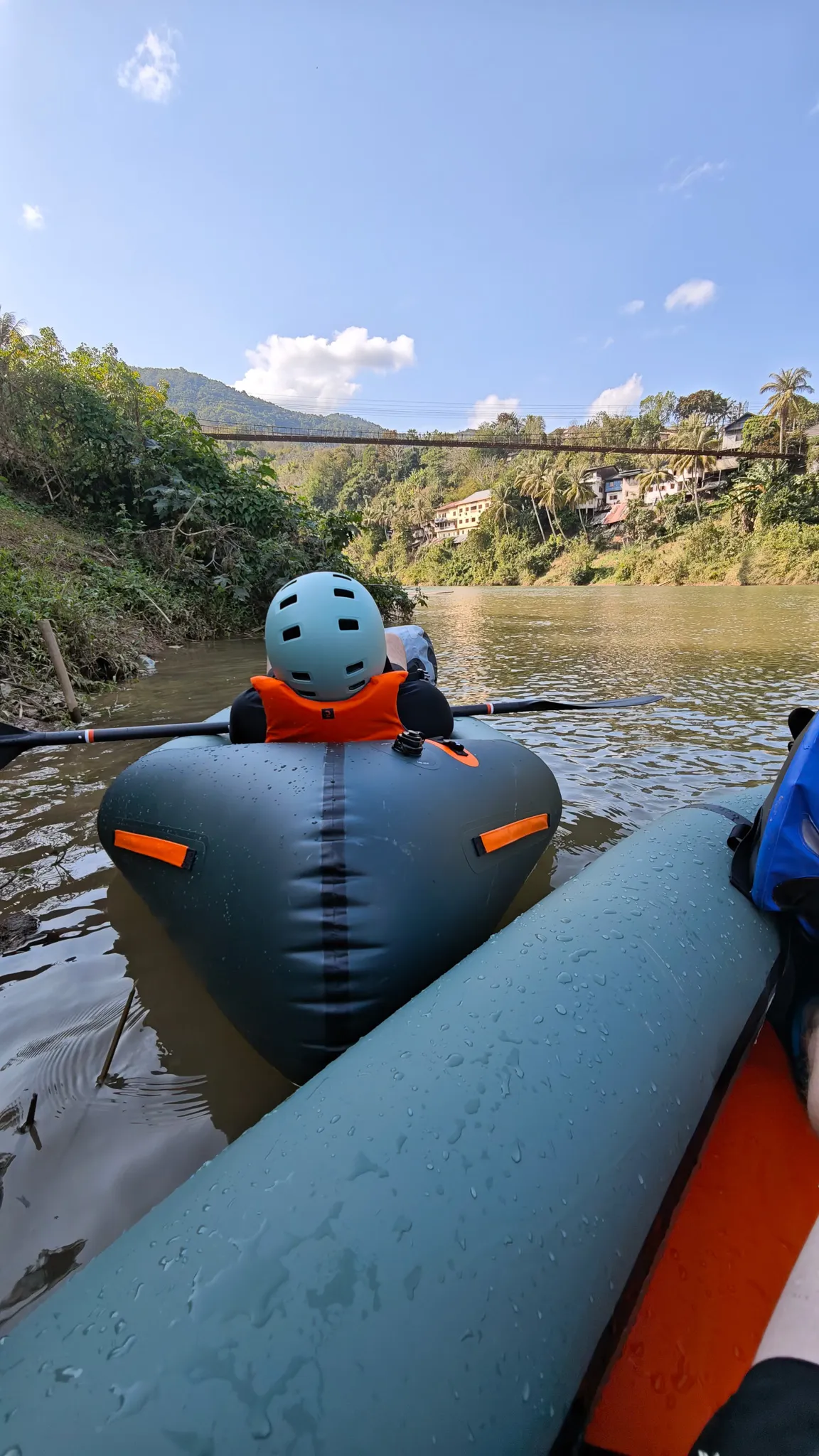
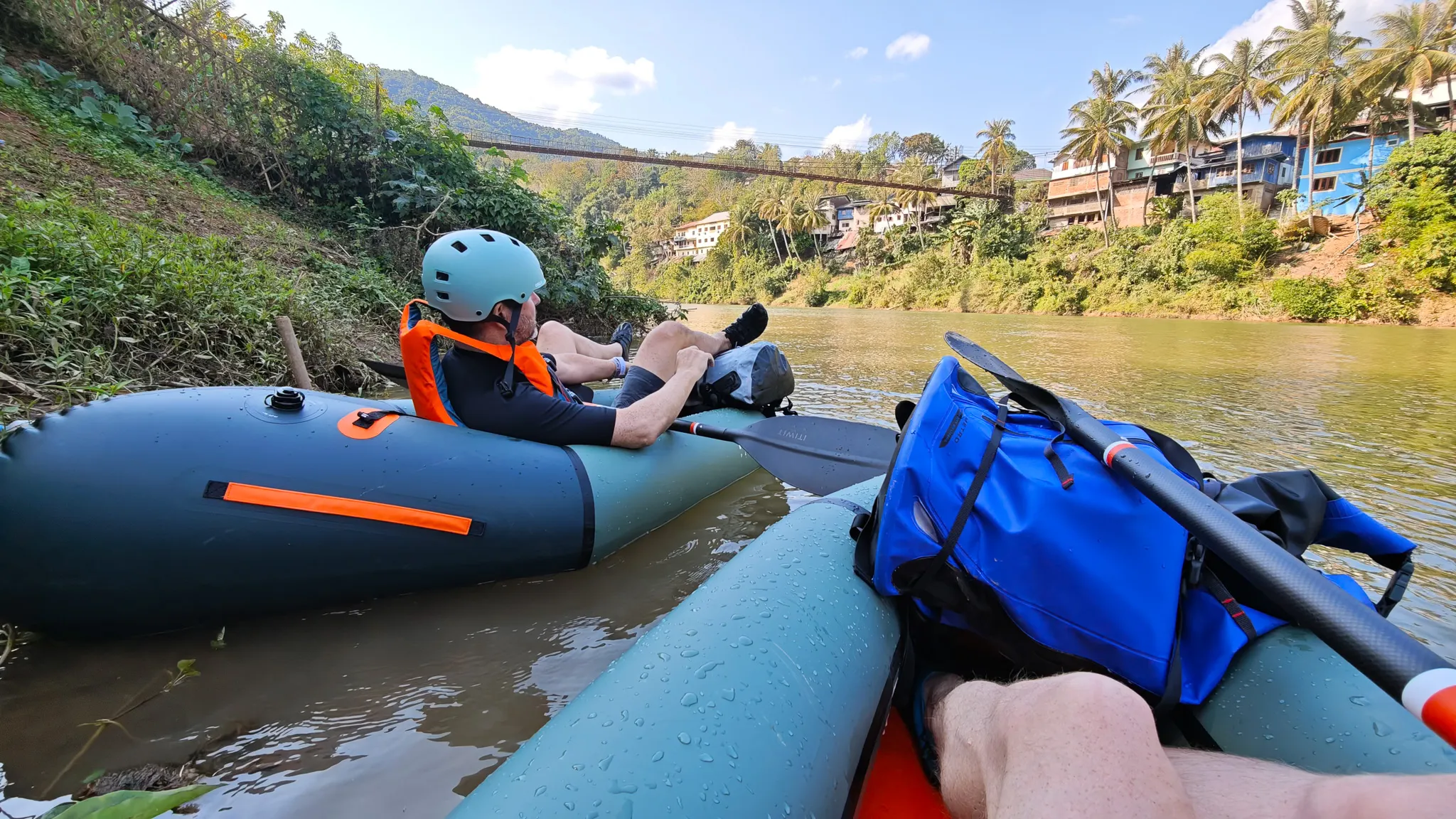
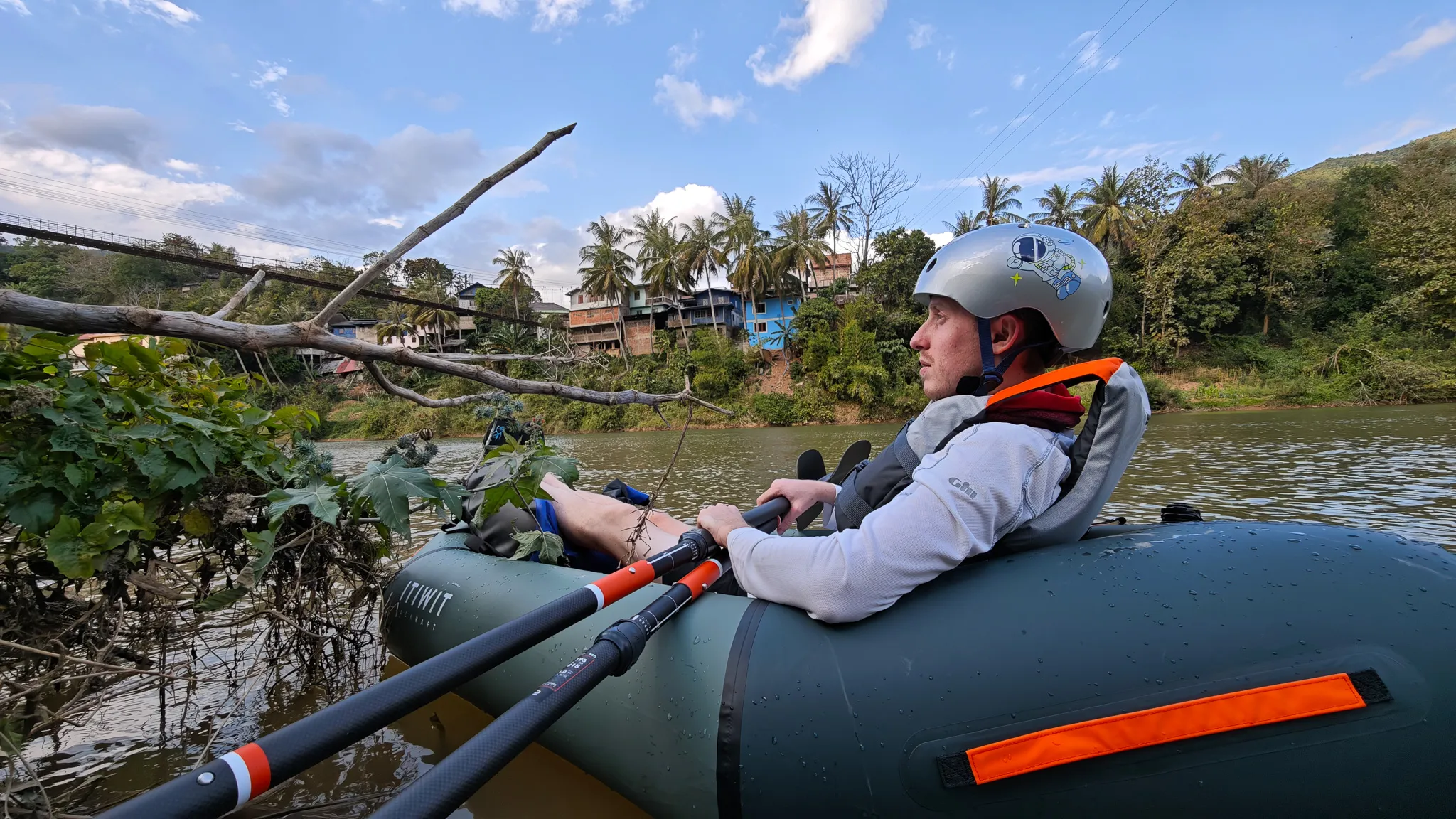
We inflated the Itiwit packrafts on the sandy bank beside the boat landing. Helmets on. Life jackets zipped. Dry bags strapped to the bow. The longboat drivers watched us with polite curiosity — two foreigners in tiny inflatable boats, about to paddle a river they navigate in 40-foot wooden vessels with truck engines bolted to the stern.
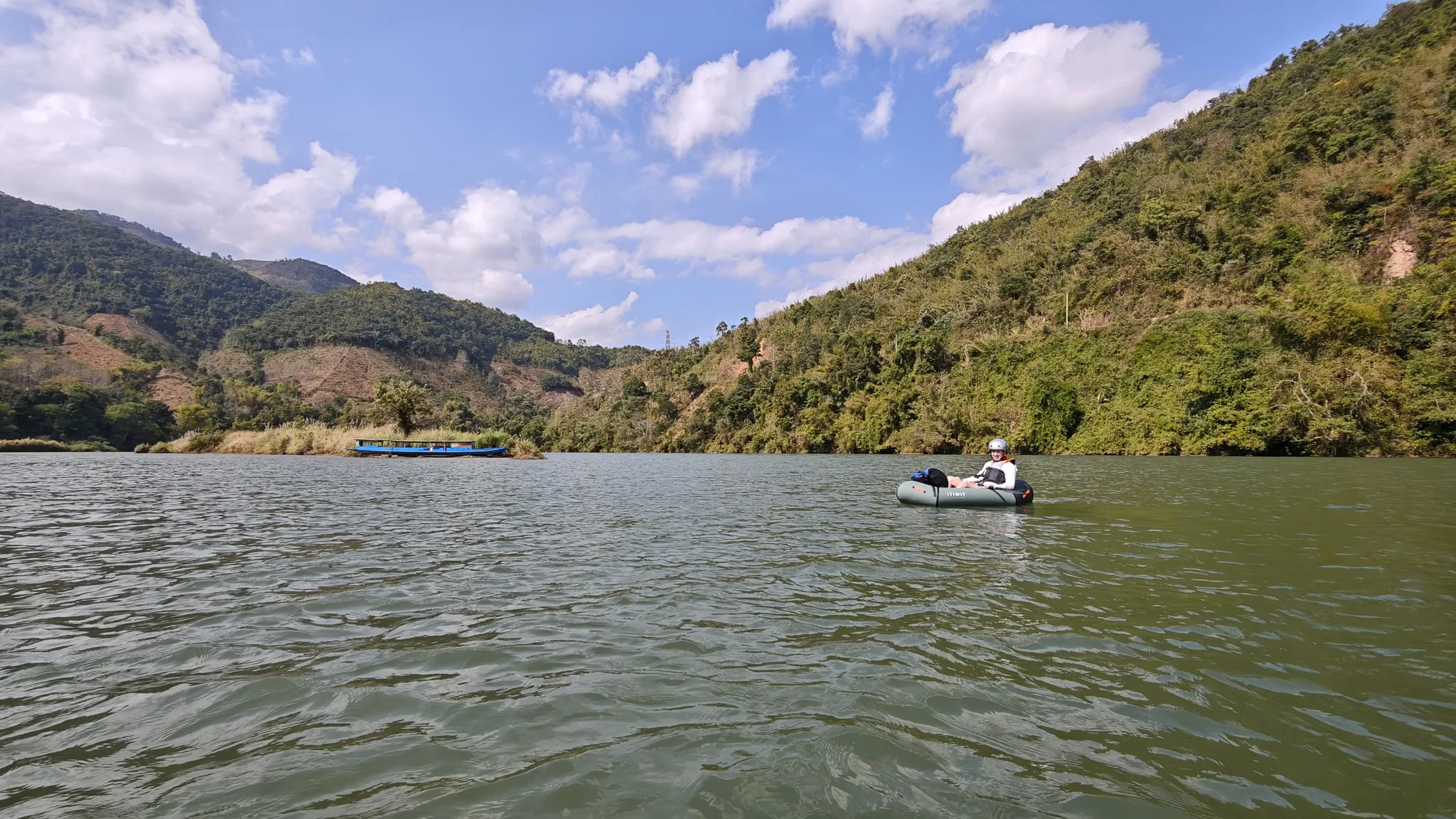
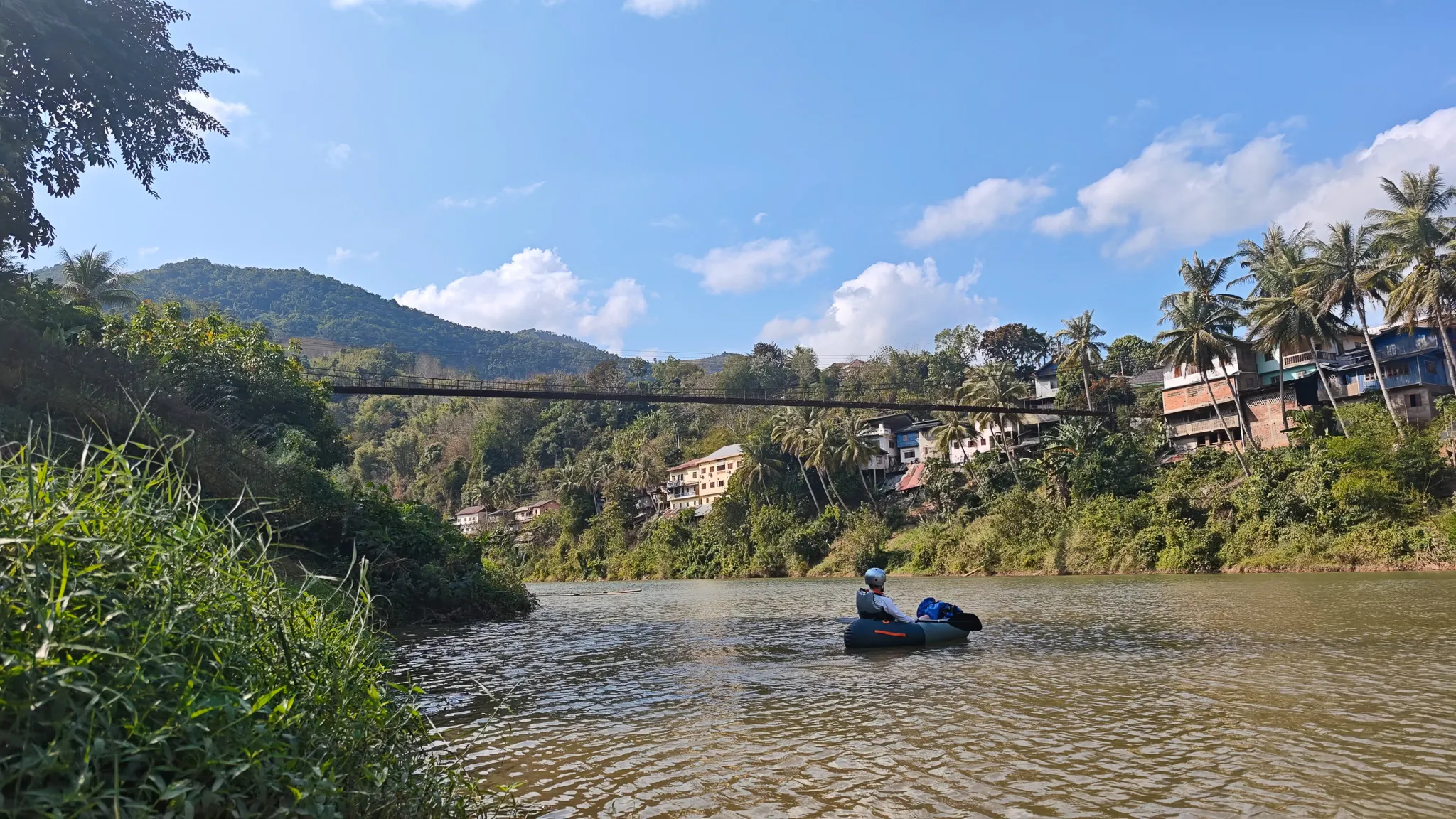
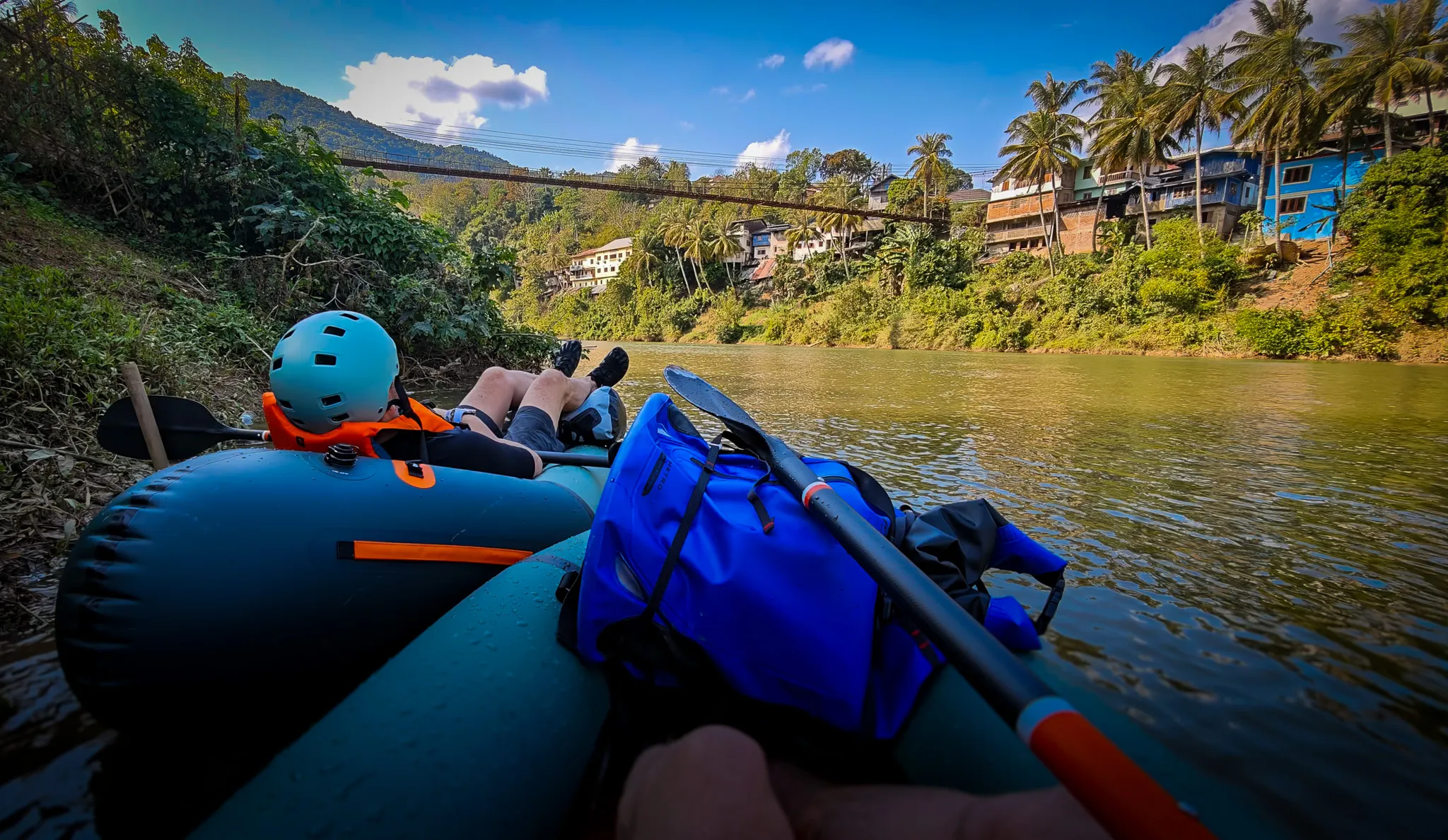
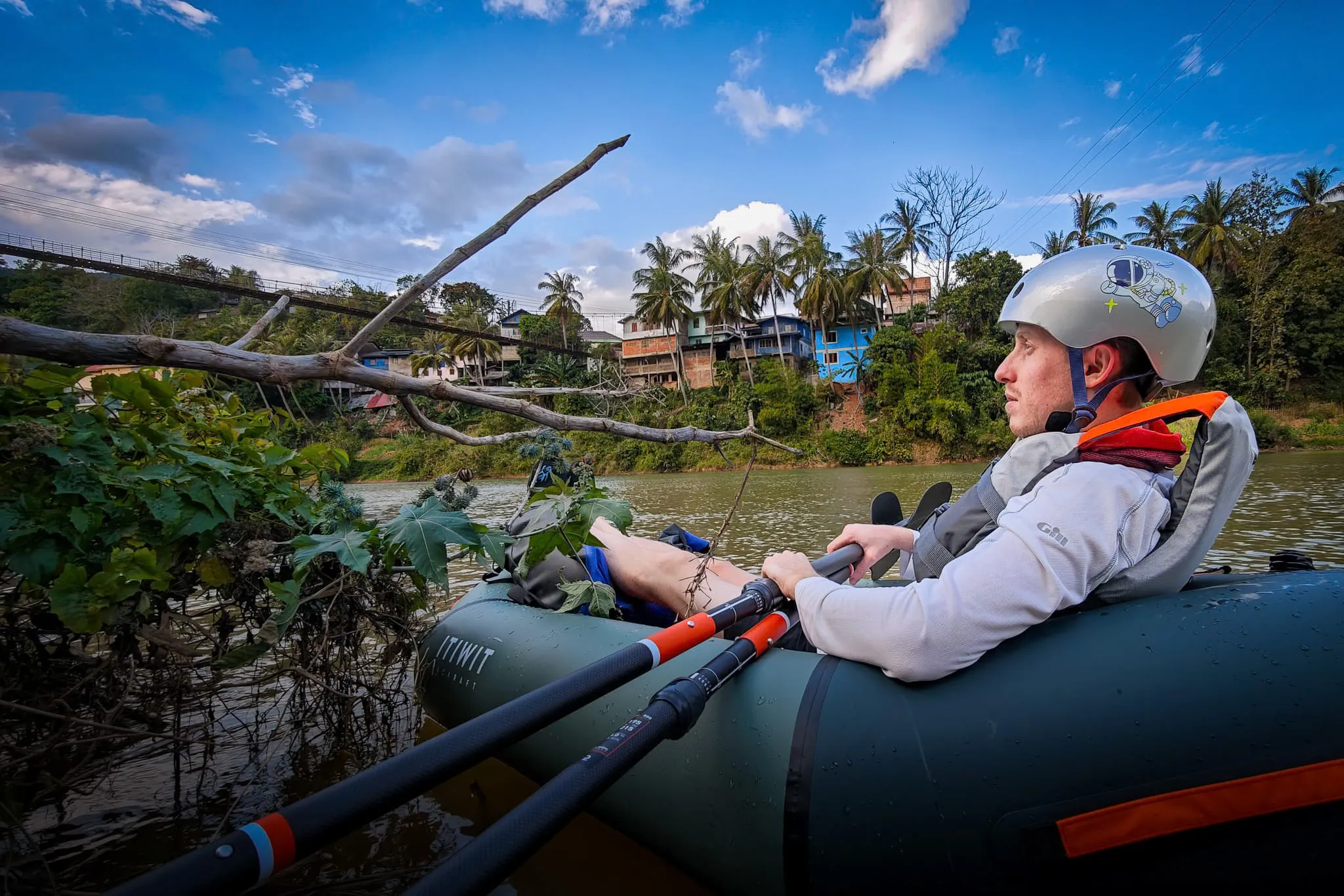
The first stroke of the paddle: the packraft spun gently into the current, the town receded, and the Nam Ou opened up — wide, calm, green hills on both sides, the suspension bridge shrinking behind us.
Drifting
Feet Up, Paddle Down
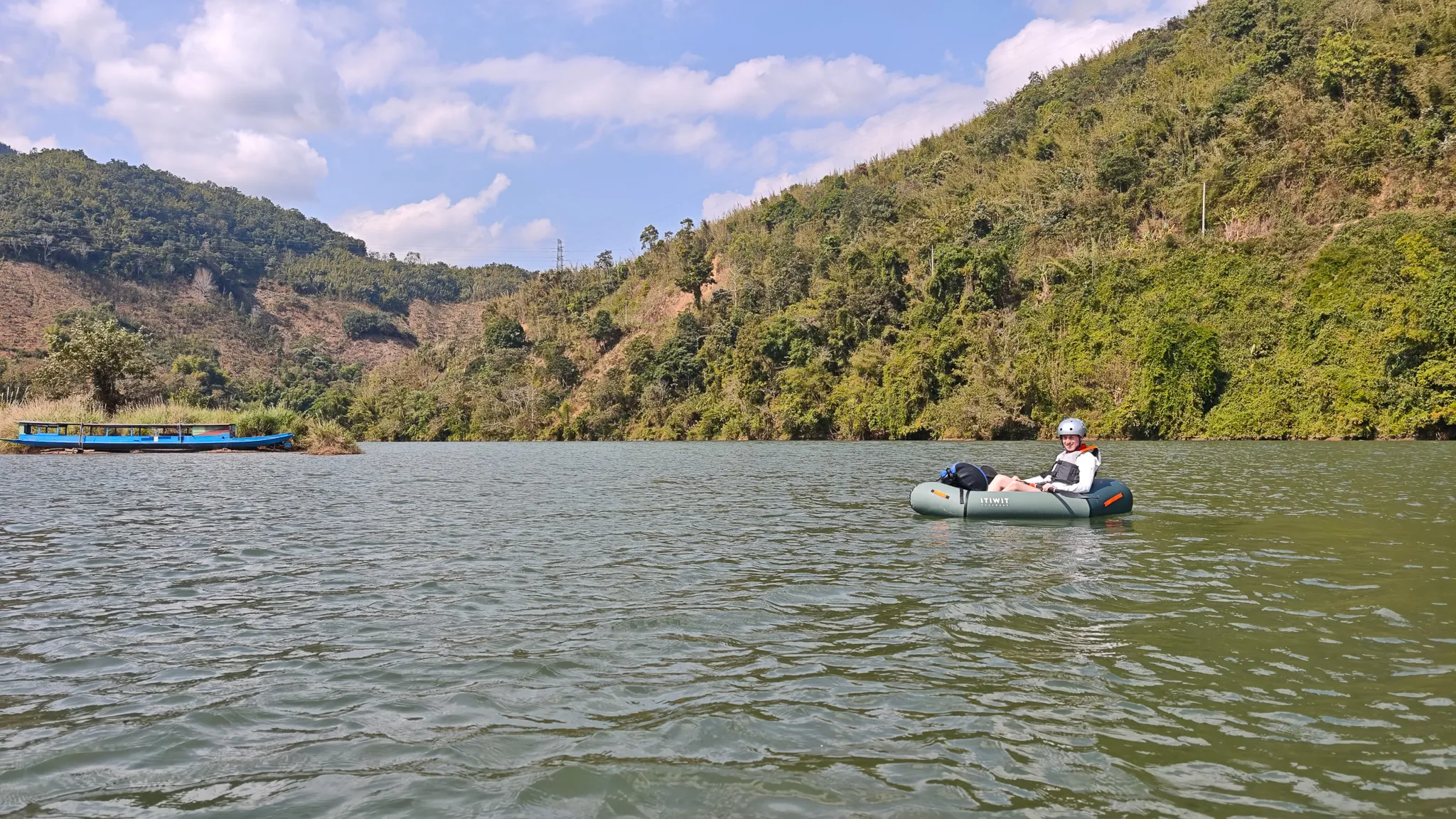
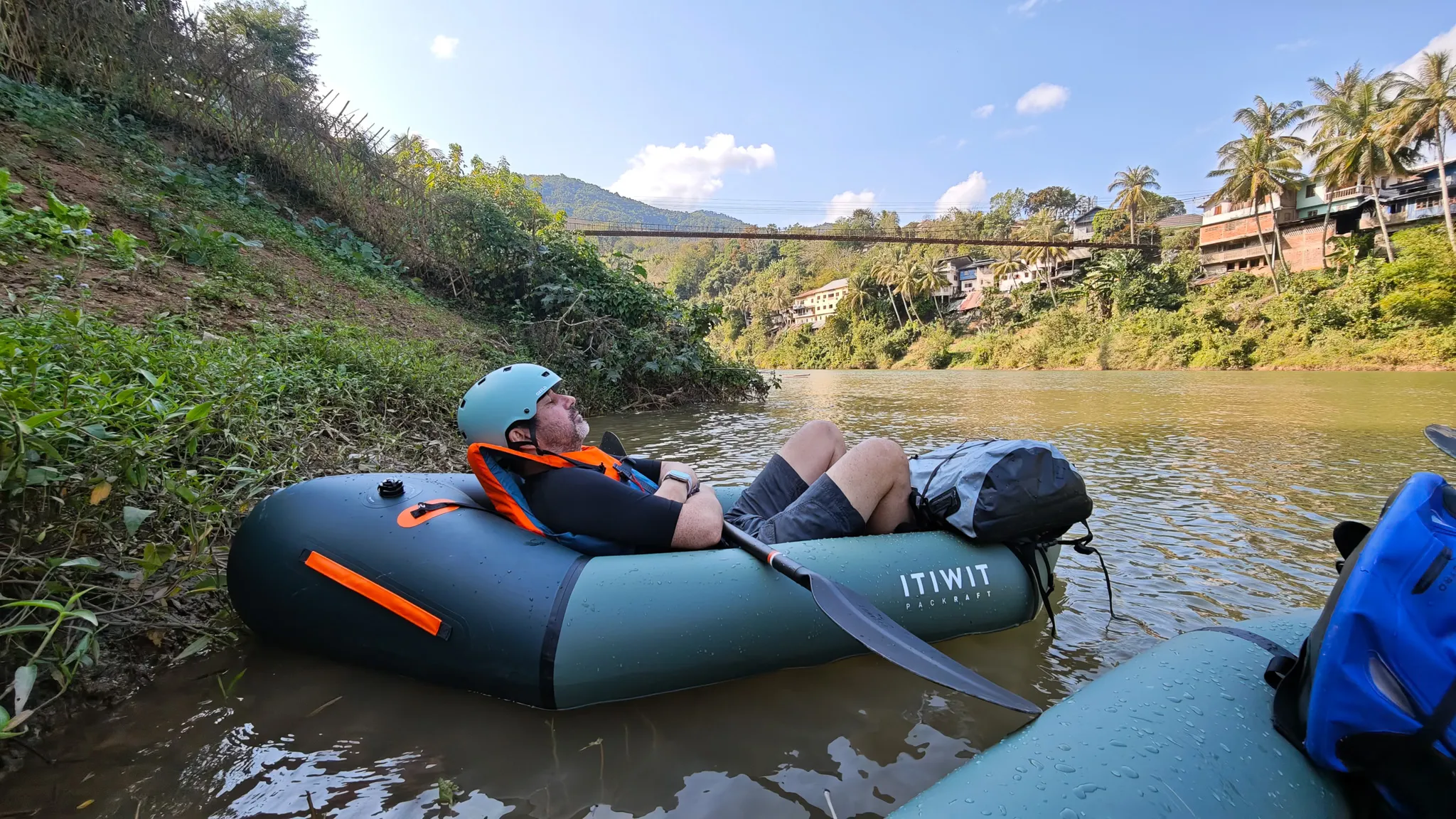
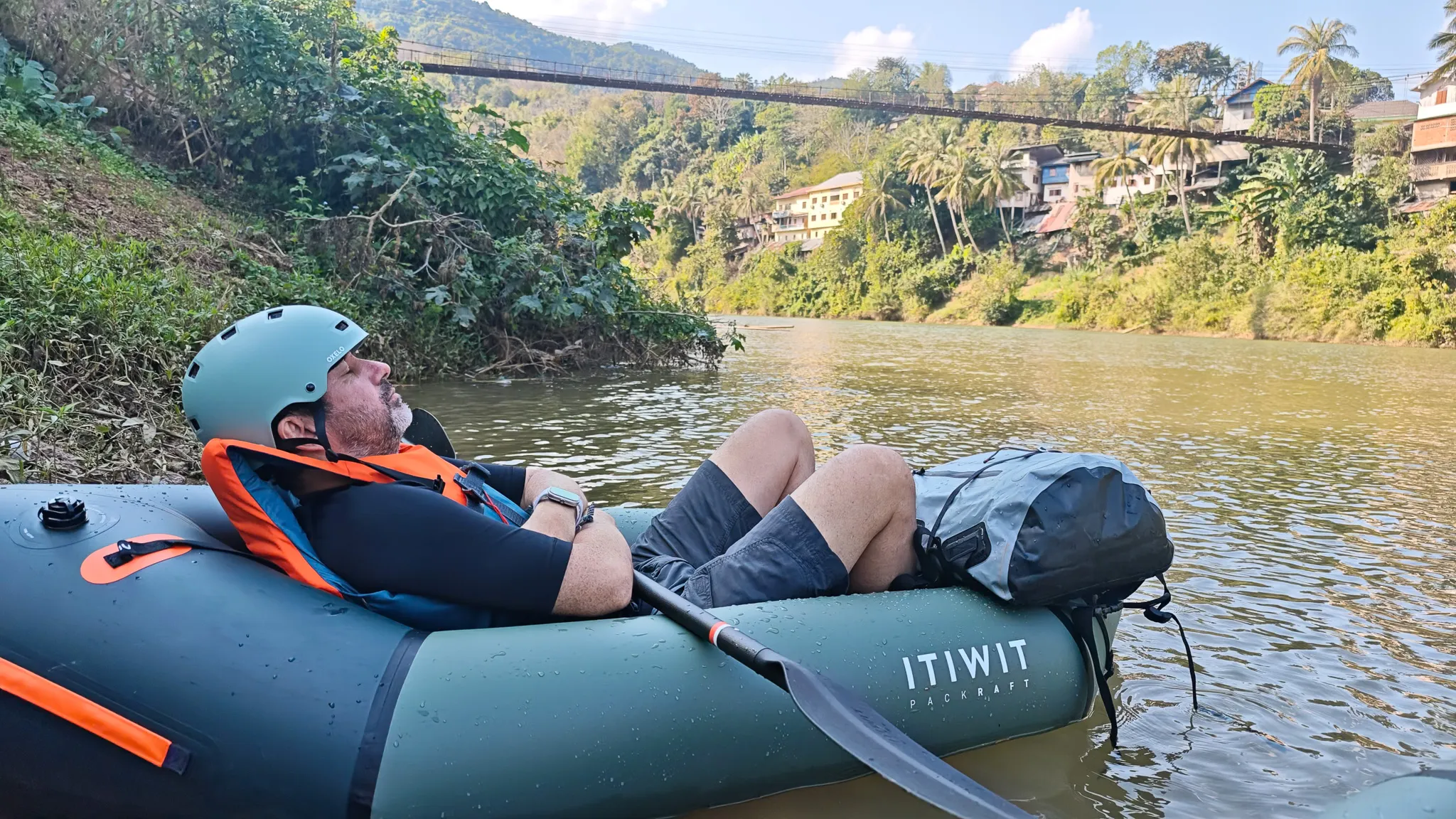
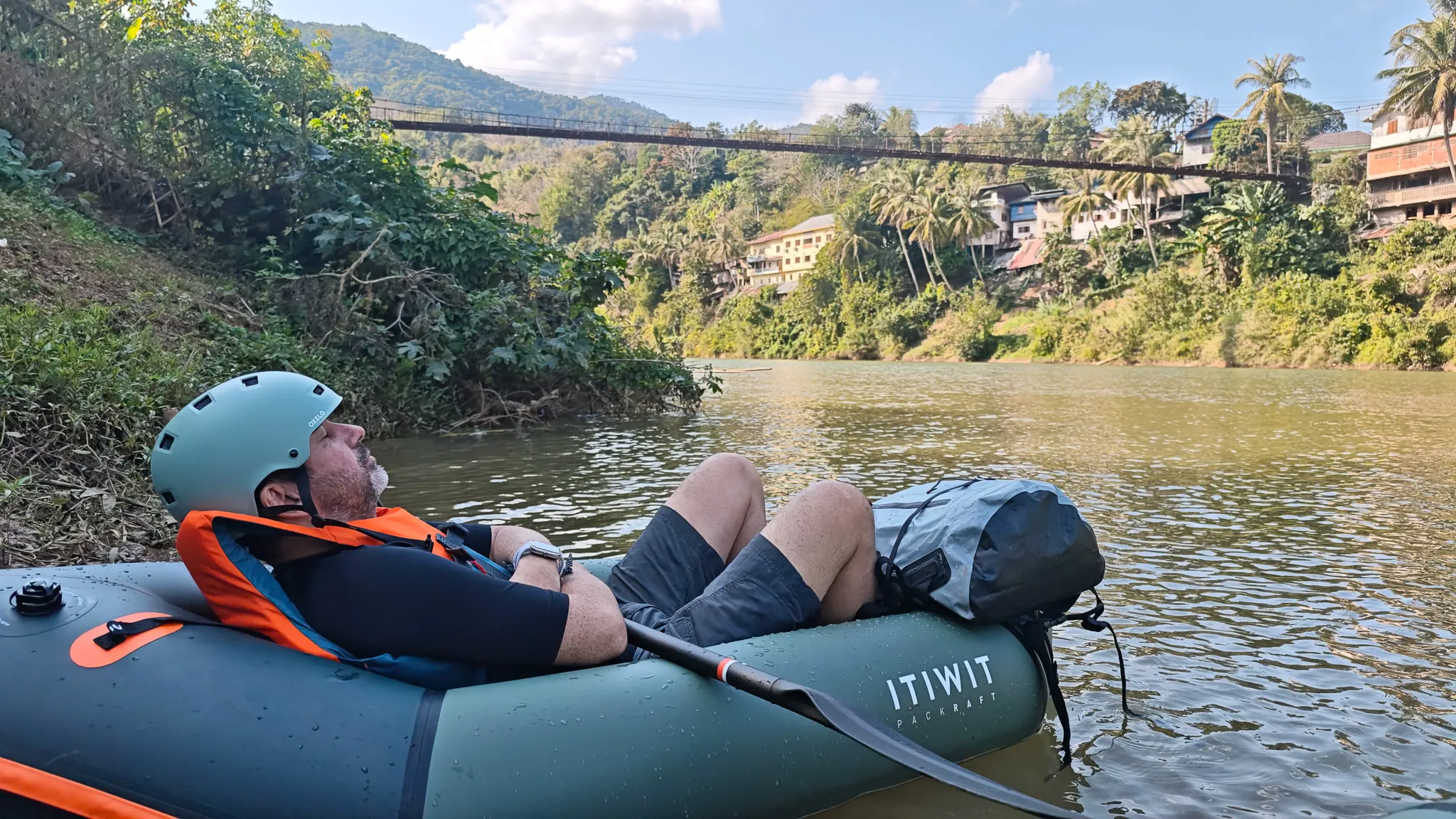
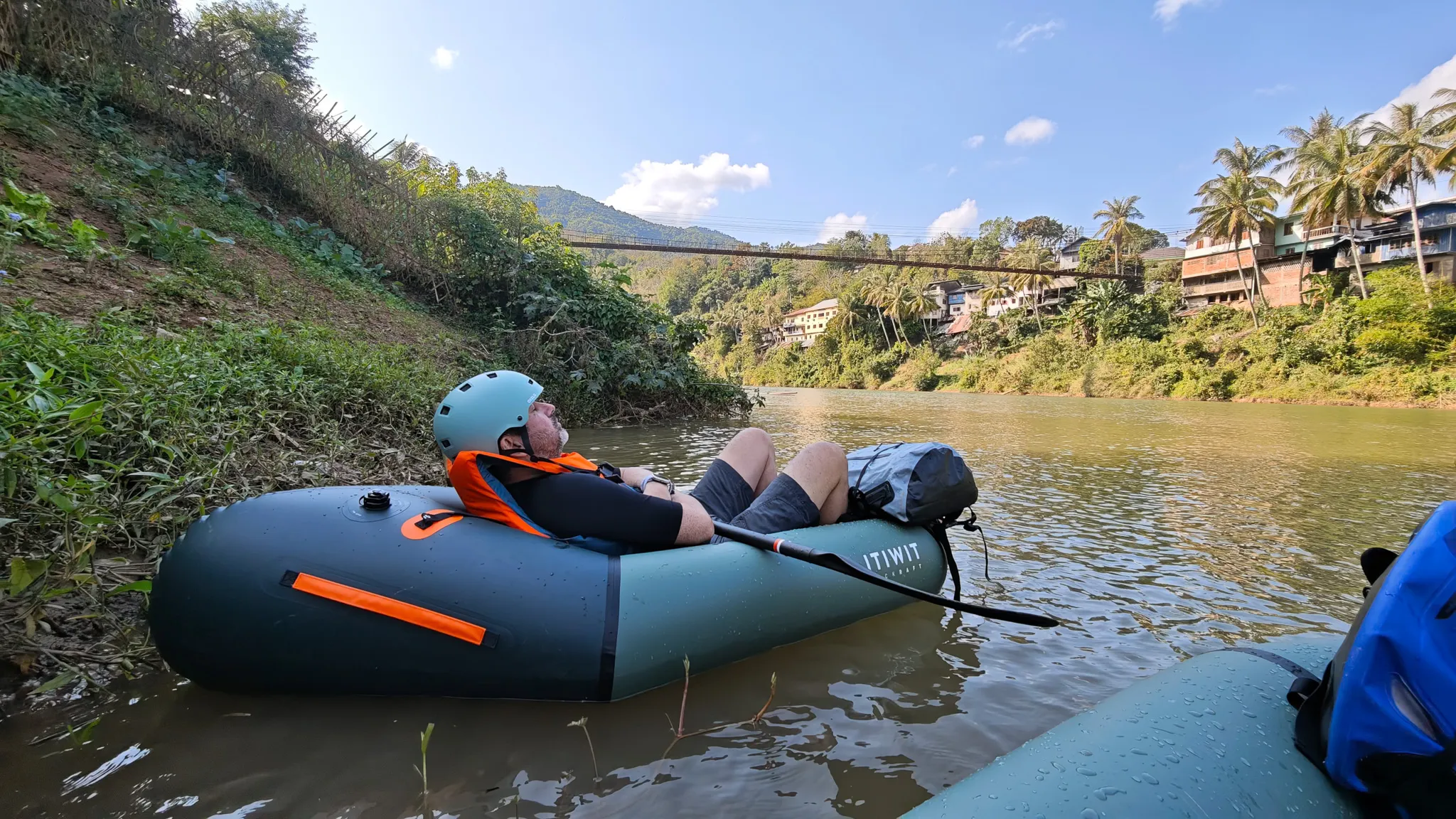
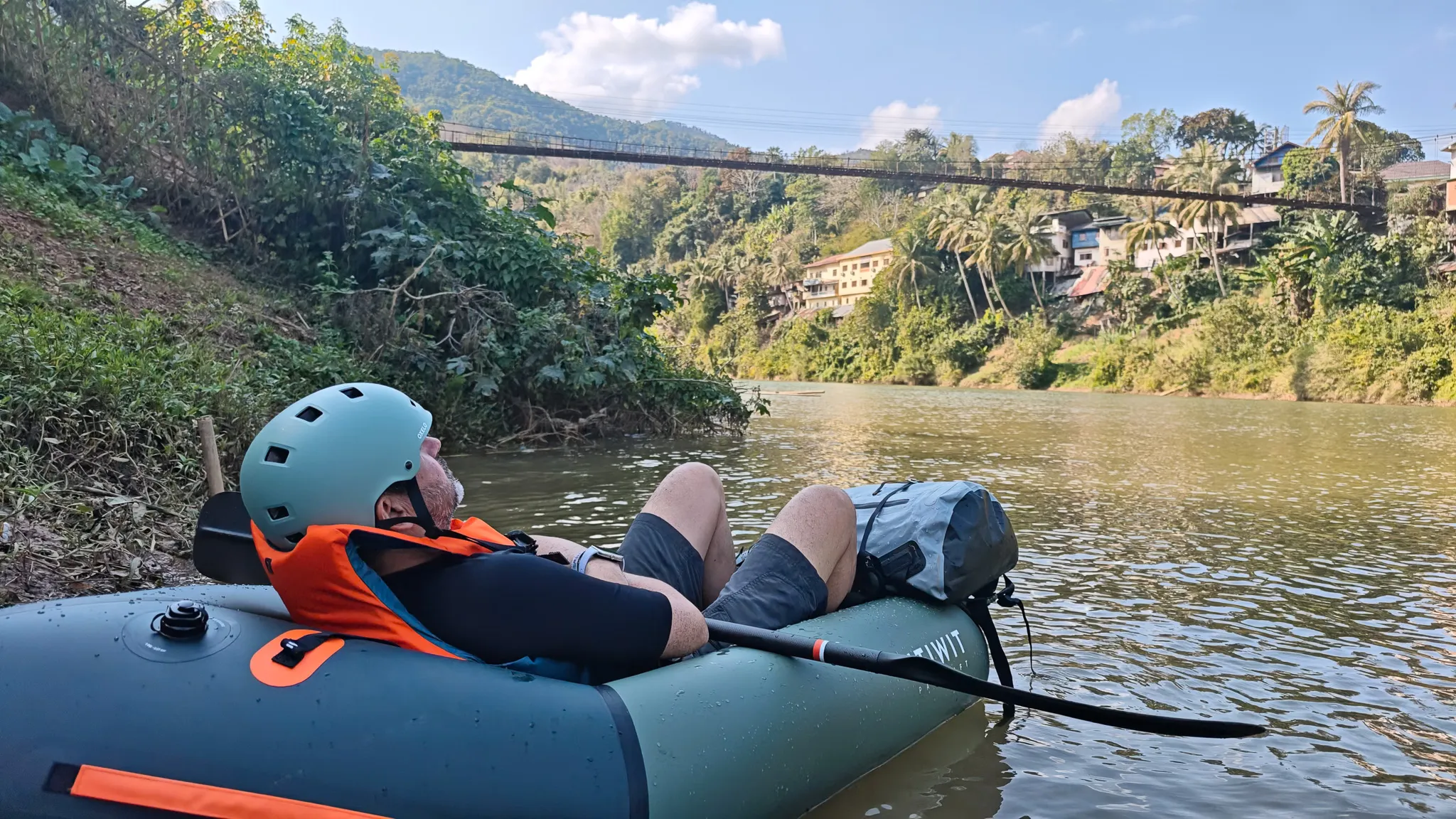
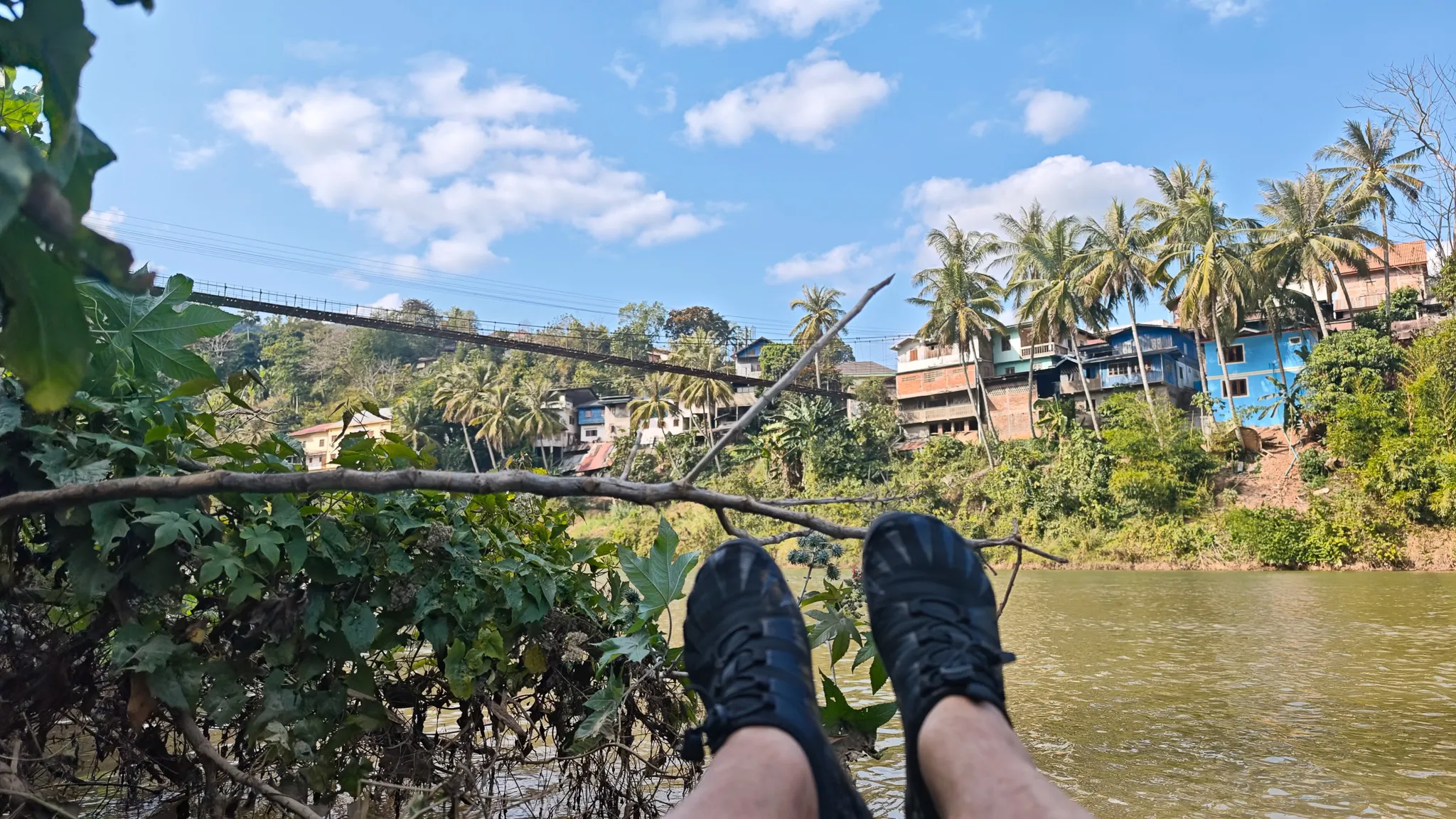
The best thing about a packraft is that you can stop paddling and nothing bad happens. You just drift. The current does the work. You lean back, put your feet up on the bow tube, and watch the sky rotate slowly above you. The suspension bridge passed overhead. Palm trees leaned in from both banks. The water made a sound like someone shushing a baby.
River Children
Bamboo Rafts & Ducklings
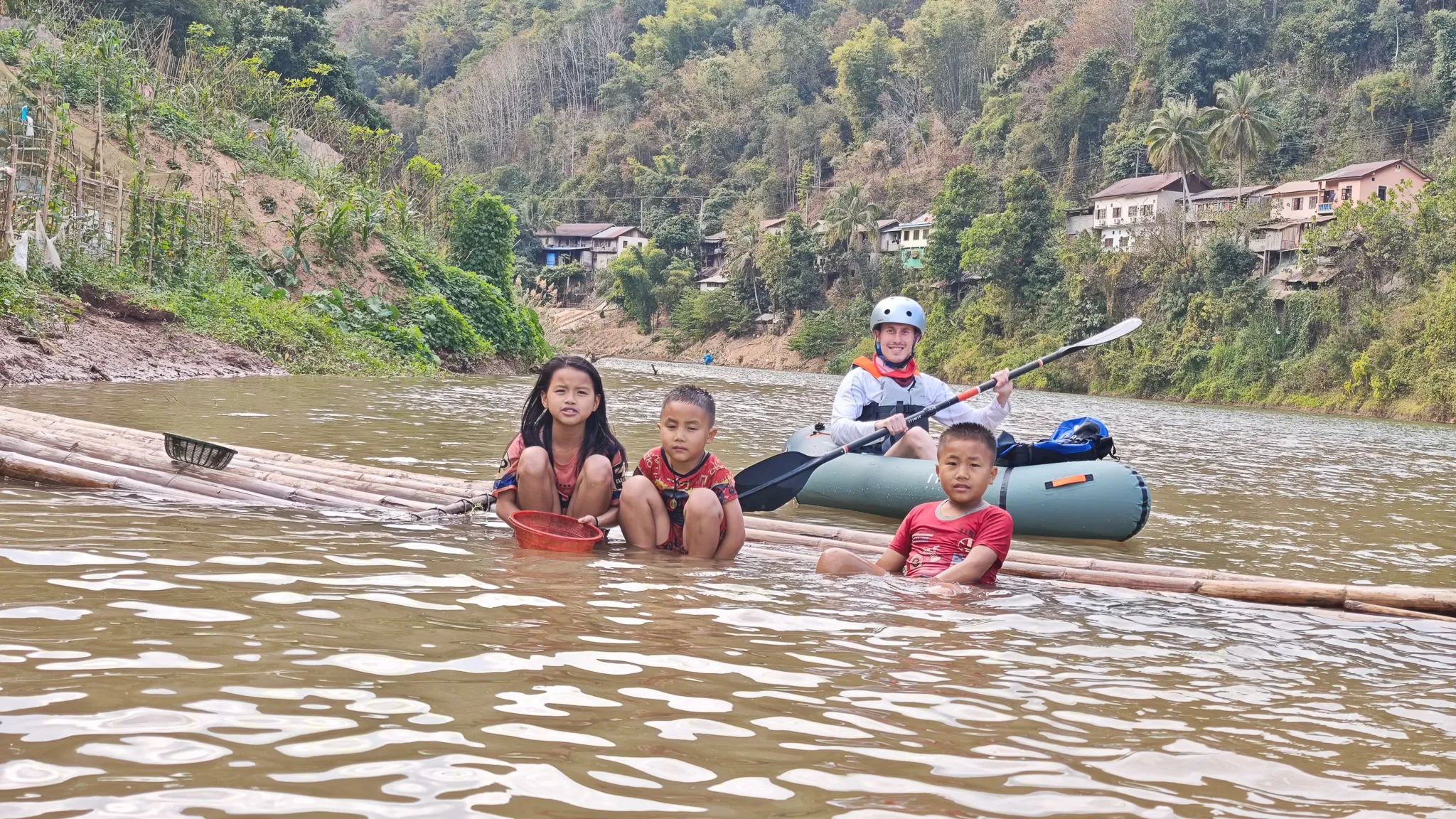
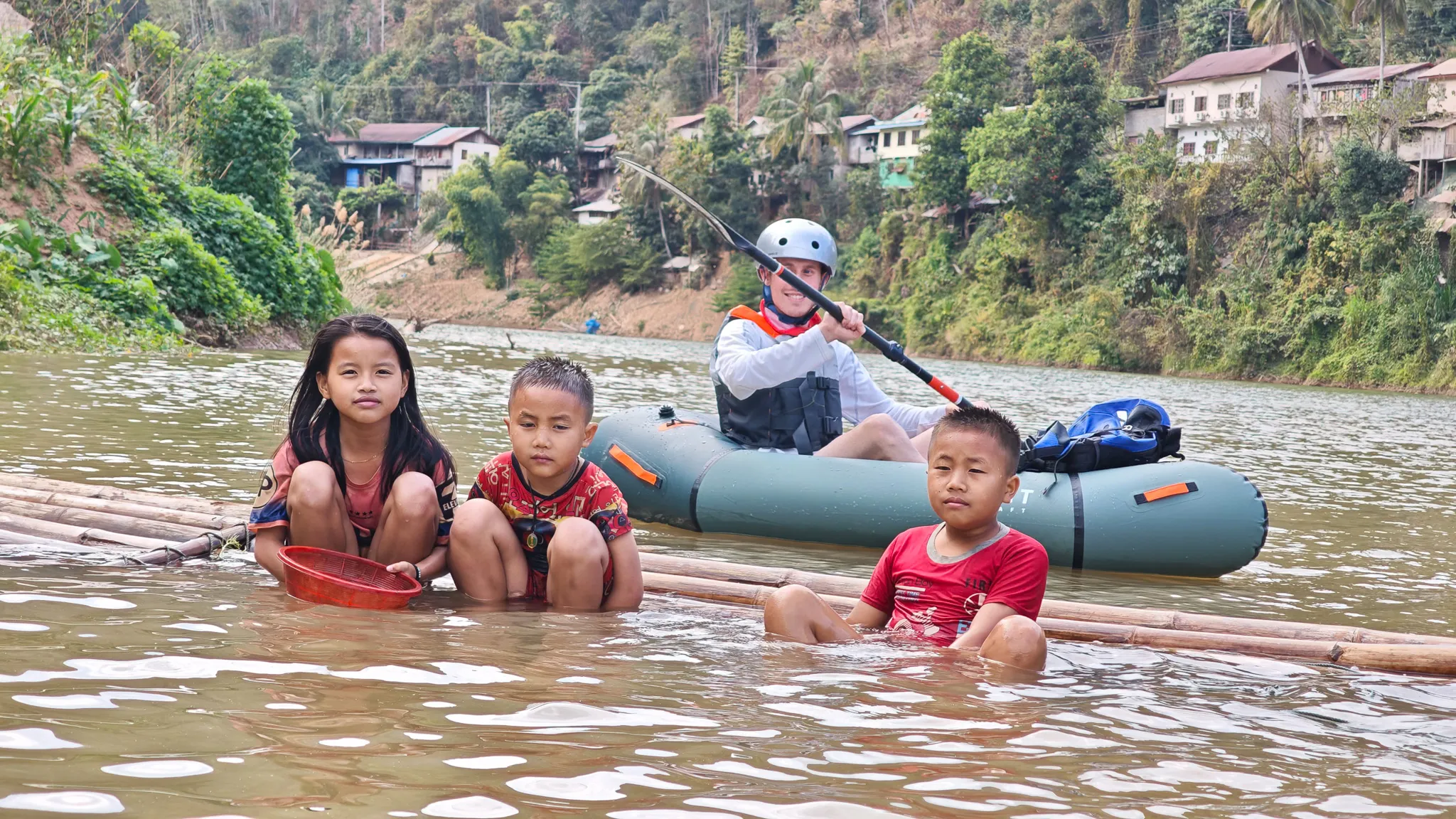
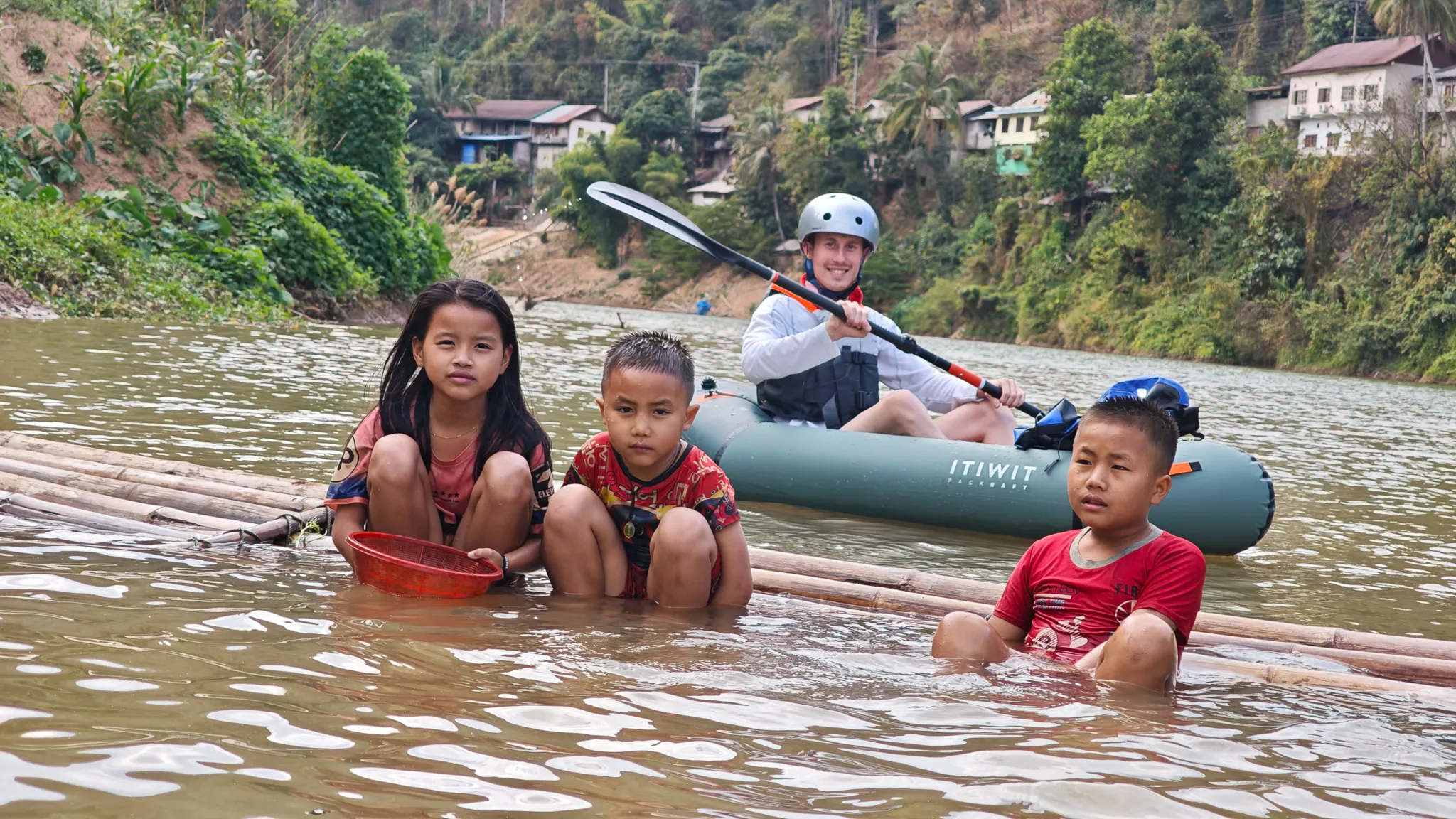
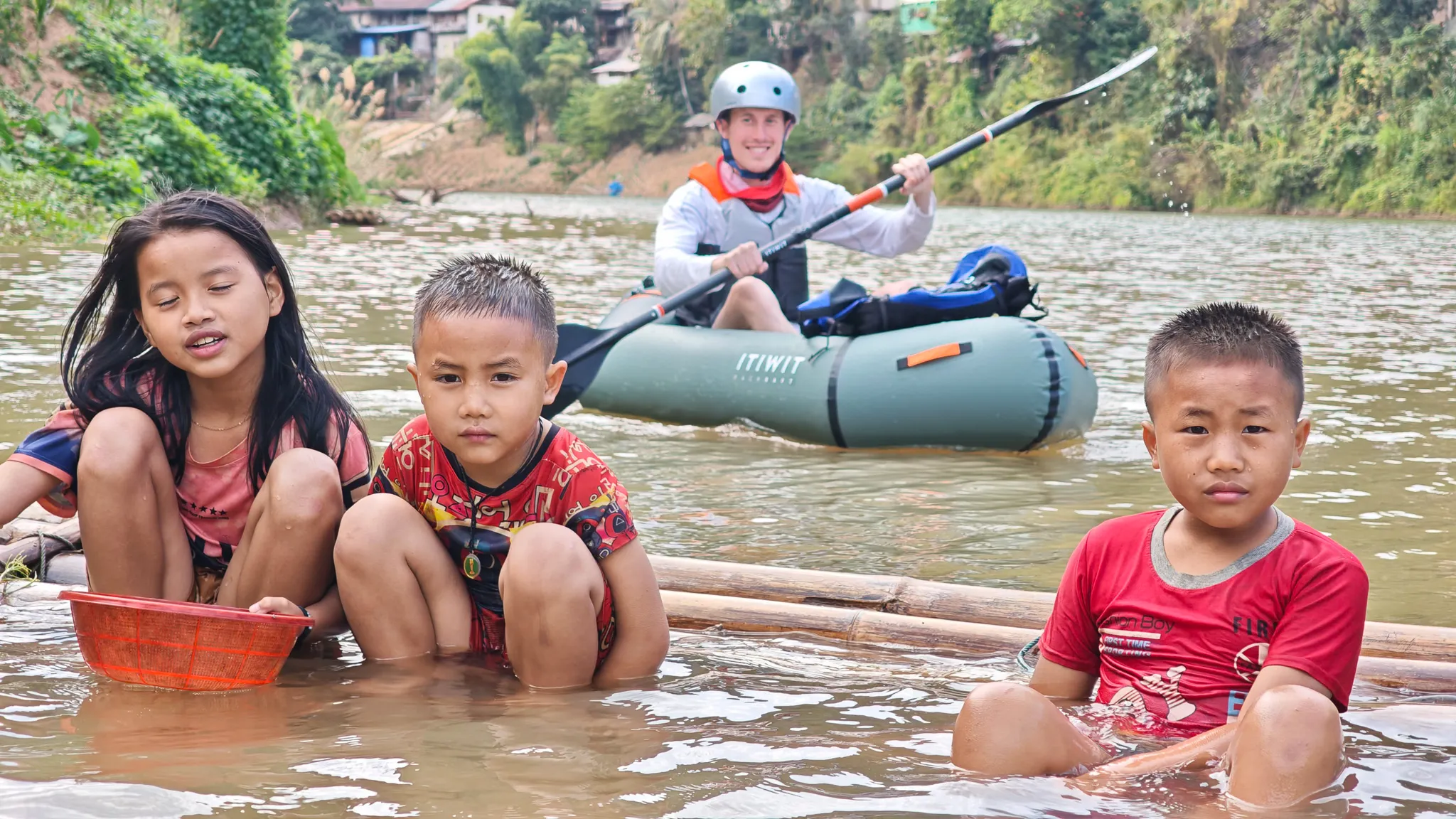
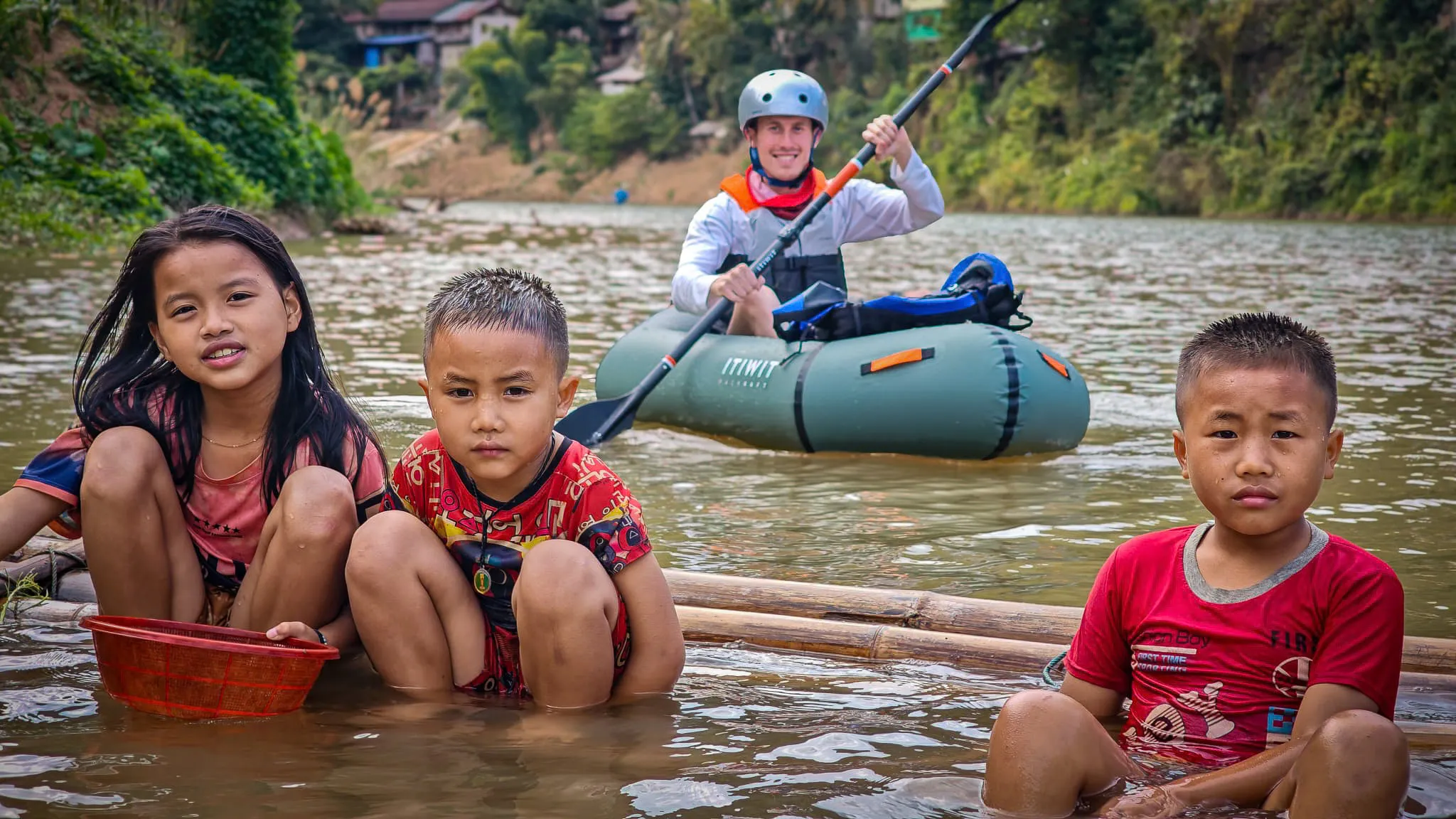
They appeared from nowhere — three children on a bamboo raft, poling themselves across the shallows with a stick. They saw our packrafts and paddled alongside us, grinning. The bamboo raft was six poles lashed together with vine. It had no seats, no sides, nothing to stop them sliding off. They didn’t care. They’d been doing this since they could walk.
For the children along the Nam Ou, the river isn’t a destination. It’s the back garden, the playground, the school bus. Bamboo rafts are built in an afternoon and last a season. The children who ride them will grow up to pilot the longboats.
Downstream
The River Ahead
By late afternoon, we’d paddled past the last houses of Muang Khua. The river widened. The hills grew taller. A single packrafter on a vast brown river, heading south into Phongsaly Province. Ahead: villages that don’t appear on Google Maps, children who’ve never seen a foreigner, and a game of petanque by torchlight. But we didn’t know that yet.
Next
Day 1 — Villages & Petanque
11 kilometres downstream. A village we’d never heard of. Beer Laos, a game of boules, and children who followed us like ducklings.
Read Next →