Day 31-33
Hong Kong — Chungking to Victoria Peak
Incense smoke, bamboo scaffolding, Michelin goose, and the greatest skyline on earth after dark.
Crossing the Harbour
The Peninsula Hotel stands on the Kowloon waterfront like an old colonial aunt who refuses to acknowledge the glass towers crowding around her. Built in 1928, it was once the grandest hotel east of Suez. Now it shares the skyline with a hundred buildings twice its height, but somehow still commands the street. I walked past its Rolls-Royce fleet and kept going. My budget ran to Chungking Mansions, not The Peninsula.
Hong Kong hits you in layers. The noise first — double-decker trams, jackhammers, Cantonese shouted across market stalls. Then the density, buildings so close together that laundry lines bridge the gap between them. Then the smell: char siu from a roast meat shop, diesel from the harbour, incense drifting from a temple doorway. Three days would not be enough. Three months might not be enough.
Man Mo Temple
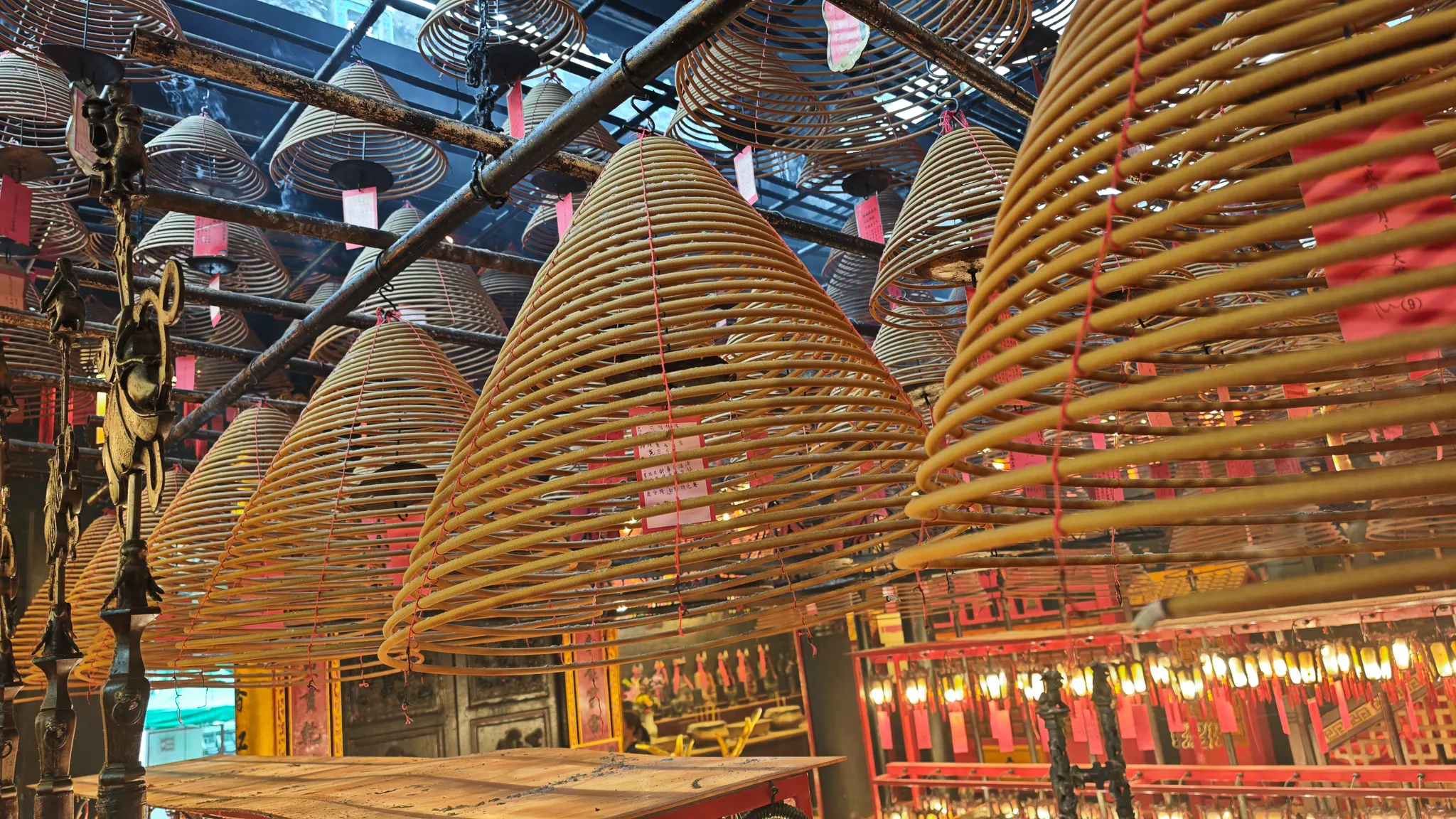
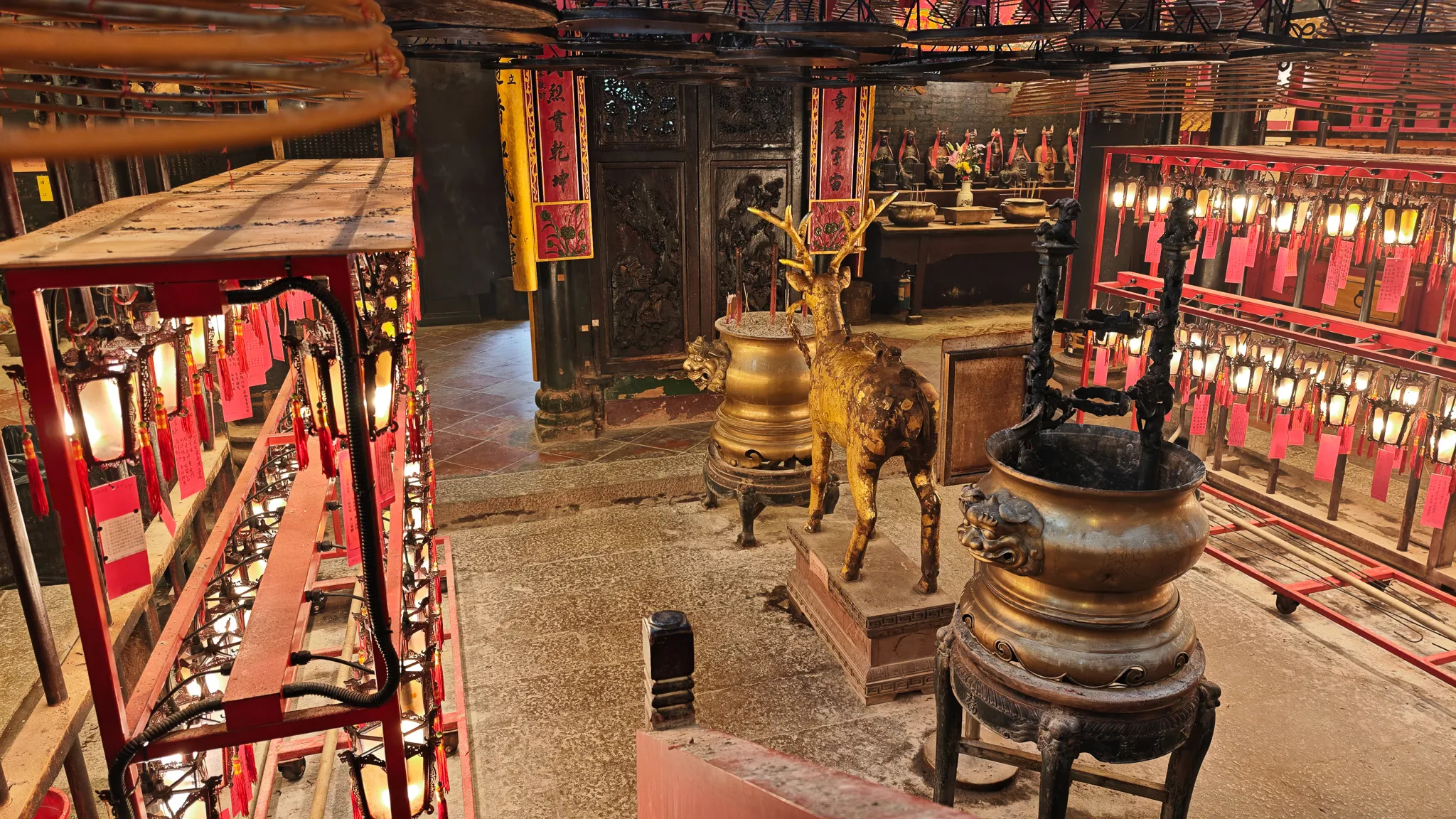
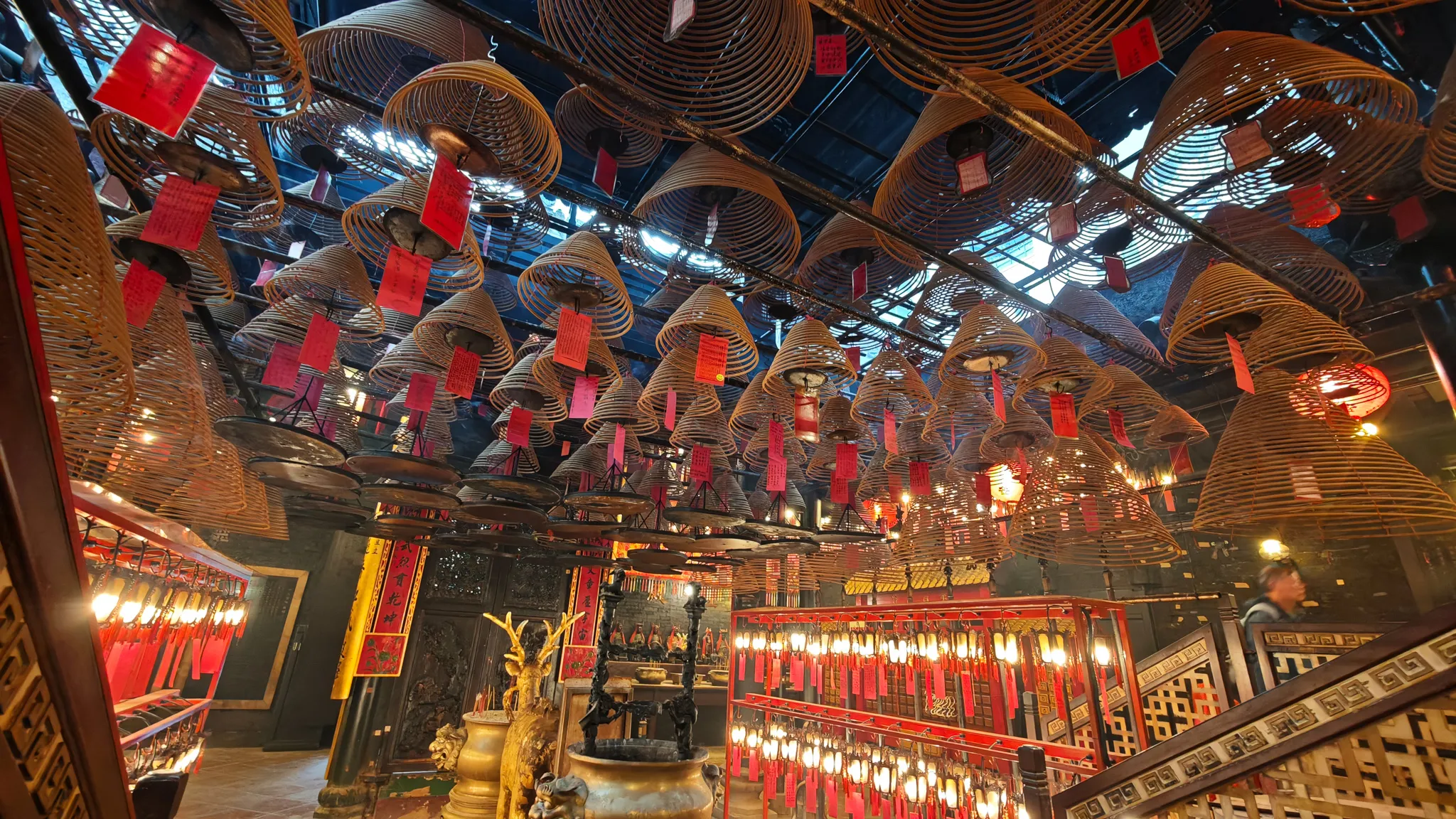
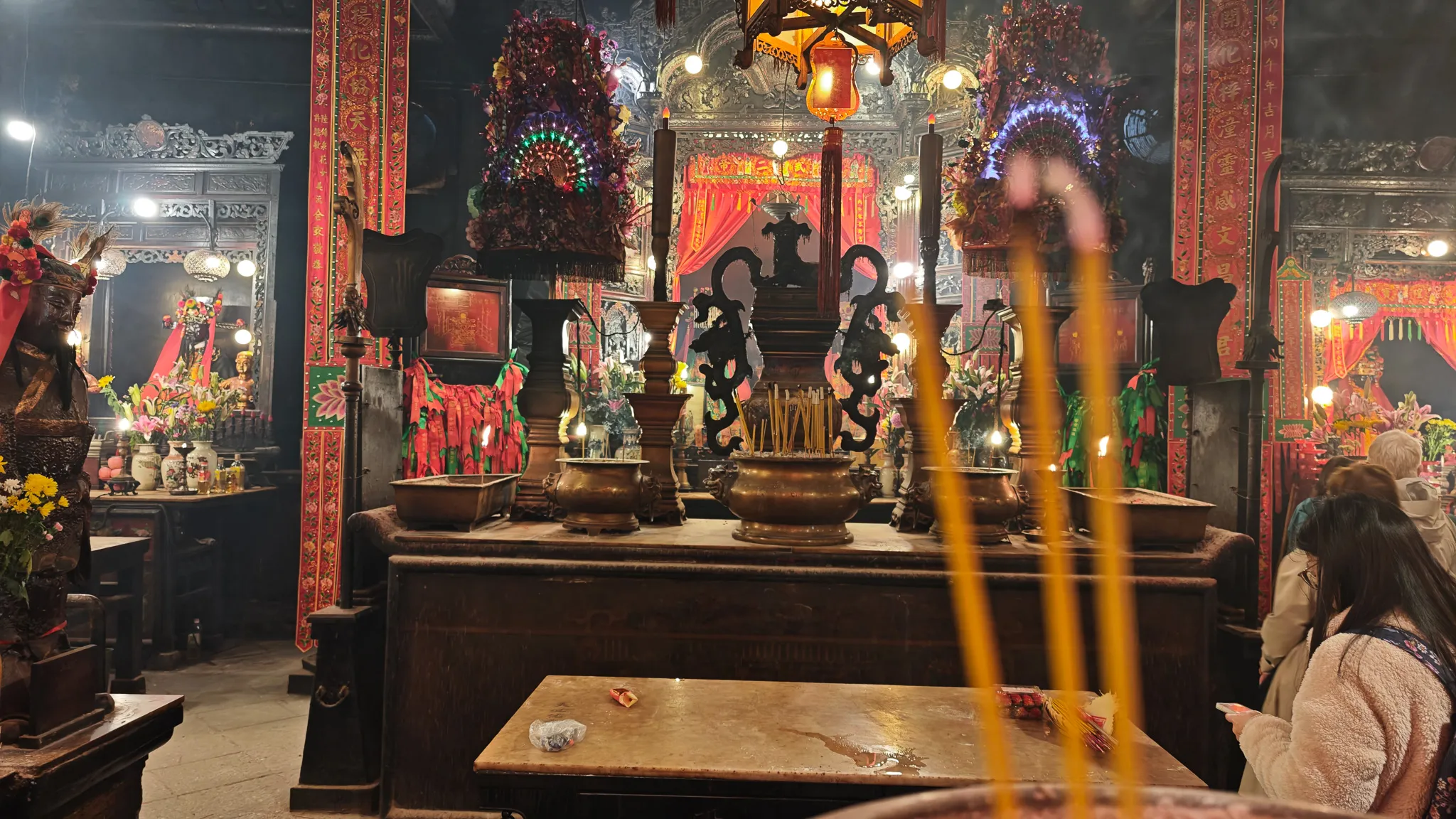
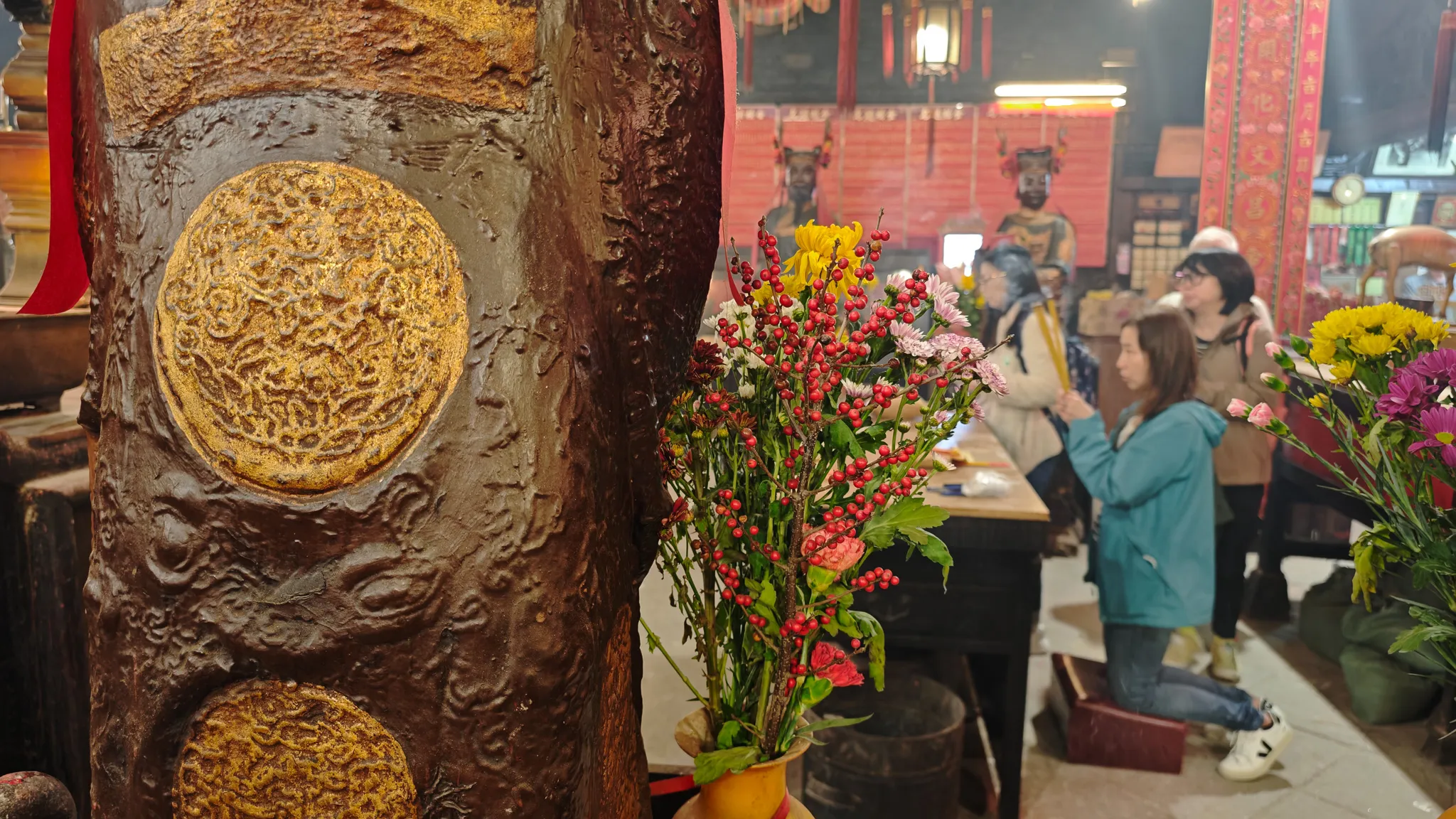
Man Mo Temple has stood on Hollywood Road since 1847, dedicated to the god of literature (Man Cheong) and the god of war (Mo Ti). Inside, the air is thick enough to chew. Enormous spiral incense coils hang from the ceiling like inverted beehives, each one burning for weeks, trailing smoke and prayers upward into the gloom.
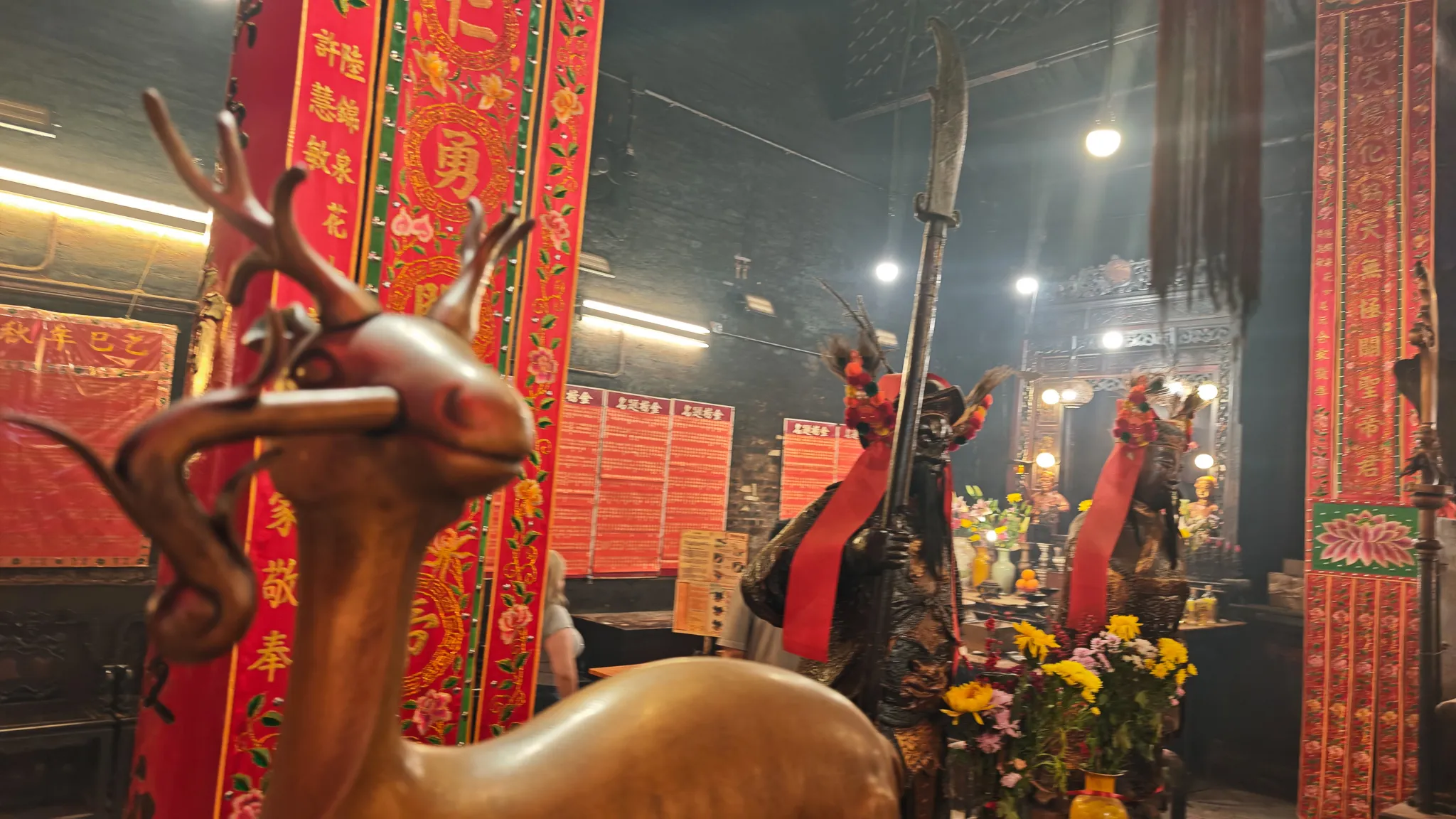
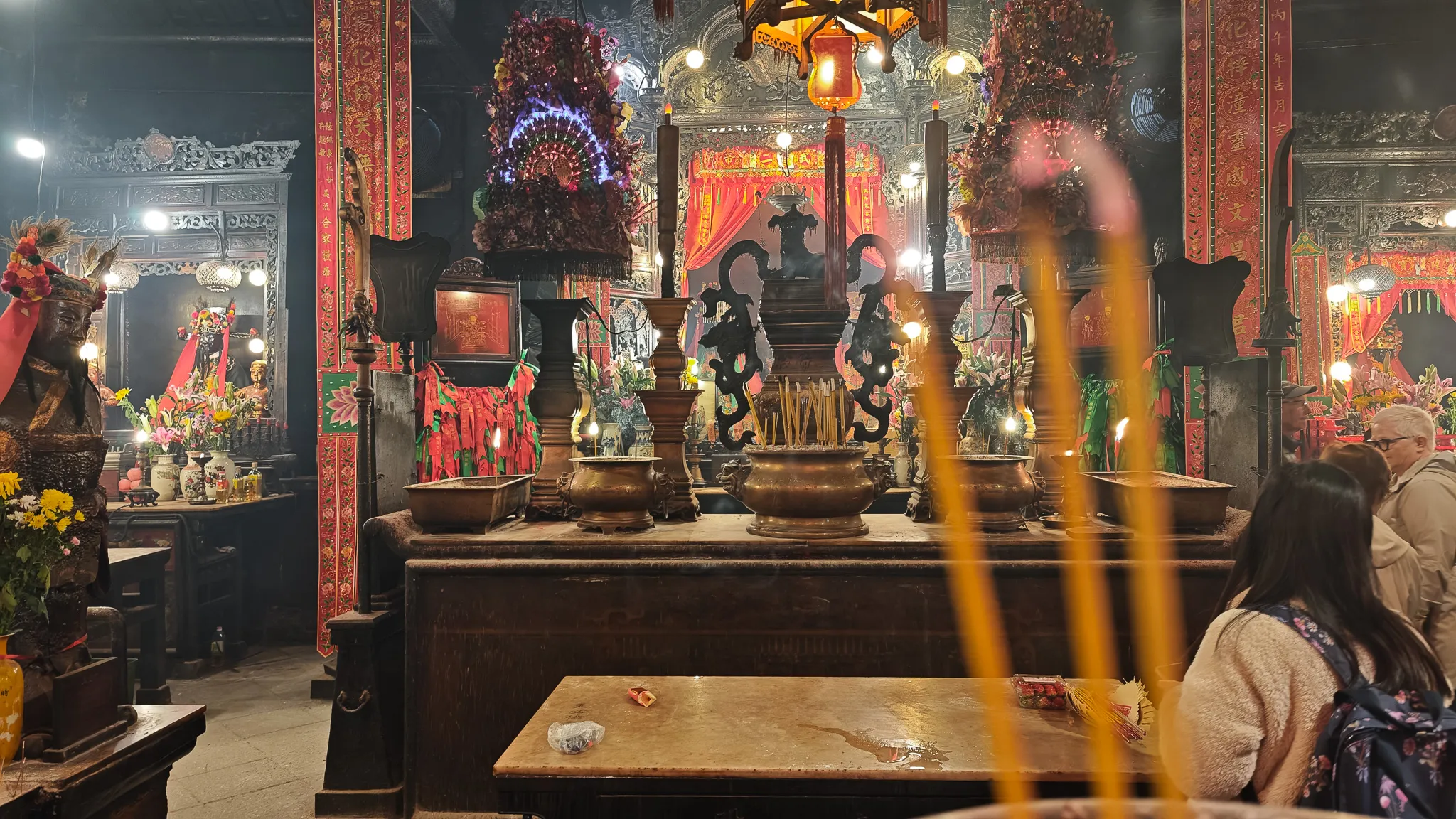
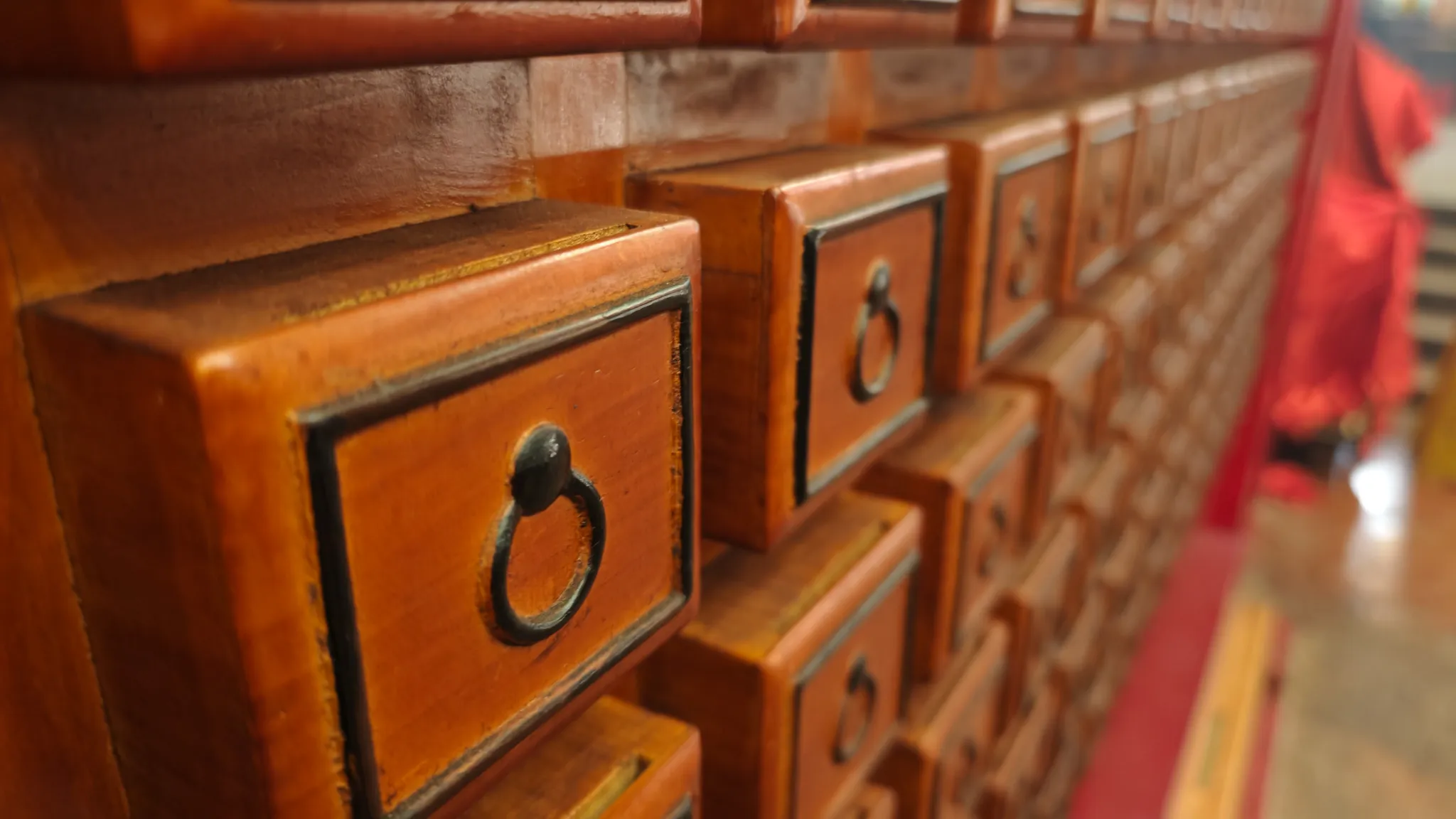
Bronze deer guard the altars. Warrior statues grip their guandao blades behind banks of smouldering joss sticks. Wooden fortune-telling drawers line the walls, each one containing a numbered bamboo slip that a temple keeper will interpret for a small donation. The place smells of sandalwood and centuries.
SoHo & the Vertical City
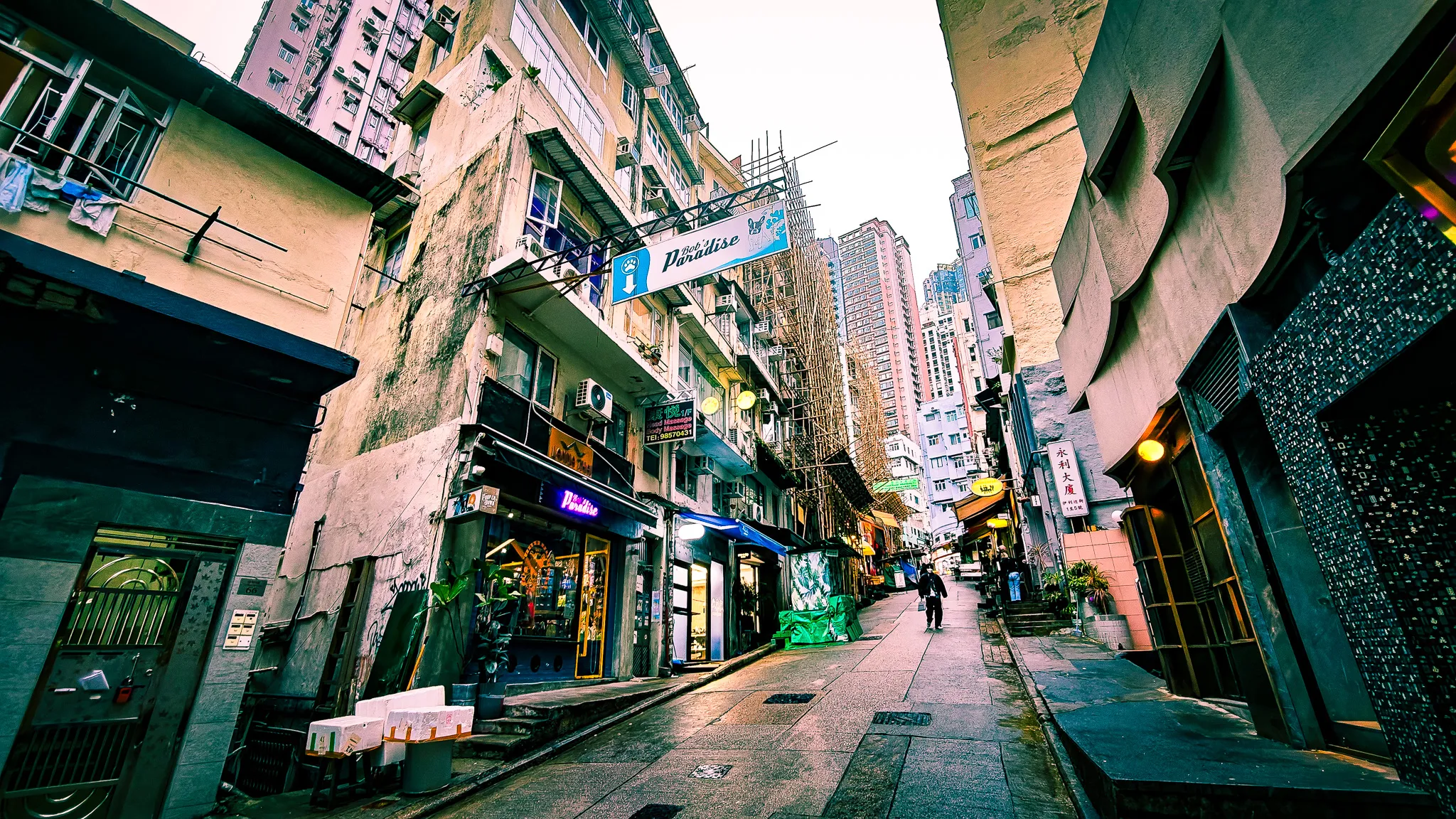
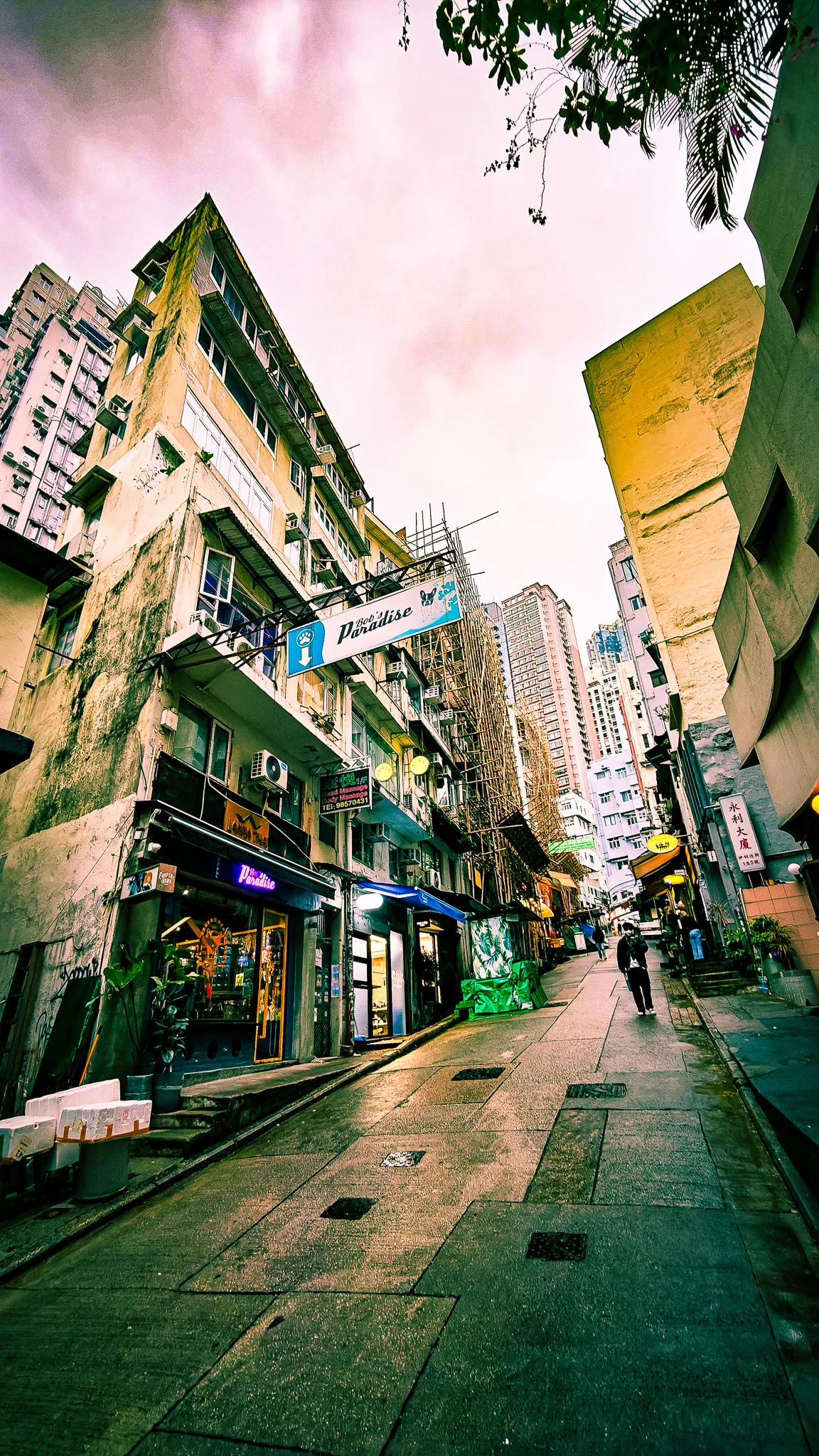
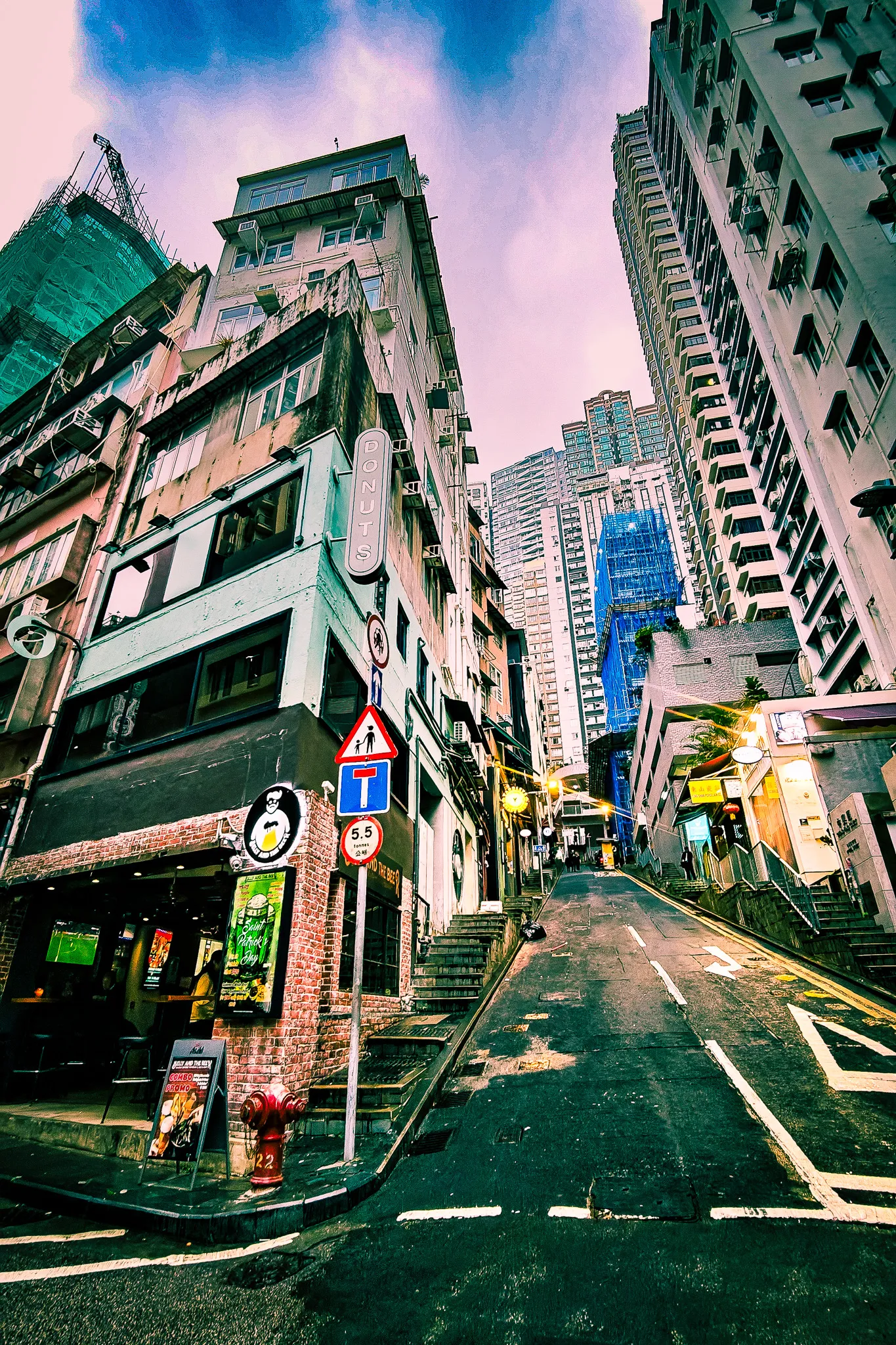
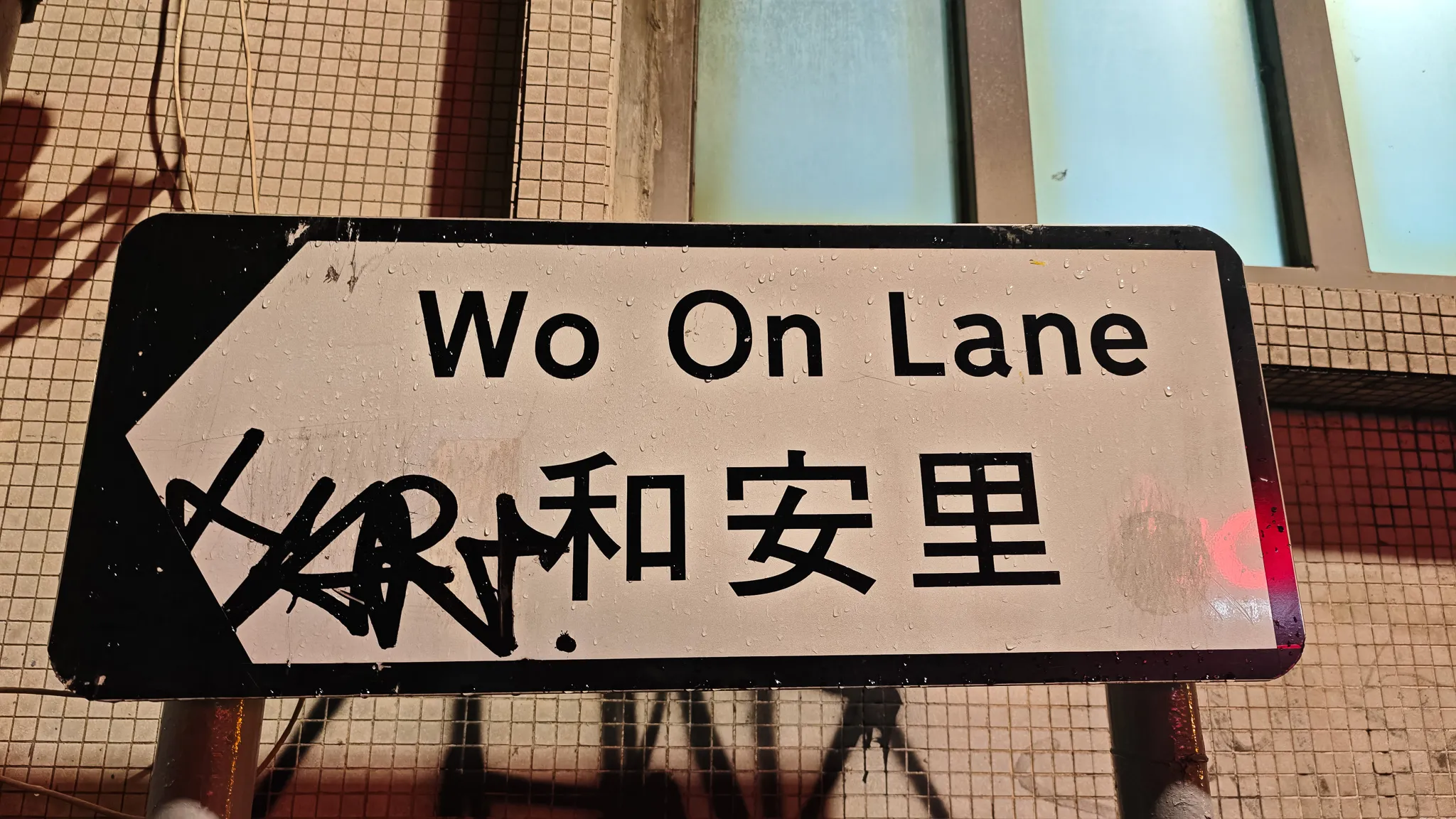
From the temple I climbed into SoHo, where the Mid-Levels escalator carries commuters uphill through a canyon of bars, galleries and overpriced coffee. At dusk, Peel Street’s neon signs flicker to life and the narrow lanes fill with after-work drinkers spilling onto the pavement.
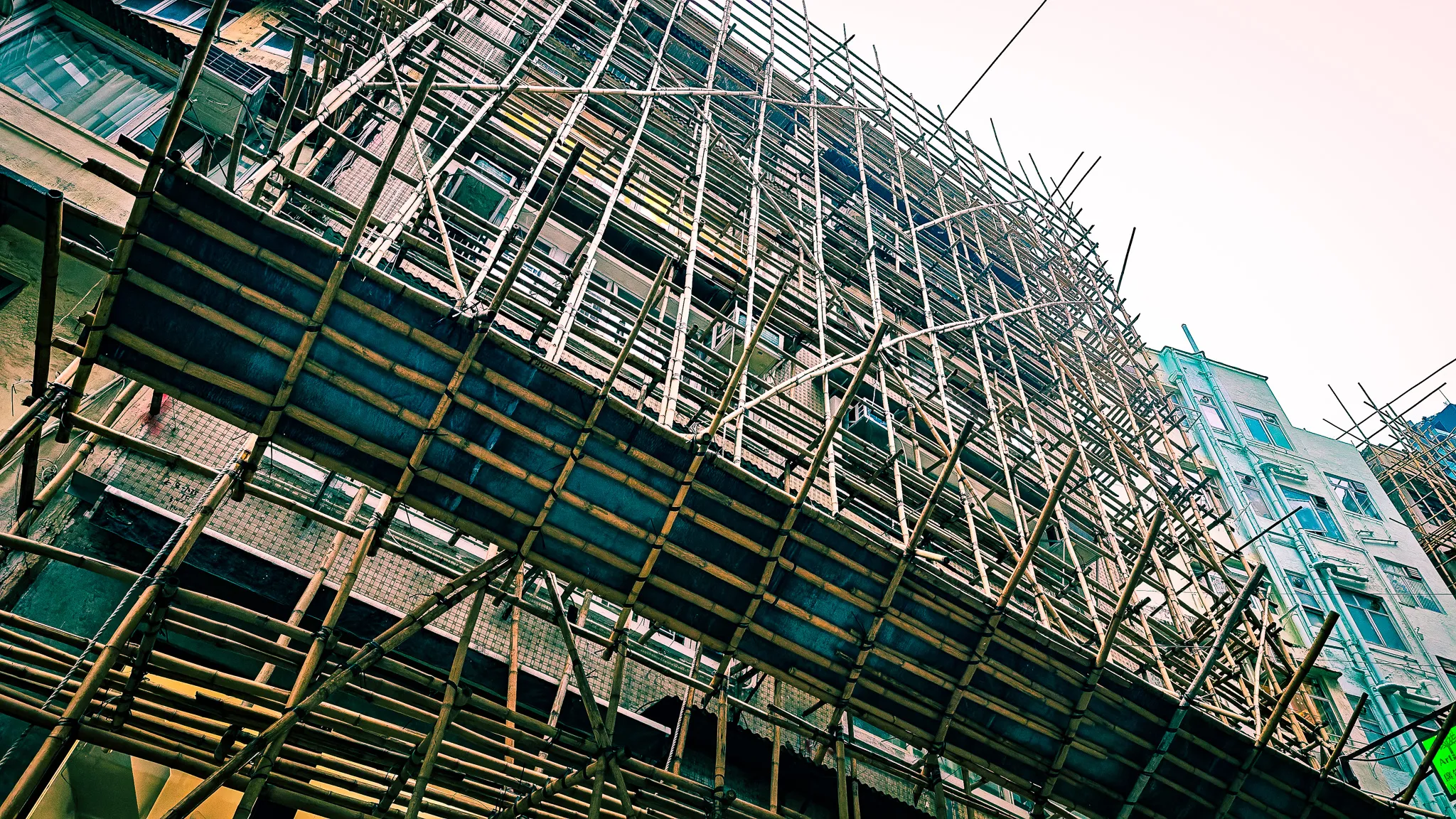
Hong Kong is one of the last places on earth where construction workers still use bamboo scaffolding. You’ll see it everywhere — lashed together with nylon straps, climbing thirty storeys up a glass tower, swaying slightly in the harbour breeze. It looks terrifying. It’s been used here for centuries. The bamboo is stronger than steel per unit weight, and the men who build these structures are artists.
Yat Lok — One Michelin Star, Zero Pretension
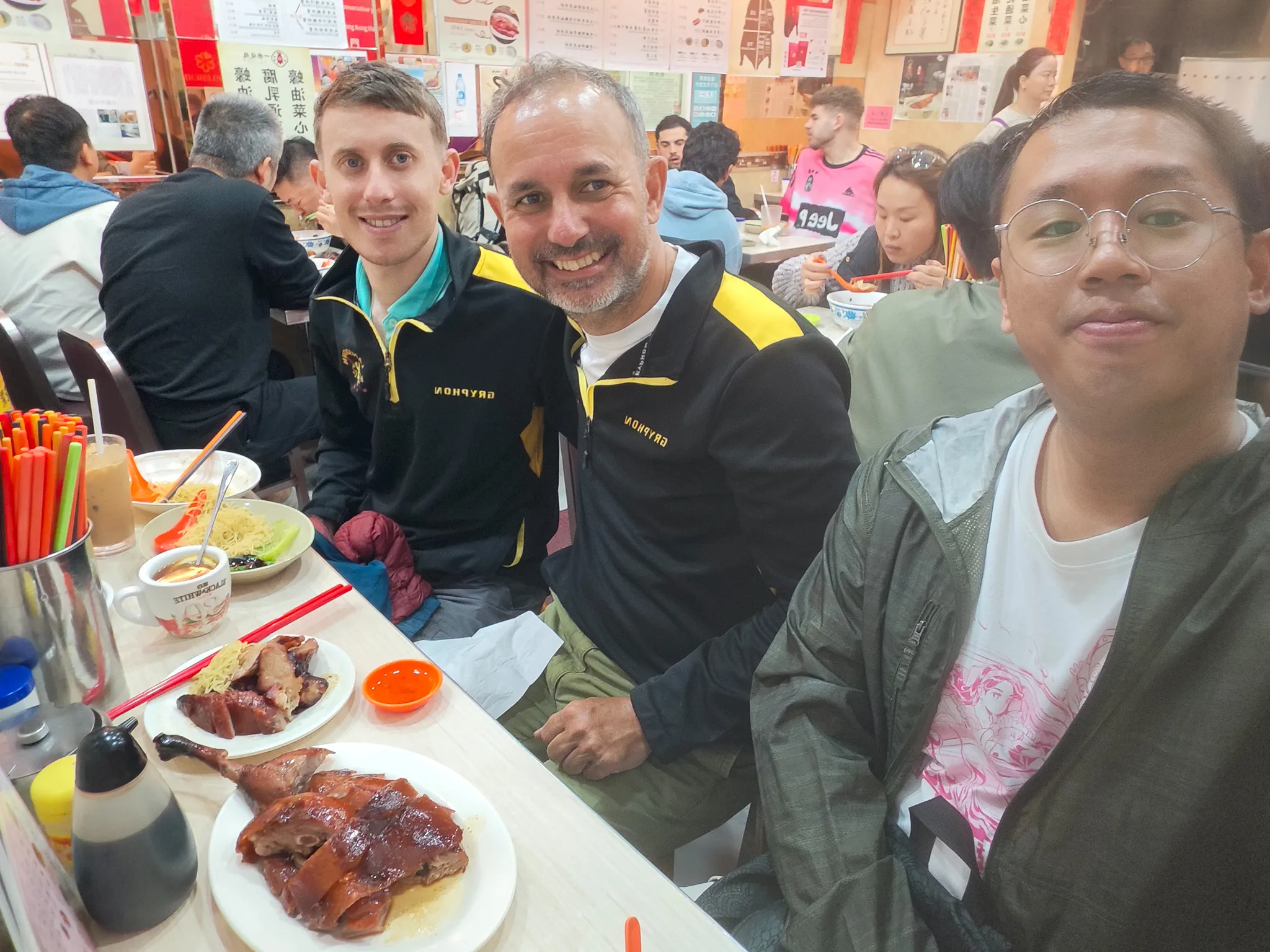
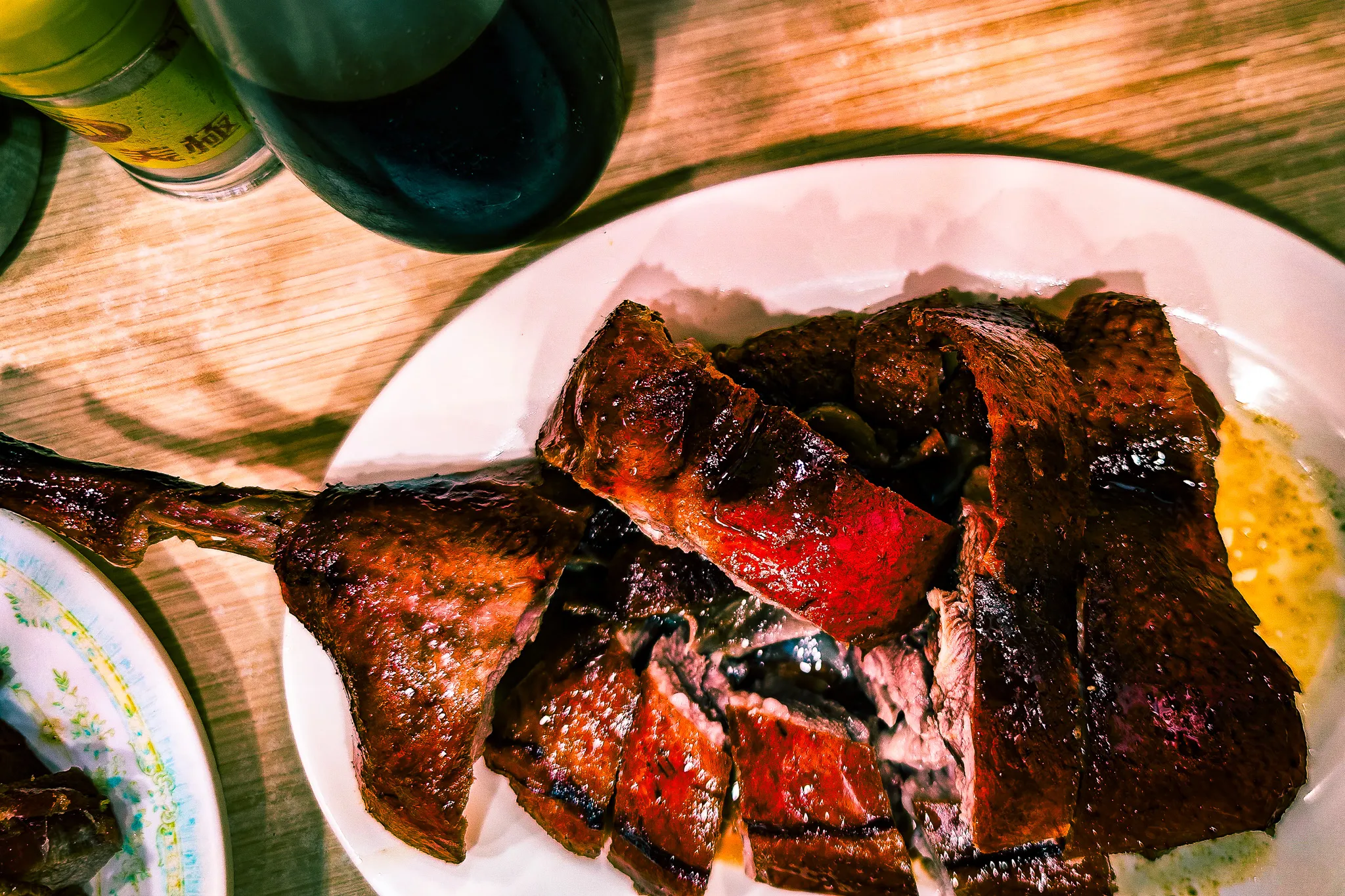
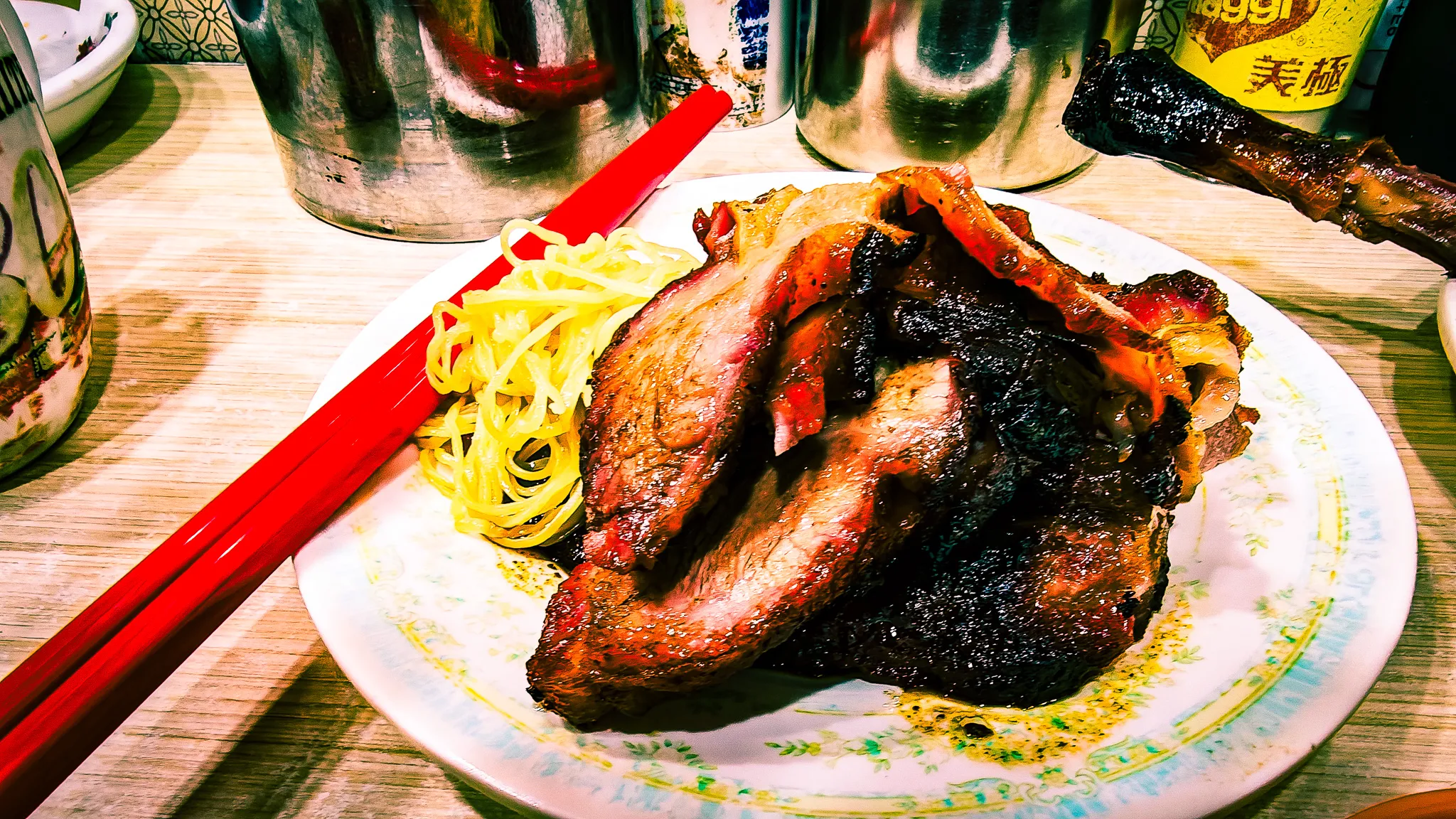
Yat Lok on Wellington Street has held a Michelin star for roast goose since 2009. The dining room is fluorescent-lit, the tables are shared, and the menu is essentially one item. You sit down, you point at the goose hanging in the window, and minutes later a plate of lacquered, crackling-skinned, juice-dripping perfection arrives with rice or noodles.
We ordered too much and ate all of it. Goose leg with noodles. Roast goose on rice. More goose. The skin shatters between your teeth. The meat is dark and rich, nothing like the bland roast poultry of home. For about eight quid, this was the best meal of the entire trip.
The Bar Crawl
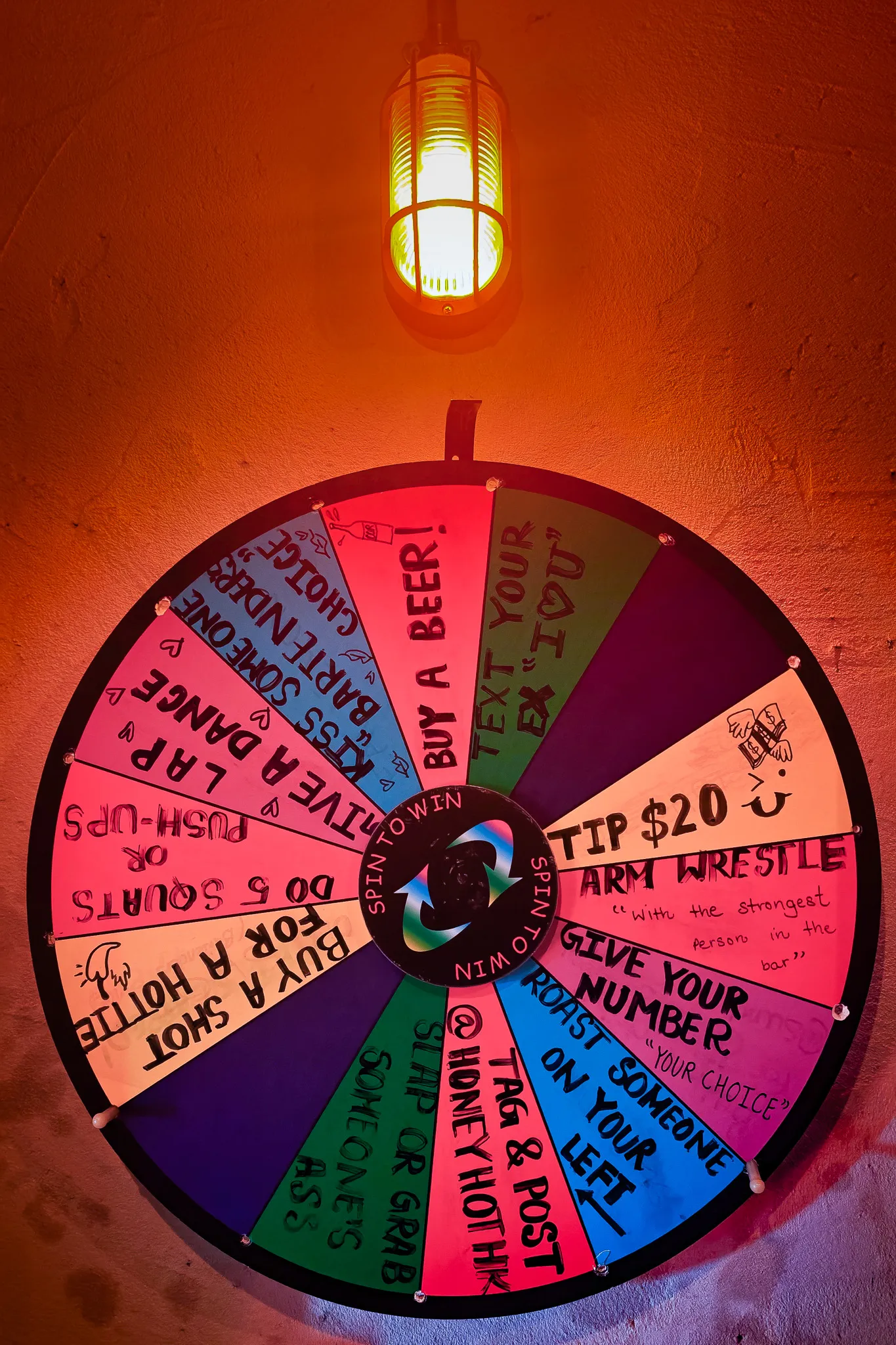
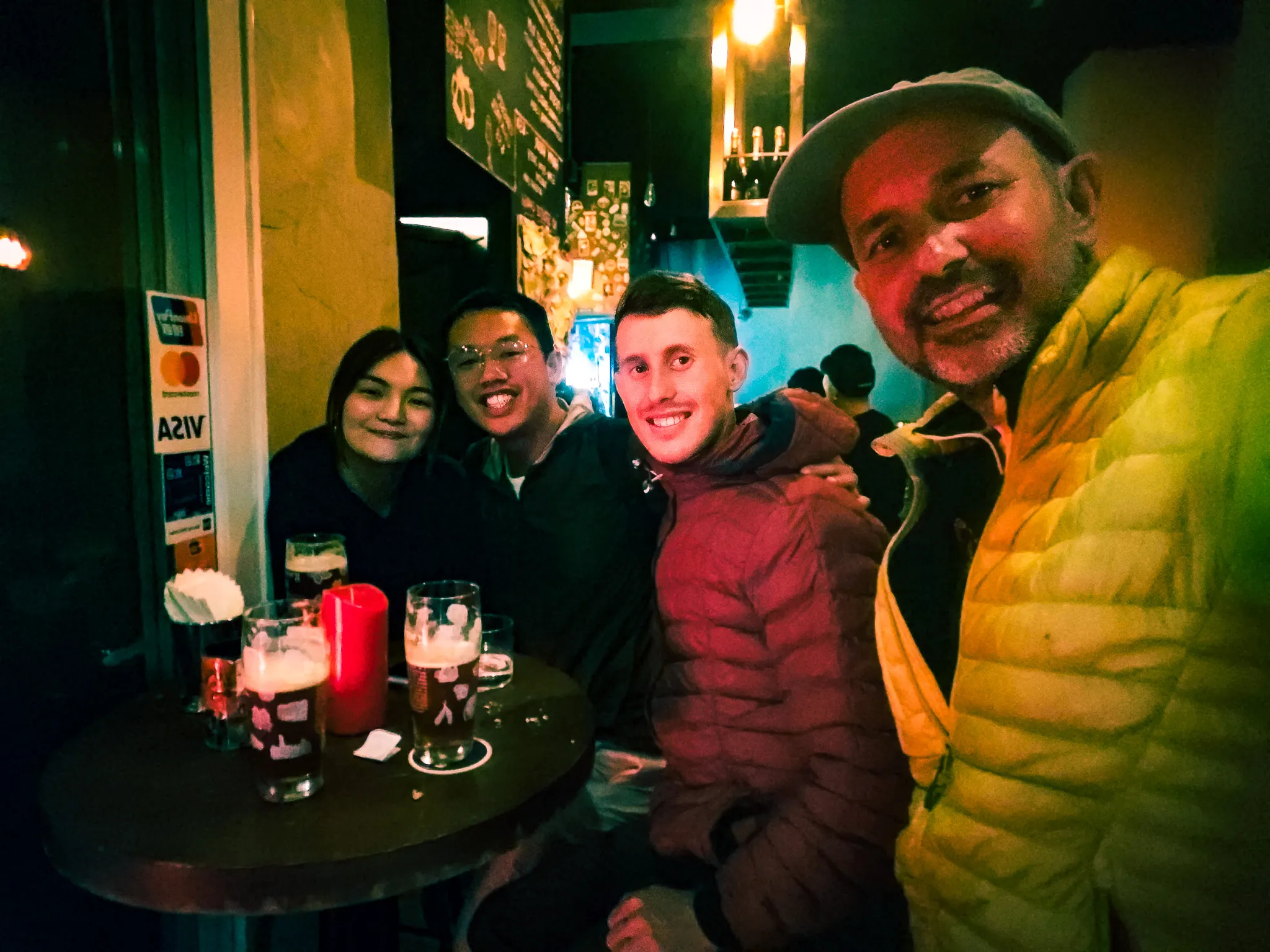
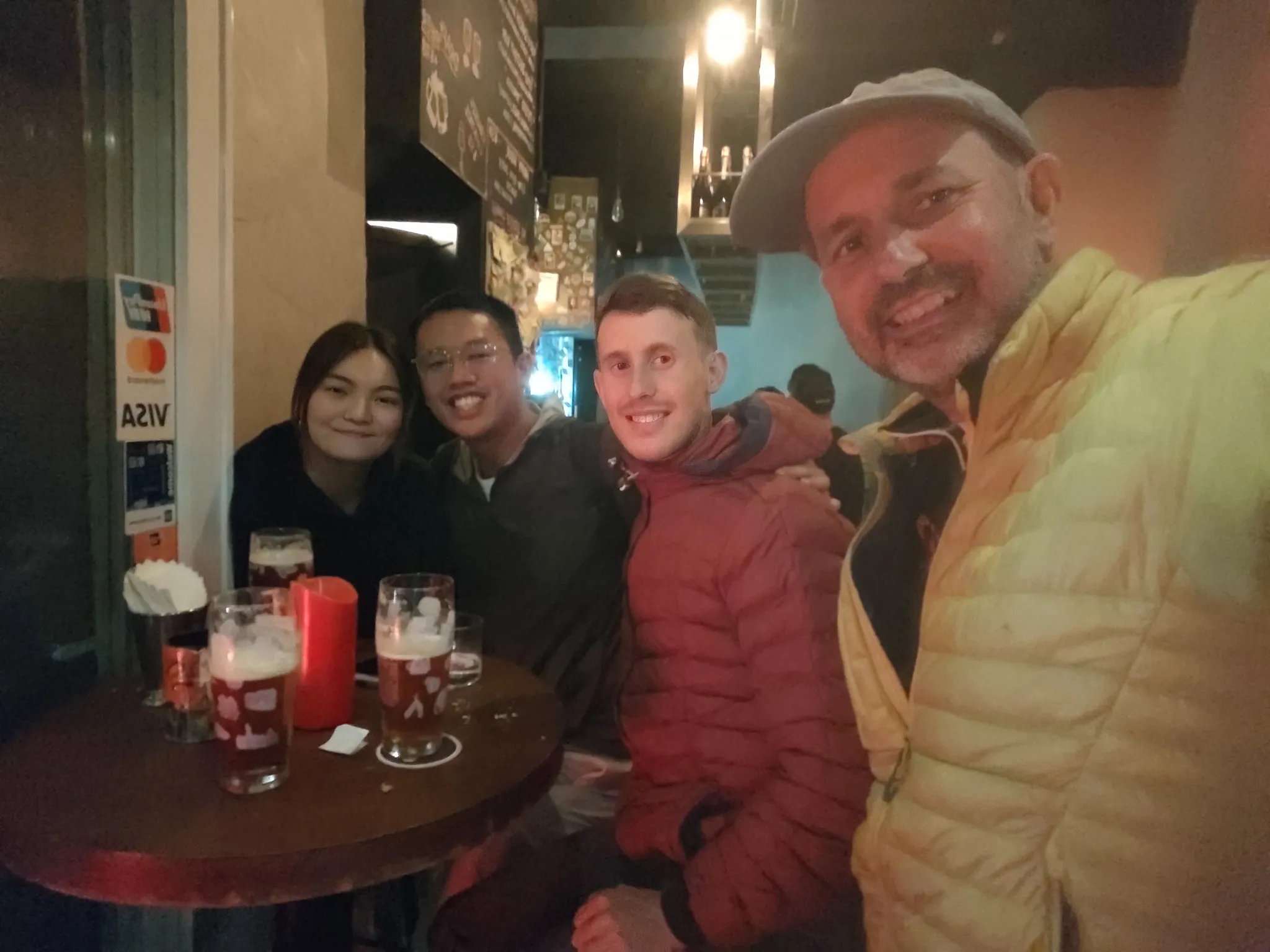
Hong Kong drinking starts civilised and ends chaotic. We began at a place with a spin-to-win wheel on the wall offering dares like “arm wrestle the bartender” and “buy a beer for a stranger.” We ended at a Belgian bar in a basement where the owner poured us things we hadn’t ordered and refused payment.
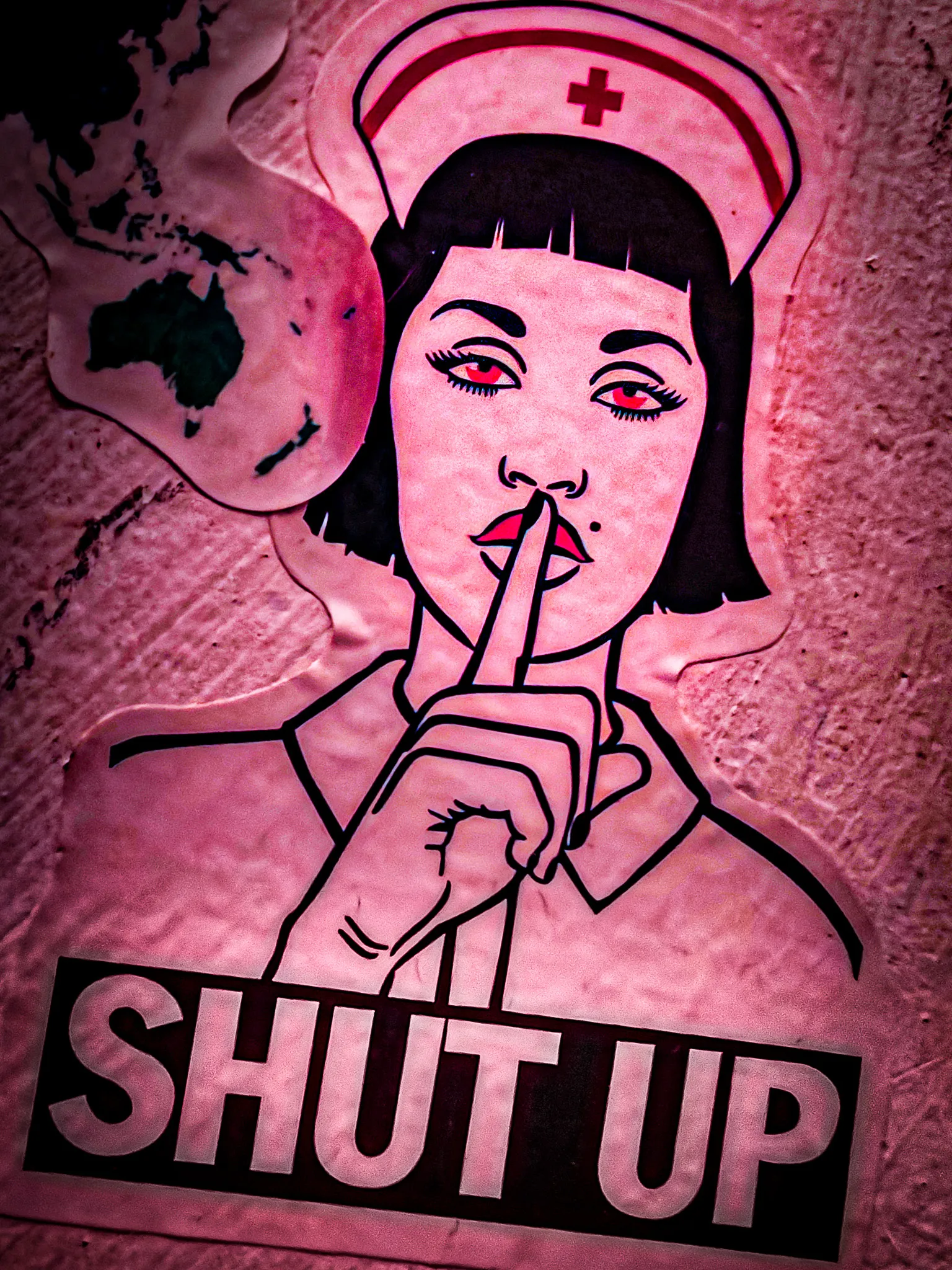
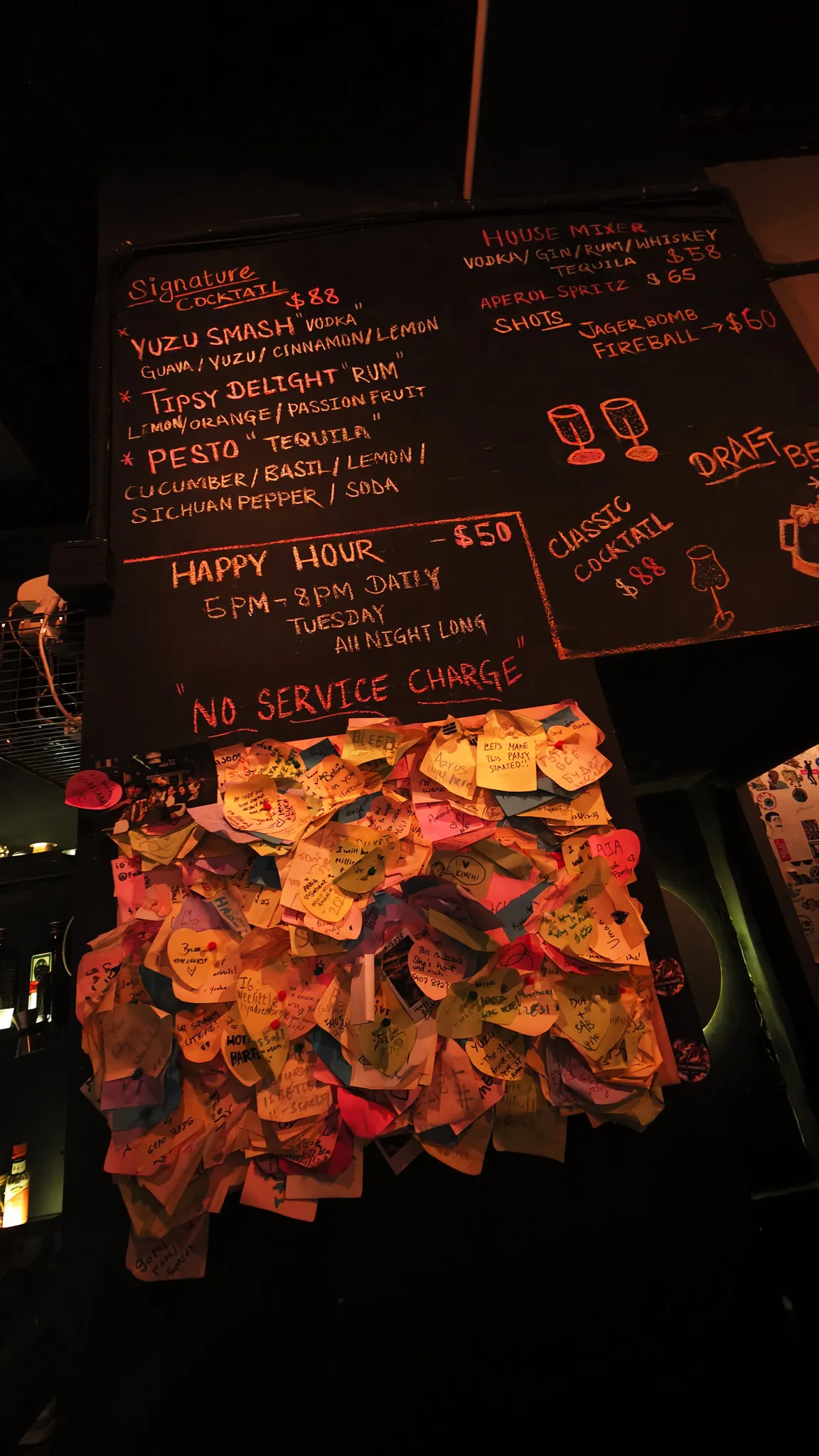
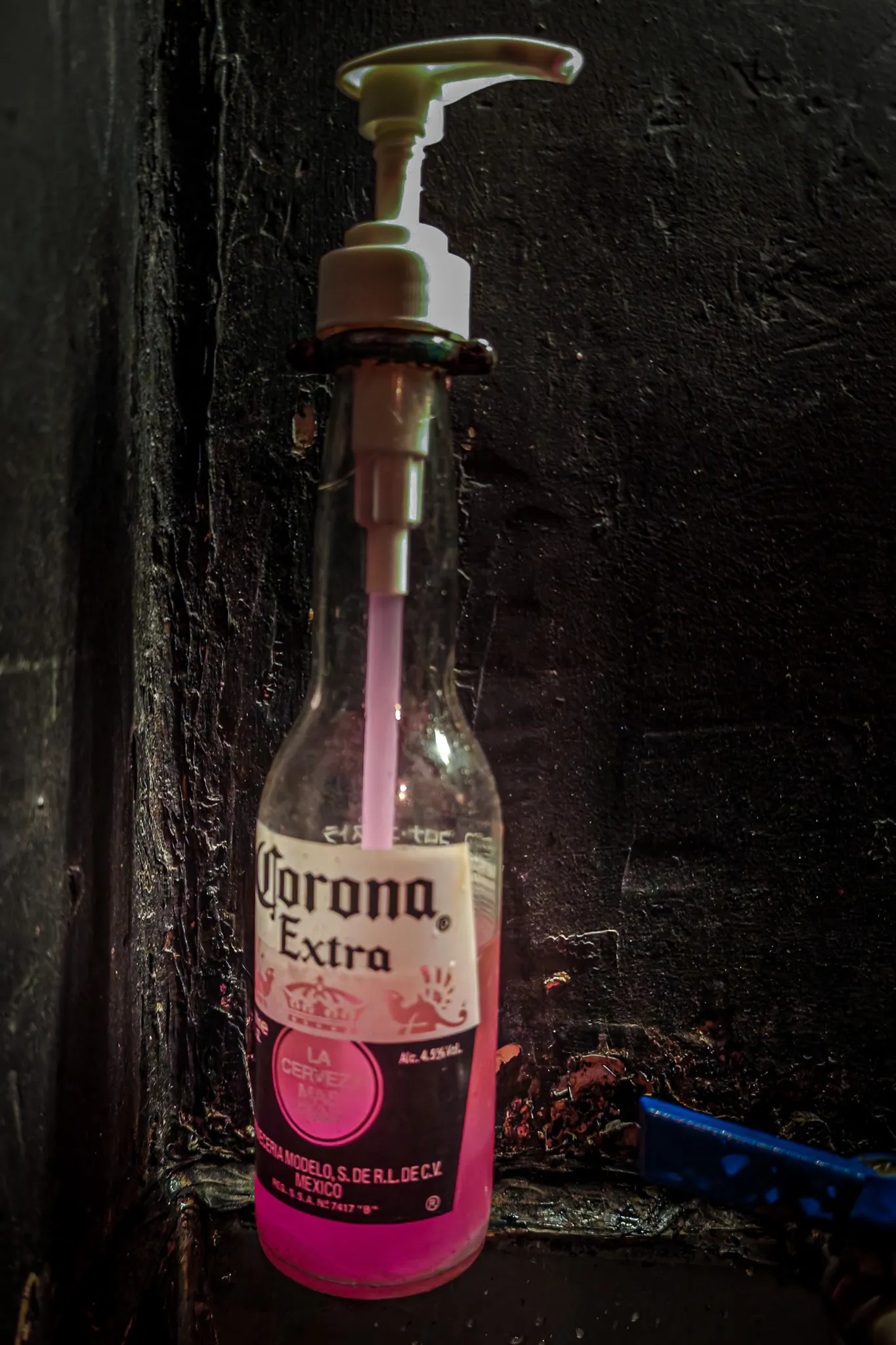
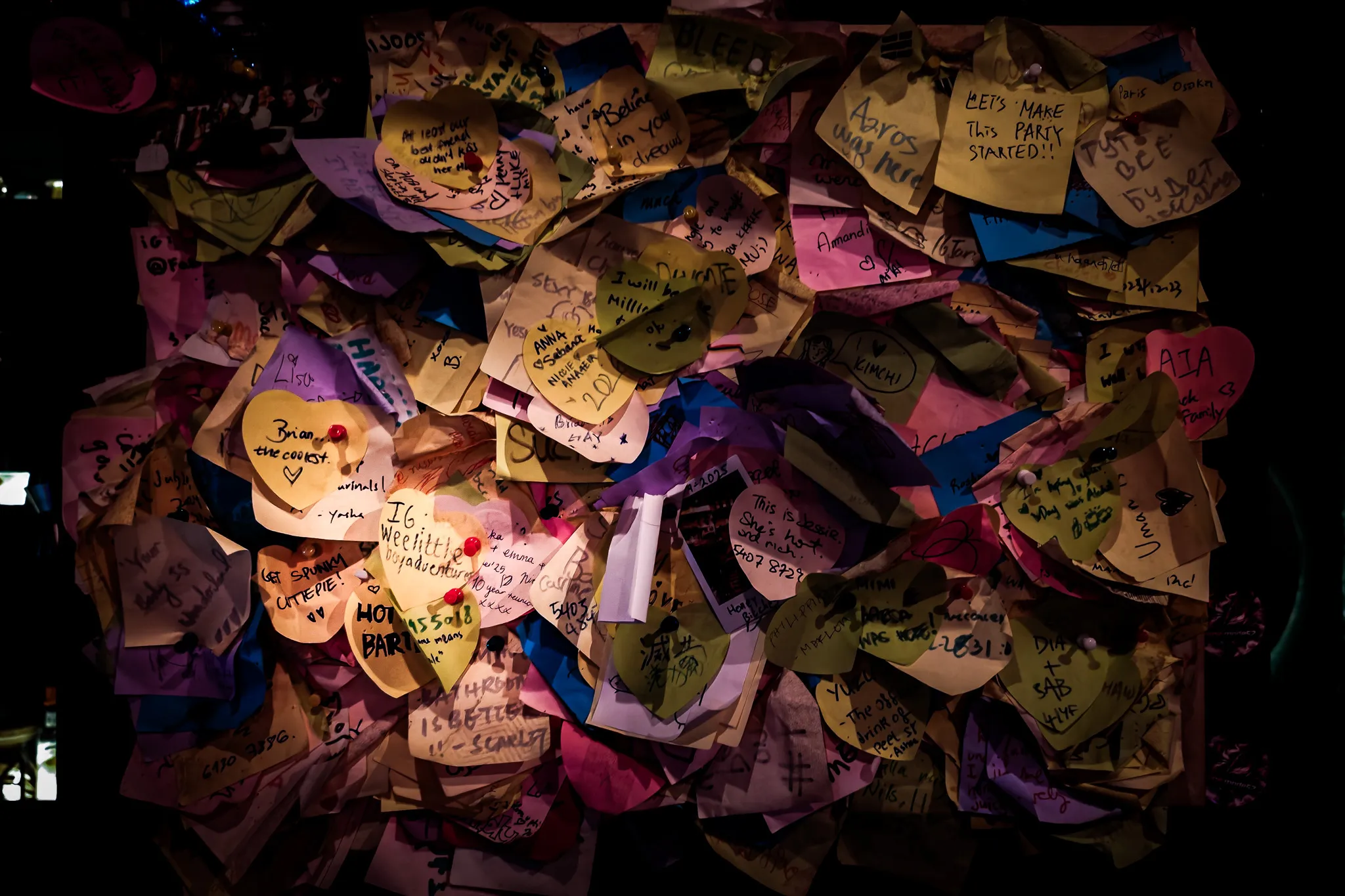
Between those two points: street art, chalkboard cocktail menus, heart-shaped sticky notes left by visitors from every country on earth, a Corona bottle repurposed as a soap dispenser, and a group of new friends from Brussels who taught us Flemish drinking songs. The kind of night that only happens when you stop planning and start saying yes.
Peel Street & Lan Kwai Fong
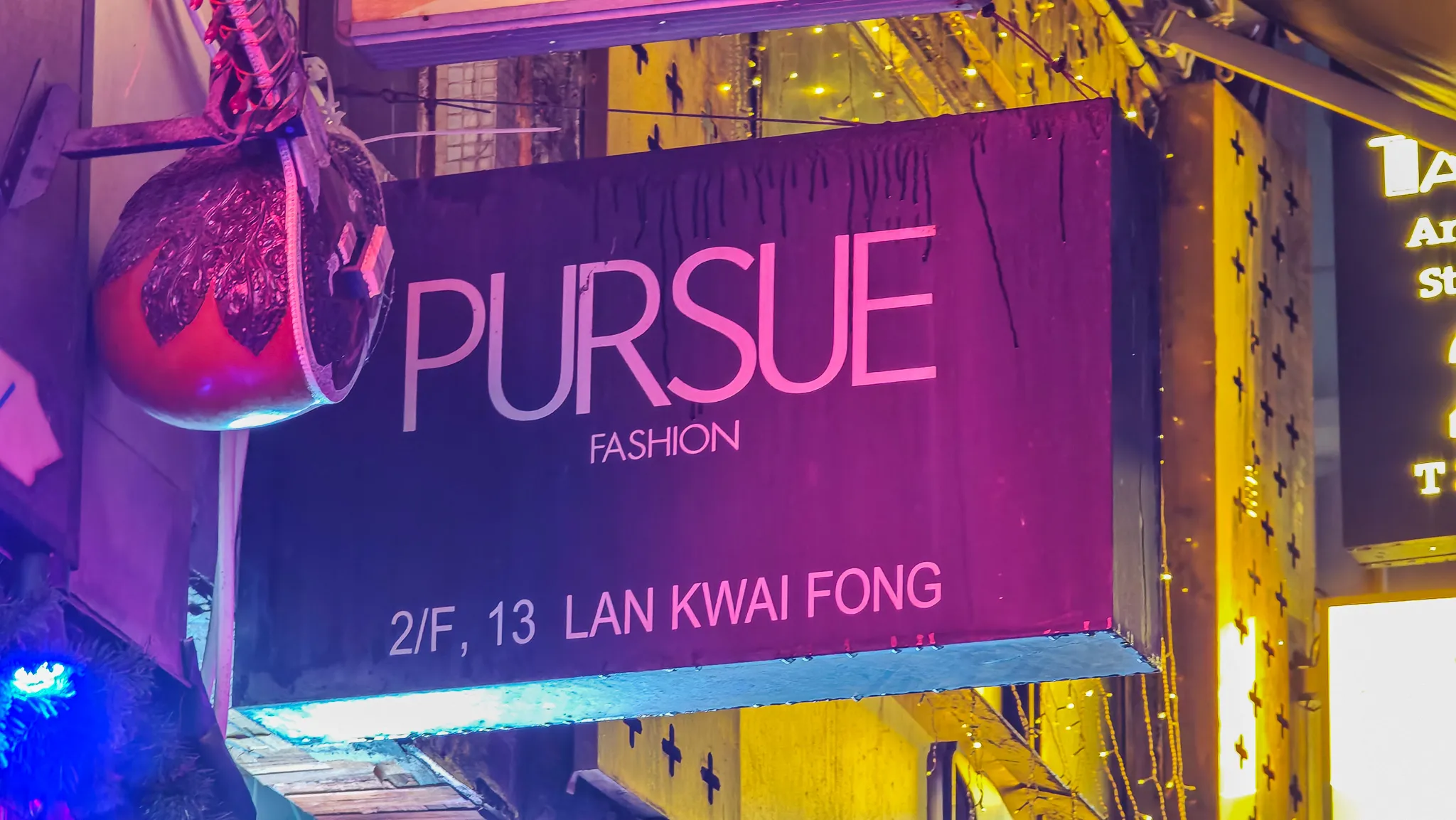
Peel Street is Hong Kong nightlife distilled — tiny bars carved into the hillside steps, people standing on the street with drinks because there’s no room inside, the constant soundtrack of laughter and clinking glass. Lan Kwai Fong nearby is louder, flashier, more tourist-friendly. Between the two, you could drink for a week and never visit the same place twice.
Chungking Mansions
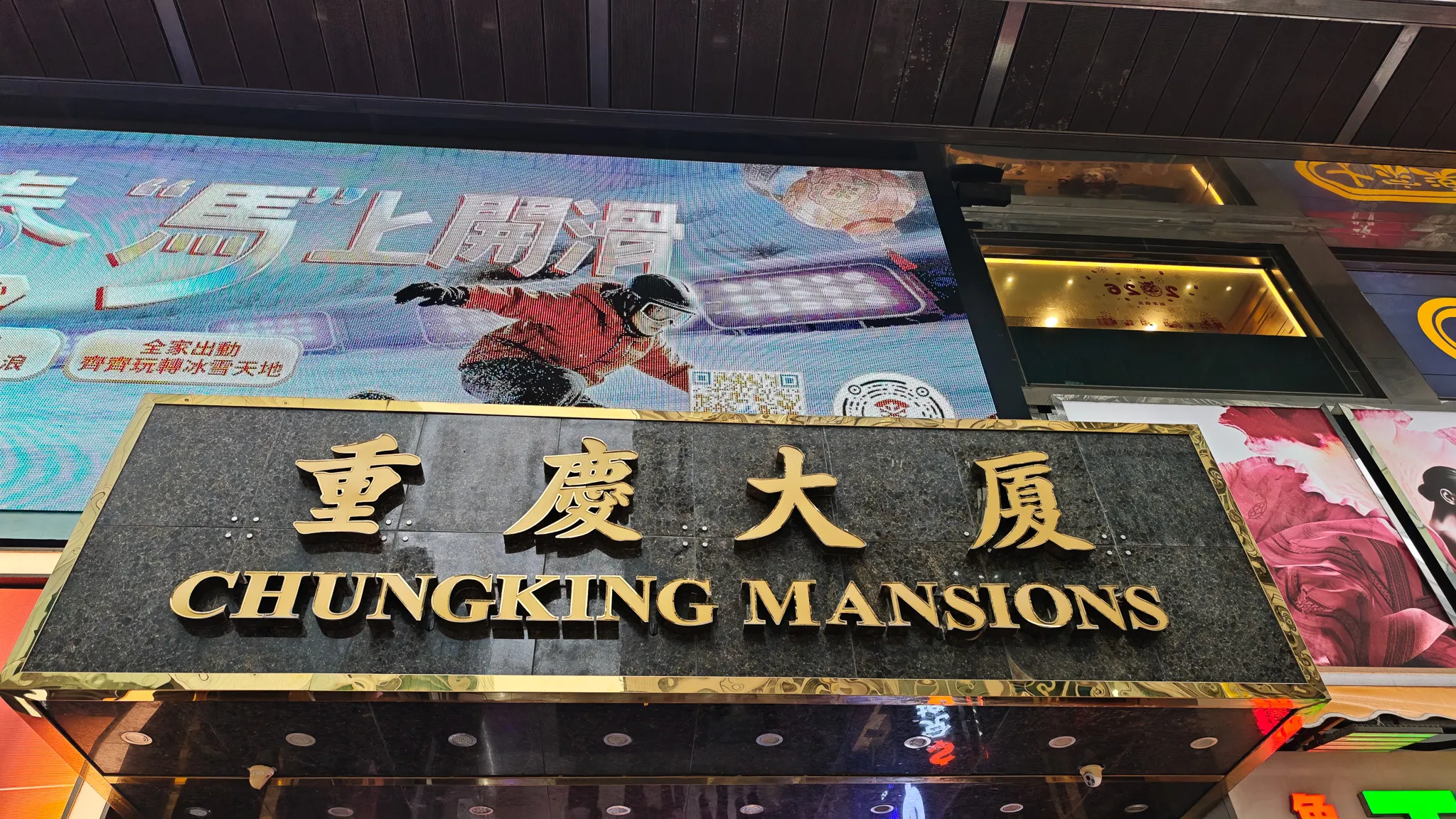
If The Peninsula is old-money Hong Kong, Chungking Mansions is its anarchic opposite. This concrete tower block on Nathan Road houses hundreds of guesthouses, curry restaurants, phone repair shops and money changers. Wong Kar-wai filmed Chungking Express here. Backpackers on their last dollars sleep here. It smells of biryani and ambition. I loved it.
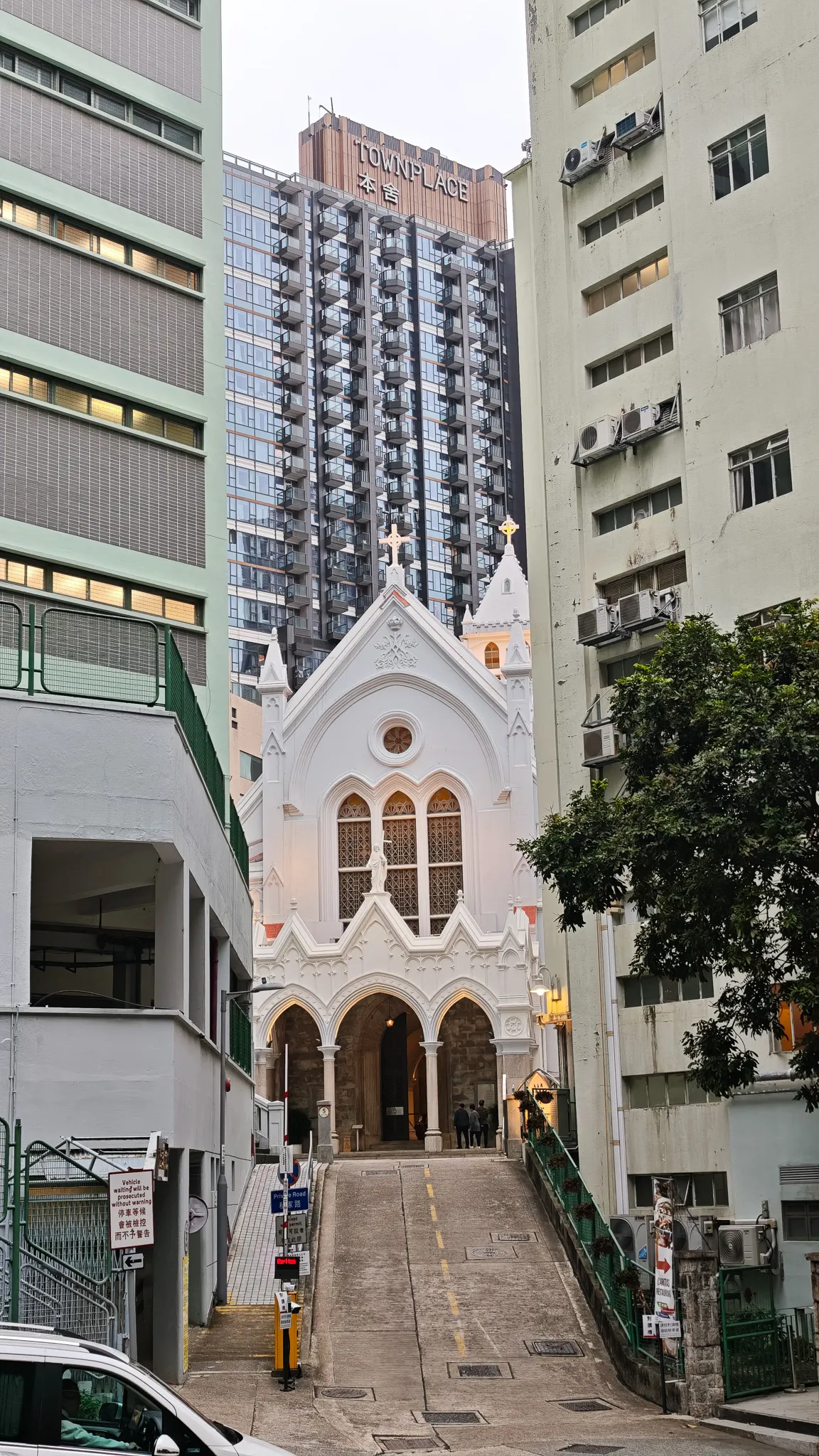
Victoria Peak — The View That Stops You
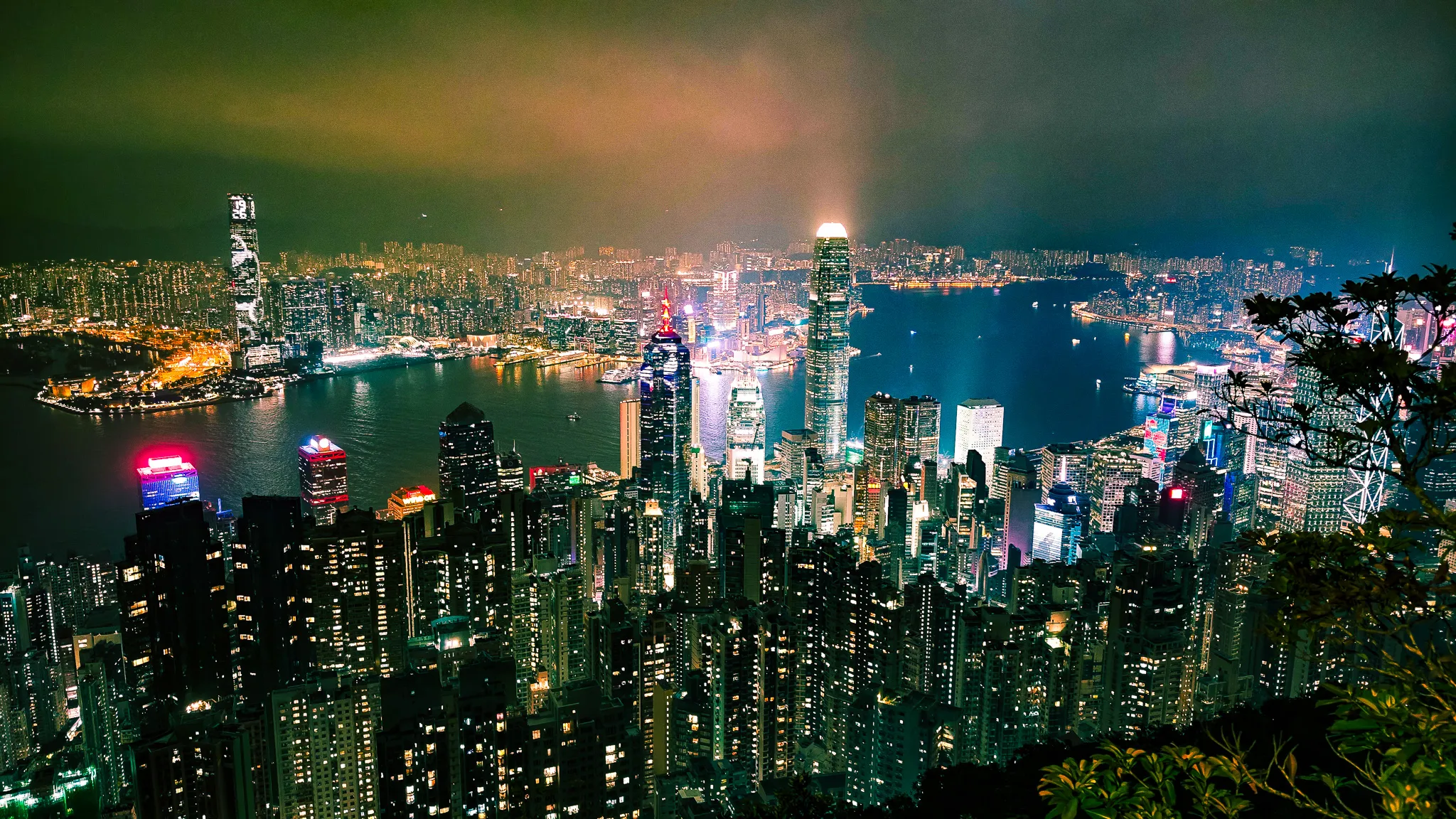
The Peak Tram has been hauling people up Victoria Peak since 1888. At 552 metres, it’s not the highest point in Hong Kong, but it’s the one with the view that makes you understand why seven million people choose to live on a few rocks in the South China Sea.
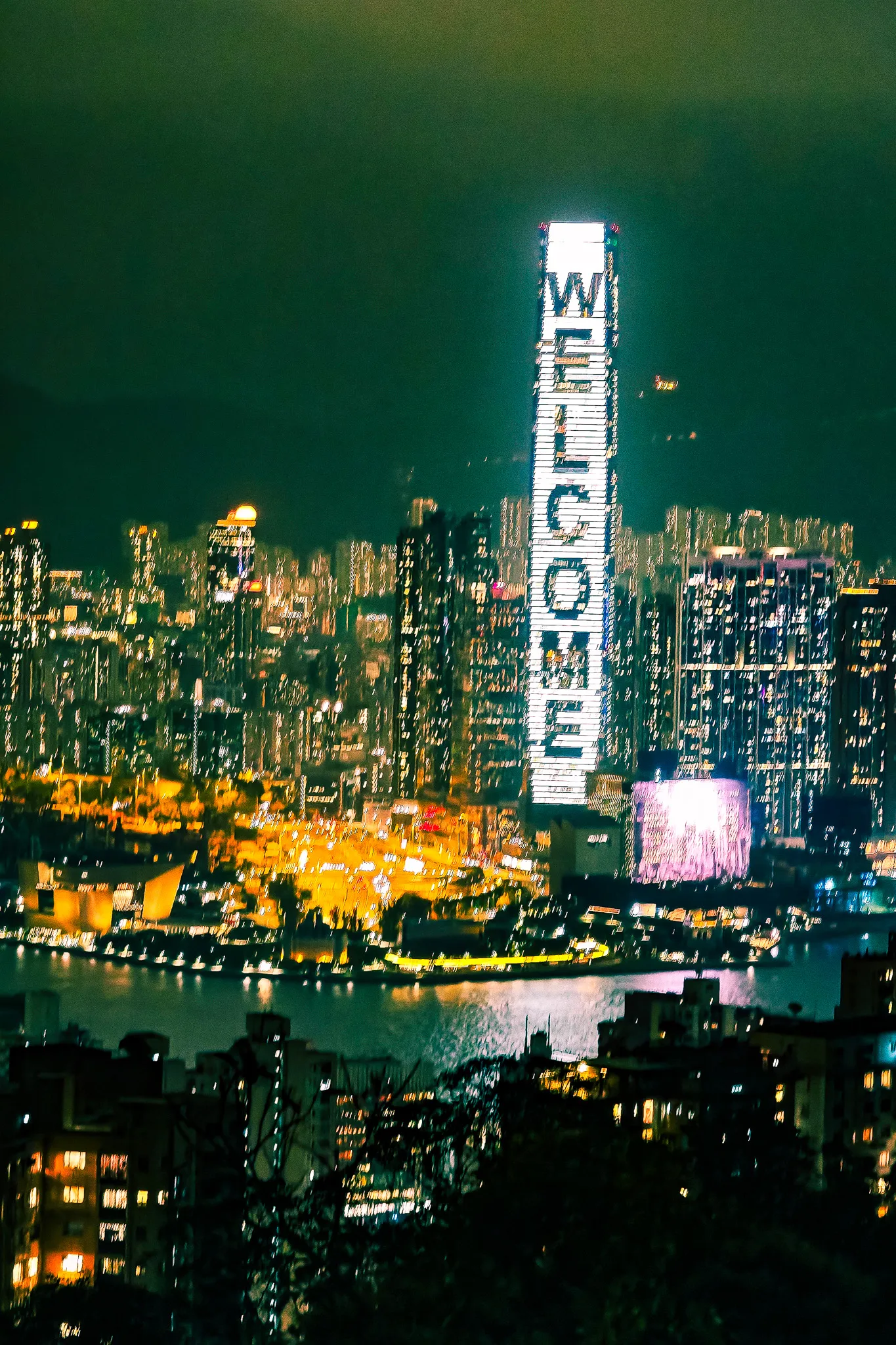
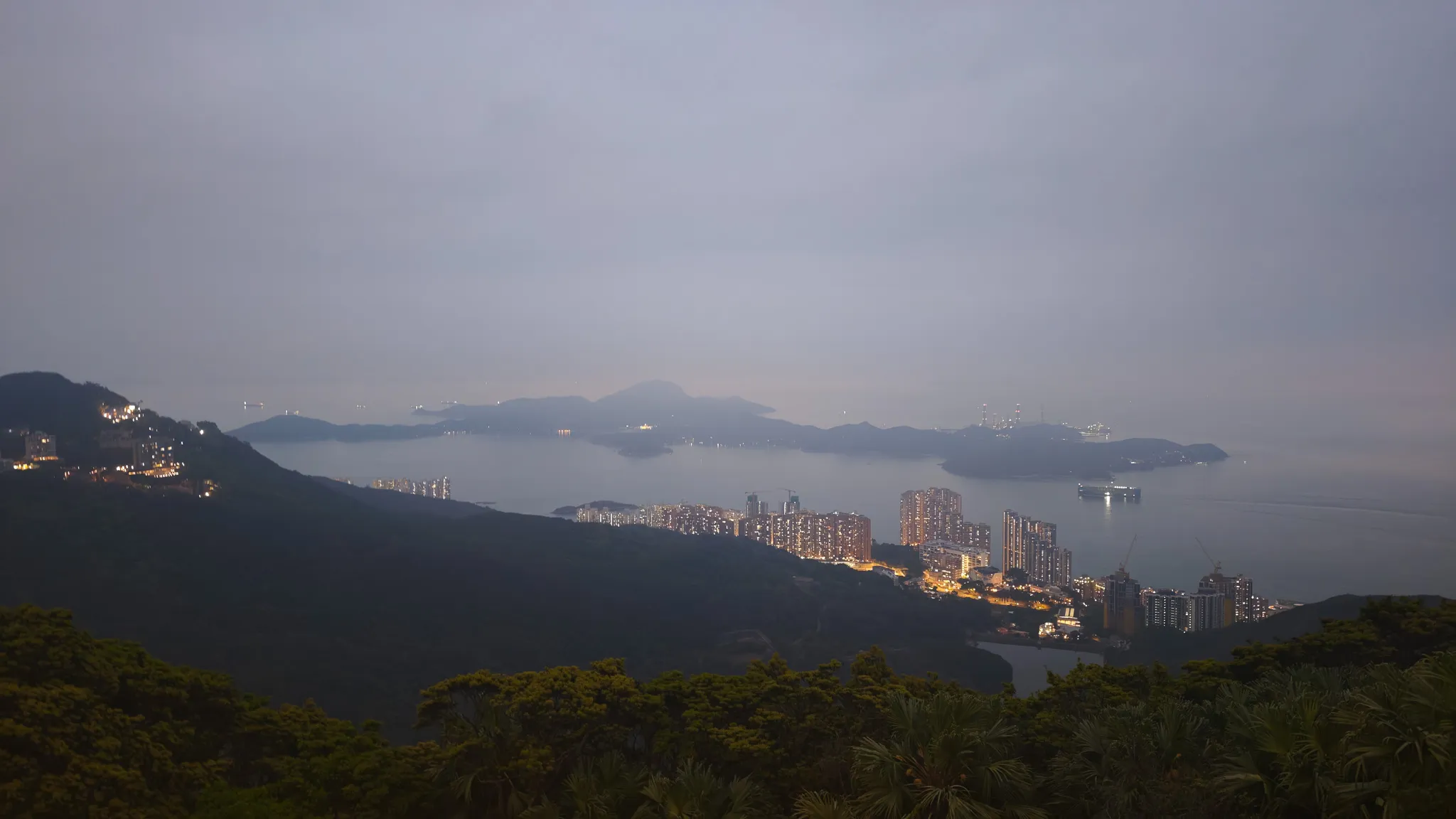
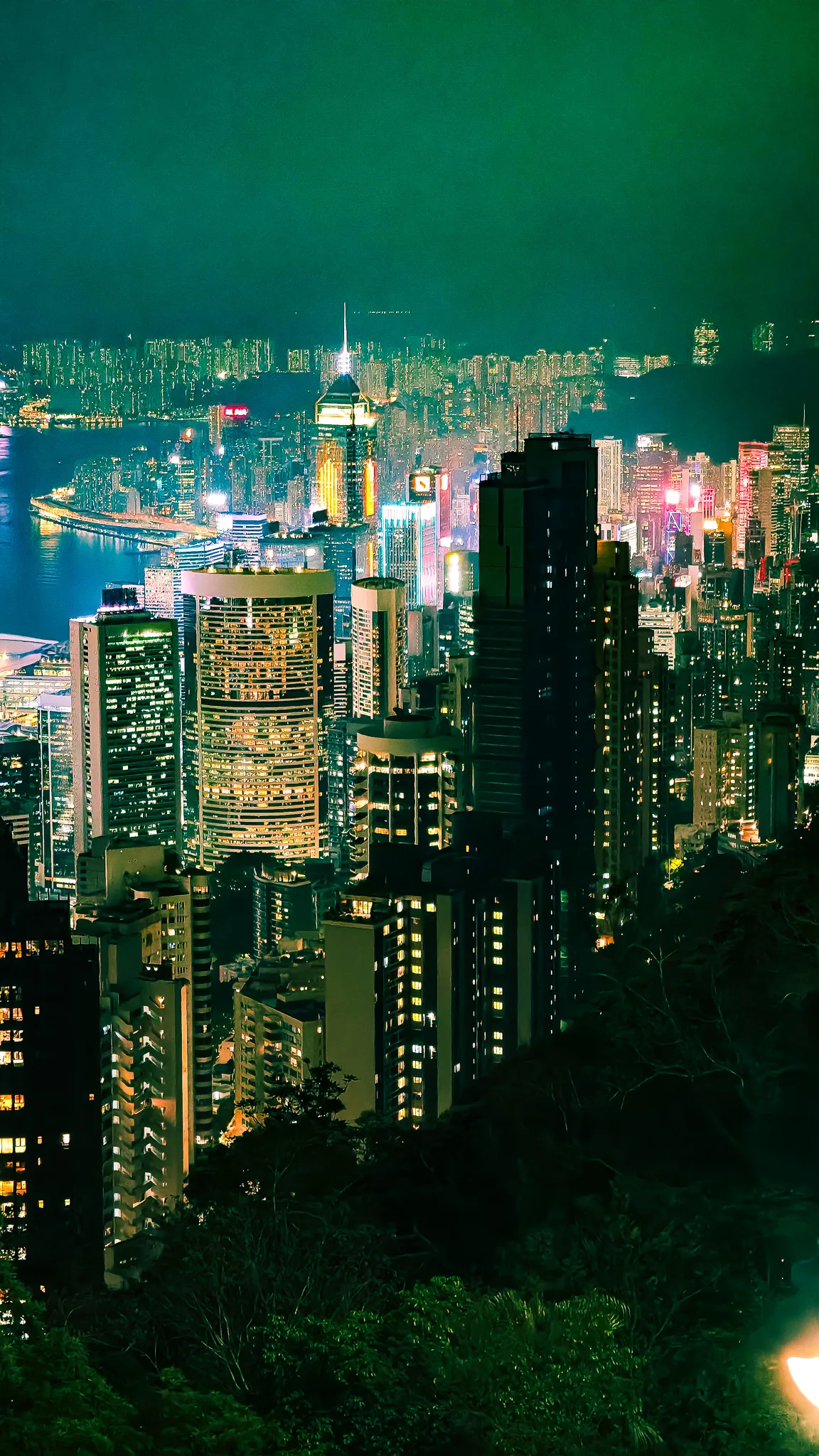
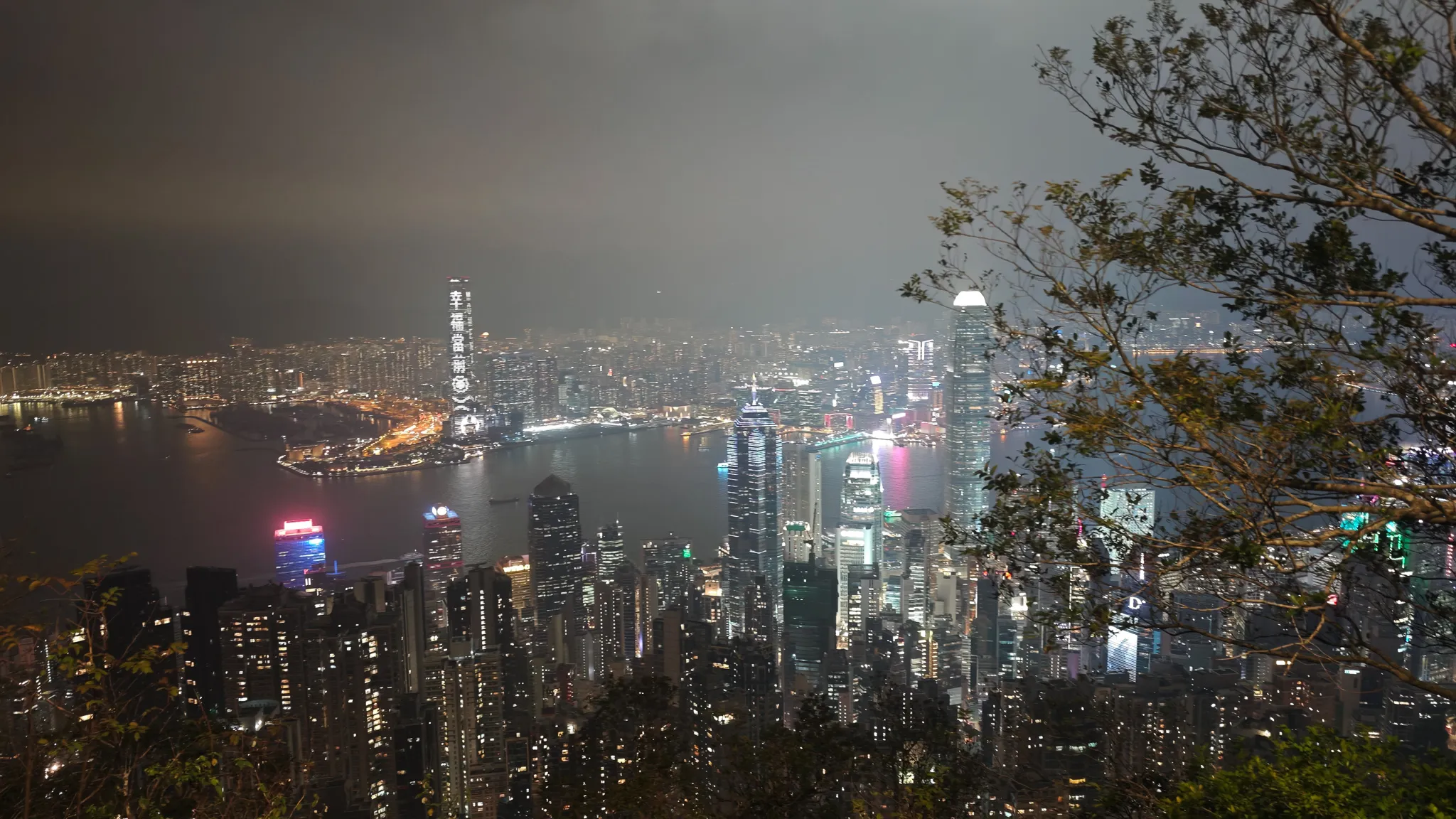
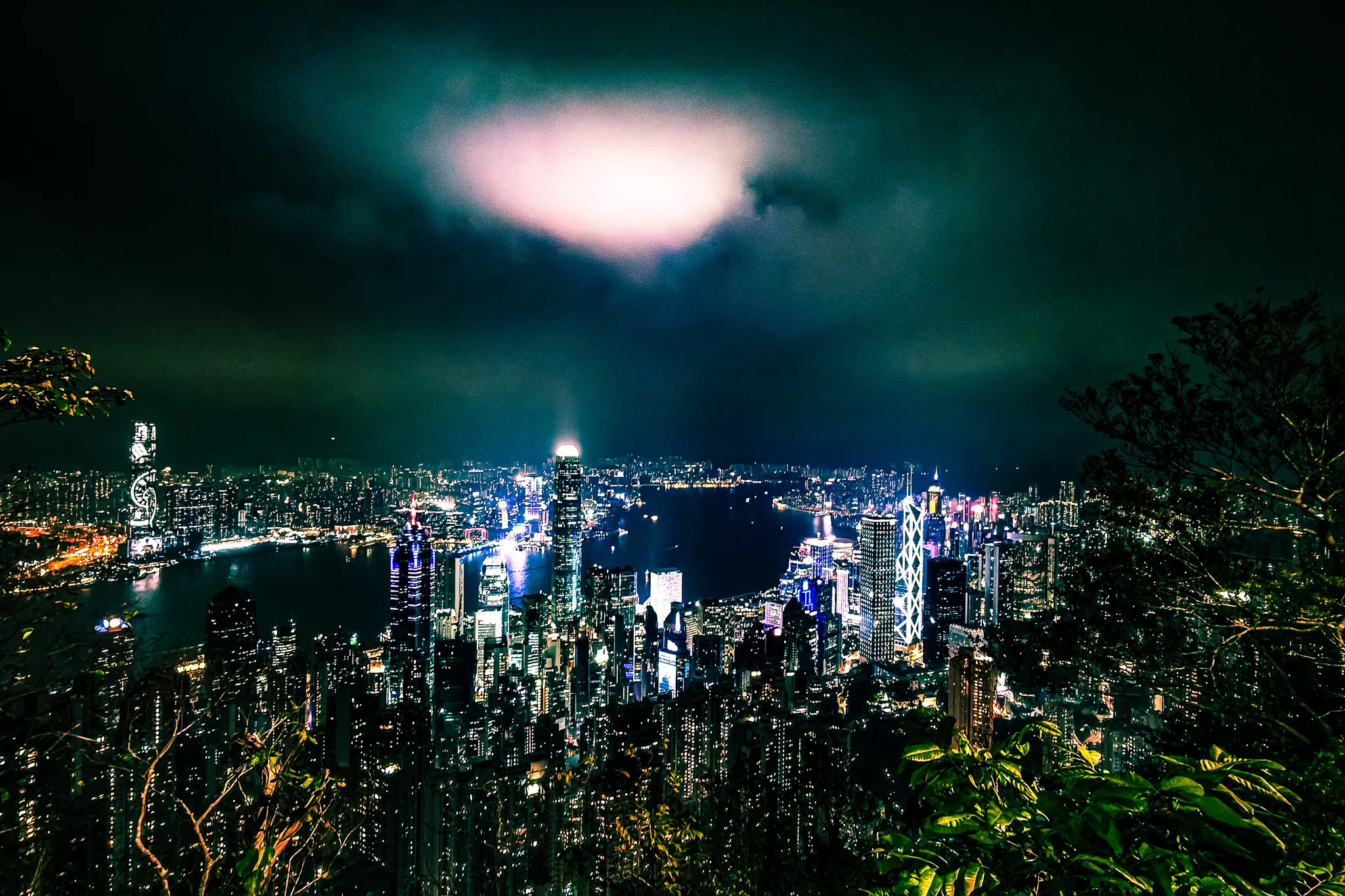
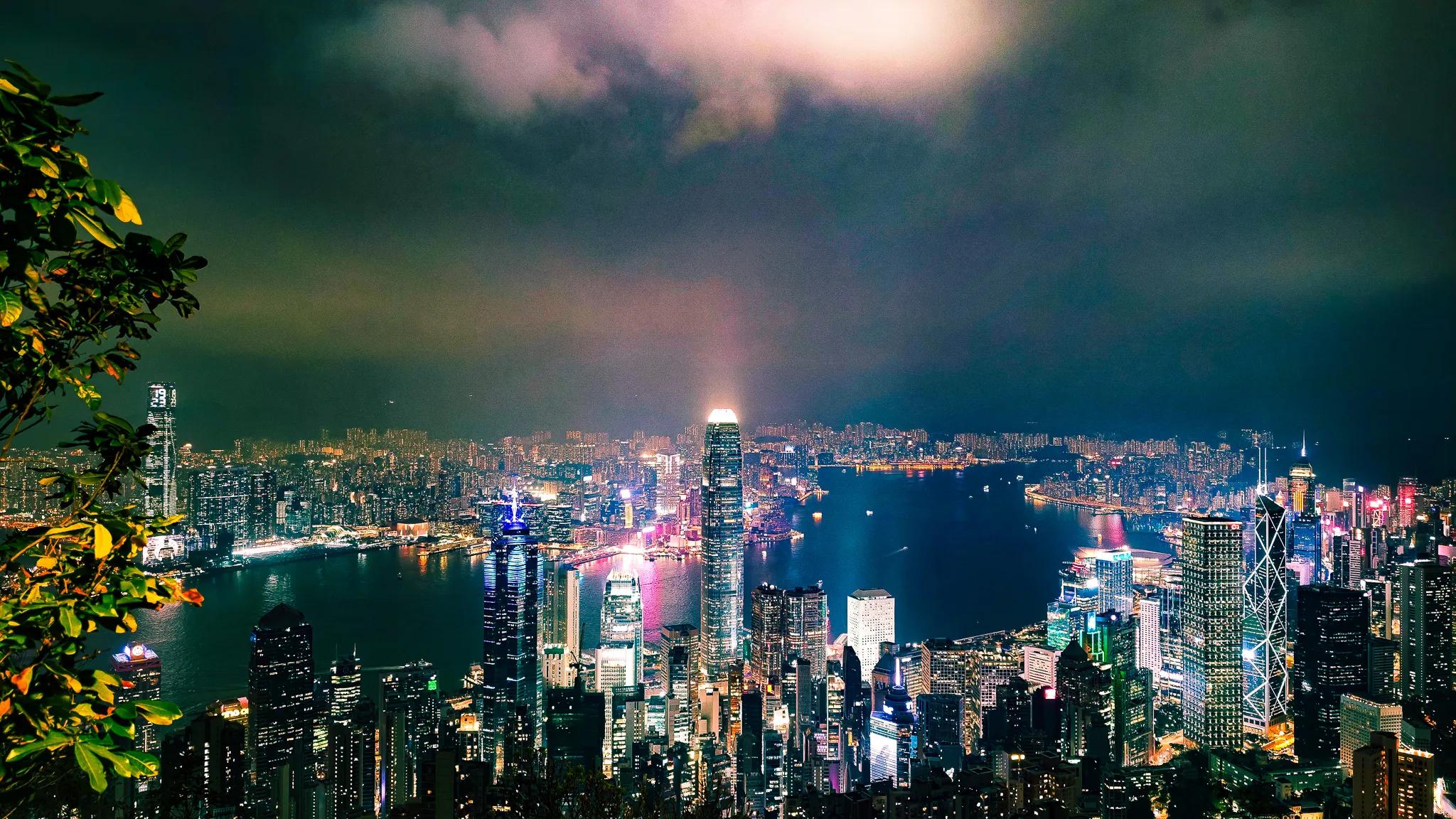
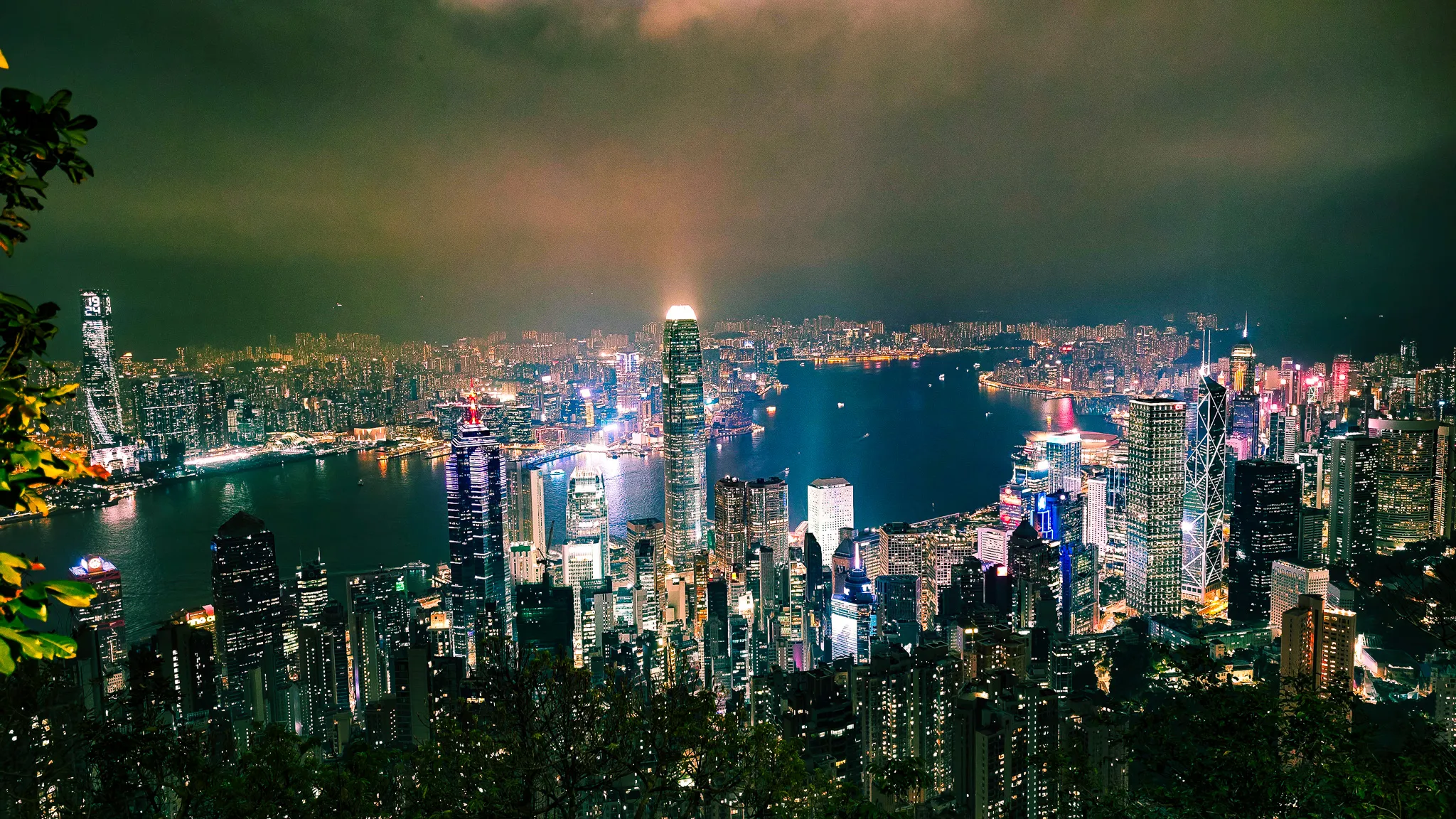
I went at dusk and stayed until well after dark. On the south side, Lamma Island and the outlying islands dissolve into haze. Then you walk around to the north side and the city detonates below you. Every skyscraper lit from within, the harbour black and glittering, the ICC tower in Kowloon scrolling “Welcome” in letters five storeys high. The clouds catch the city’s light and glow pink and orange above the skyline. It is, without qualification, the most beautiful urban panorama on earth.
Last Call
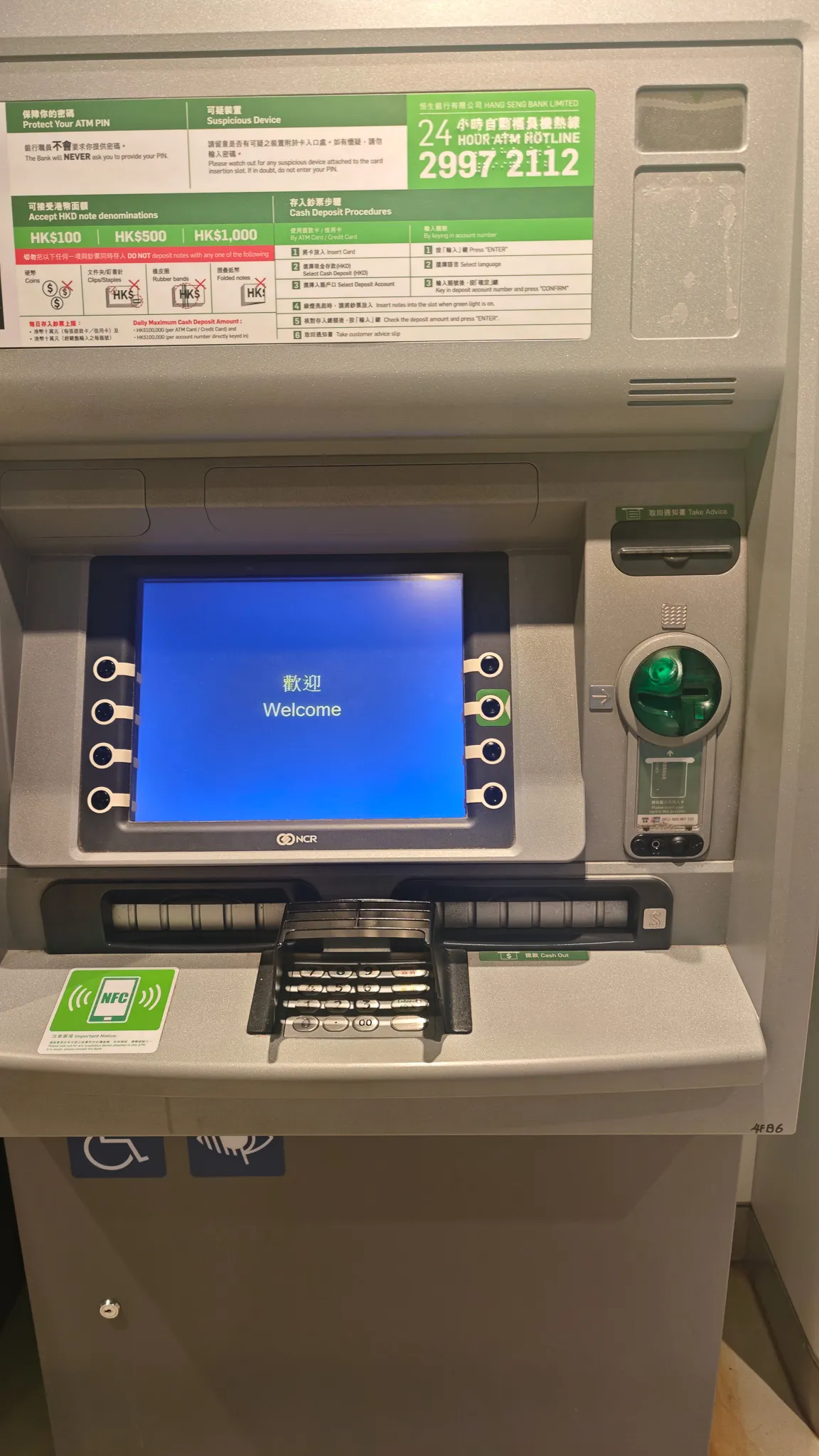
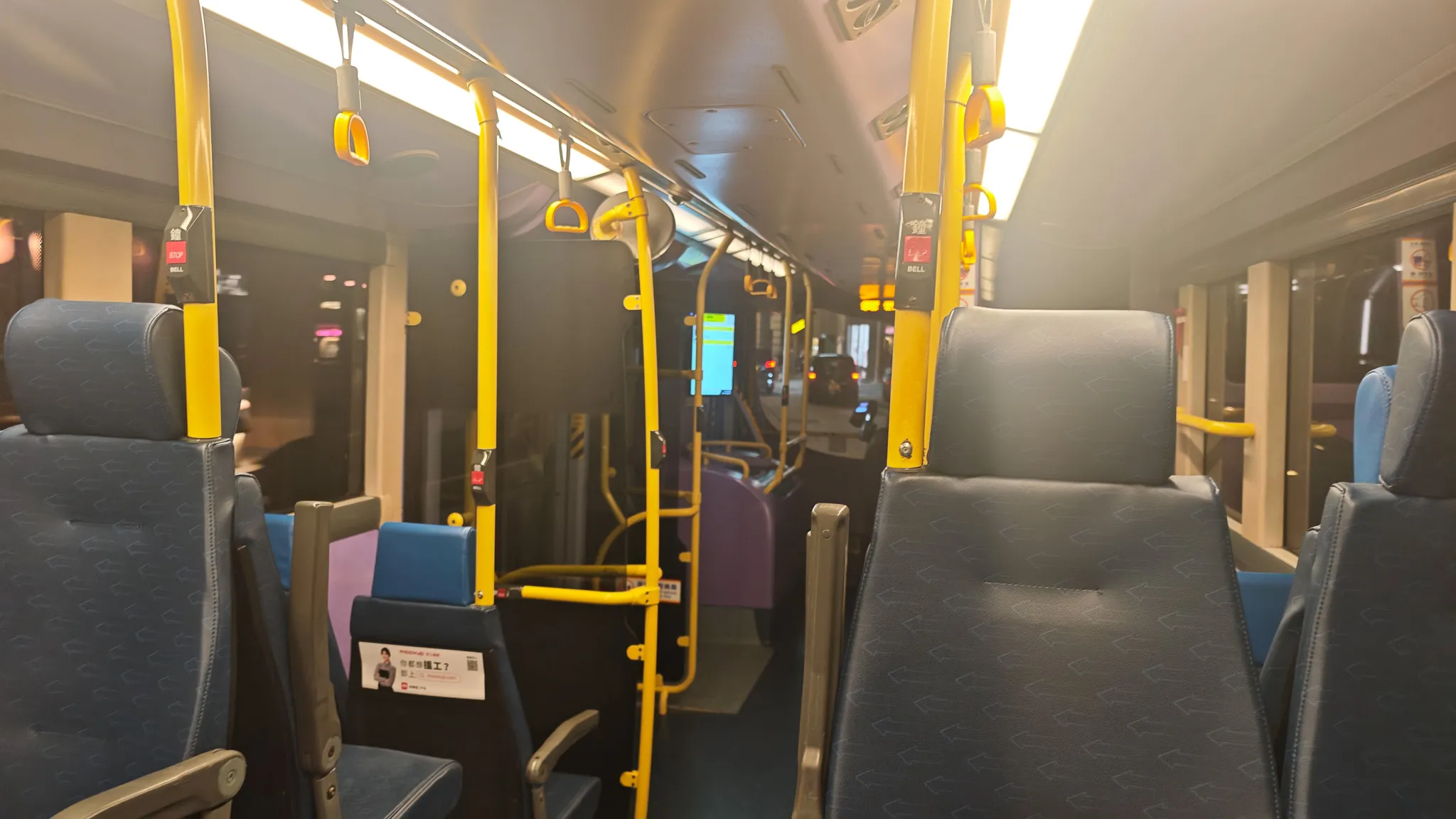
Back down in the city, the night wasn’t finished. A Hang Seng ATM provided emergency funds. A cricket bar in Wan Chai provided emergency friends. And an empty night bus provided emergency transport home through streets that were finally, briefly, quiet.