
The Final Days
Vientiane — COPE, Stupa
& Goodbye Laos
Dive bars in Vang Vieng, 270 million unexploded bombs, the golden stupa, raw laab with bile, and farewell to the friends who made Laos unforgettable.
Last Night in Vang Vieng
The Dive Bar Farewell
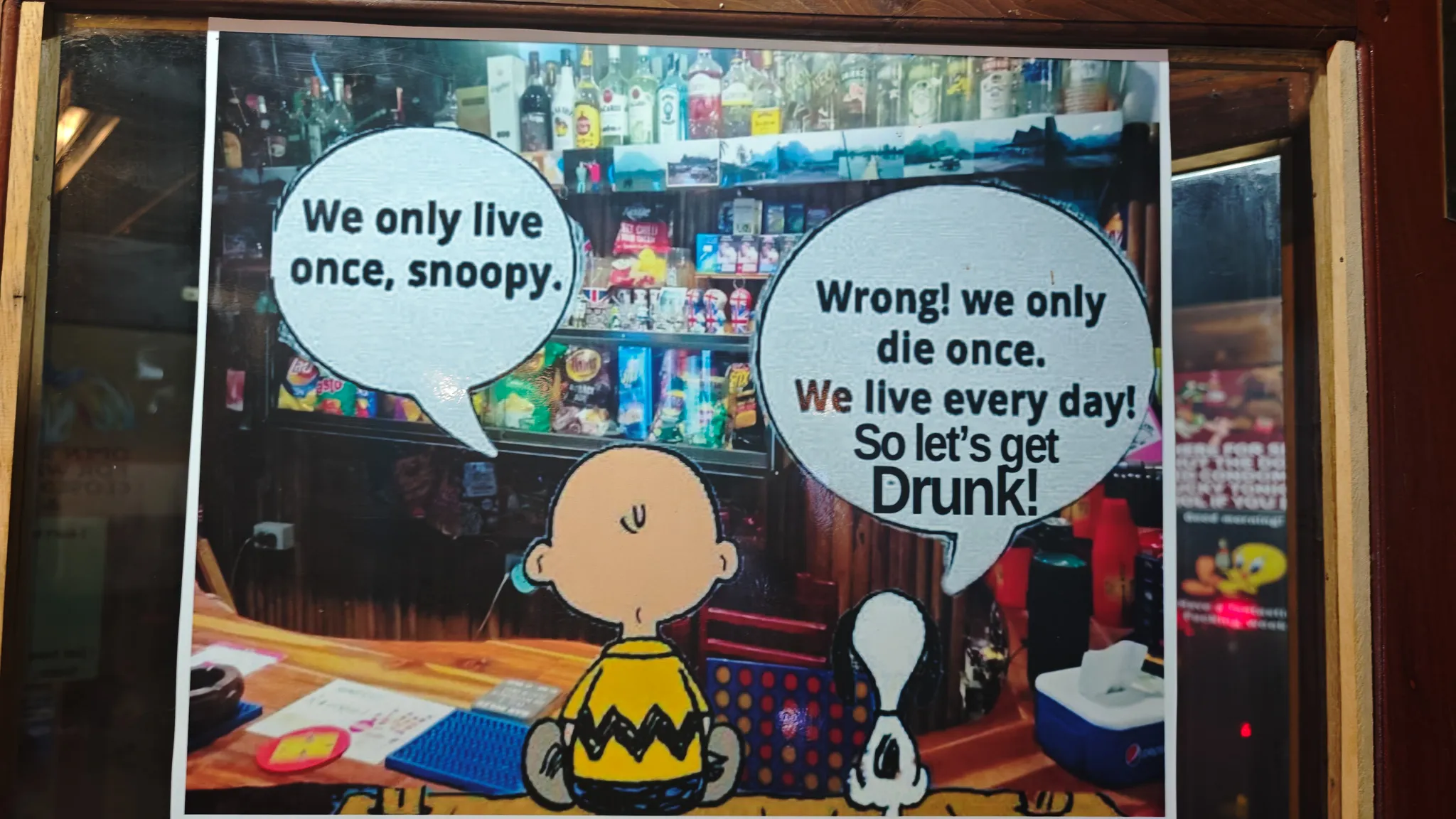
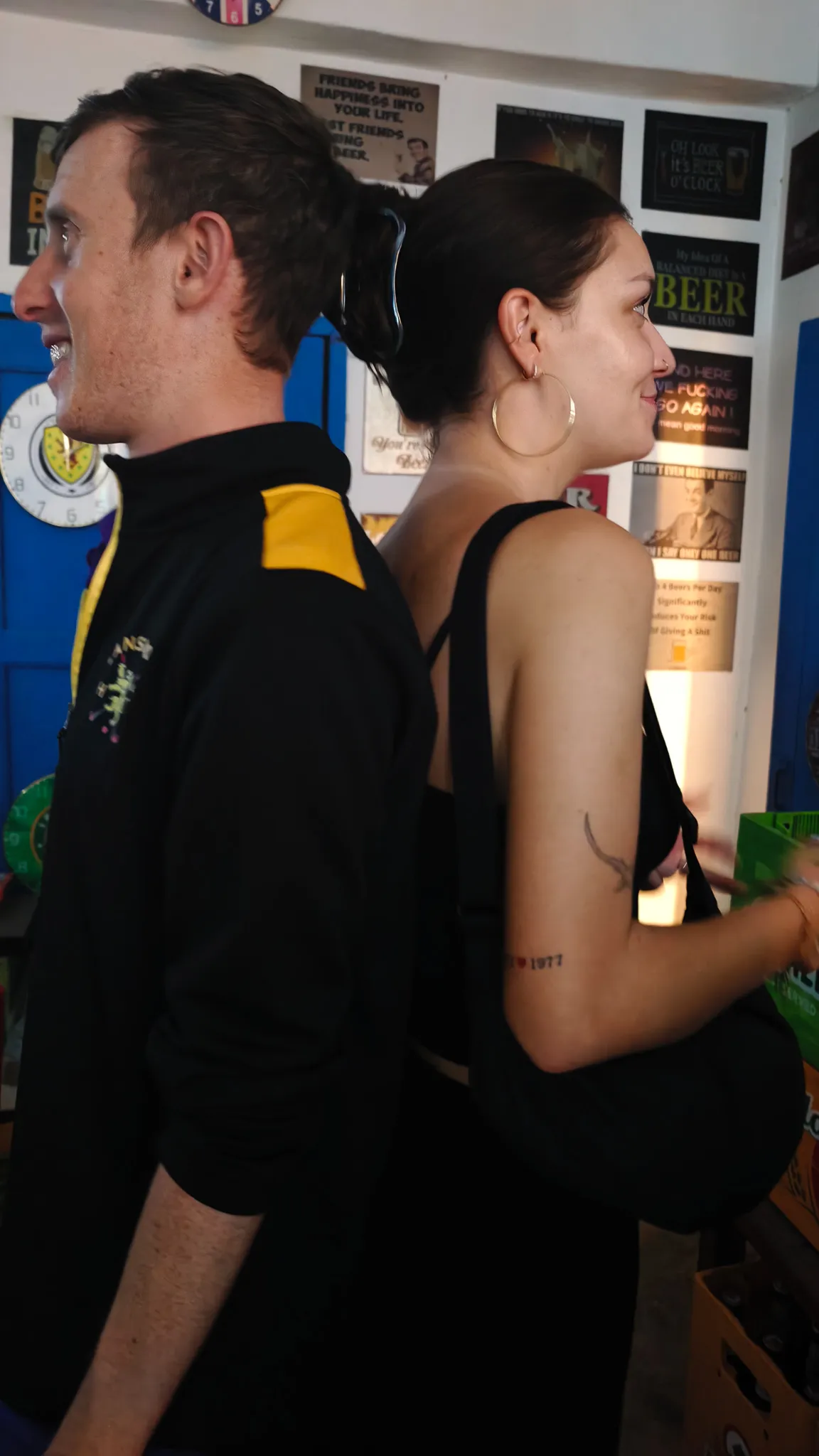
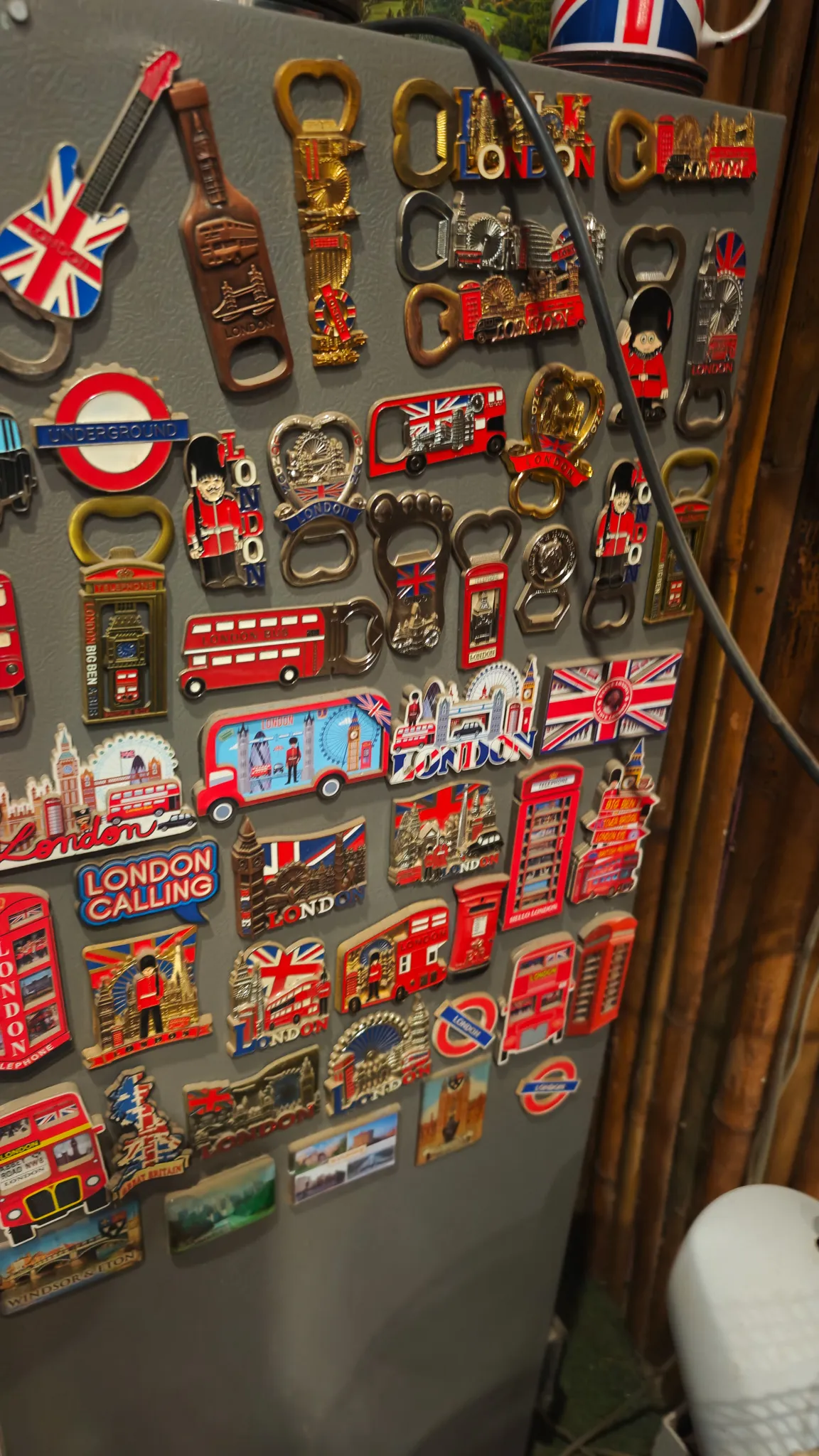
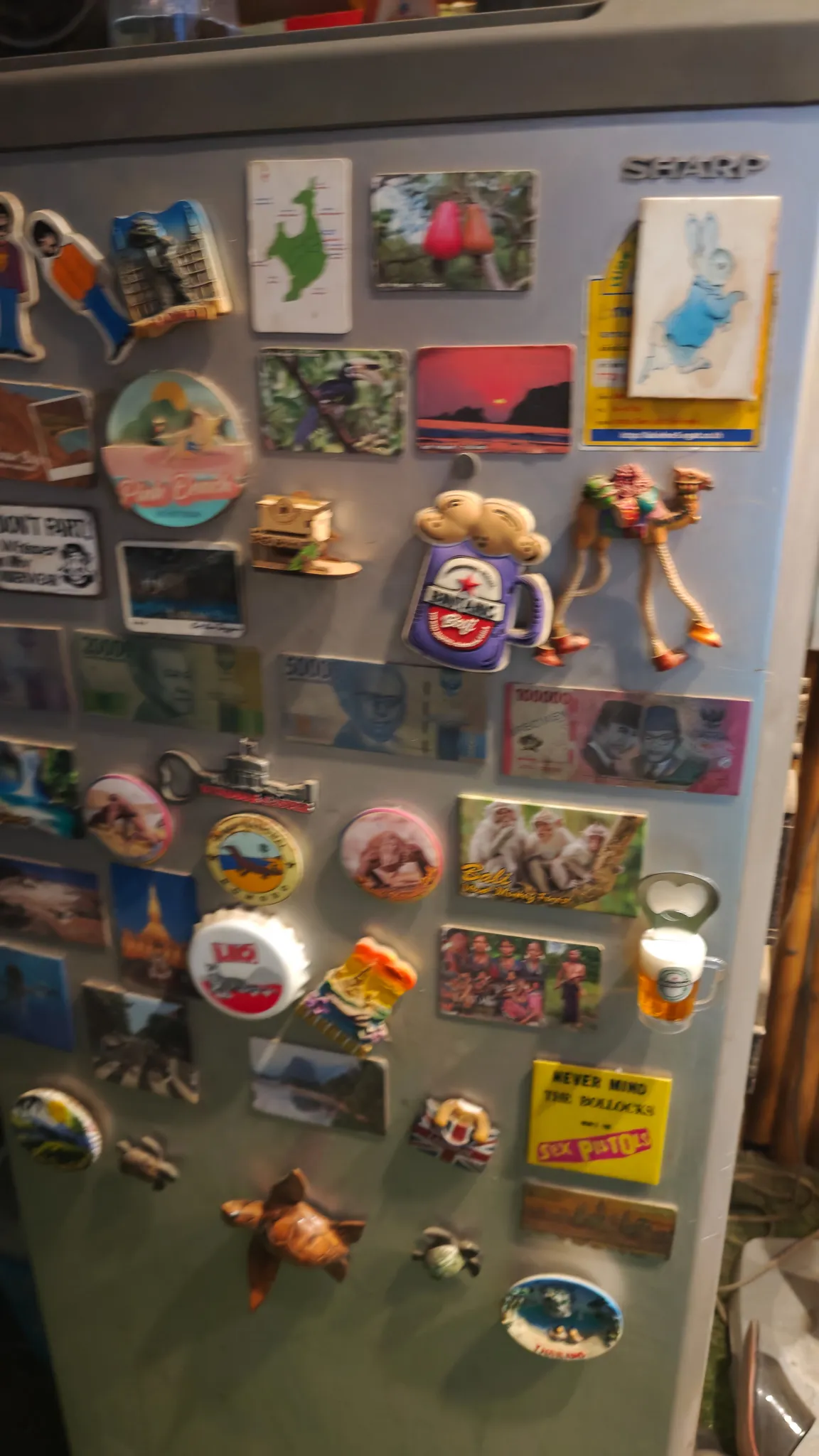
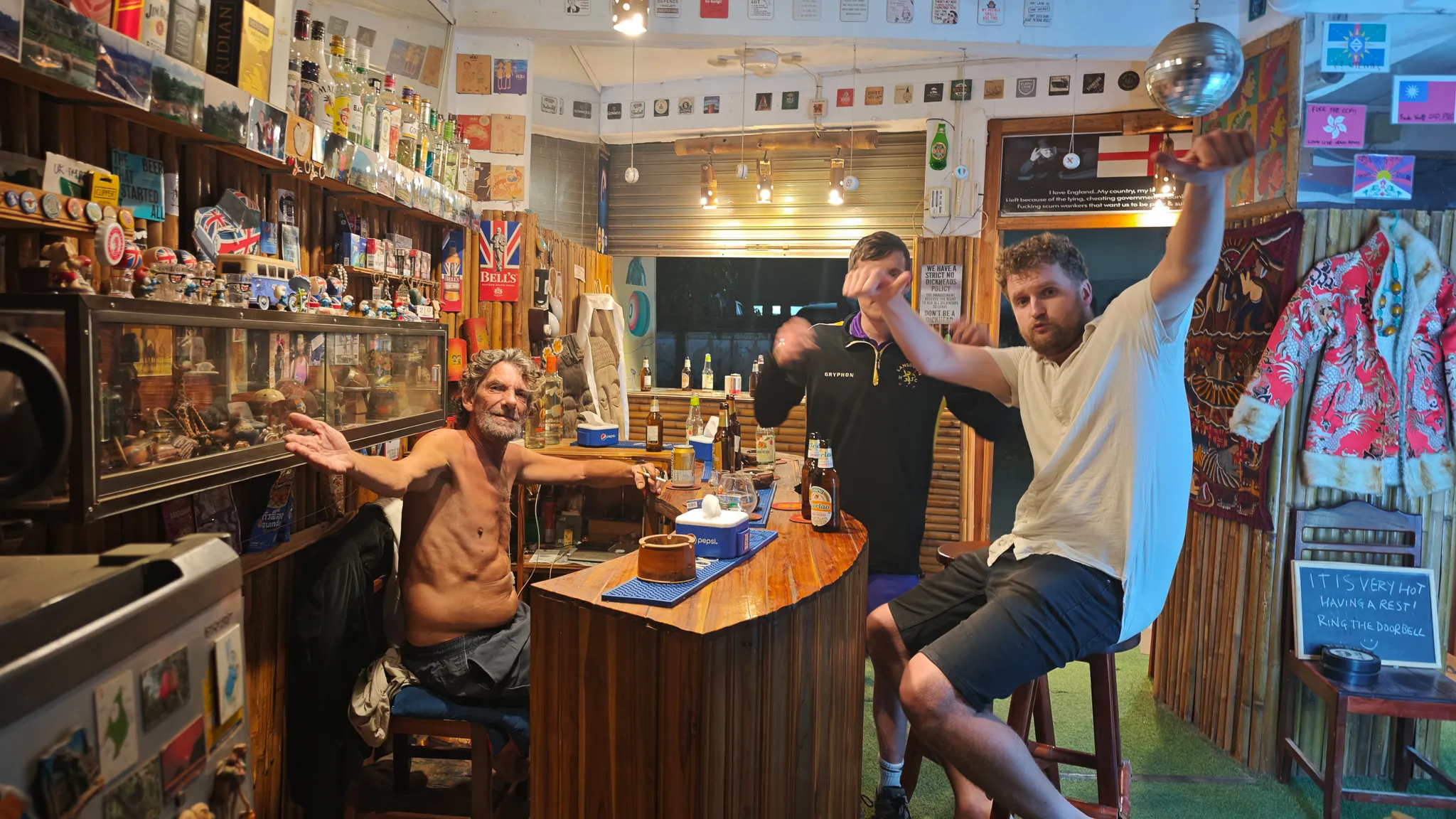
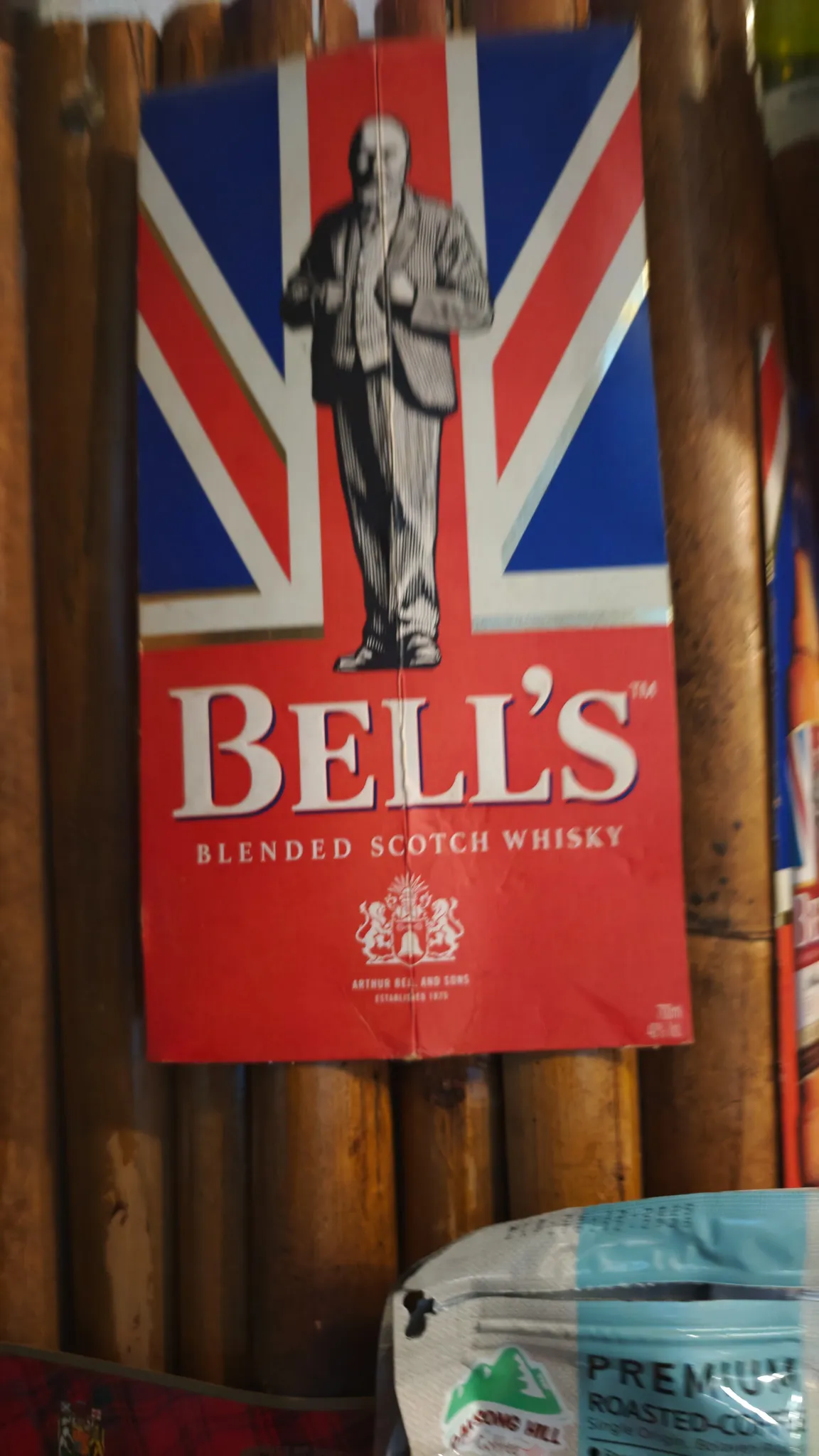
Before Vientiane, there was one last night in Vang Vieng. Not the tubing-and-bucket-drinks Vang Vieng of the guidebooks — the other one. The one with a British-run dive bar wallpapered in England flags and Bell’s whisky posters, a fridge covered in London bus magnets, and a “Keep Quiet — Respect the Temple” sign on the door because the bar sits right next to a wat.
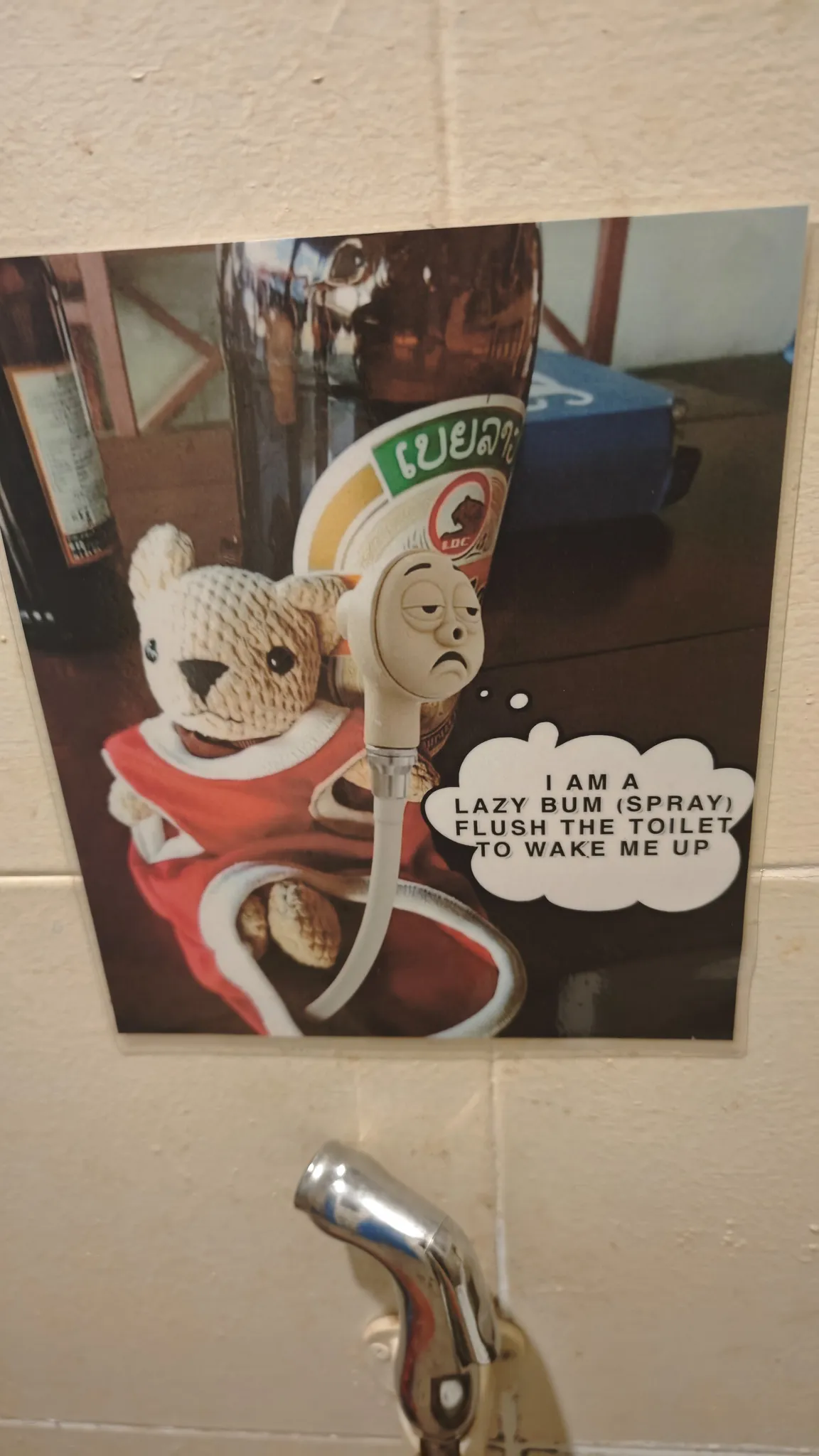
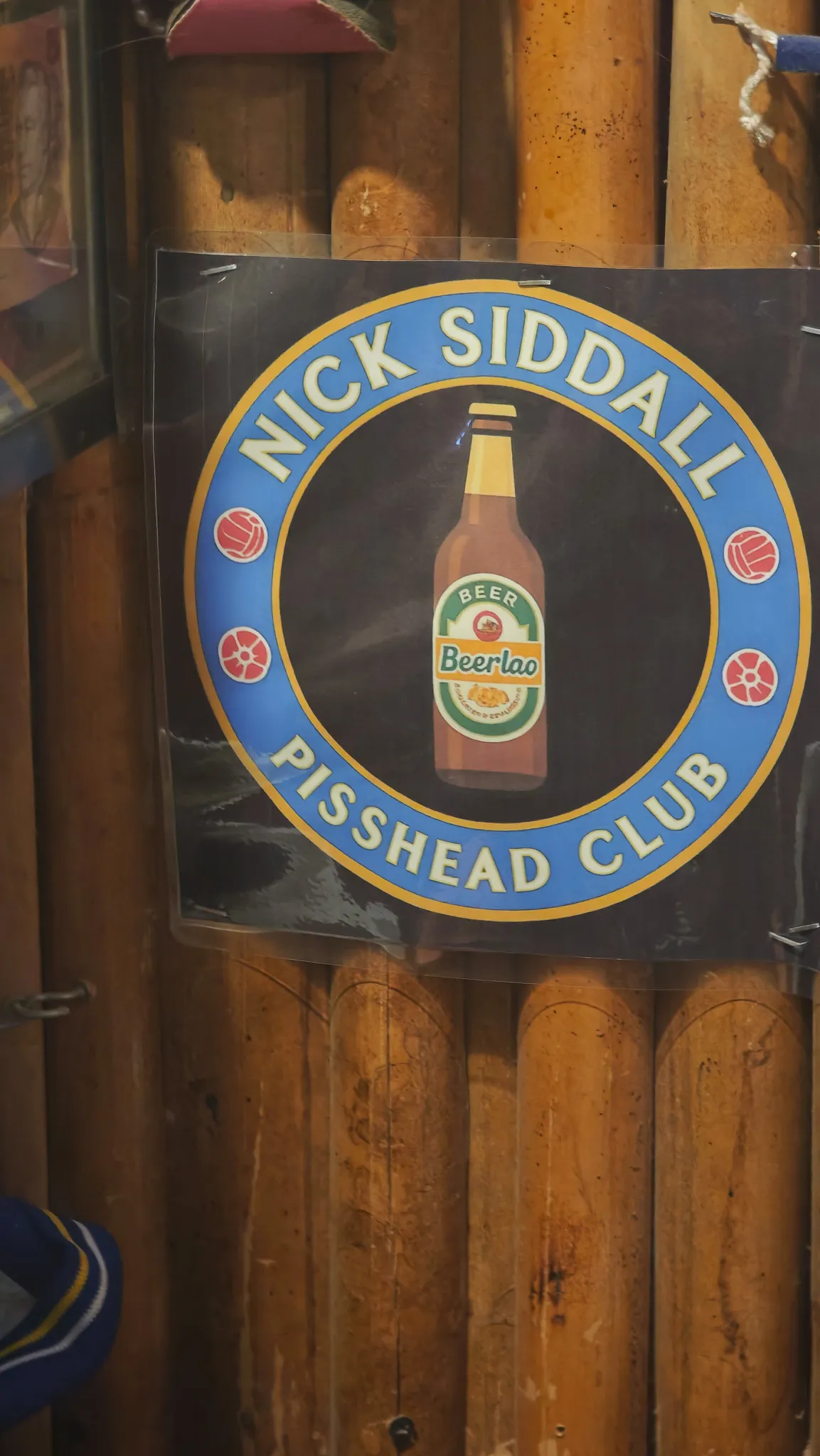
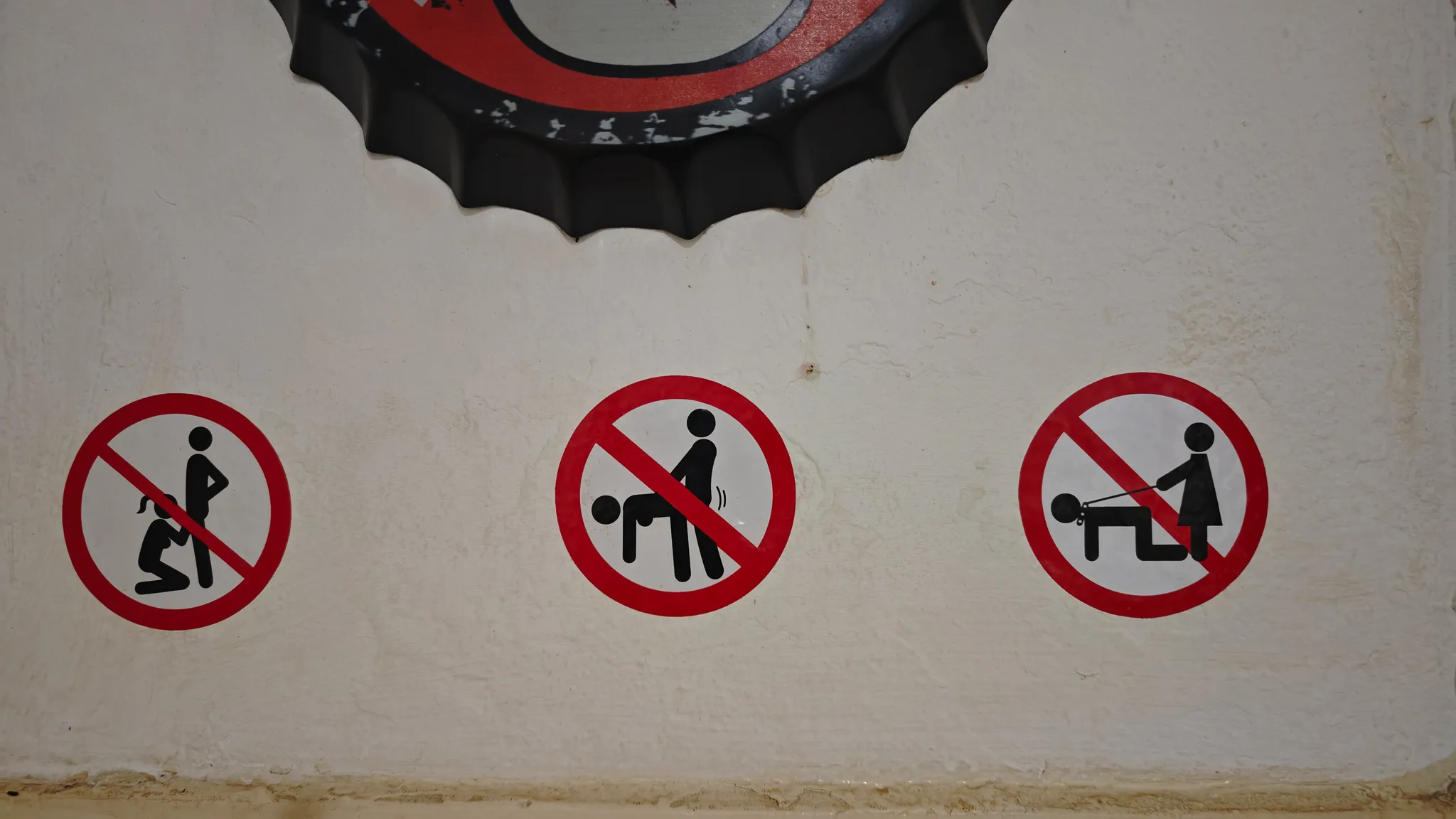
The Snoopy bar sign outside reads “We only die once so let’s get drunk.” The toilet has a Beer Lao flush sign with a teddy bear. There are prohibition stickers on the walls and a “Pisshead Club” membership card hanging behind the bar. This is the Vang Vieng that doesn’t make the Instagram reels.
The Capital
Arriving in Vientiane
Vientiane is the quietest capital city in Southeast Asia. No skyscrapers, no metro, no chaos — just wide French-colonial boulevards, tuk-tuks, and the Mekong sliding past at the end of every street. After weeks in the mountains and on the river, it felt like arriving in a different country entirely.
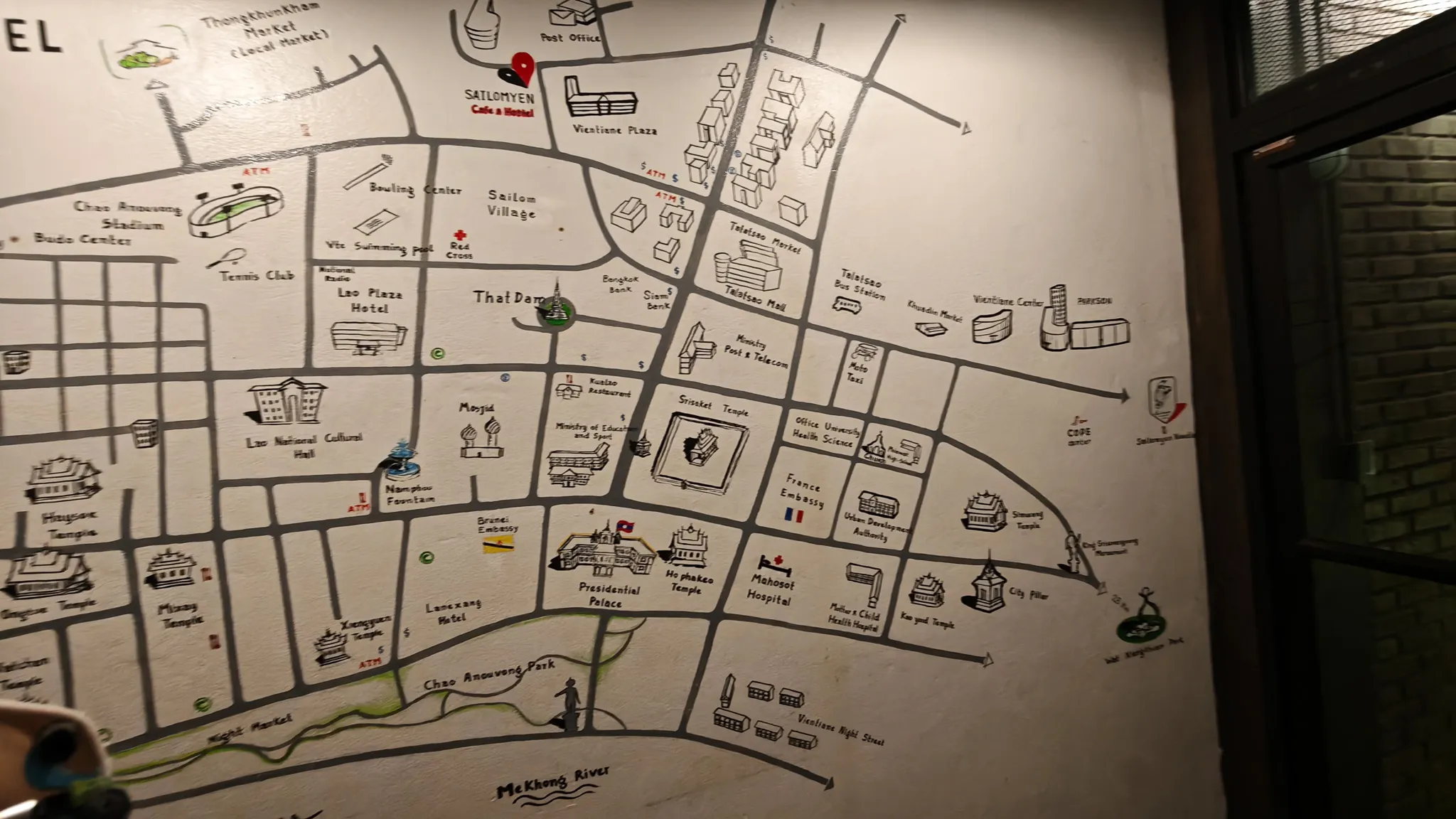
We found a hostel with a hand-drawn map of the city on the wall — temples, cafes, the night market, all sketched in felt-tip. That map became our guide for four days of wandering.
After Dark
Street Art & Neon
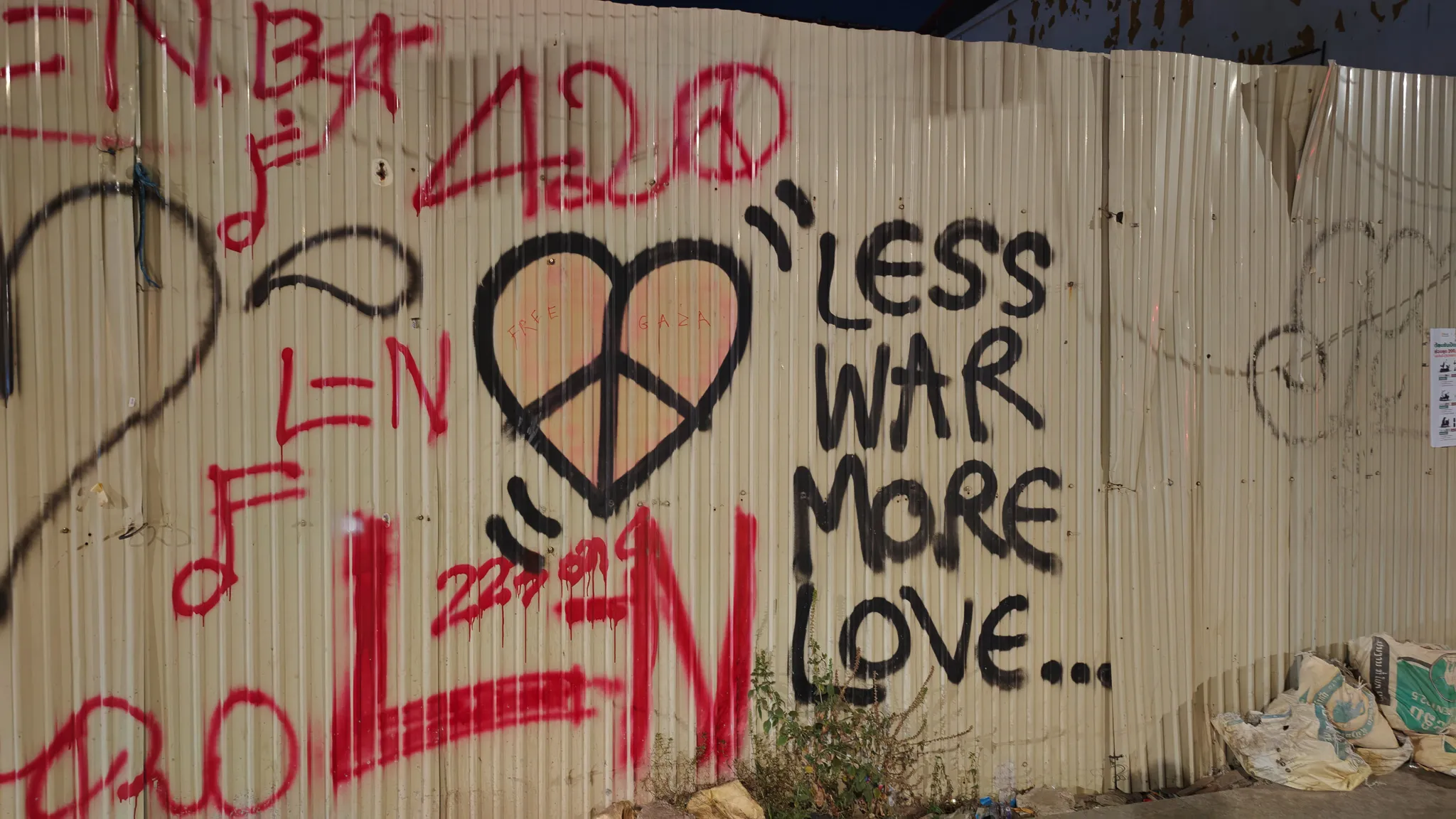
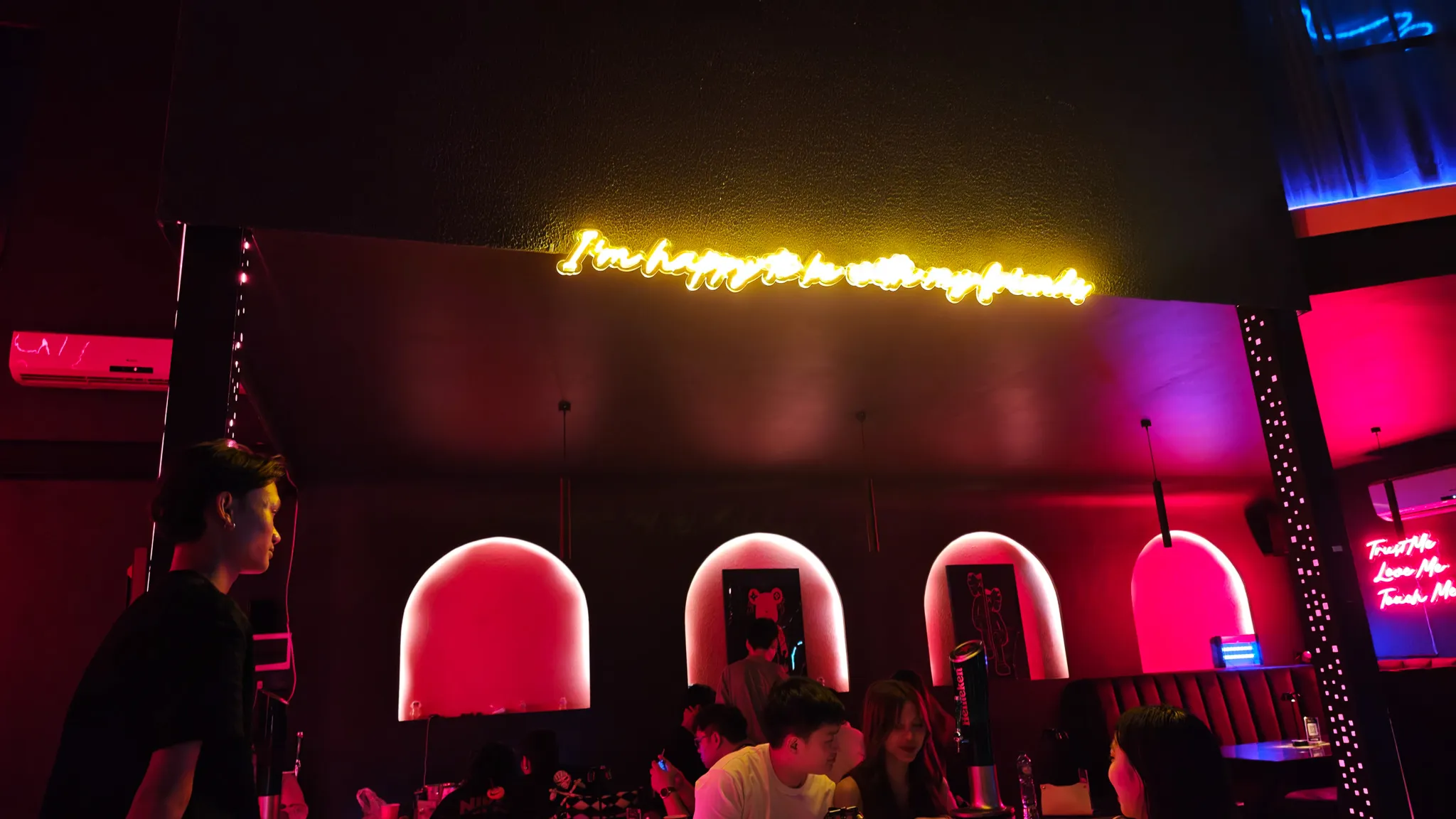
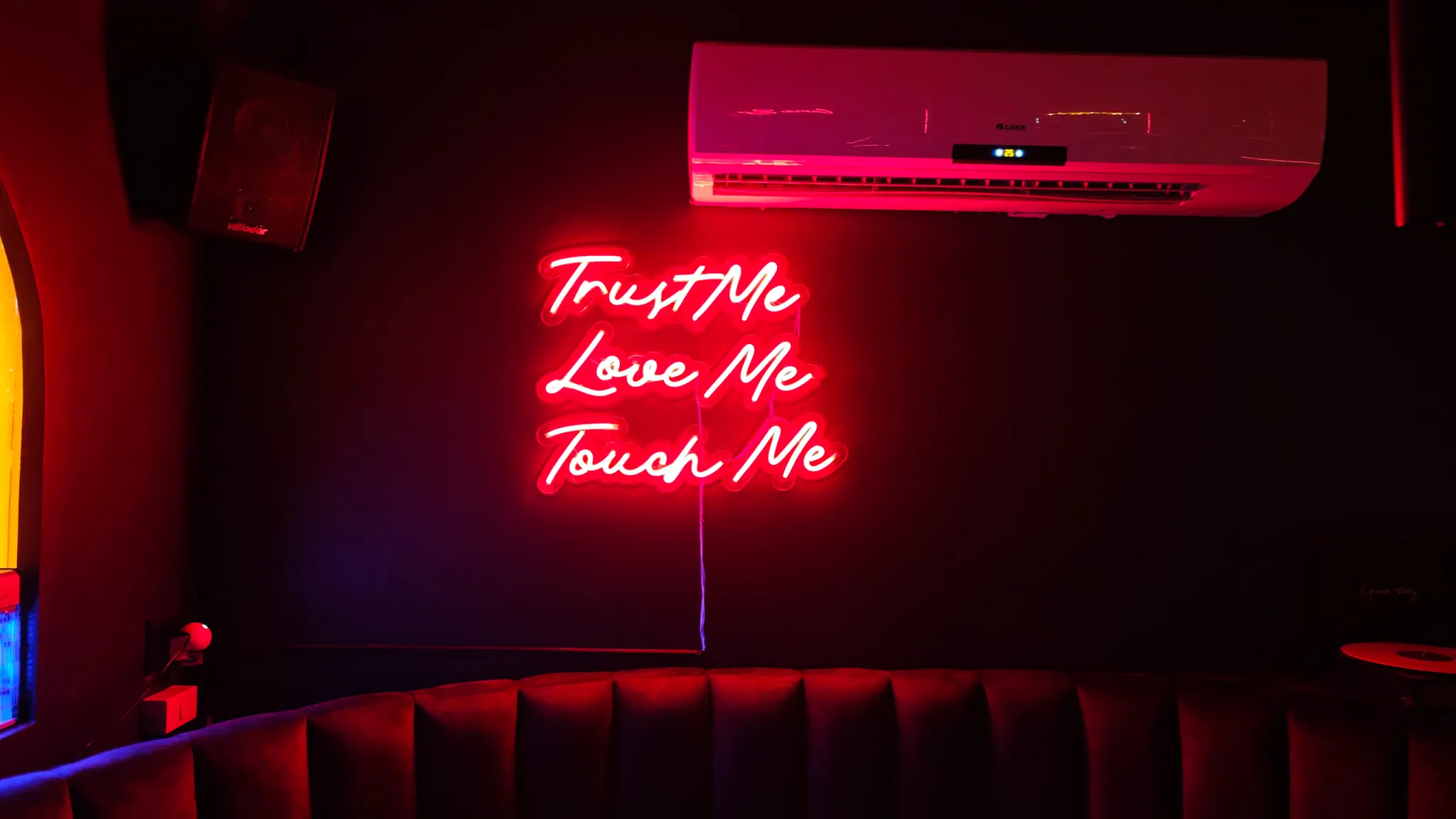
Vientiane’s nightlife is understated but full of character. Corrugated metal walls carry spray-painted messages — “Less War More Love” with a peace-sign heart, a sentiment that hits differently in the most bombed country on earth. Around the corner, neon-lit cocktail bars glow pink through arched alcoves, and “Trust Me Love Me Touch Me” burns in red neon above a velvet banquette.
It’s a city that knows how to do atmosphere without trying too hard.
The Secret War
COPE Centre
Between 1964 and 1973, the United States dropped over 270 million cluster munitions on Laos during the Secret War — making it the most heavily bombed country per capita in history. Around 80 million of those bomblets failed to detonate. They’re still in the ground. Since the war ended, more than 20,000 people have been killed or injured by unexploded ordnance — nearly half of them children.
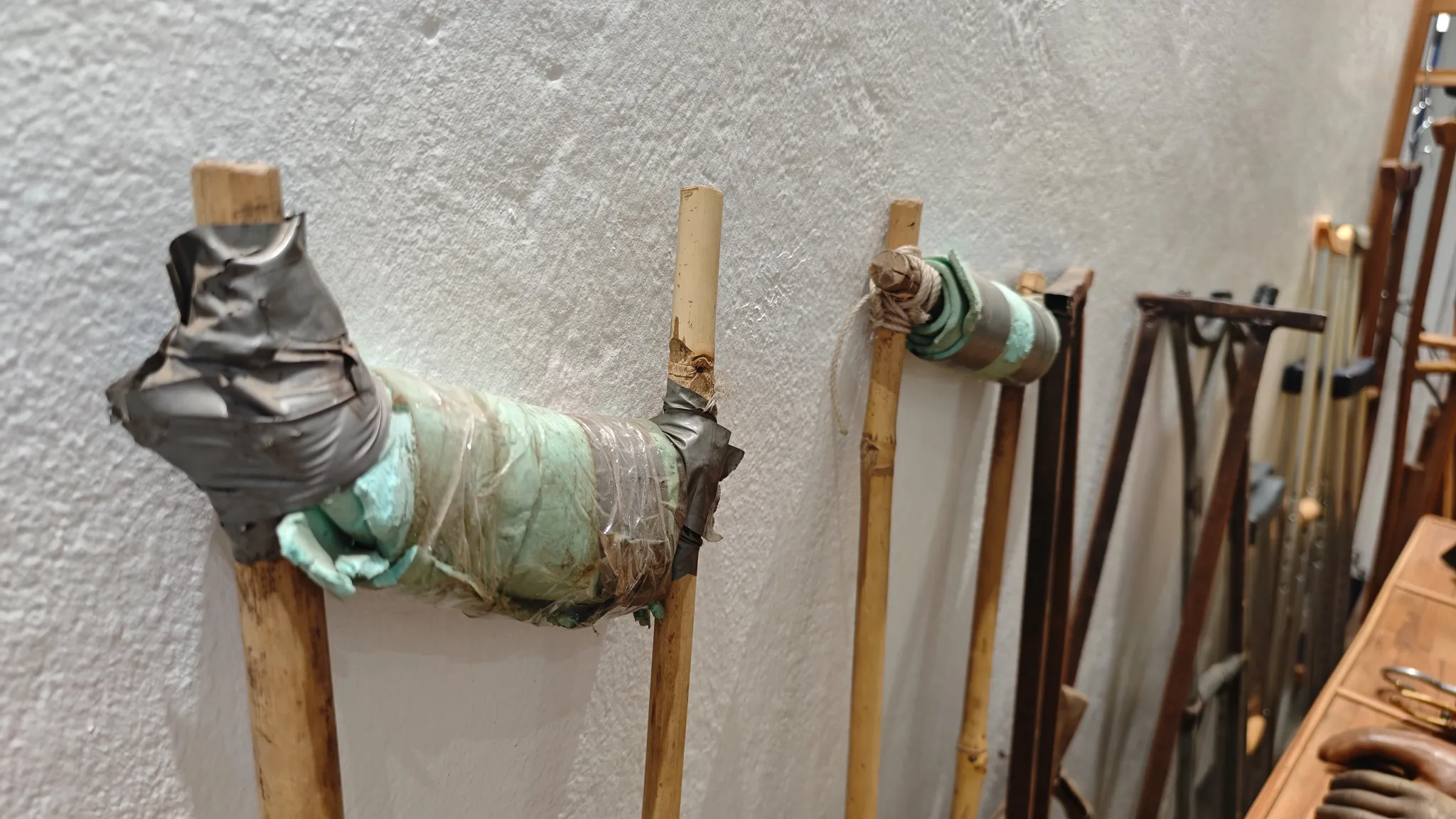
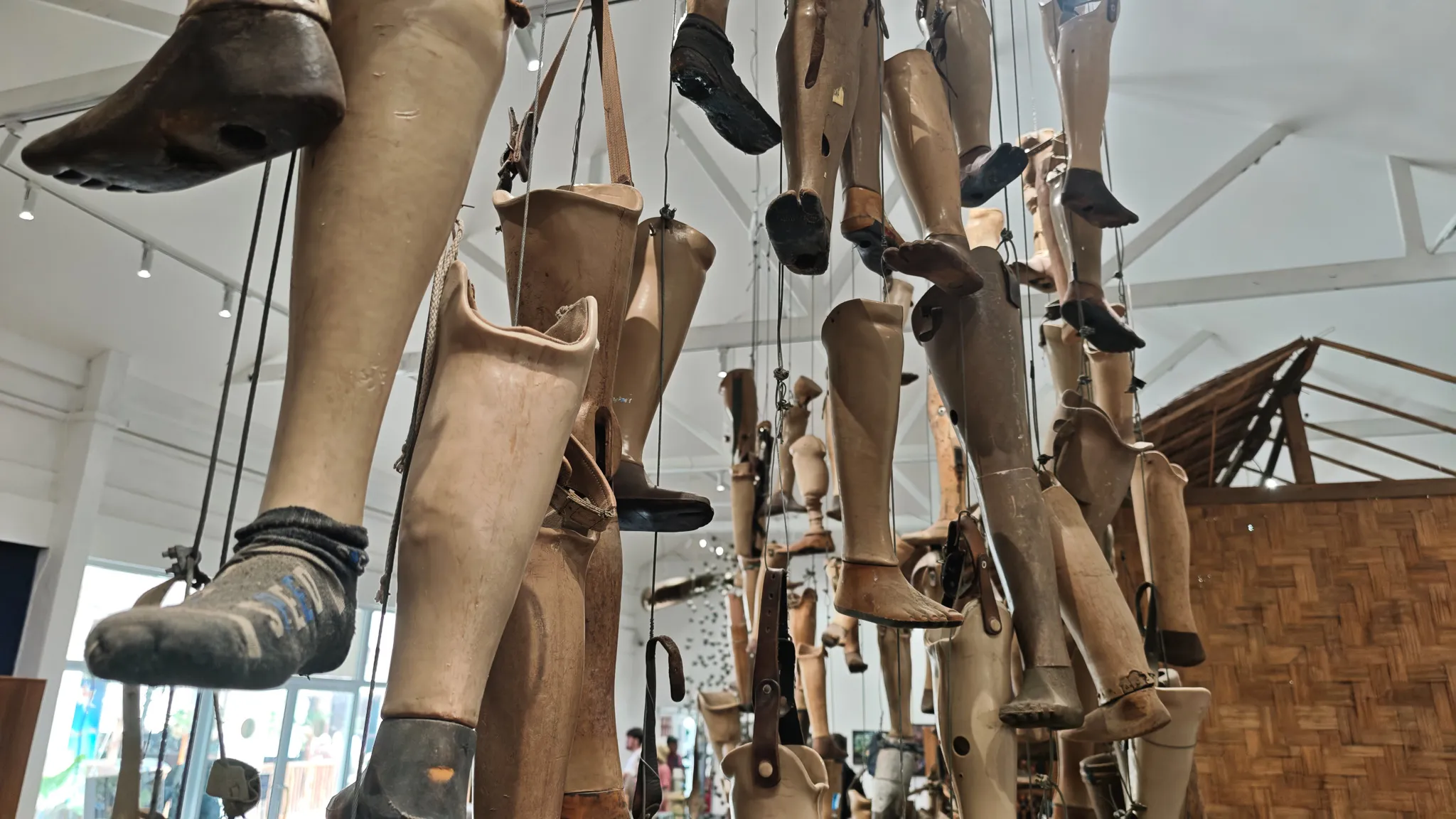
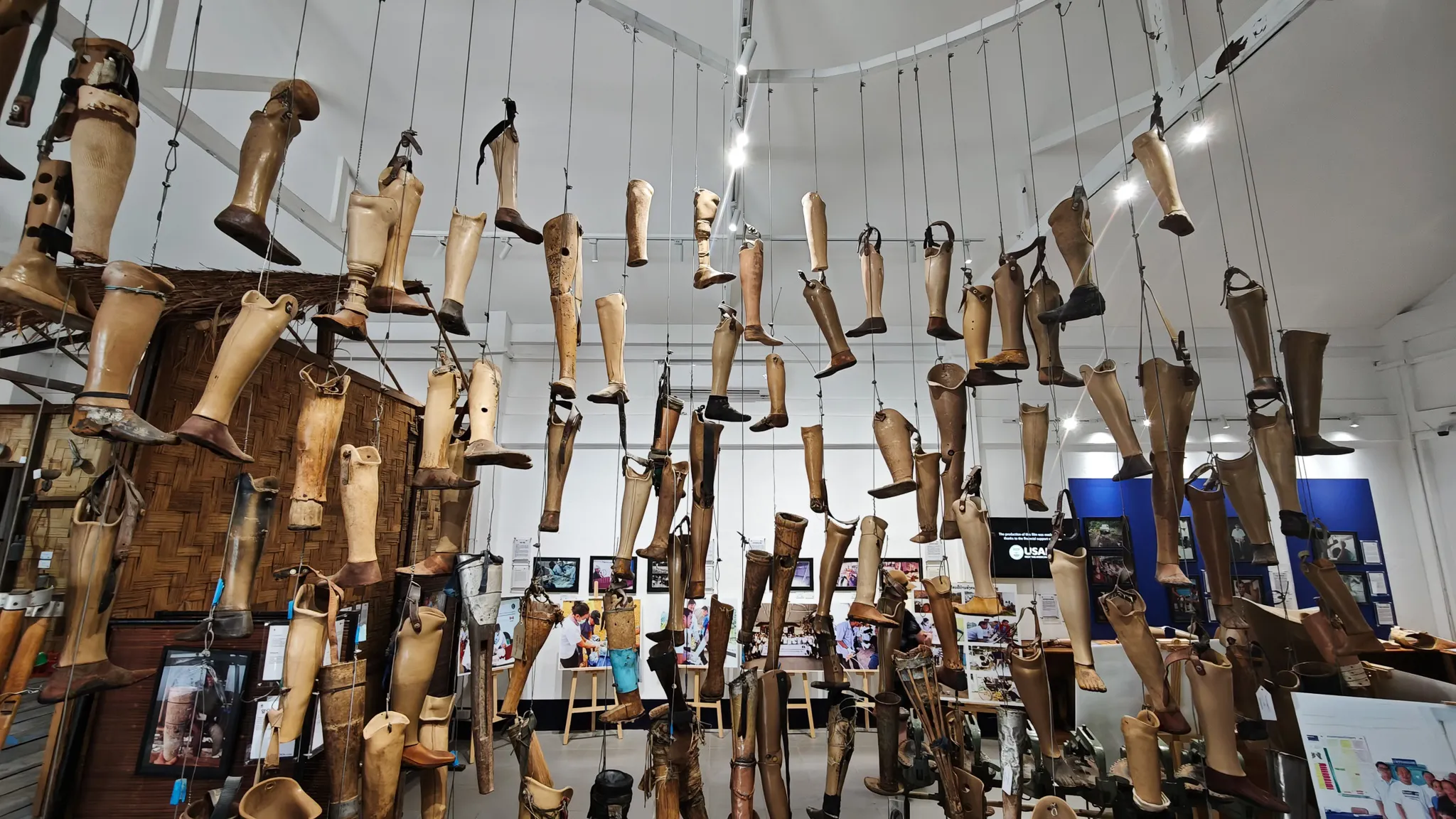
The COPE Centre (Cooperative Orthotic and Prosthetic Enterprise) in Vientiane tells this story without flinching. Makeshift crutches fashioned from bamboo and tape. Dozens of prosthetic legs suspended from the ceiling. Information panels about clearance operations that will take another century to complete at current rates.
It’s a quiet museum. No dramatic soundtrack, no Hollywood angles. Just the facts of what happened and the people still dealing with the consequences. The “Less War More Love” graffiti outside suddenly makes a lot more sense.
The Golden Stupa
Pha That Luang
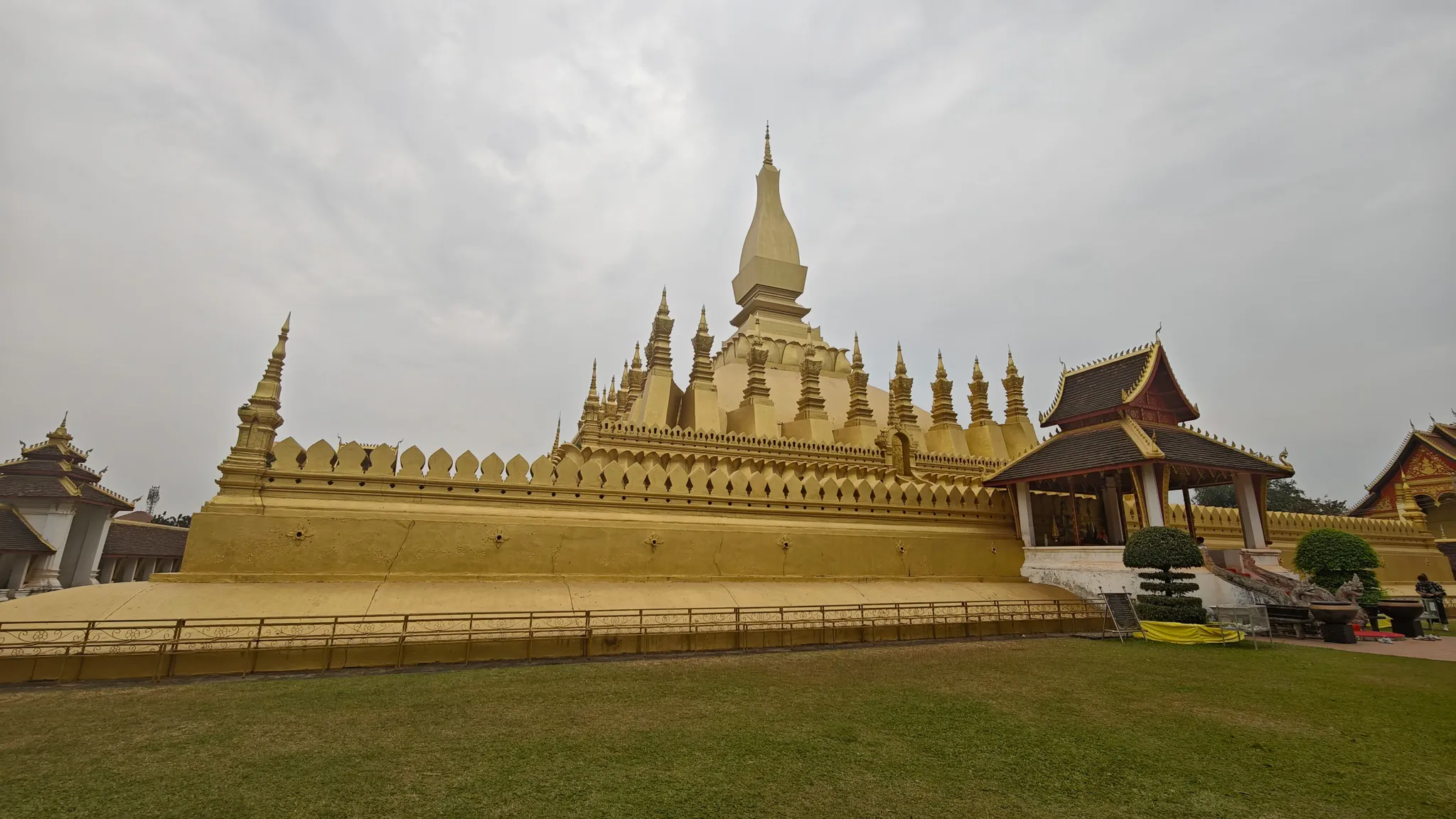
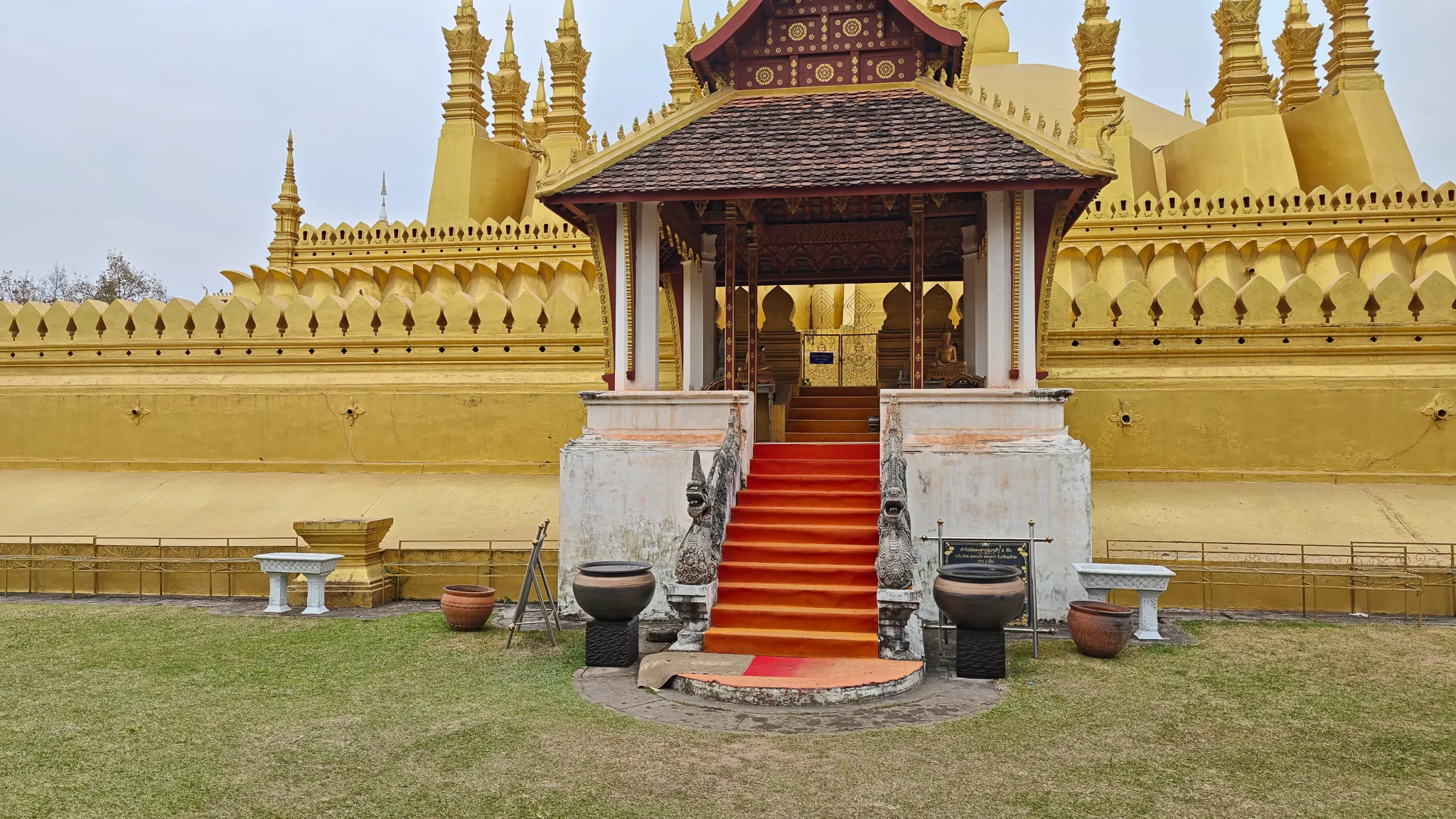
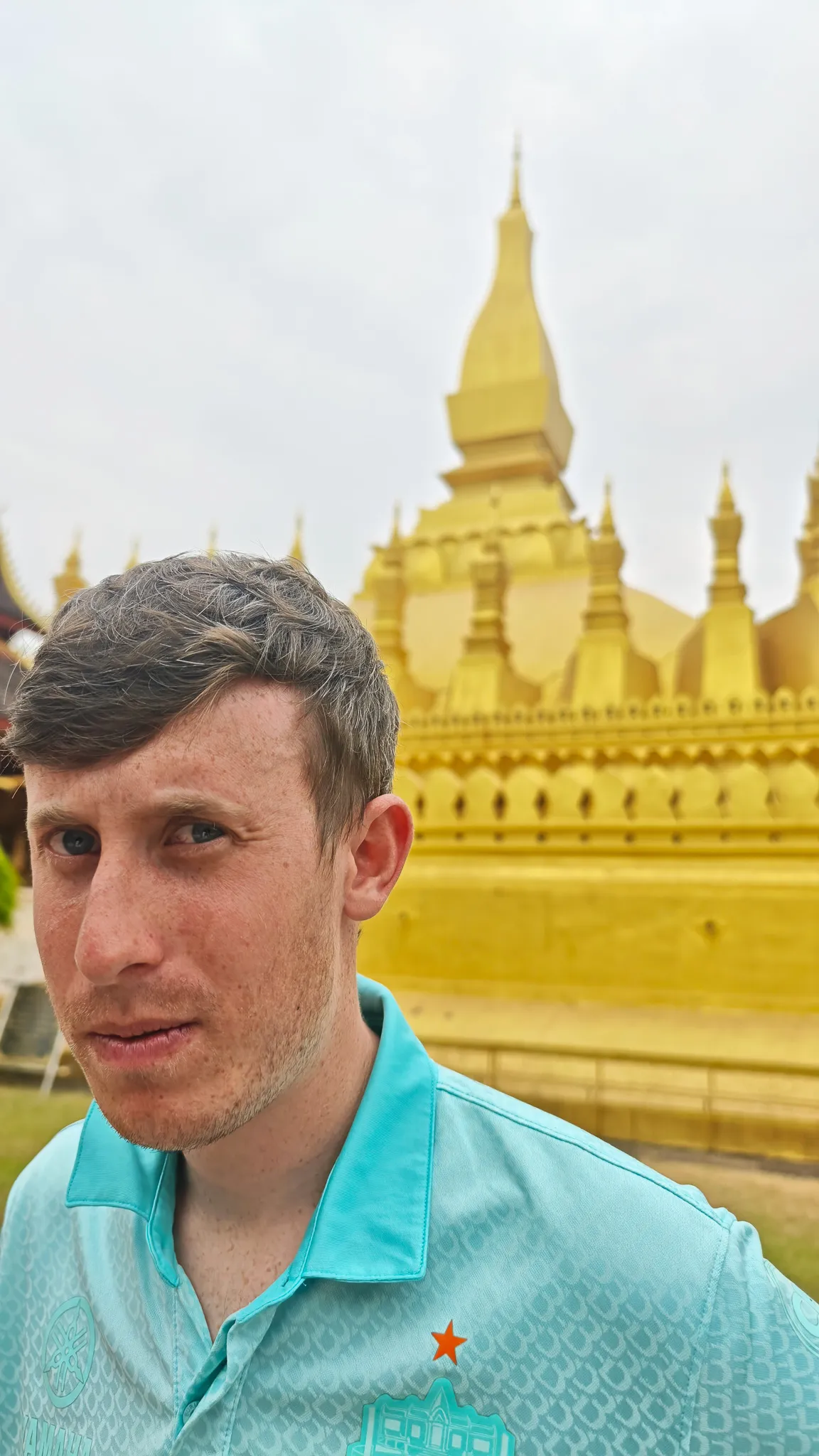
Pha That Luang is the national symbol of Laos — a gold-covered Buddhist stupa dating from the 16th century, though the site’s origins stretch back to the 3rd century when an Ashokan missionary is said to have enshrined a relic of the Buddha here. It appears on the national emblem, the currency, and the national seal. If Laos has a single building that defines it, this is it.
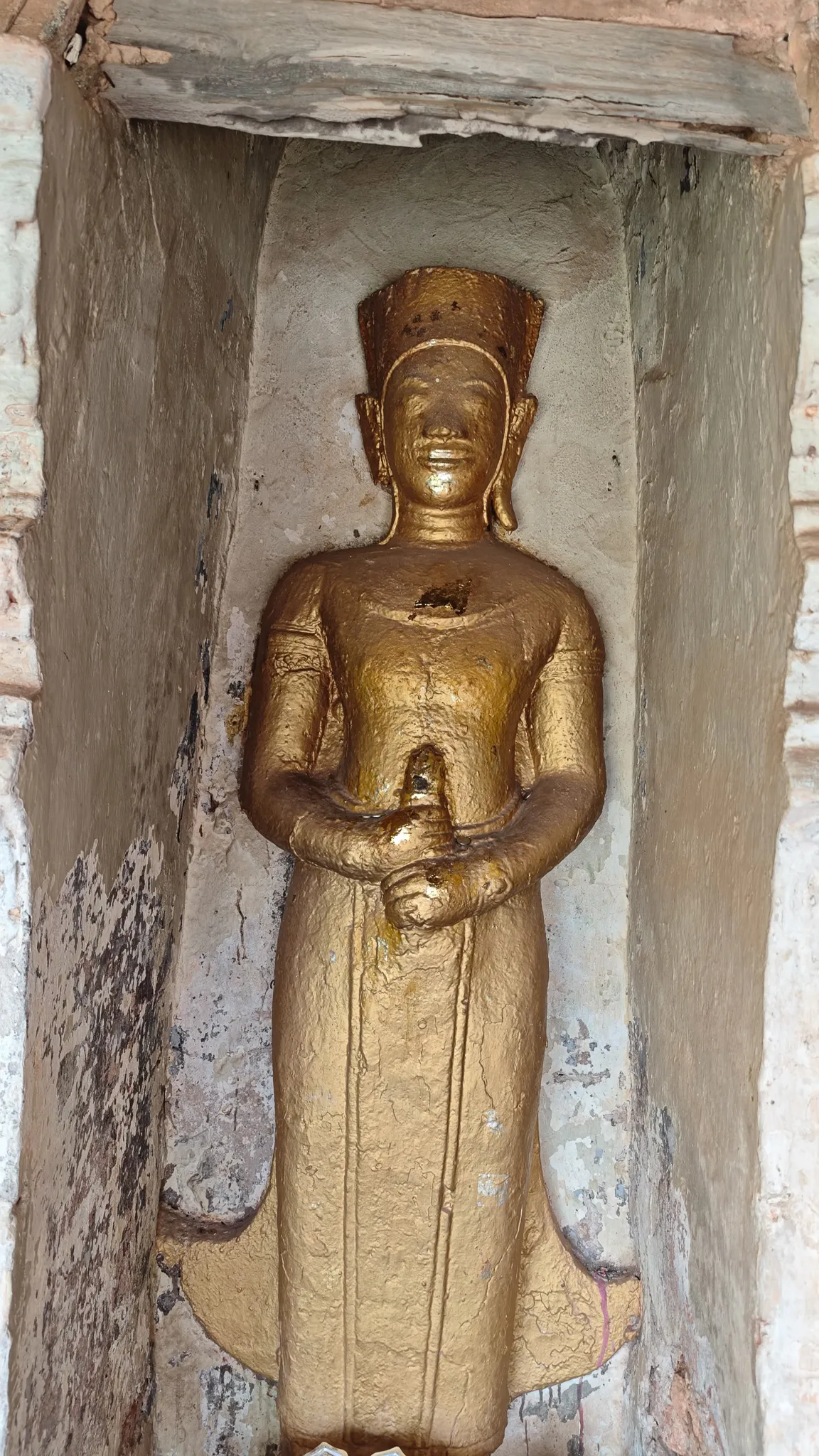
The stupa rises in three tiers, representing the material world, the Buddhist conditions for achieving enlightenment, and nirvana. Small golden Buddhas sit in niches around the exterior walls. Naga guardians flank the red-carpeted entrance stairway. The whole thing glows in the afternoon sun like something from another era.
Eating Vientiane
Salt-Crusted Fish & Raw Laab with Bile
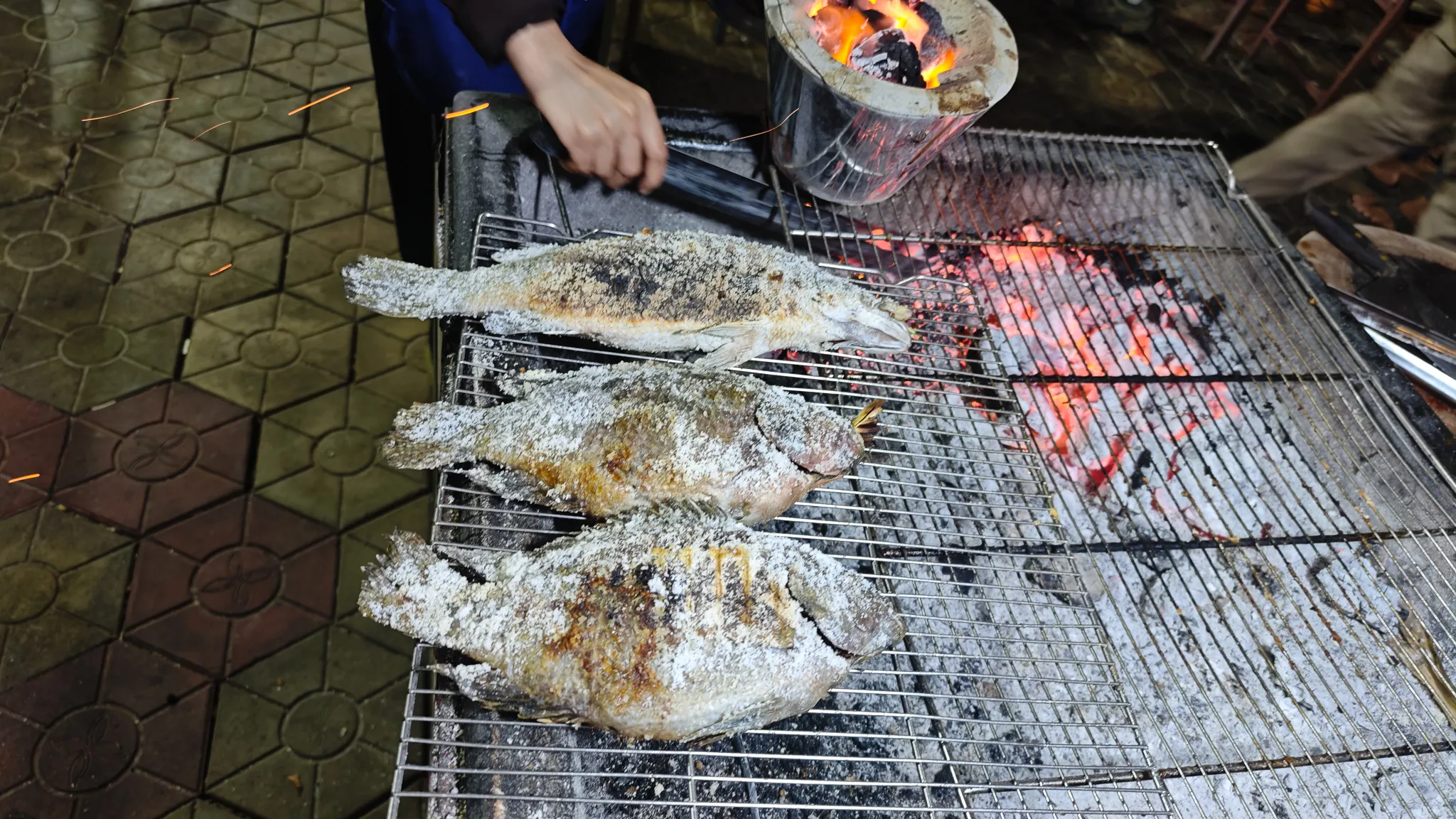
Two meals defined Vientiane. The first was pa ping — whole Mekong fish packed in a thick salt crust and grilled over charcoal at a riverside restaurant. You crack the salt shell open and the fish inside is perfectly steamed, falling apart with chopsticks. Simple, ancient, and exactly right for a city built on the Mekong.
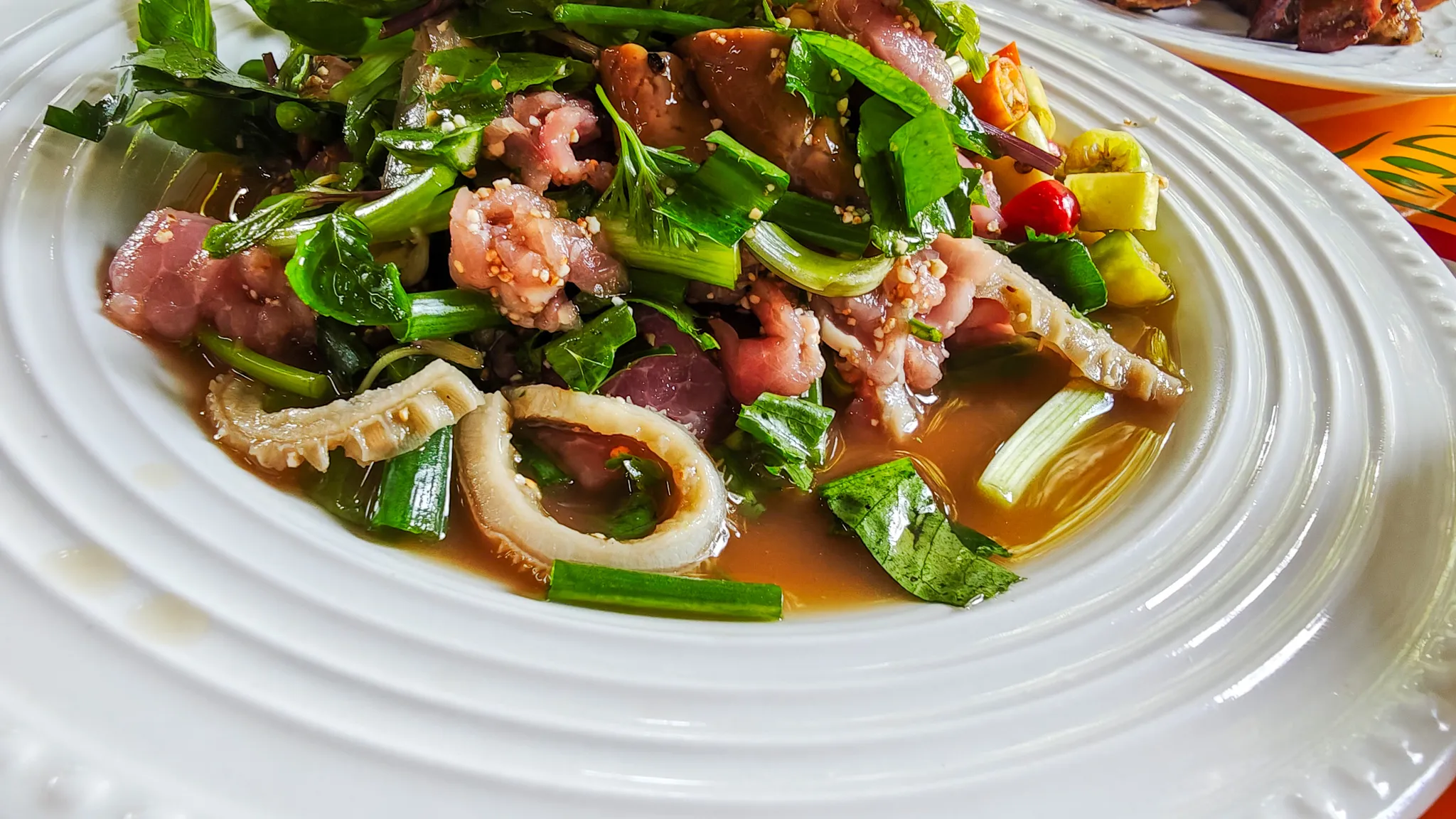
The second was raw laab with bile at the restaurant made famous by Mark Wiens. Laab is the national dish of Laos — minced meat with fresh herbs, chillies, roasted rice powder and lime. The raw version takes it further: uncooked meat mixed with bile from the gallbladder, which gives it a distinctive bitter edge. It’s challenging, funky, and completely unforgettable. Served with sticky rice from a woven basket, of course.
The People
Nights Out with Jenny & Chompoo
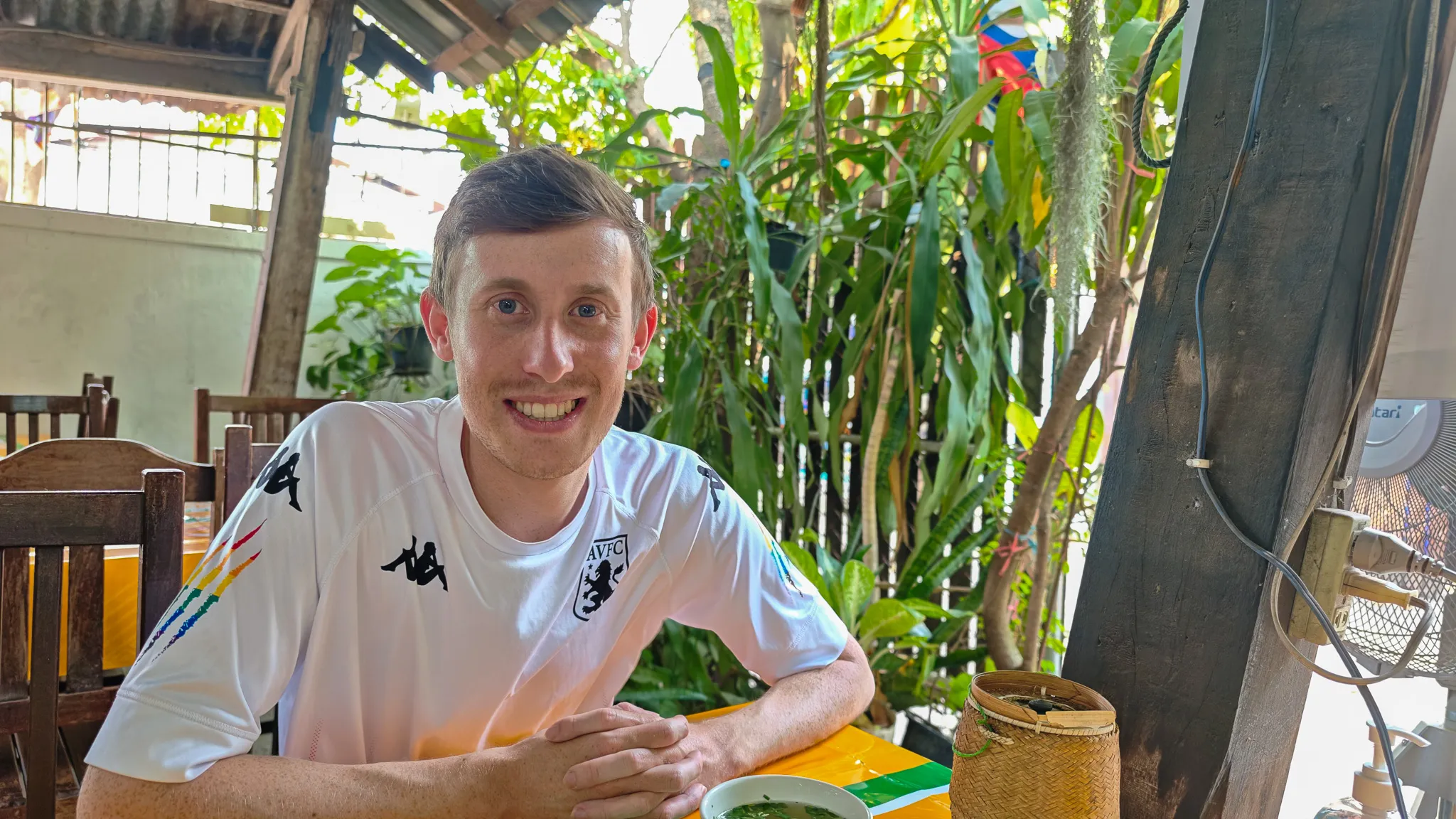
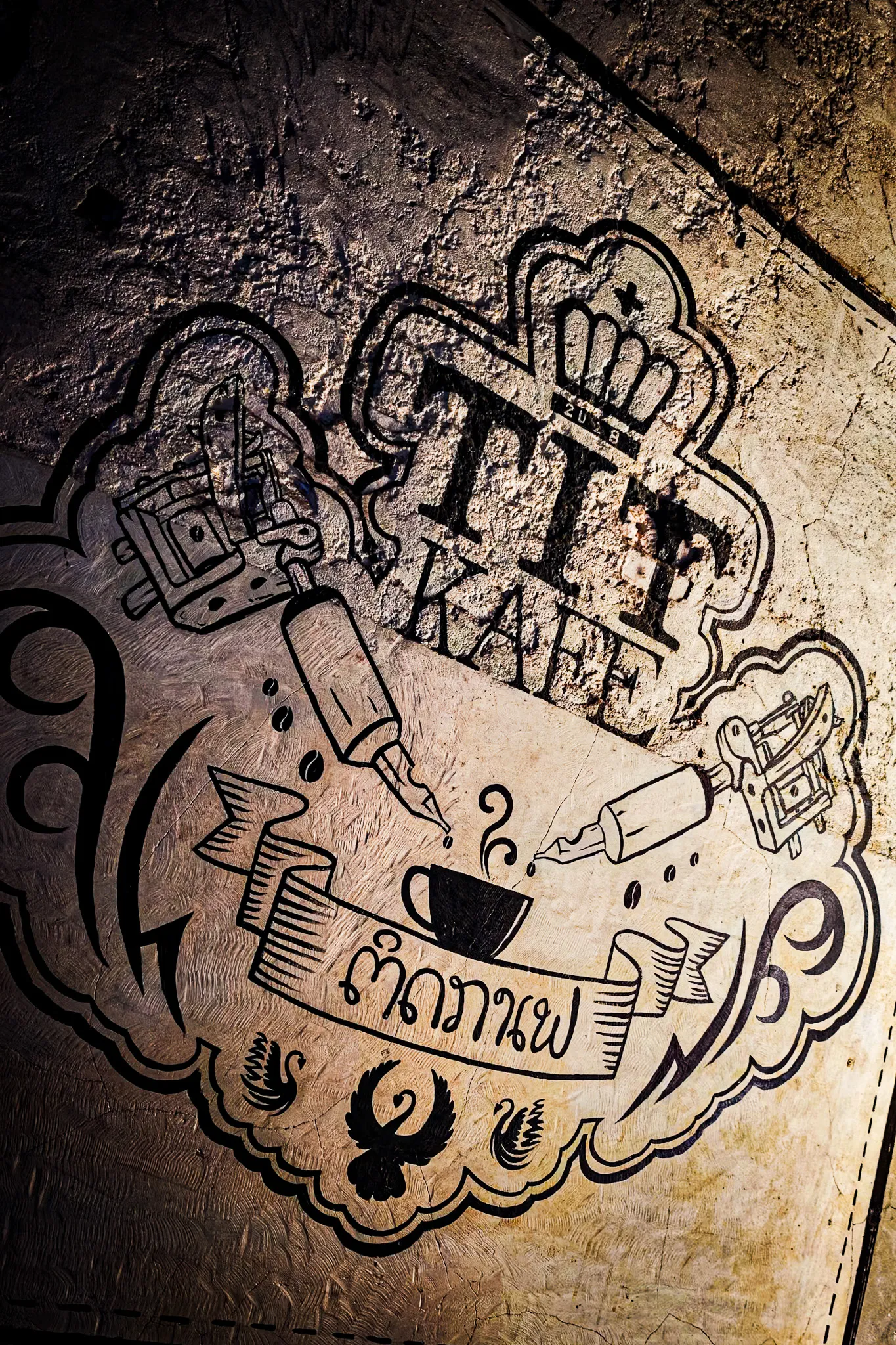
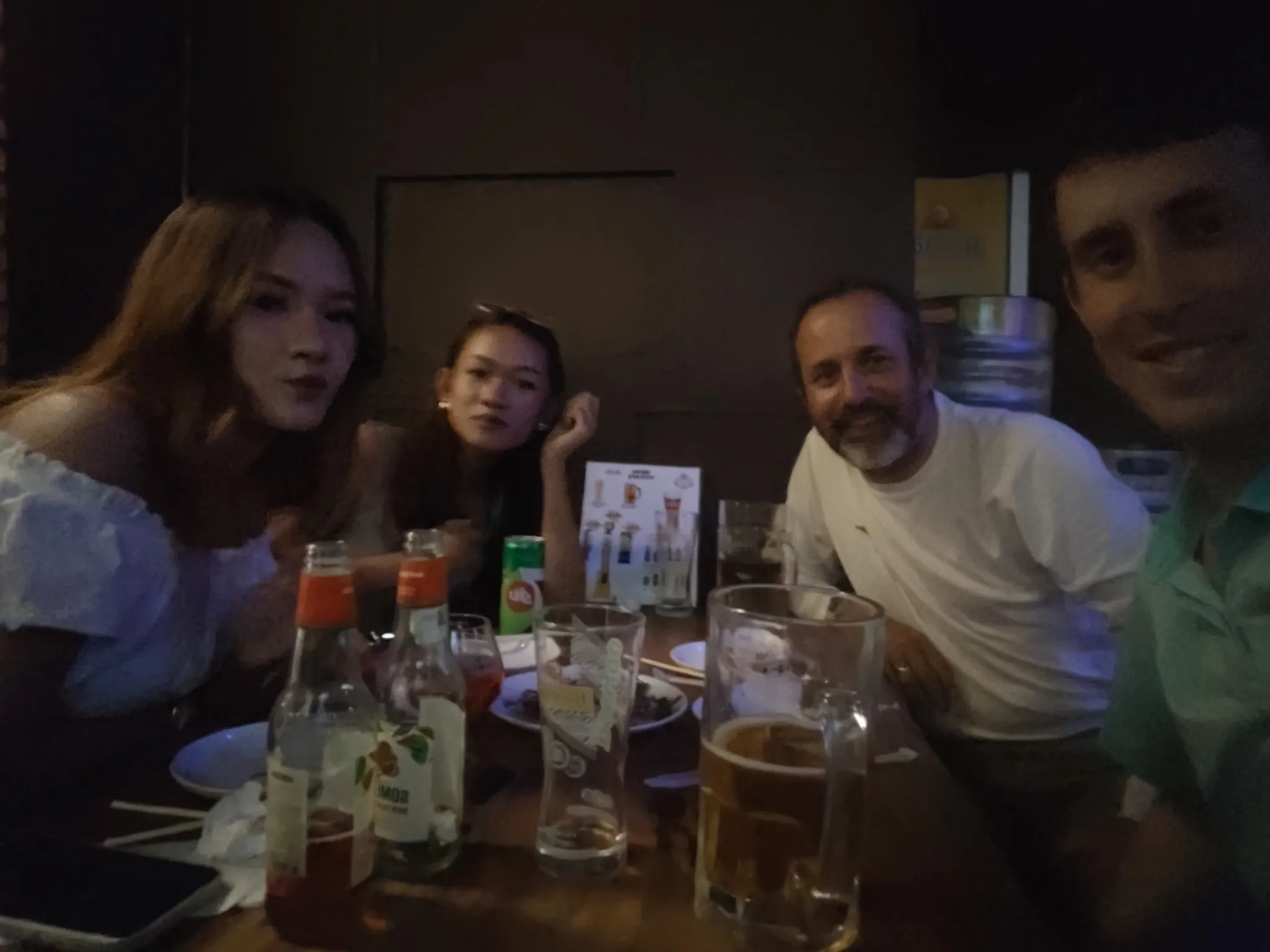
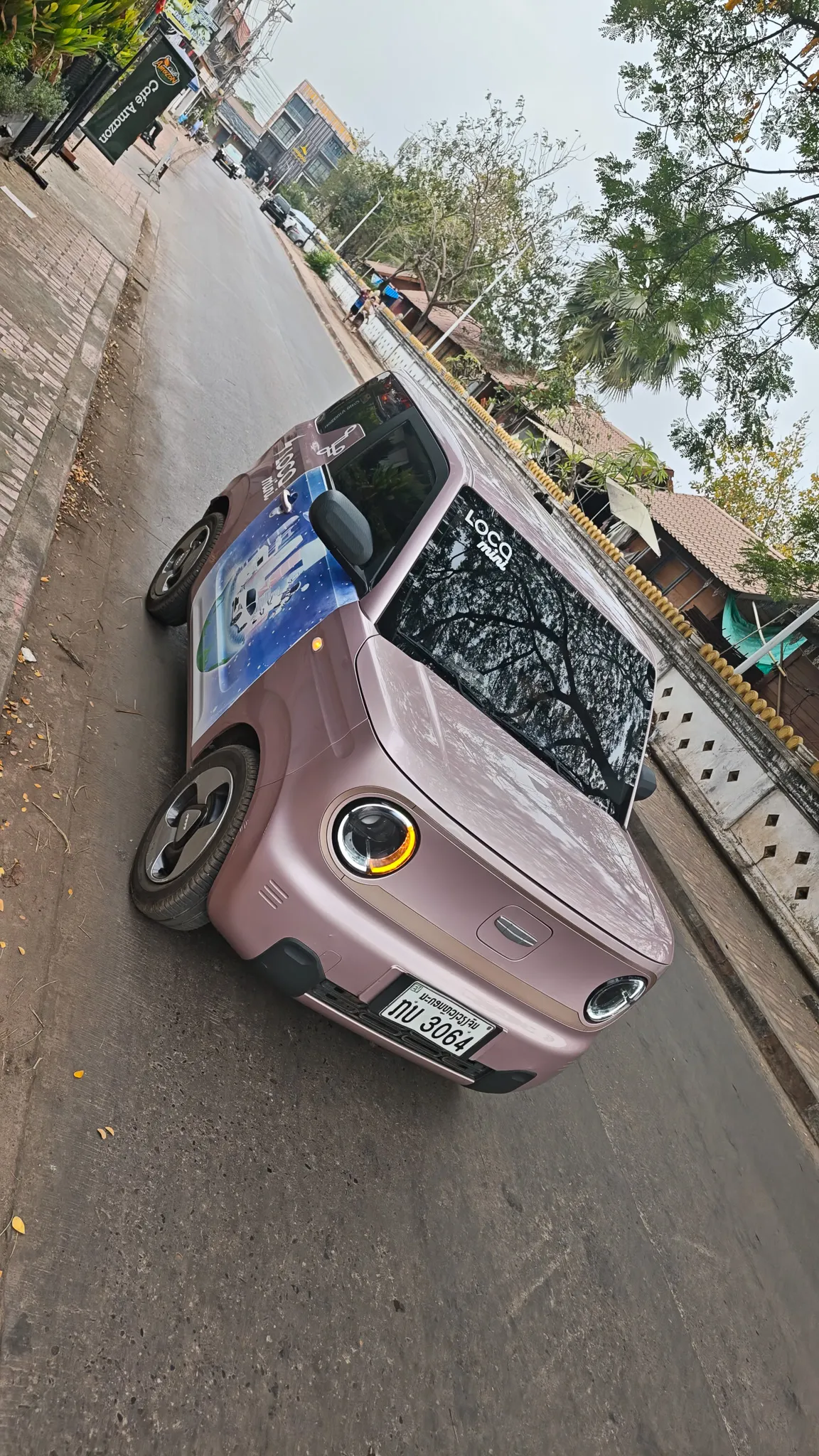
The best thing about Vientiane wasn’t a temple or a museum — it was the people. Jenny and Chompoo became our Vientiane family. Dinners turned into bar crawls, bar crawls turned into late nights at Tip Kafe (a tattoo-parlour-slash-bar with murals on the walls), and late nights turned into bleary-eyed Connect Four games back at the hostel.
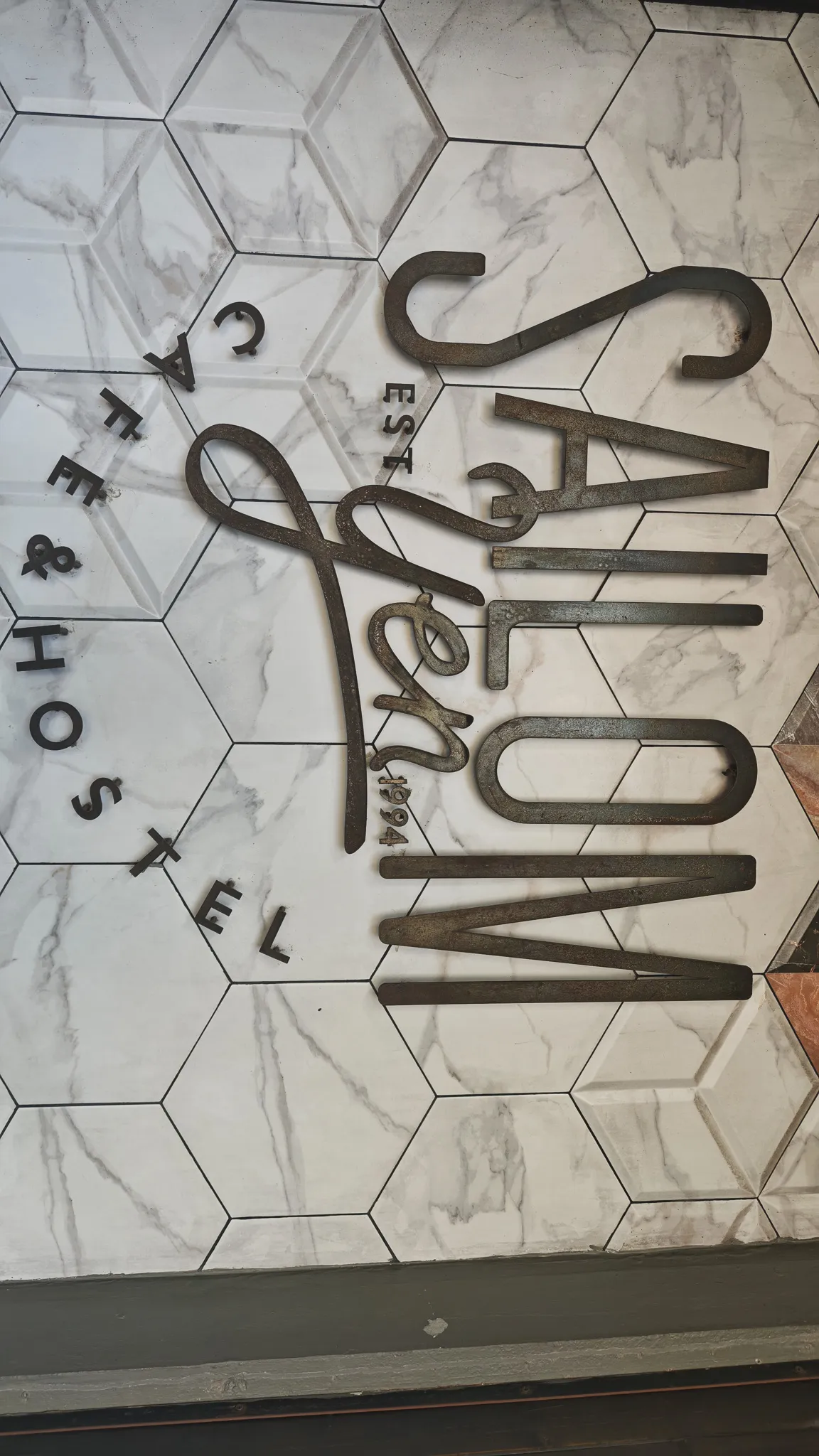
Satlomyen Cafe became our daytime base — a marble-tiled hostel-cafe hybrid where we planned nothing and did it slowly. This is how Vientiane works: you don’t sightsee, you just live there for a few days and let the city happen to you.


The Last Day
Goodbye Laos
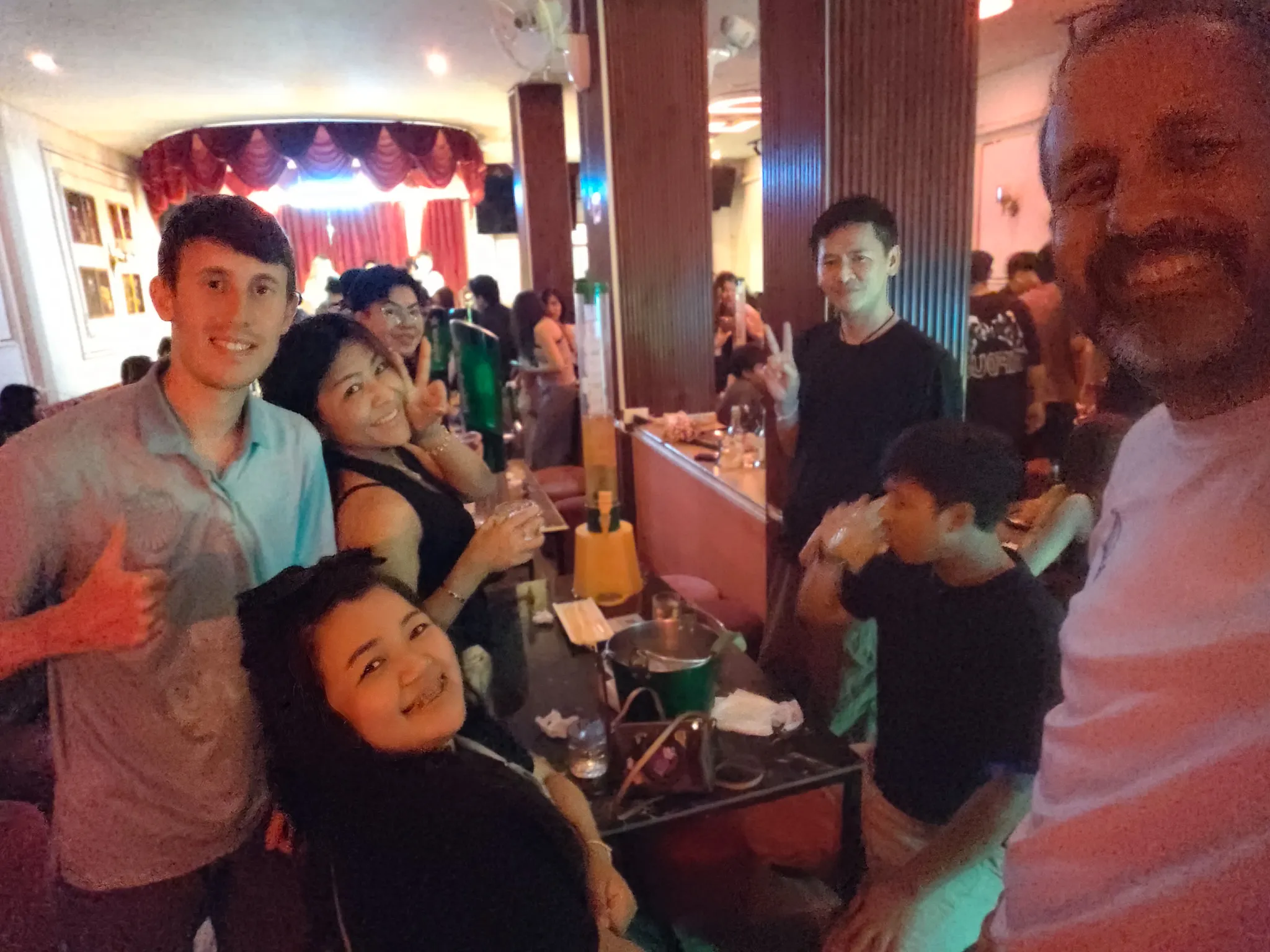
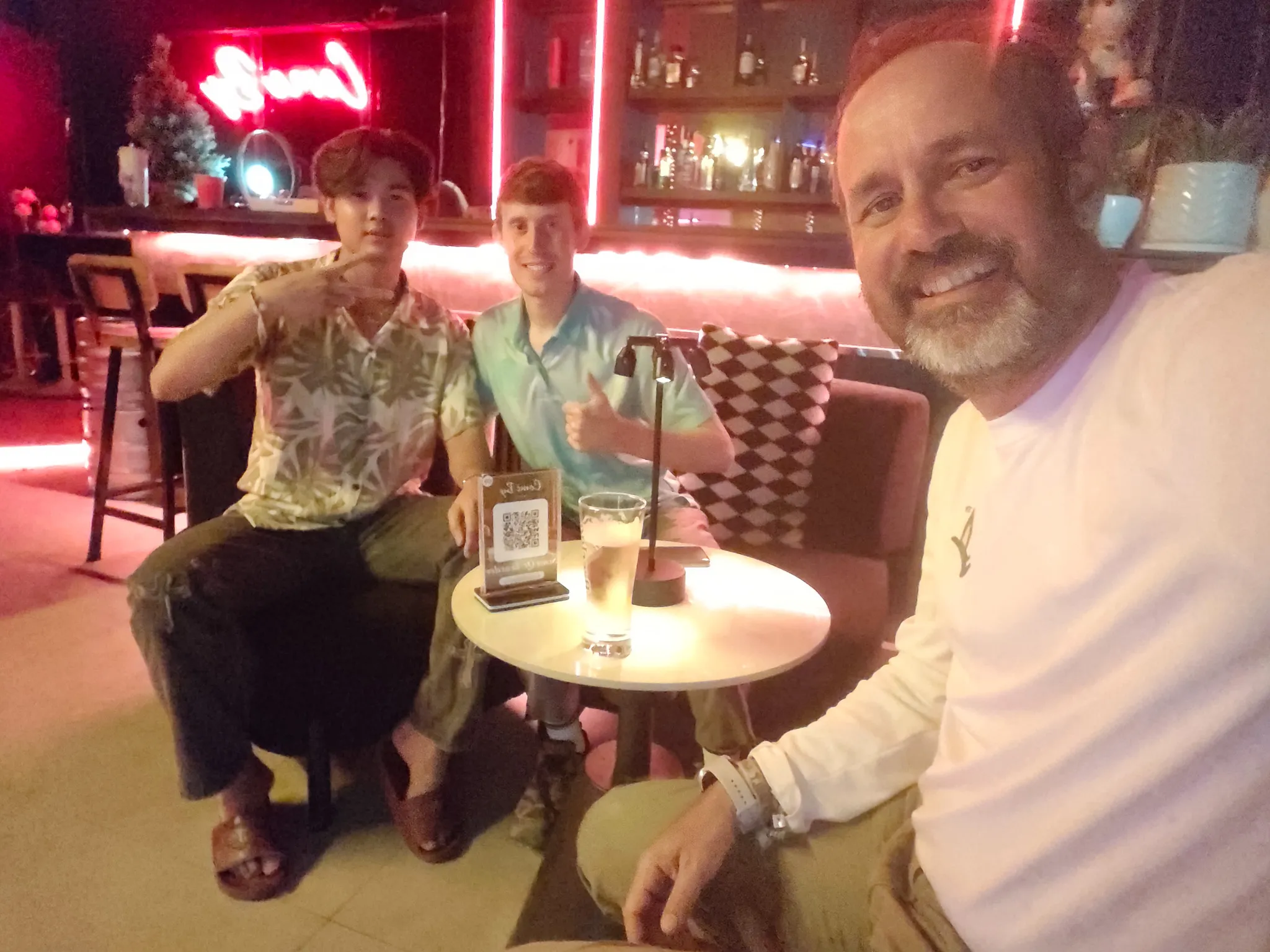
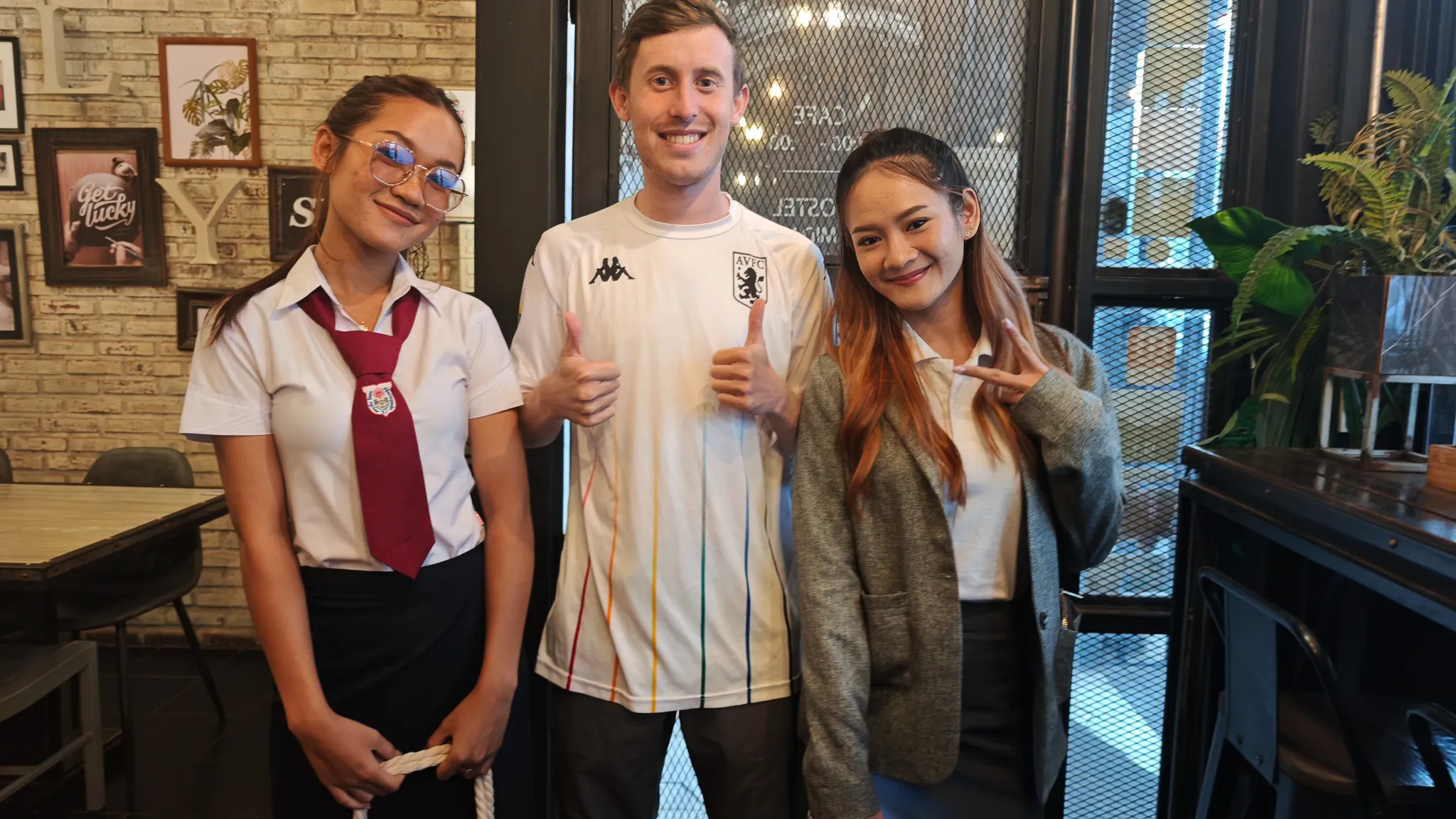
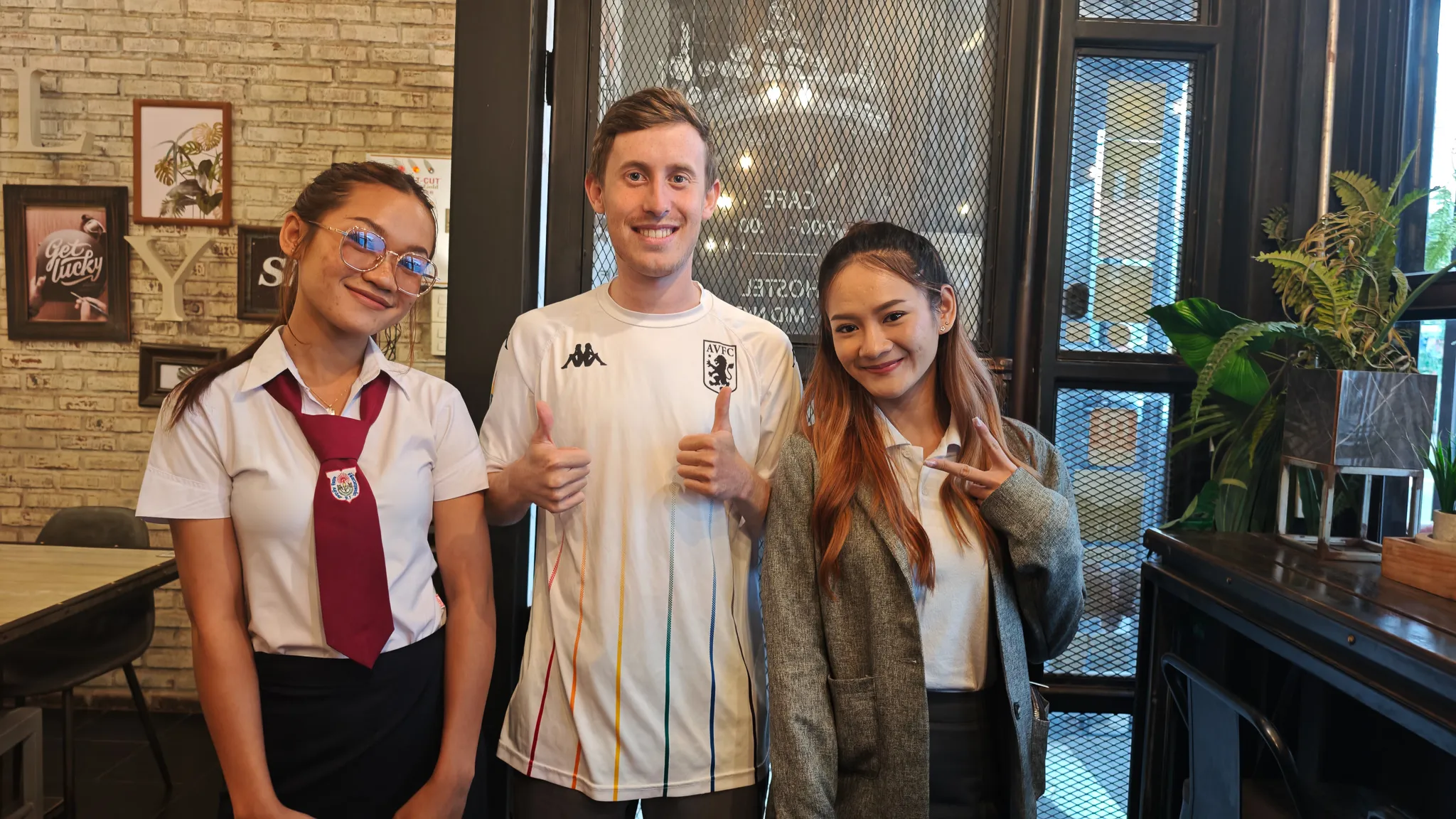
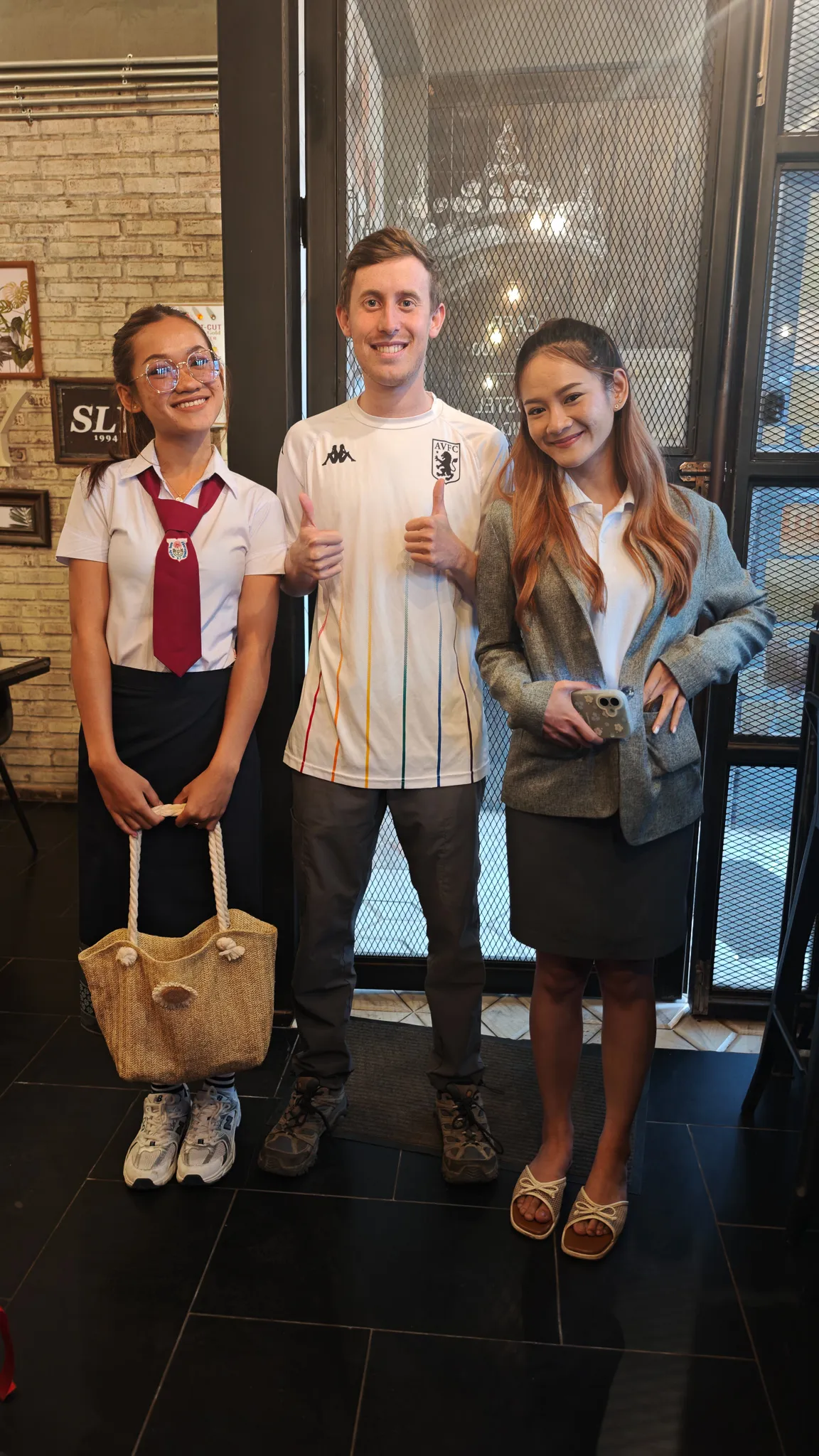
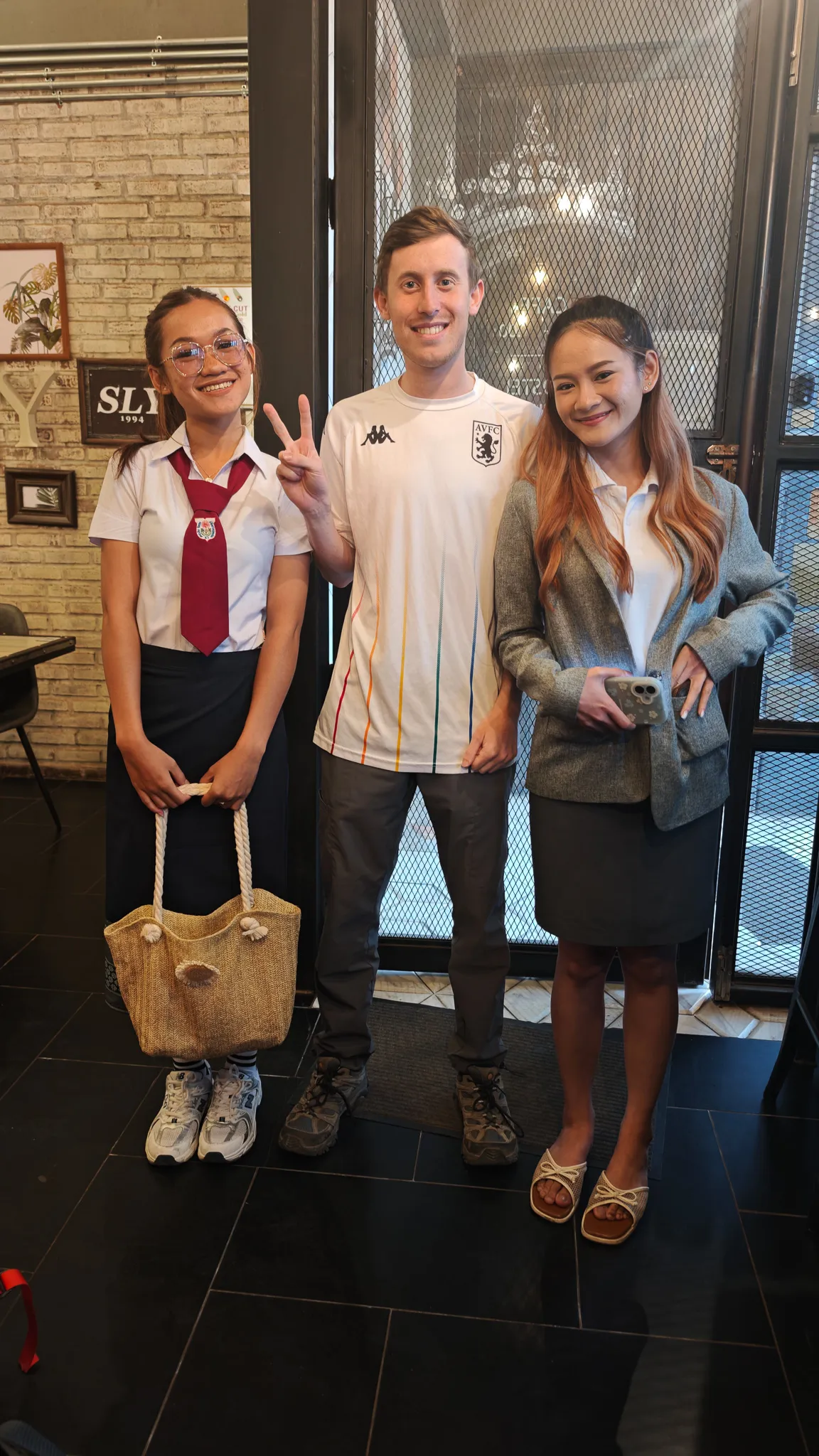
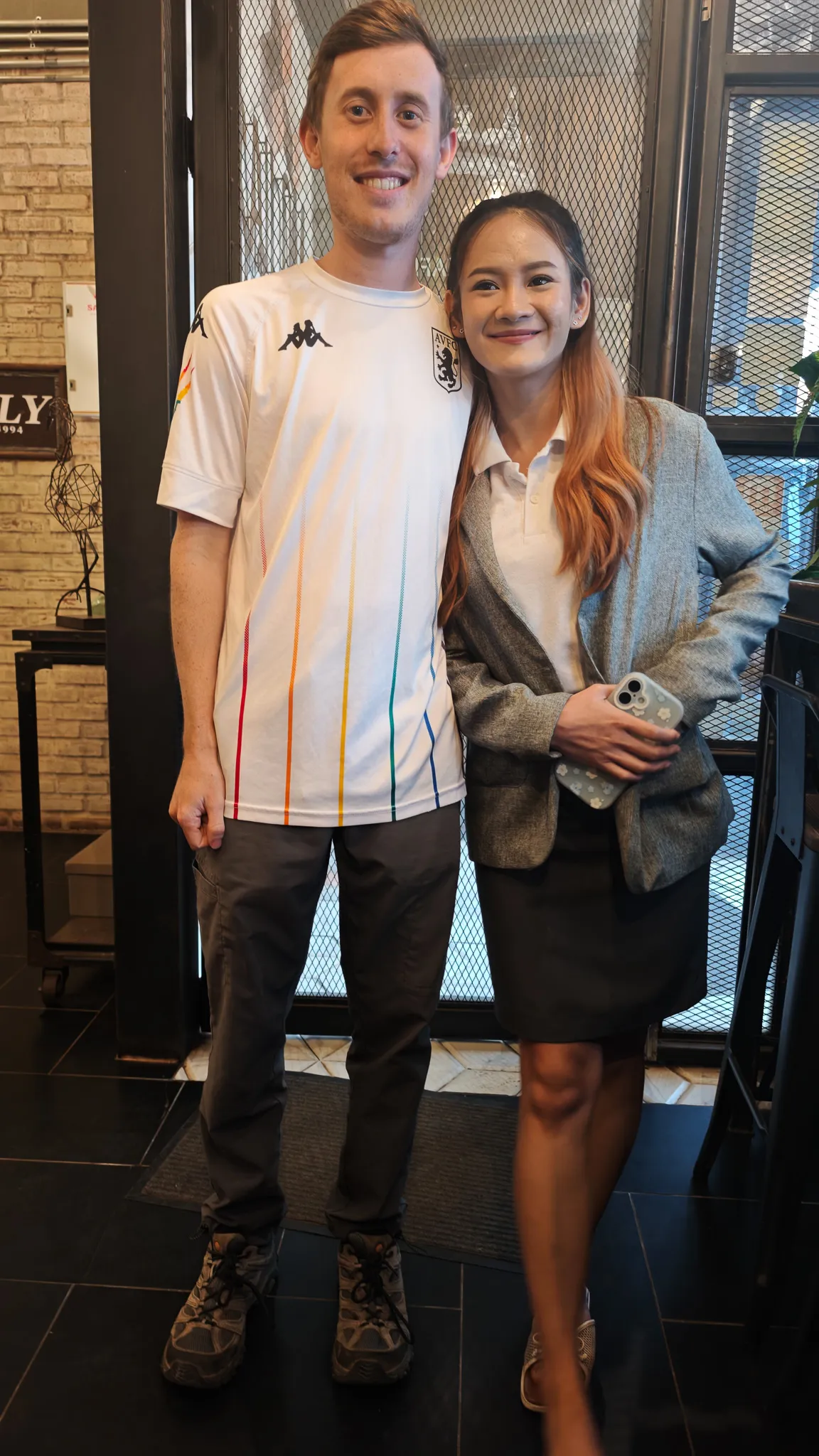
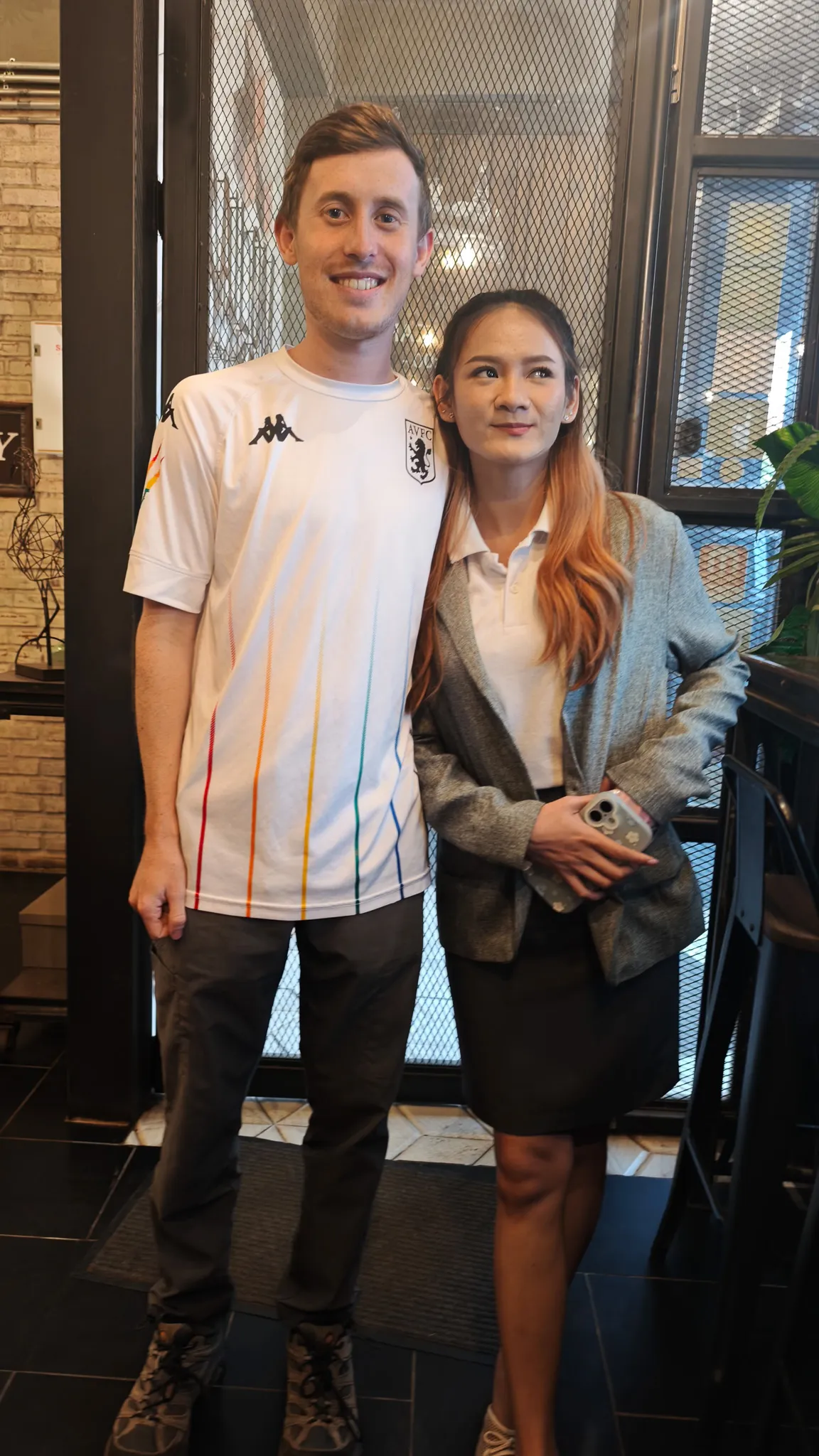
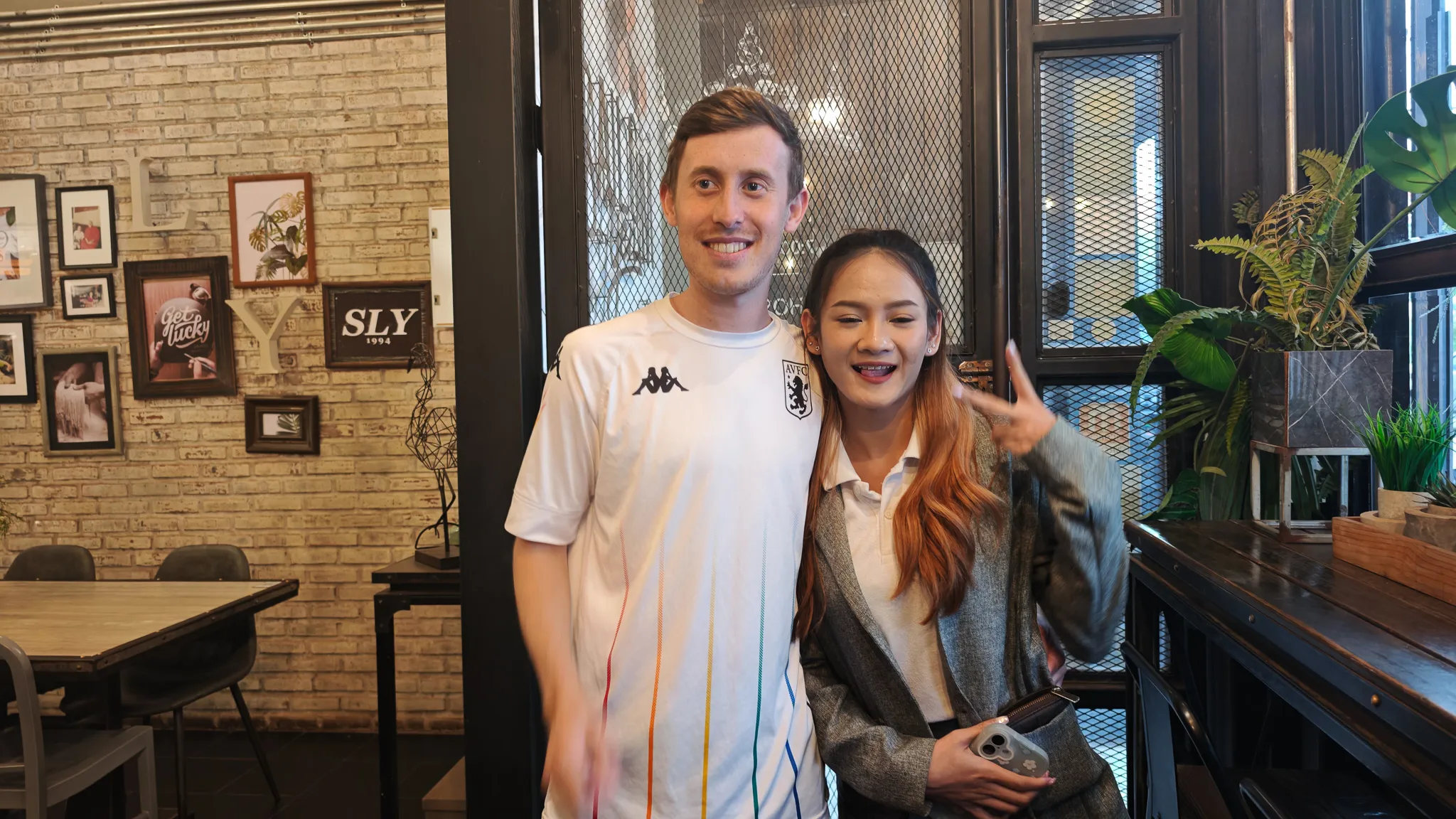
The final afternoon was spent at a cafe with our Lao friends — peace signs, thumbs up, goodbye photos that we took far too many of because nobody wanted to be the one to say “right, that’s enough.” We took seven. They’re all here.
From the cafe we went straight to the overnight train — across the Friendship Bridge to Nong Khai, then the sleeper south to Bangkok. Laos was done. The packraft trip, the mountains, the villages, the people, the Beer Lao, the sticky rice, the bombs still in the ground — all of it behind us now. Ahead: Thailand, Taiwan, and whatever comes next.
Next Stop
Bangkok — Train Markets & Canal Walks
The overnight sleeper to Bang Sue Grand Station, trackside shanty towns, and banyan trees eating houses.
Read Next →