Day 2 on the Nam Ou

Breakfast Shots &
the Abandoned Settlement

Eggs, chili salt, and lao-lao at 7am. Twenty kilometres into a valley where only the oxen remain.

20 km
Distance
7am
Lao-lao for breakfast
0
People at the settlement

Morning

Breakfast with the Village

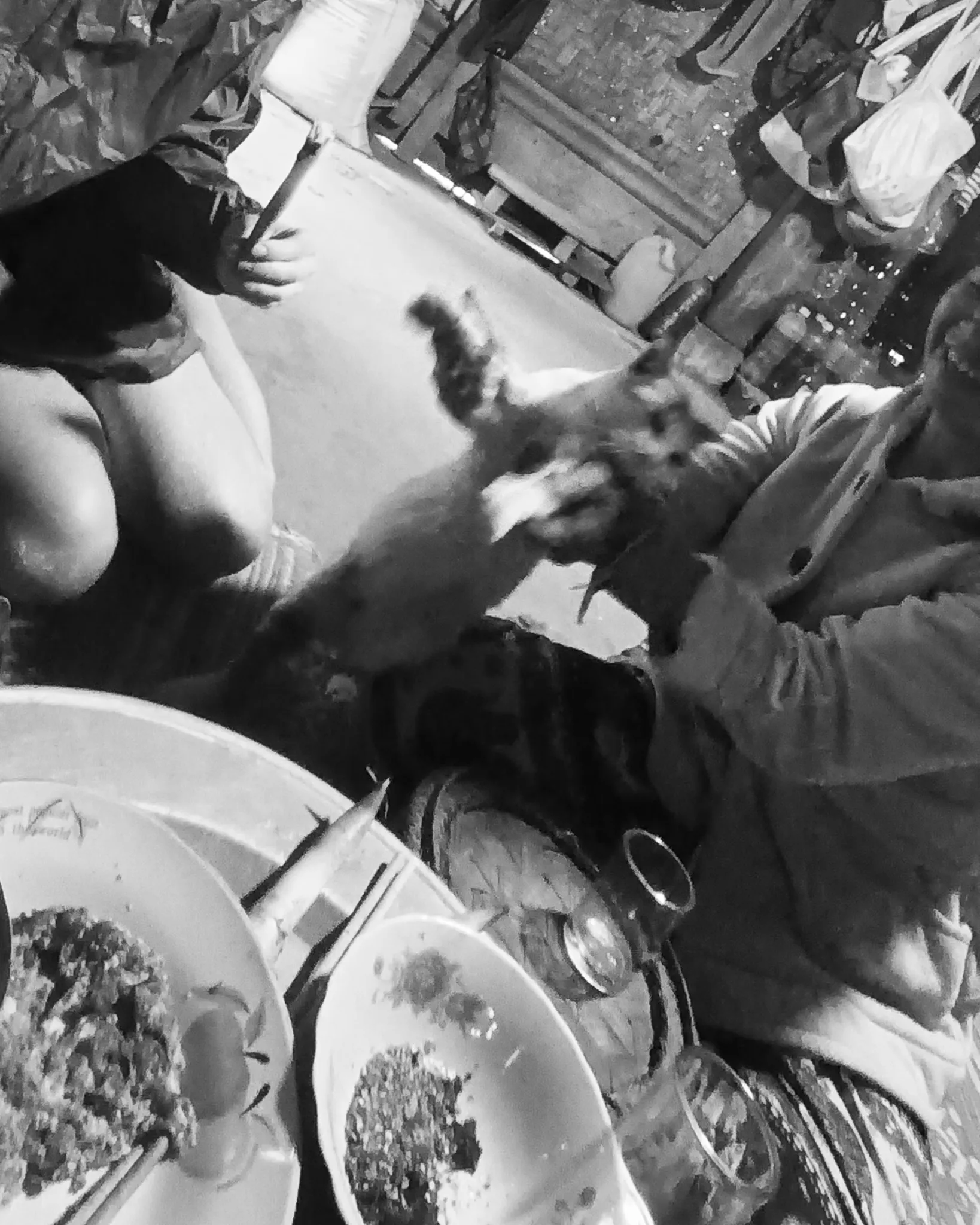
The villagers made us breakfast right next to where we’d slept — cooked over an open fire on the floor of the stilt house. Eggs, vegetables, chili salt. And then, at 7am, shots of lao-lao and bottles of Beer Laos. Lao-lao is rice whisky — distilled in the villages, stored in plastic bottles, and offered to guests the way the British offer tea. Refusing is possible but discouraged.

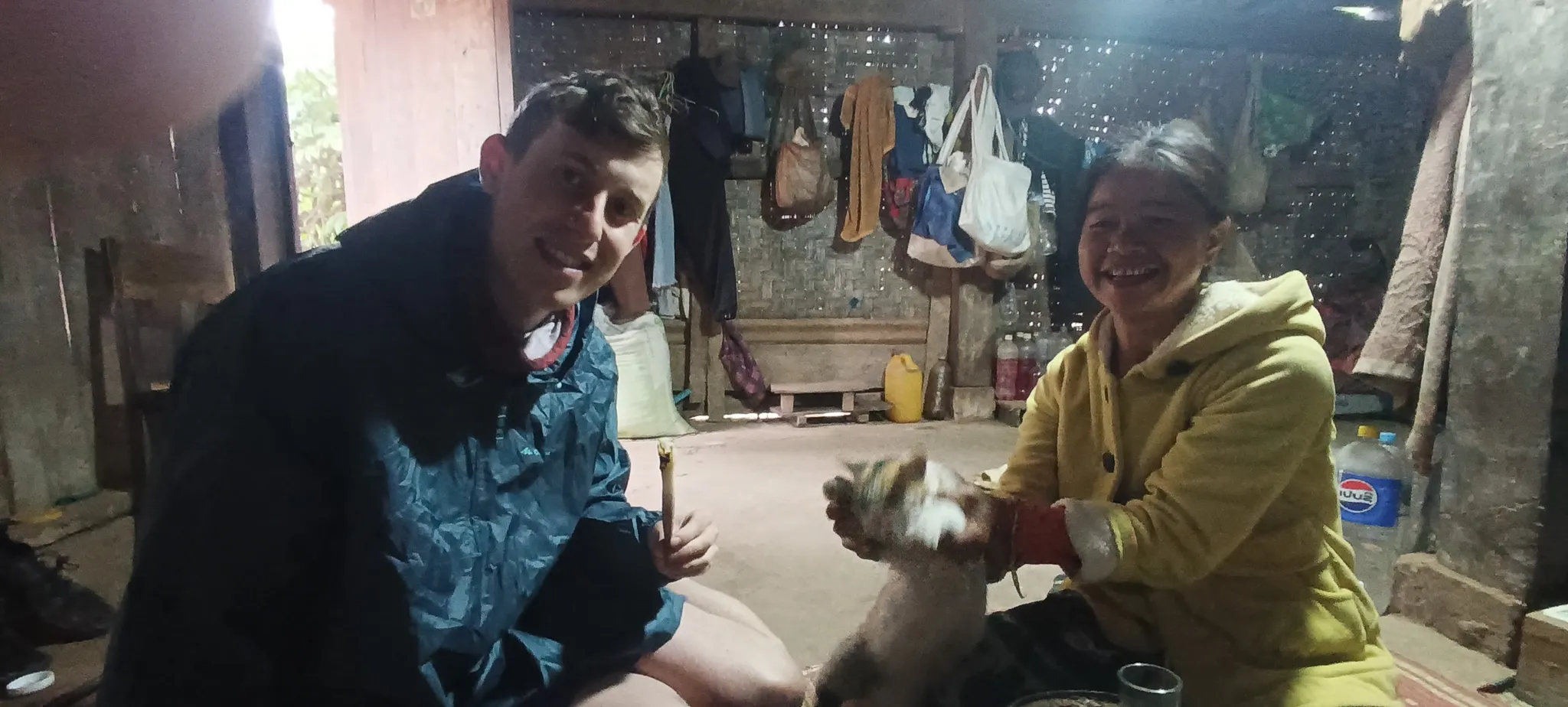
The host’s cat sat on his lap while he poured. Chickens patrolled below. It was the most civilised breakfast we’d had in days, and also the drunkest.
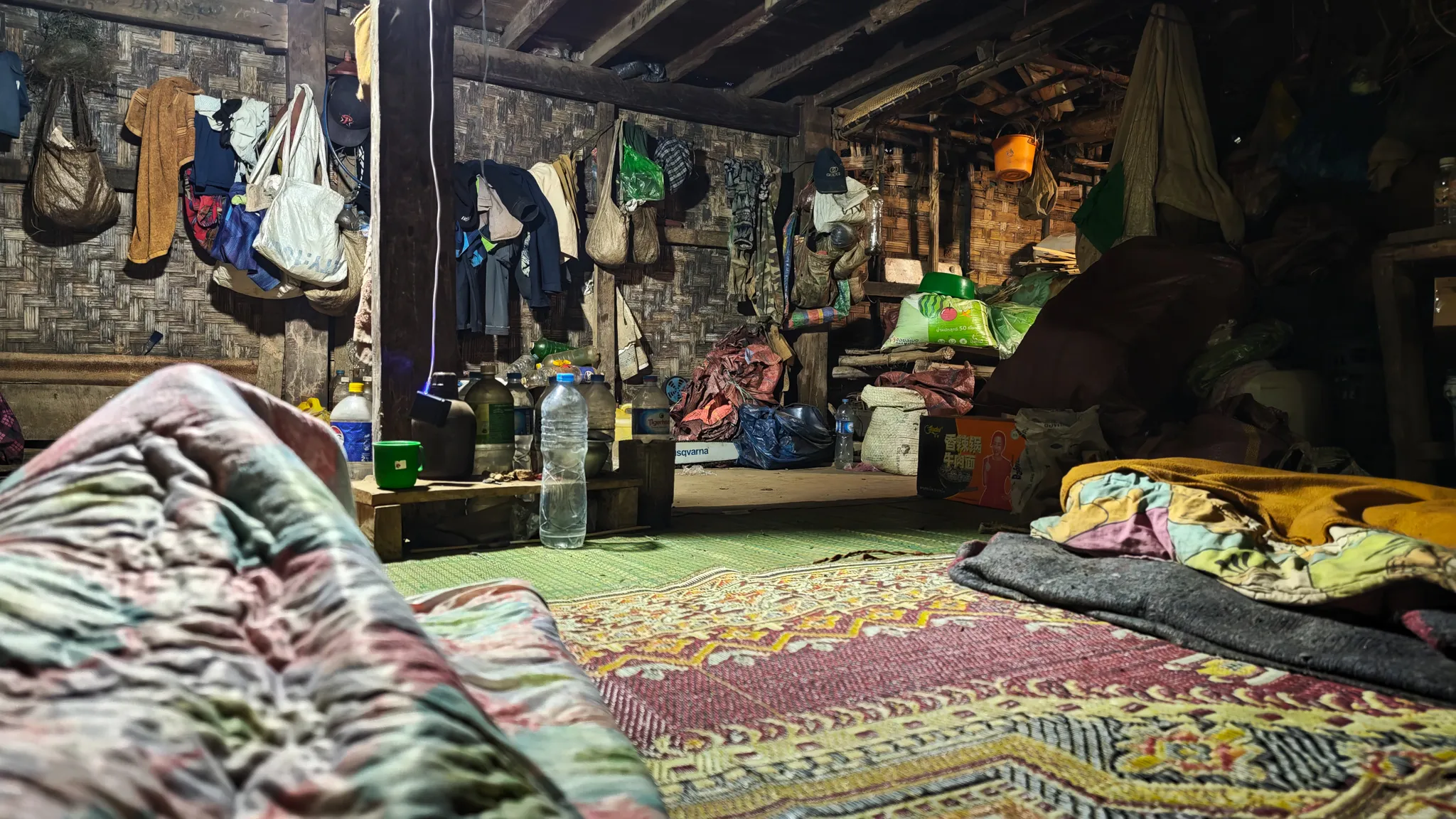

Interior of a traditional village hut with woven bamboo walls, sleeping mats, and bags hanging from the rafters along the Nam Ou river in Laos Traveller waking up inside a village hut during a packrafting trip along the Nam Ou river in Laos Black and white photo of breakfast being served with plates of food at a villagers home along the Nam Ou river in Laos
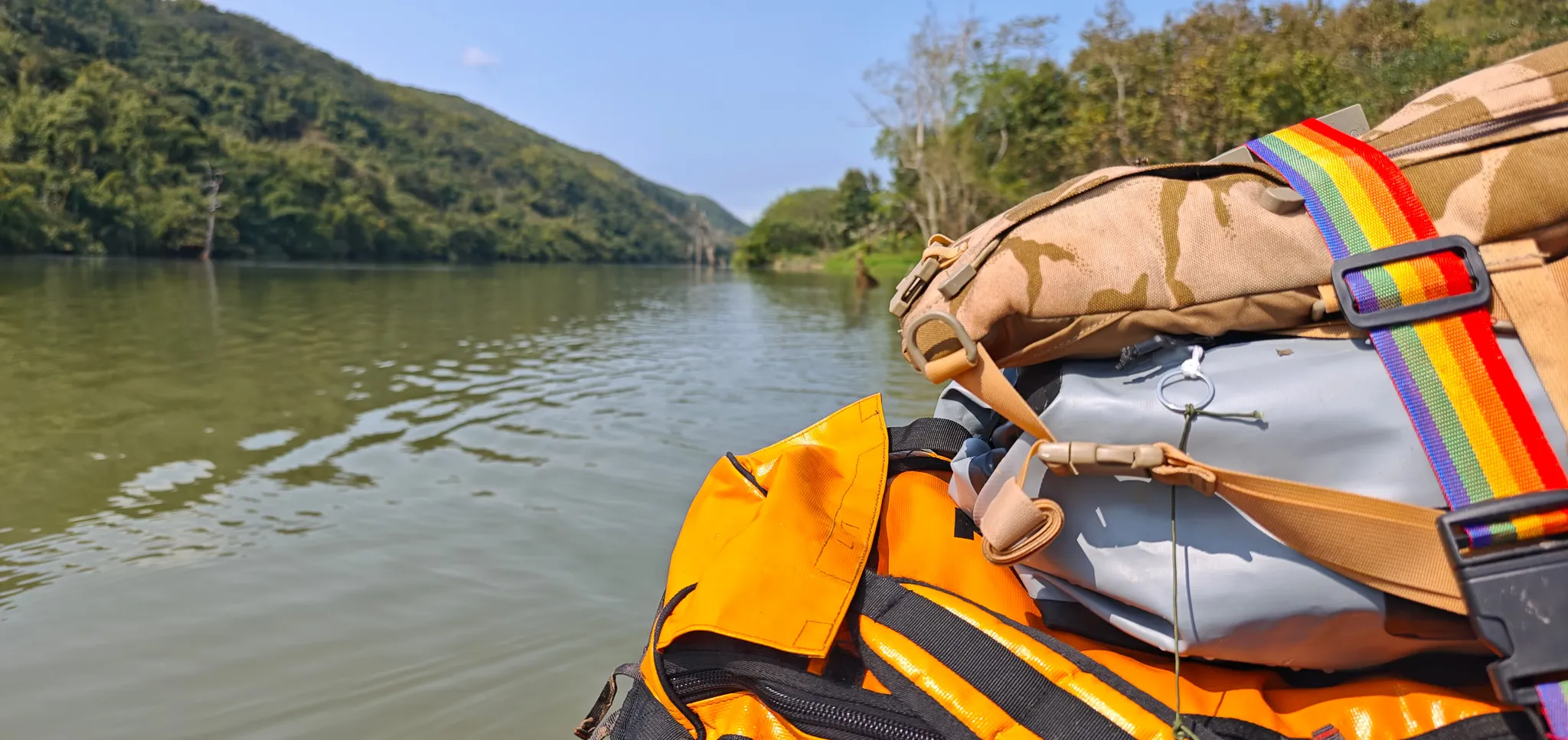
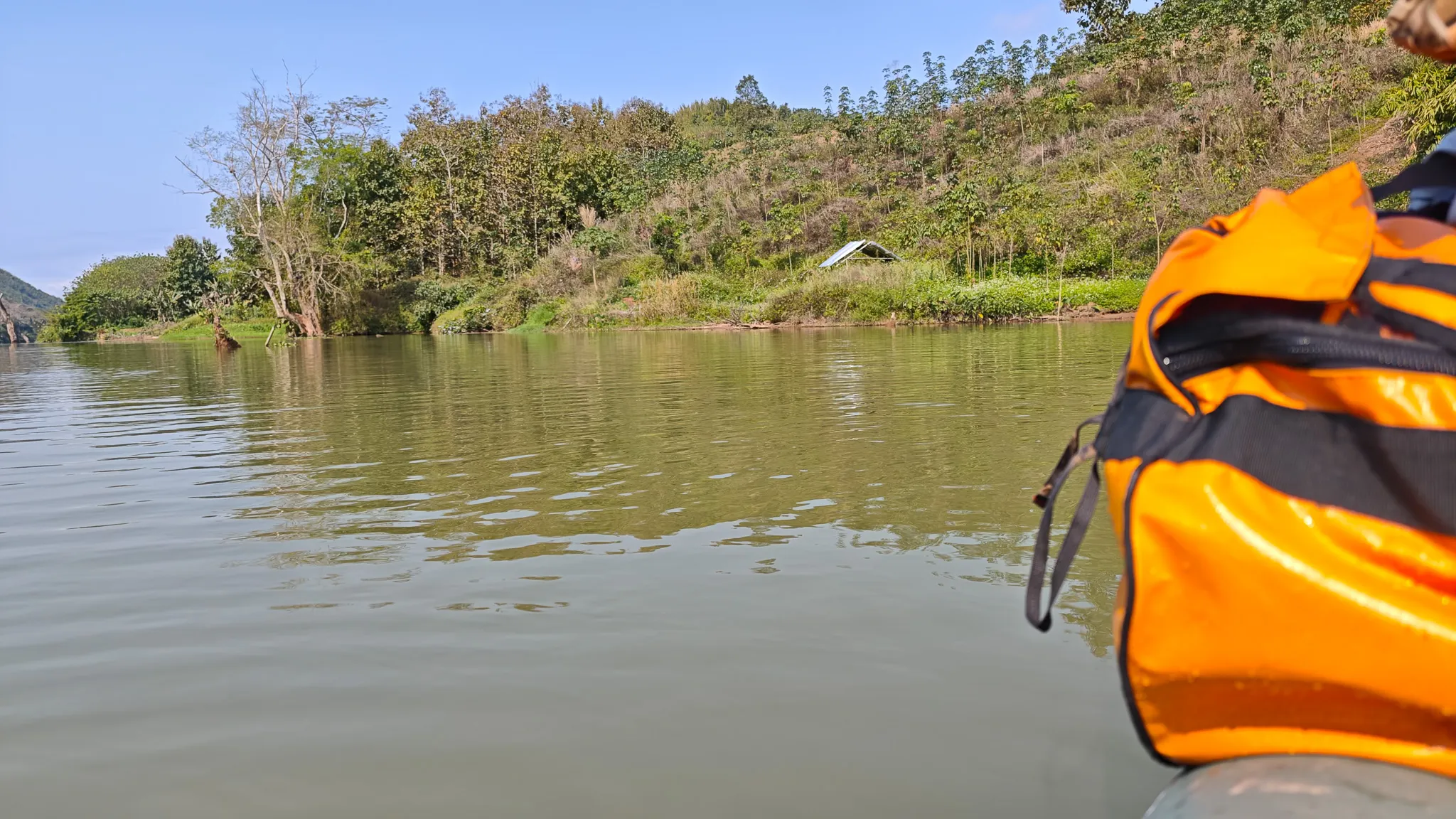
Traveller and local villager host with a cat inside a traditional hut during morning breakfast along the Nam Ou river in Laos View from a packraft showing orange life jacket and camo dry bag with the calm Nam Ou river stretching ahead between forested hills
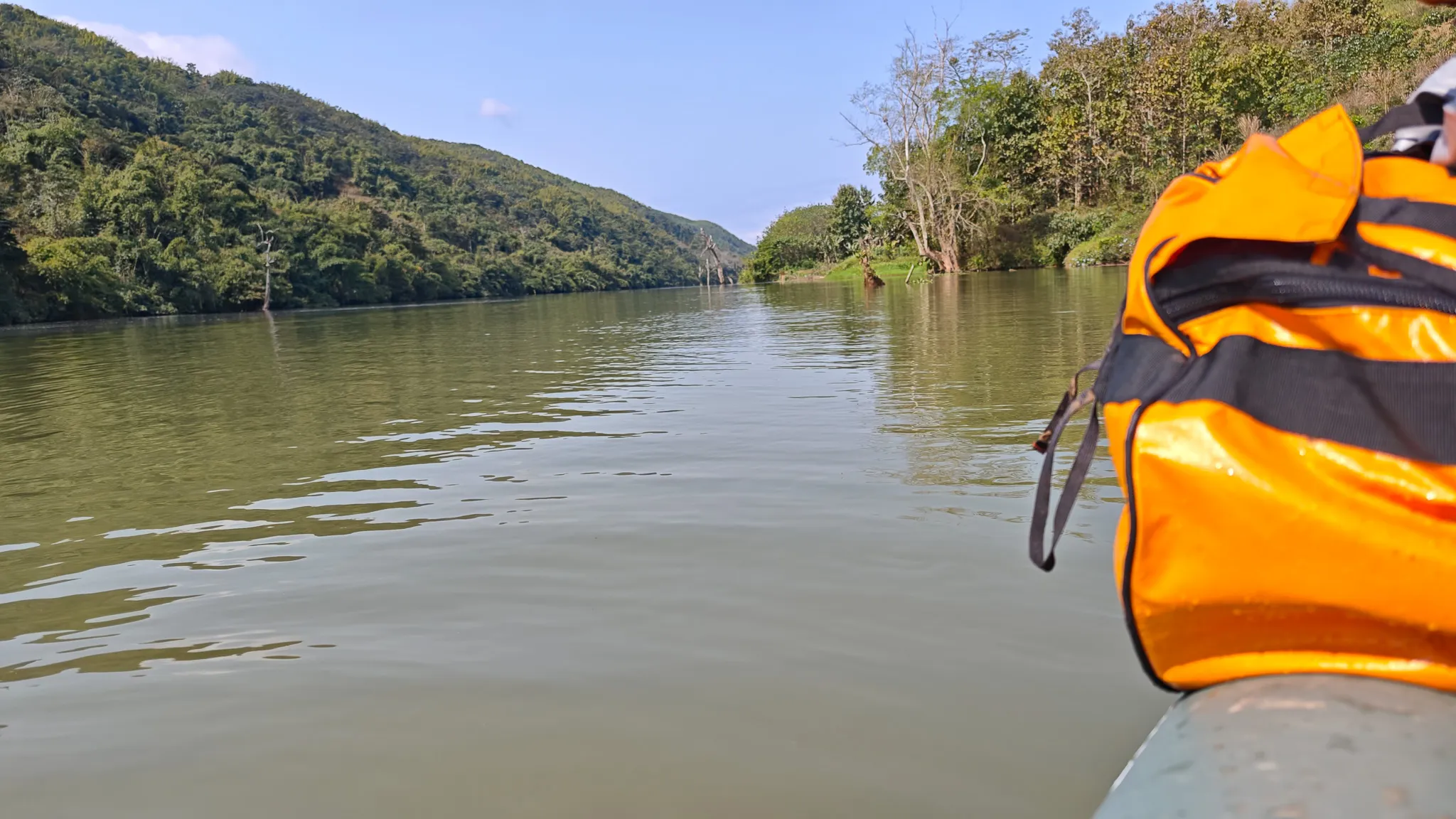
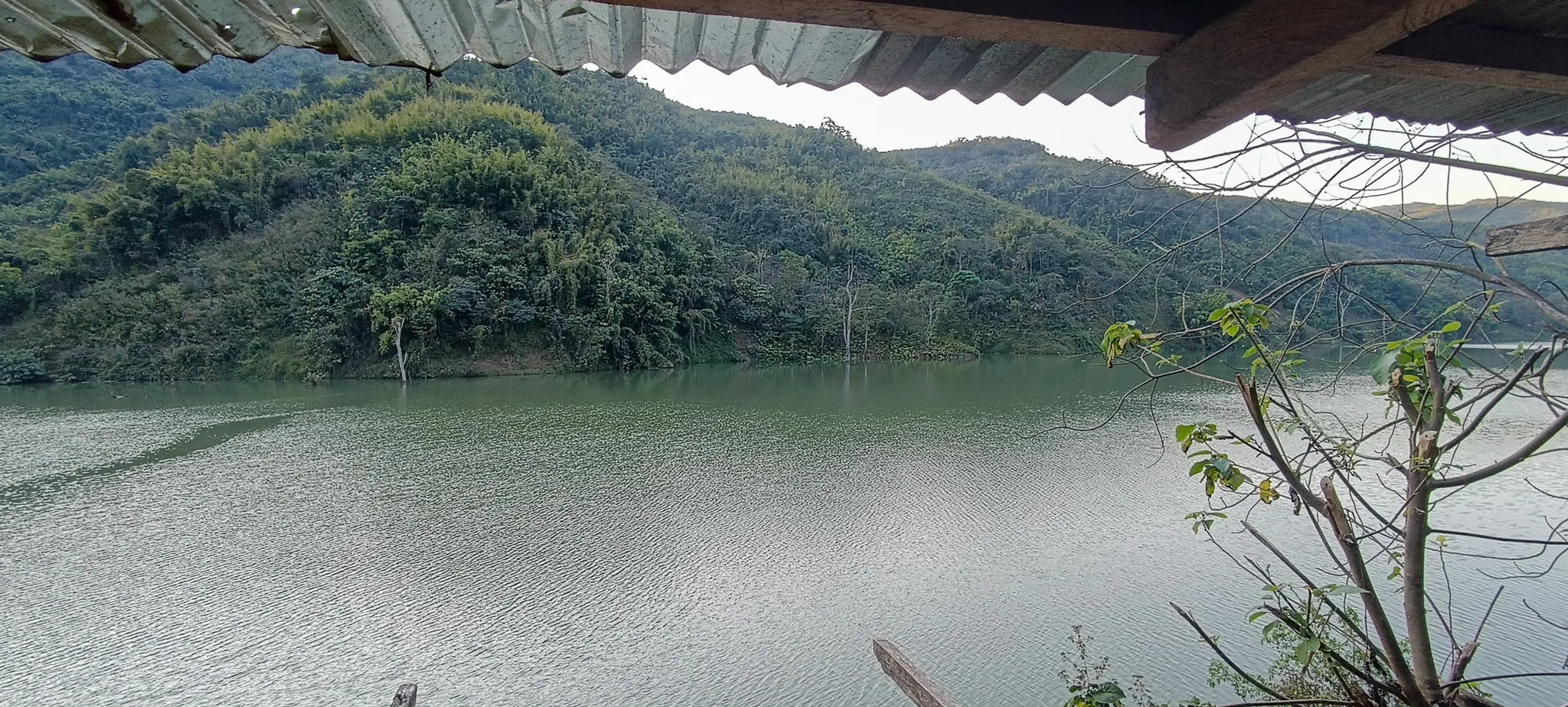
The Nam Ou widens south of Ban Haddean

The River

Twenty Kilometres

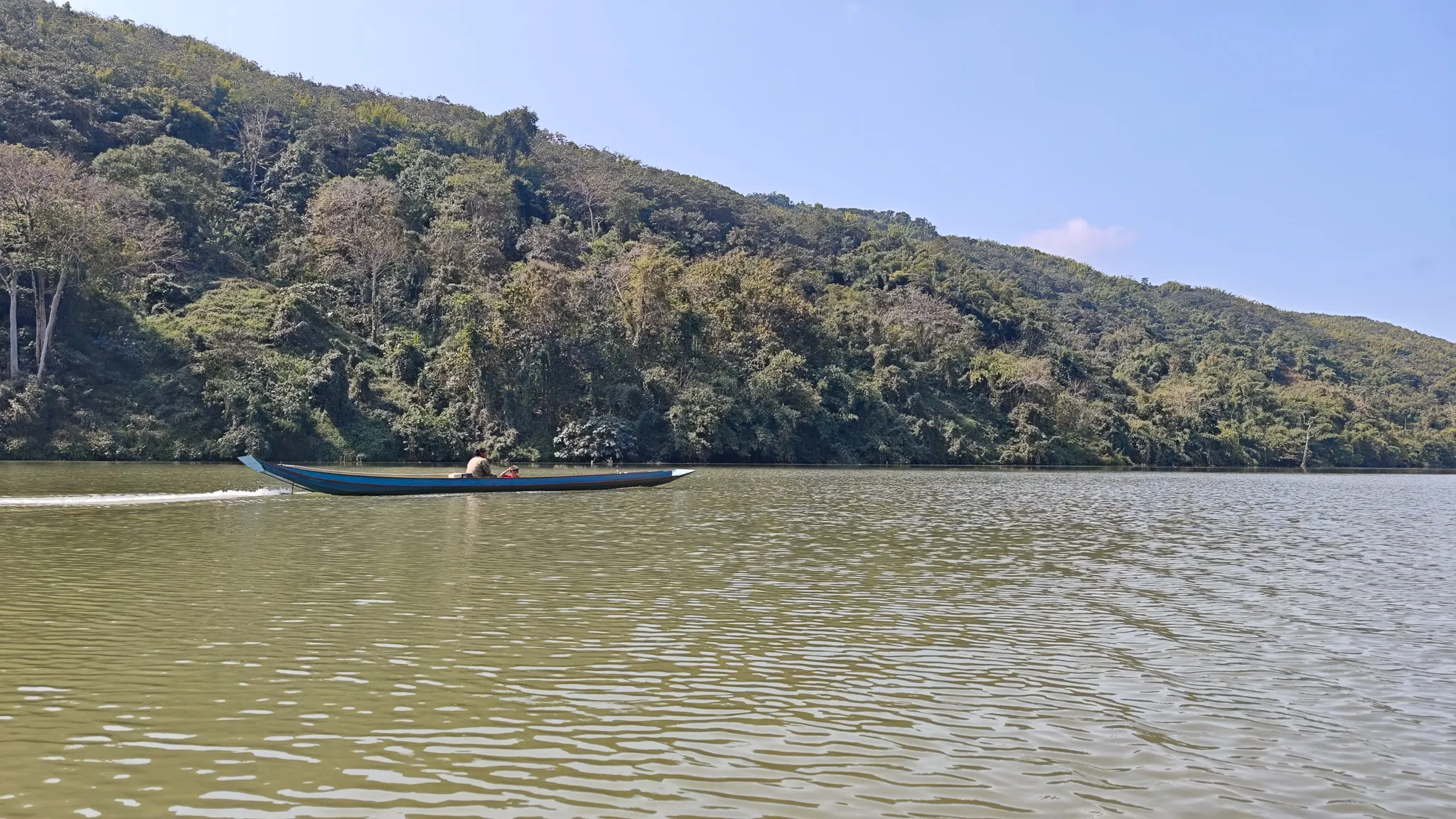
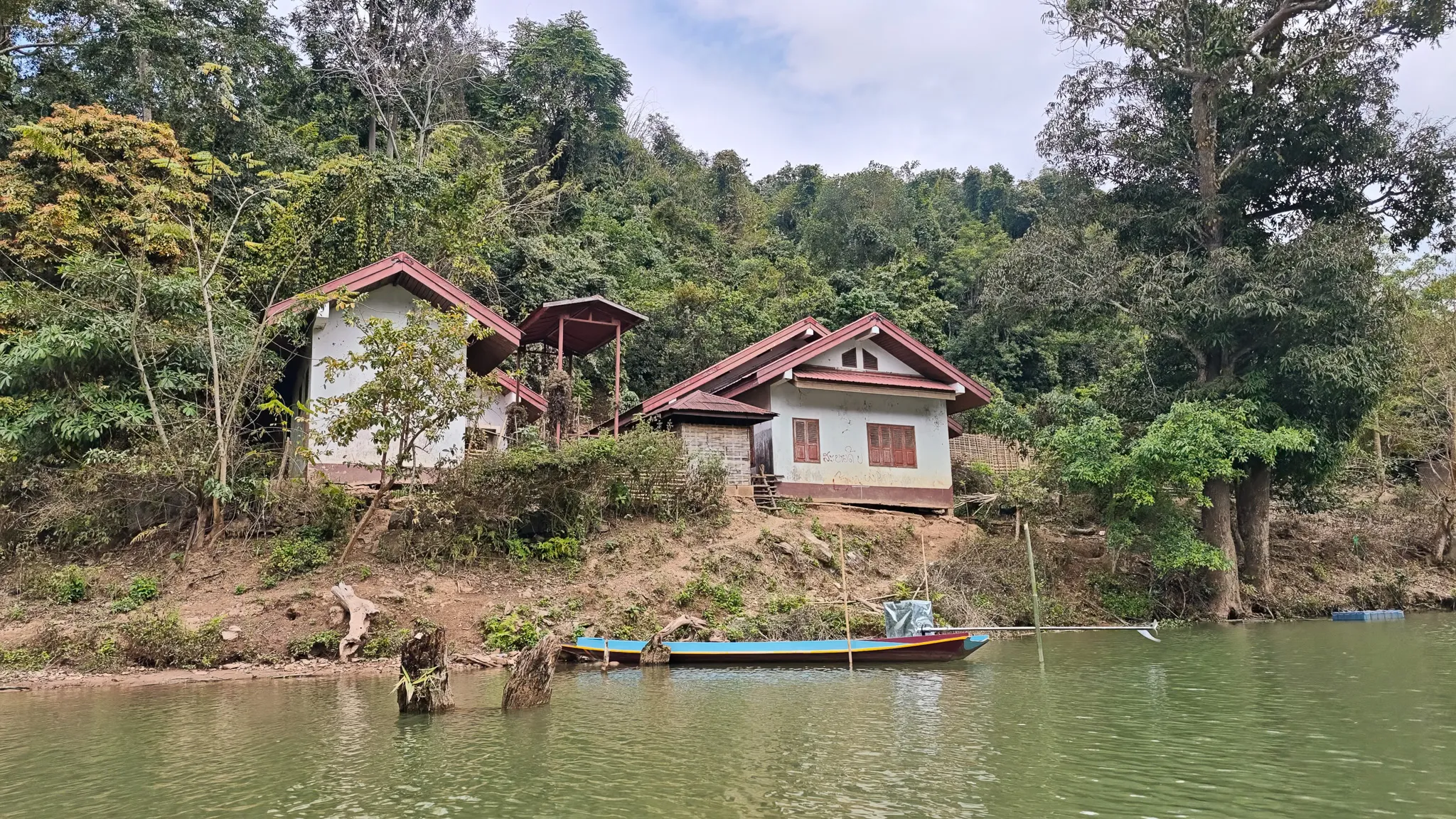
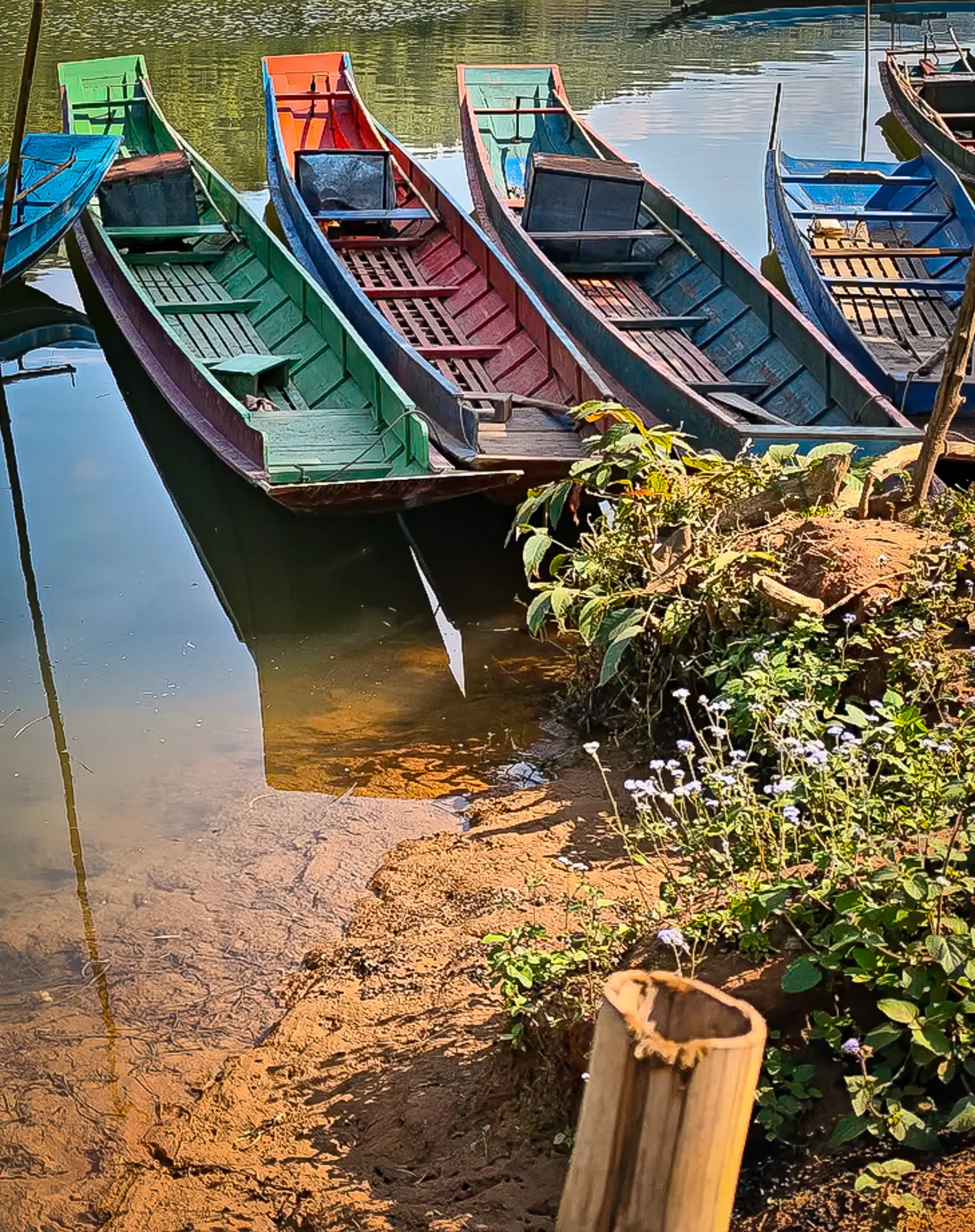
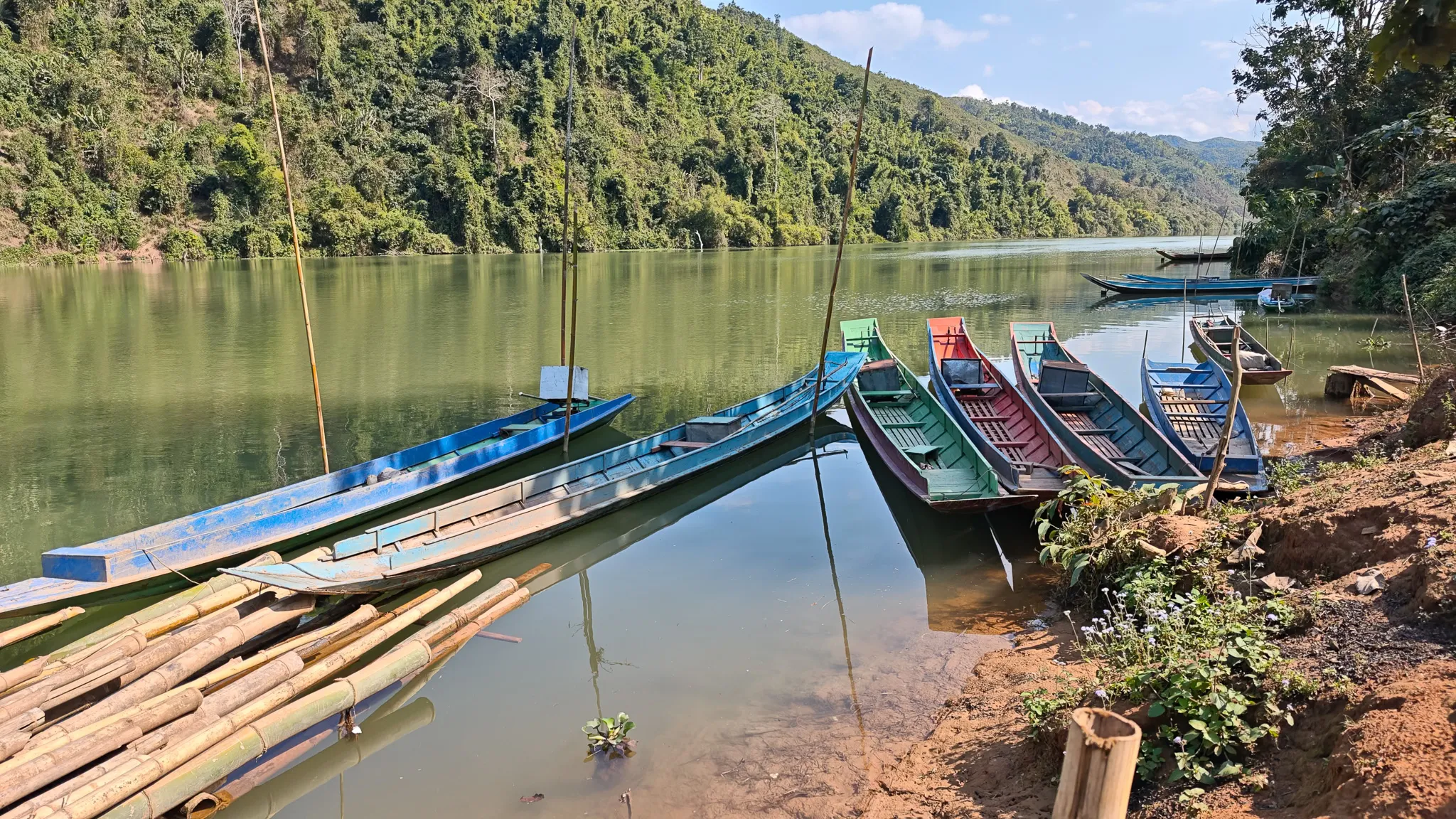
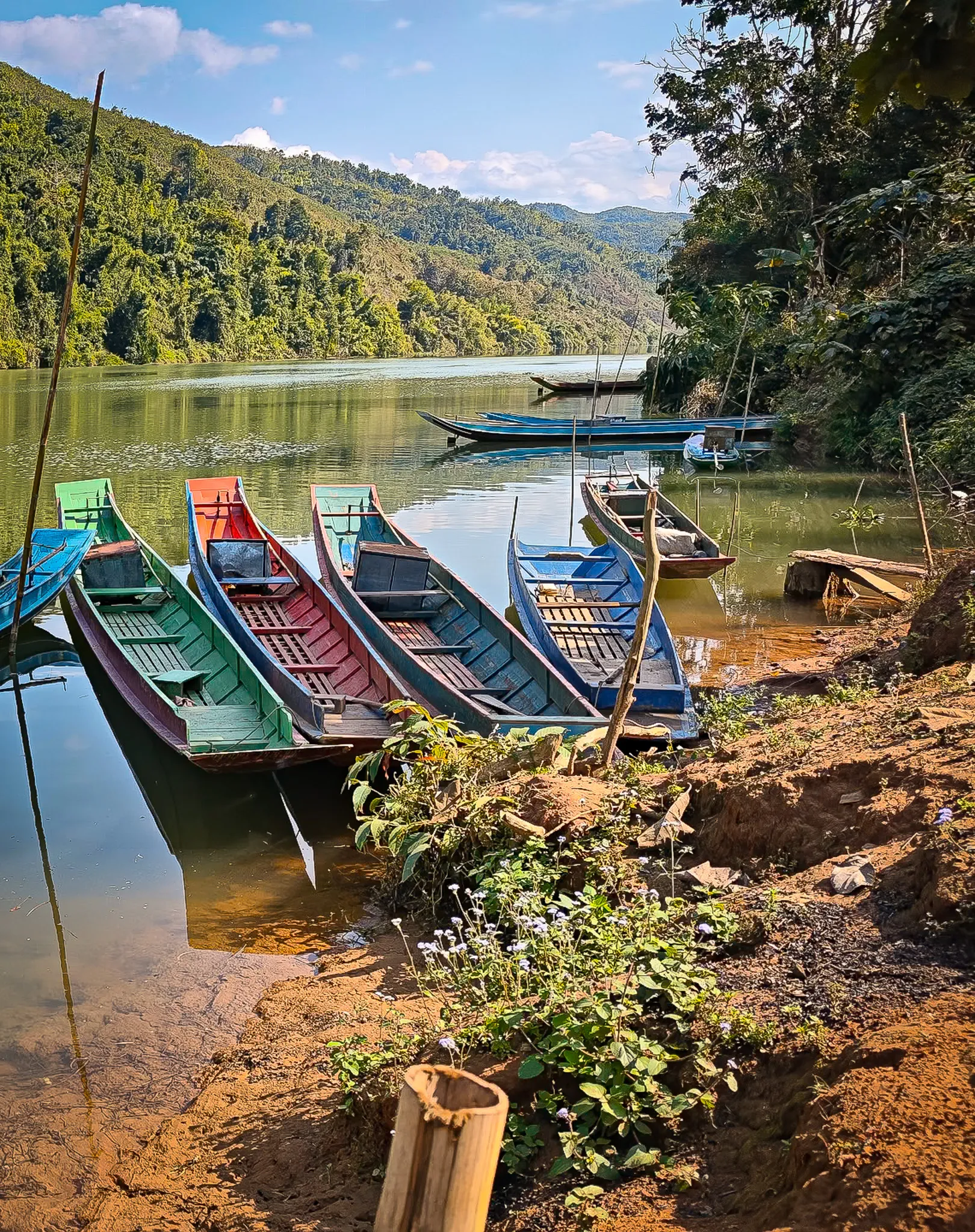
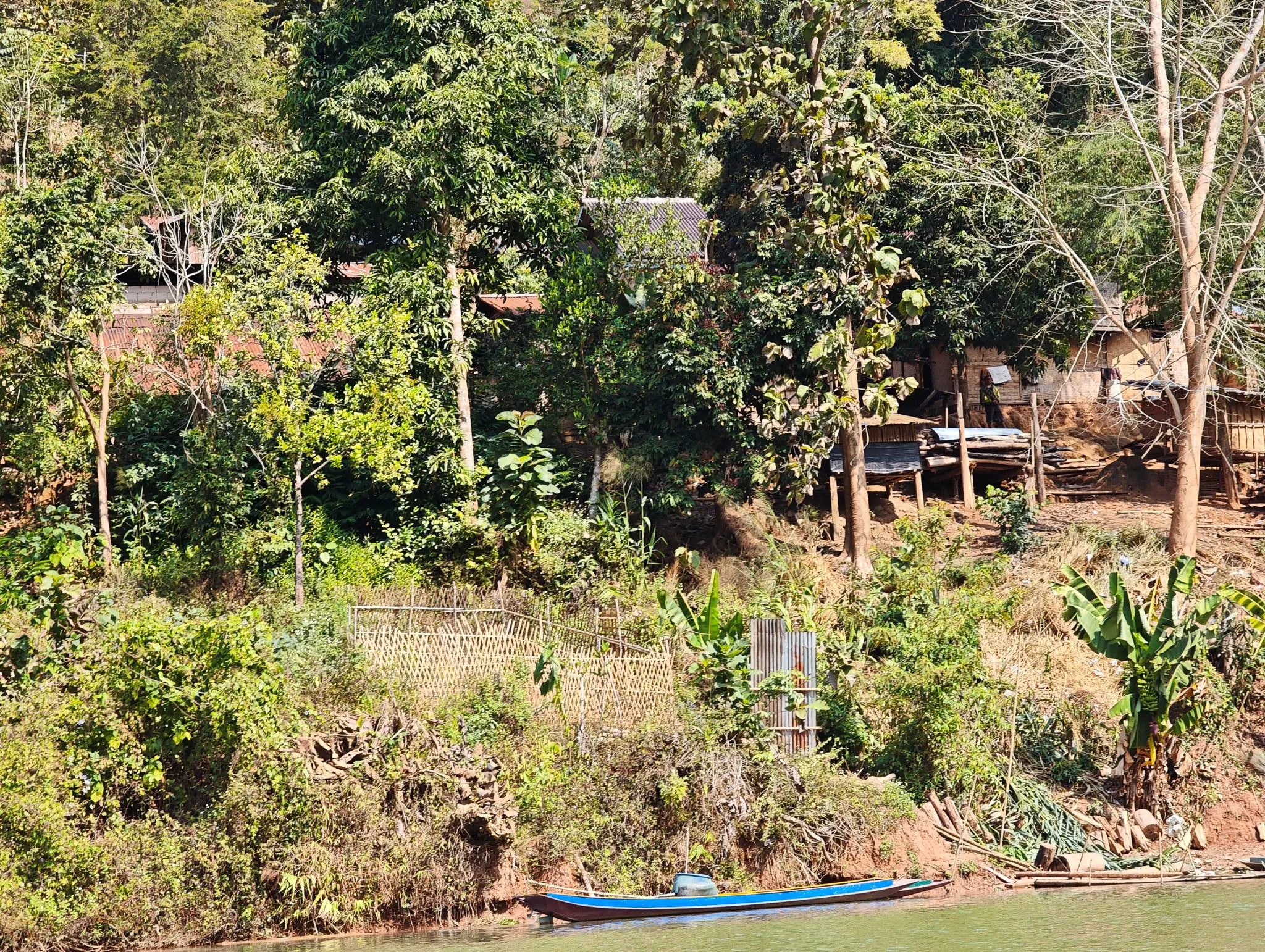
We paddled 20 kilometres — the longest day yet. The Nam Ou widened and narrowed, the hills pressing in then falling back. We passed villages on the riverbanks: wooden houses with red tin roofs, longboats moored on the mud, children waving from bamboo rafts. At each one, we could have stopped. The river gives you options. We chose to keep going.
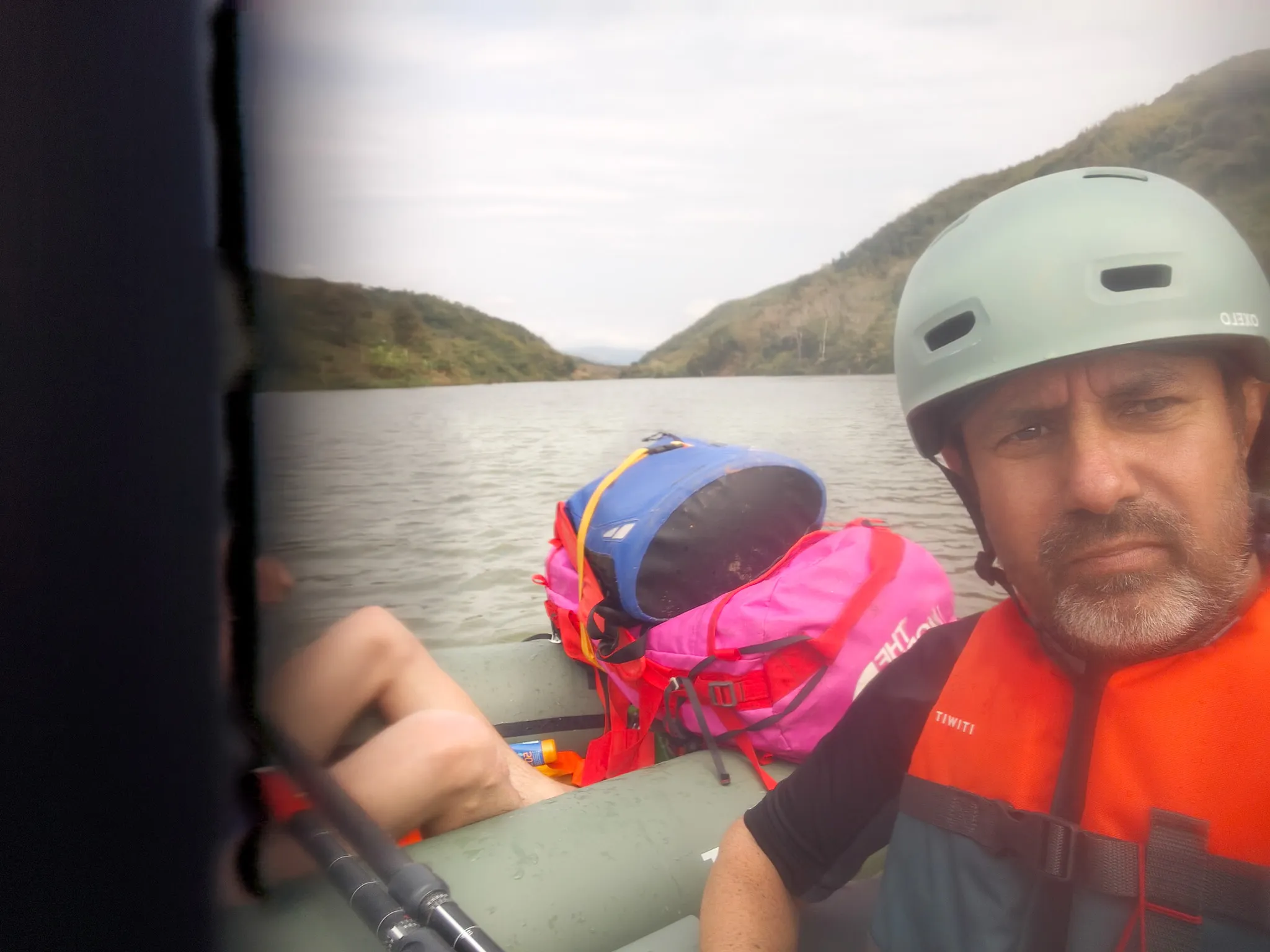
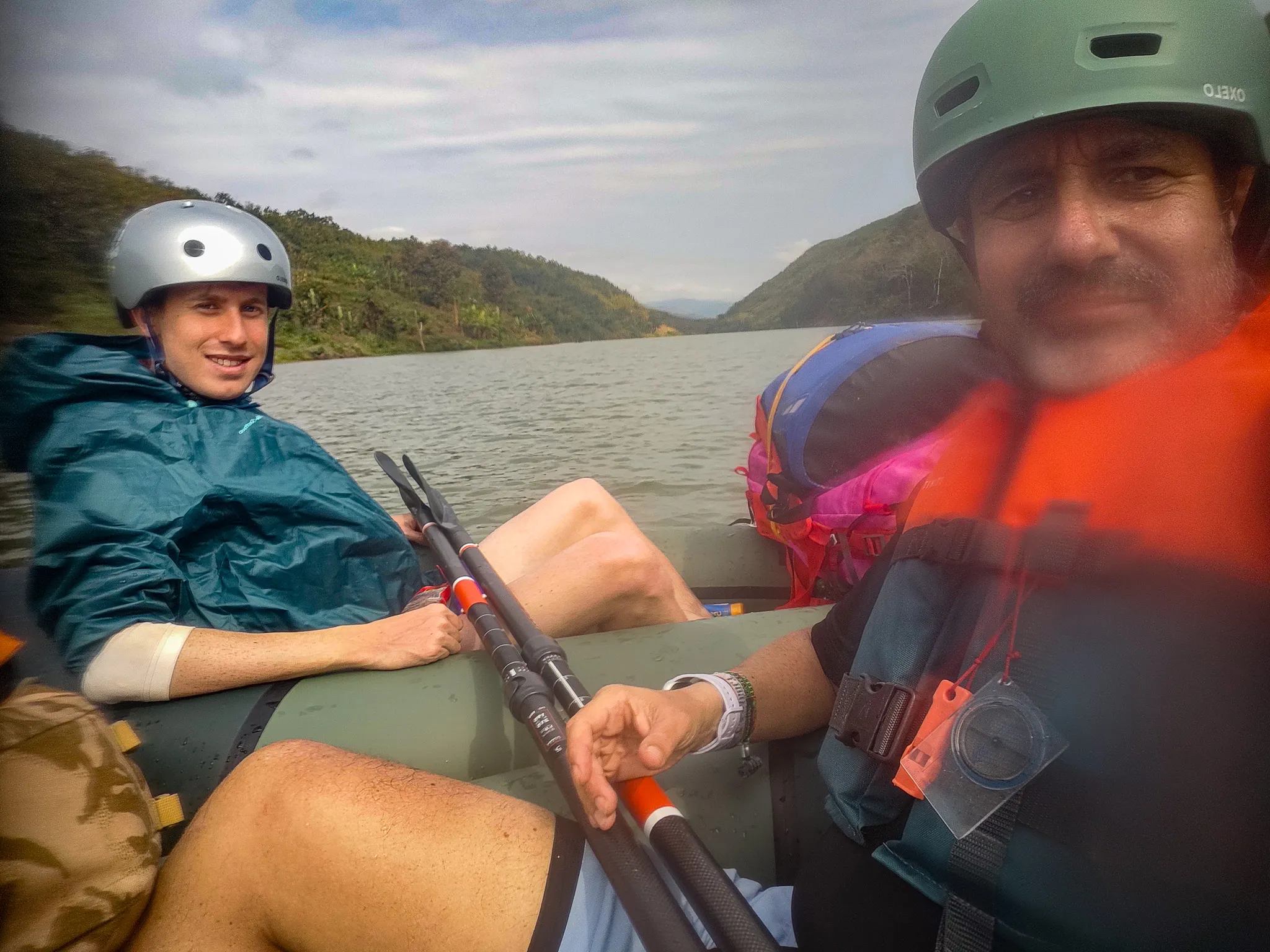
Selfie from a packraft on the Nam Ou river showing a paddler in helmet and orange life jacket with gear and forested hills behind Two packrafters in helmets and life jackets taking a selfie in their inflatable kayak on the calm Nam Ou river surrounded by green hills Paddling downstream on the Nam Ou river through a forested valley with an orange dry bag visible on the packraft bow
View from a packraft of a small riverside settlement with a tin roof building nestled among trees on the Nam Ou river hillside A traditional Lao longboat motoring past on the Nam Ou river with dense jungle hillside in the background A riverside village seen from the water with stilted houses on a steep bank and a blue longboat moored below on the Nam Ou river
Two village houses with red roofs perched on an eroded riverbank with a blue longboat moored on the Nam Ou river in Laos Colourful green, red, and blue longboats moored at a muddy riverbank on the Nam Ou river in a Lao village Row of colourful longboats and a bamboo raft moored along the Nam Ou river with forested hills reflected in calm water

Villages

The River Communities

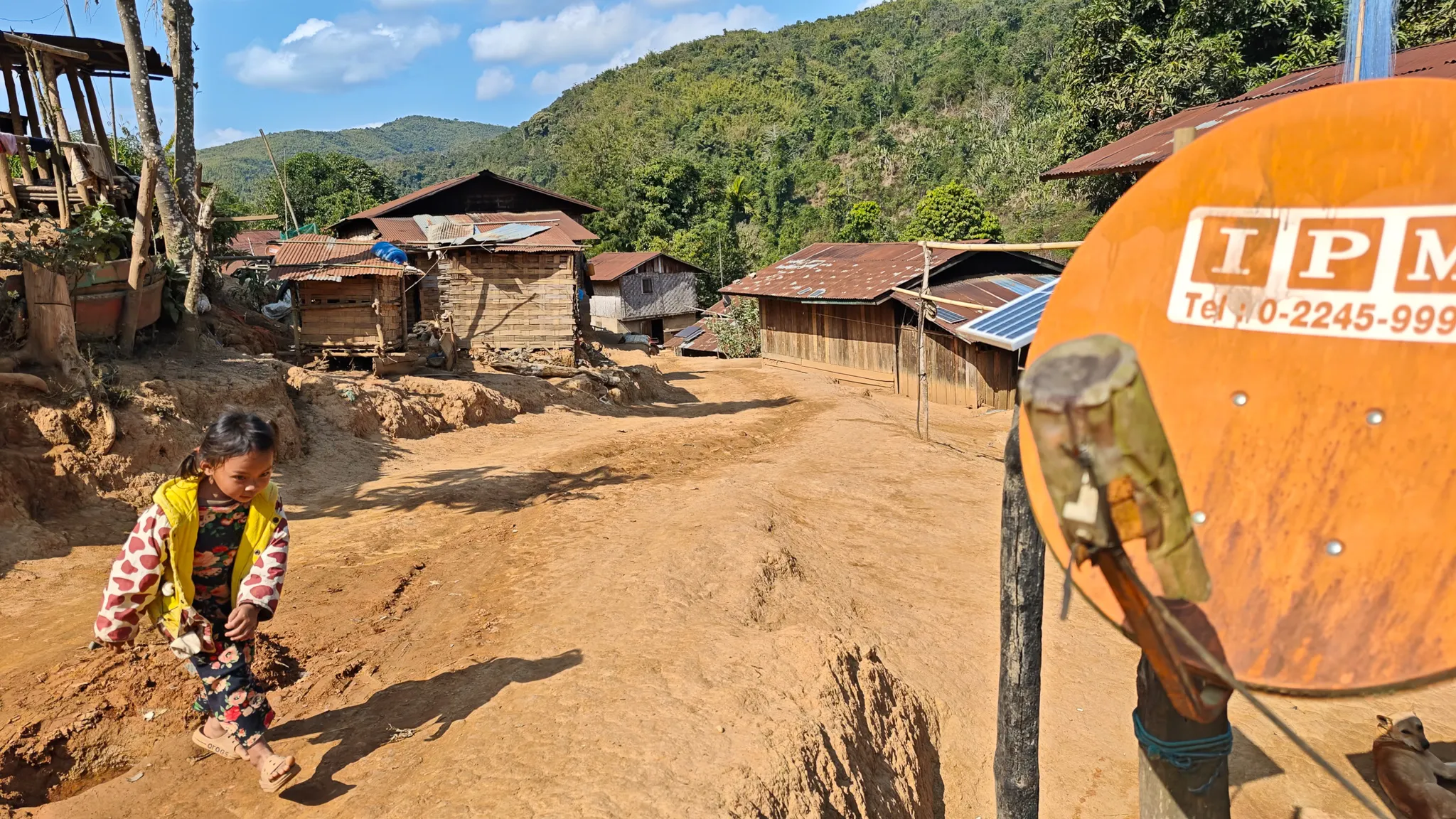
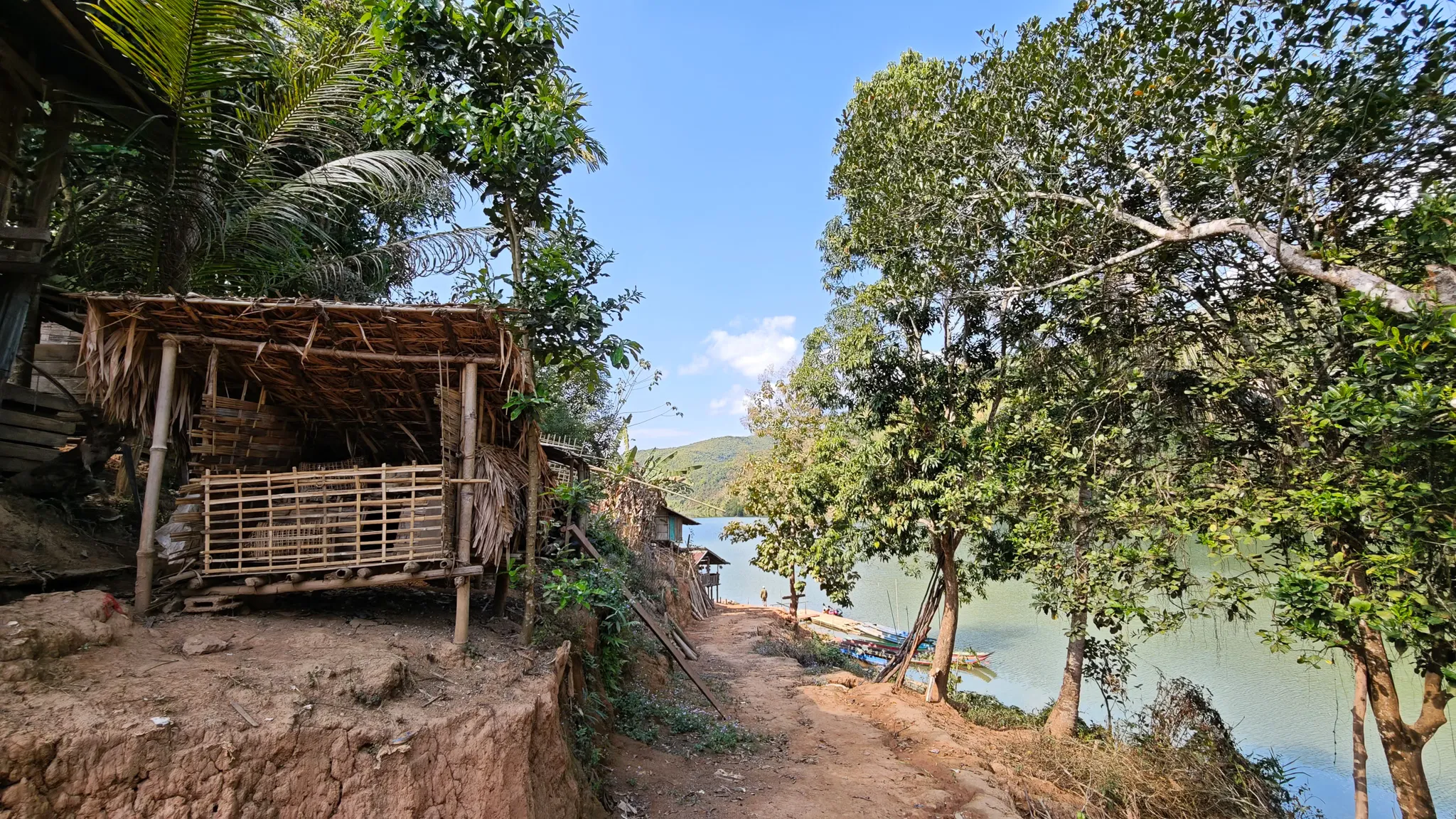
At the 14km mark we pulled into a village — bamboo huts, a child in a yellow jacket staring at us, a satellite dish on one roof (the only concession to the 21st century). We could have stayed. The villagers would have offered. But something about the afternoon light and the current made us push on. That decision led us somewhere we didn’t expect.
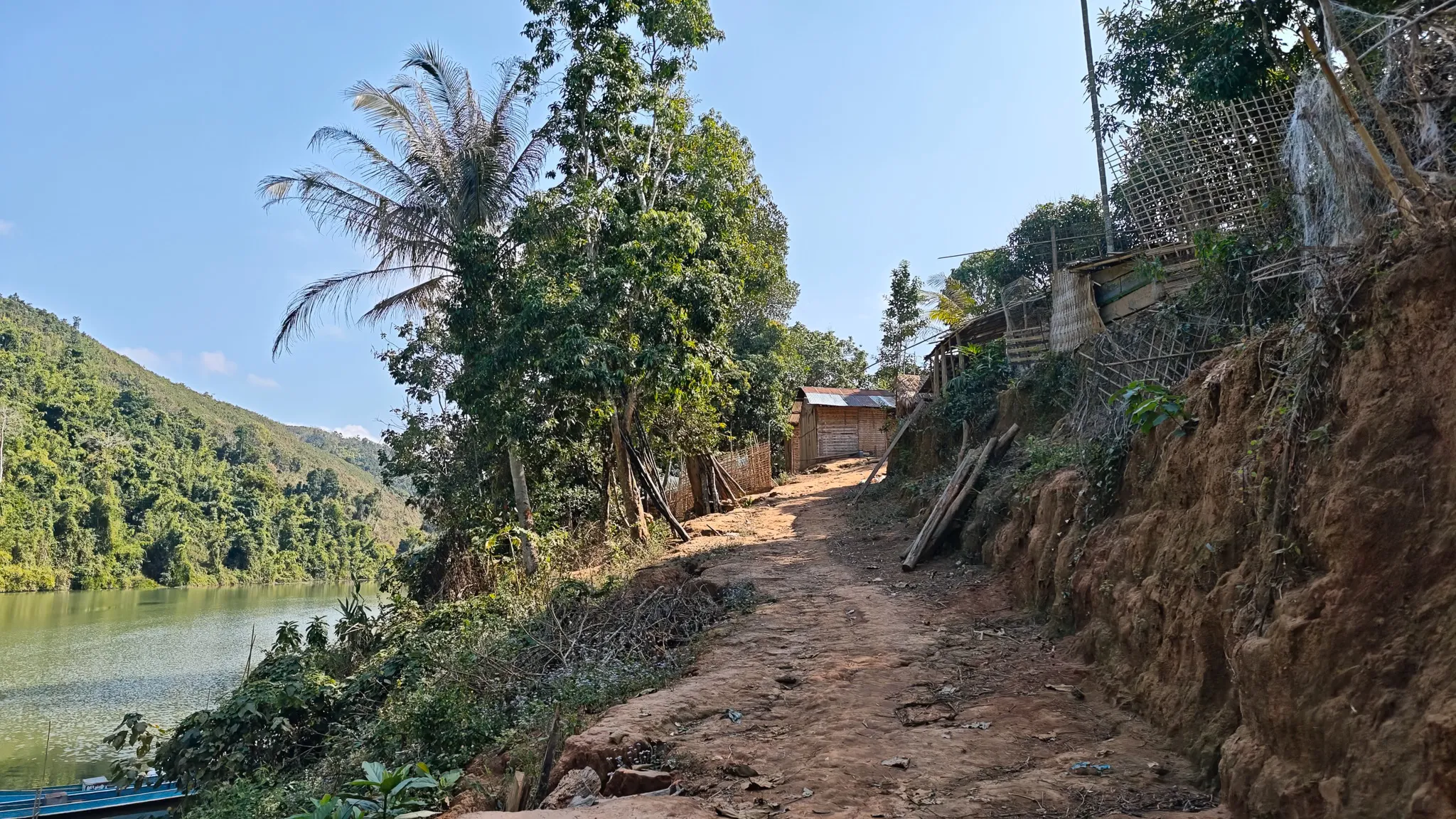
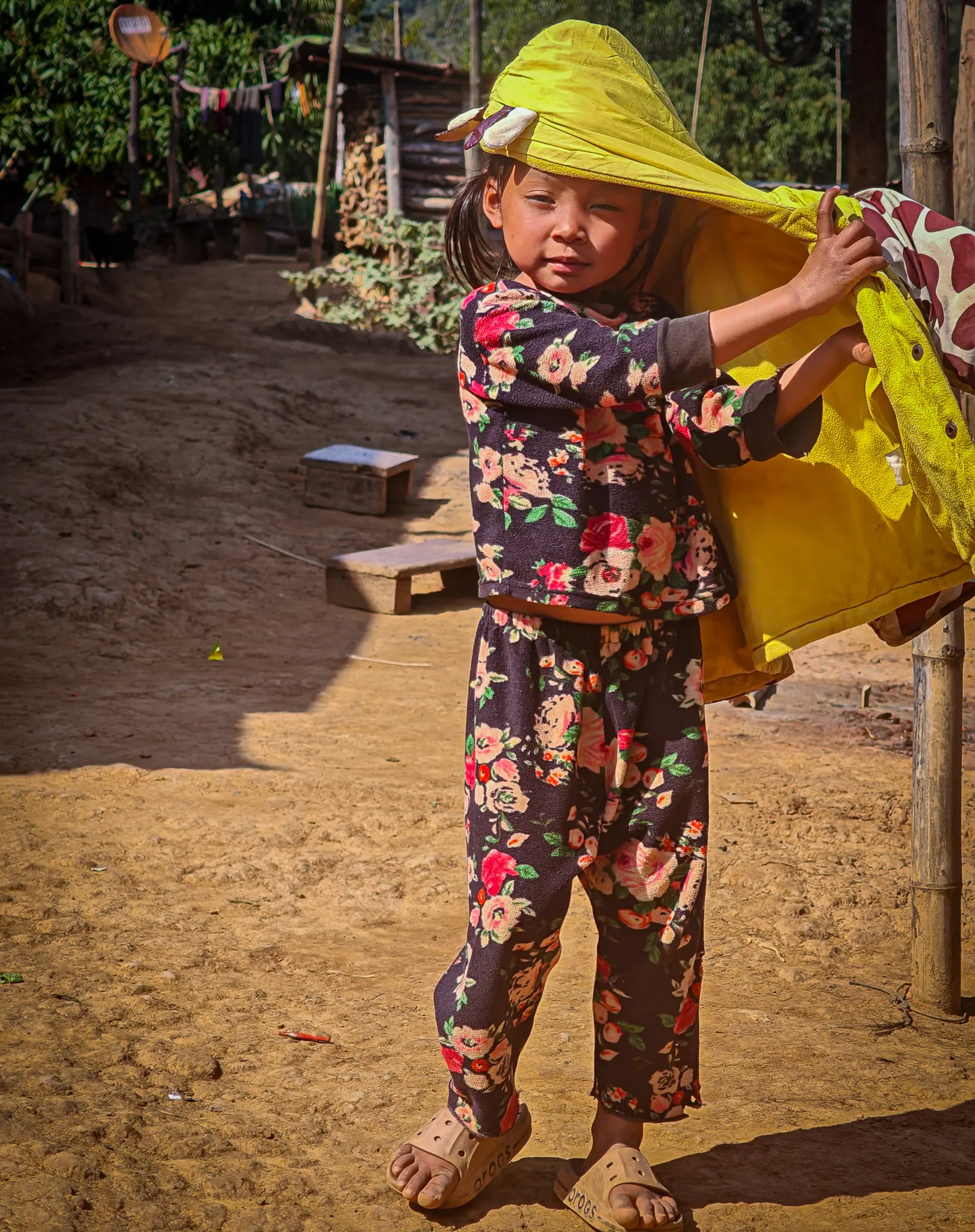
Narrow dirt path along the riverbank through a small village with wooden huts and palm trees beside the Nam Ou river A young child in a floral outfit and yellow jacket standing in a Lao village along the Nam Ou river A remote Lao village with wooden houses, a satellite dish, and a child on a dusty road near the Nam Ou river
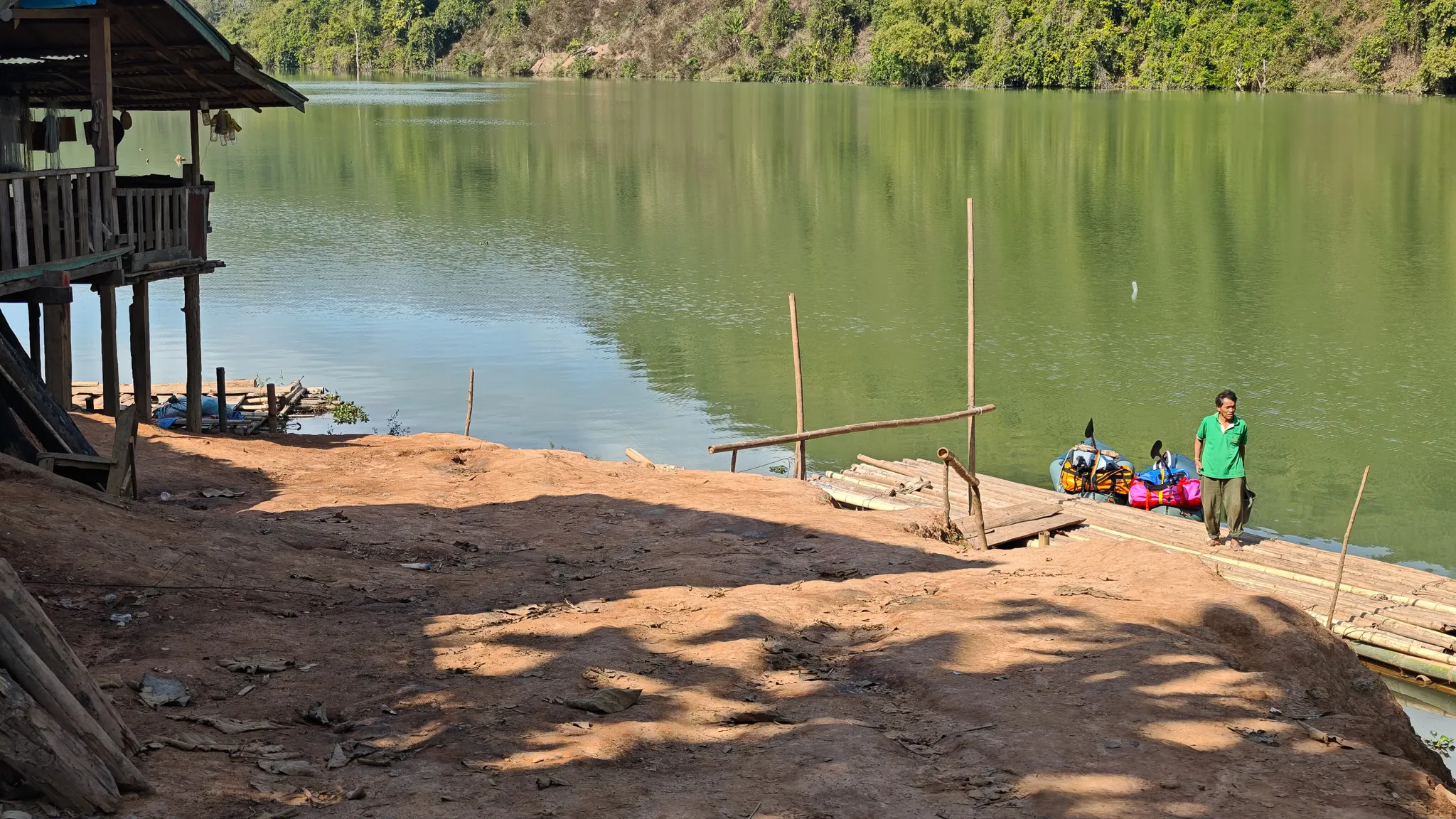
A stilted village hut and bamboo landing with packrafting gear laid out beside the calm green Nam Ou river A raised bamboo hut beside a dirt path leading down to the Nam Ou river through a small Lao village
The flooded valley — drowned trees standing in still water

The Dams

Drowned Trees

Before we reached the settlement, the river changed. Dead trees stood upright in still water — a forest drowned by a reservoir. The Nam Ou cascade is a series of seven hydroelectric dams built by PowerChina under a $2.7 billion deal signed in 2011. They’ve displaced 12,000 people from hundreds of villages. The reservoirs flooded farmland, forests, and the riverbanks where communities had fished for generations.

Nobody talks about the dams on the tourist trail. But when you’re paddling through a flooded valley of dead trees, you see the cost. The submerged stumps reflect in the flat water like a photograph of something that used to be alive.
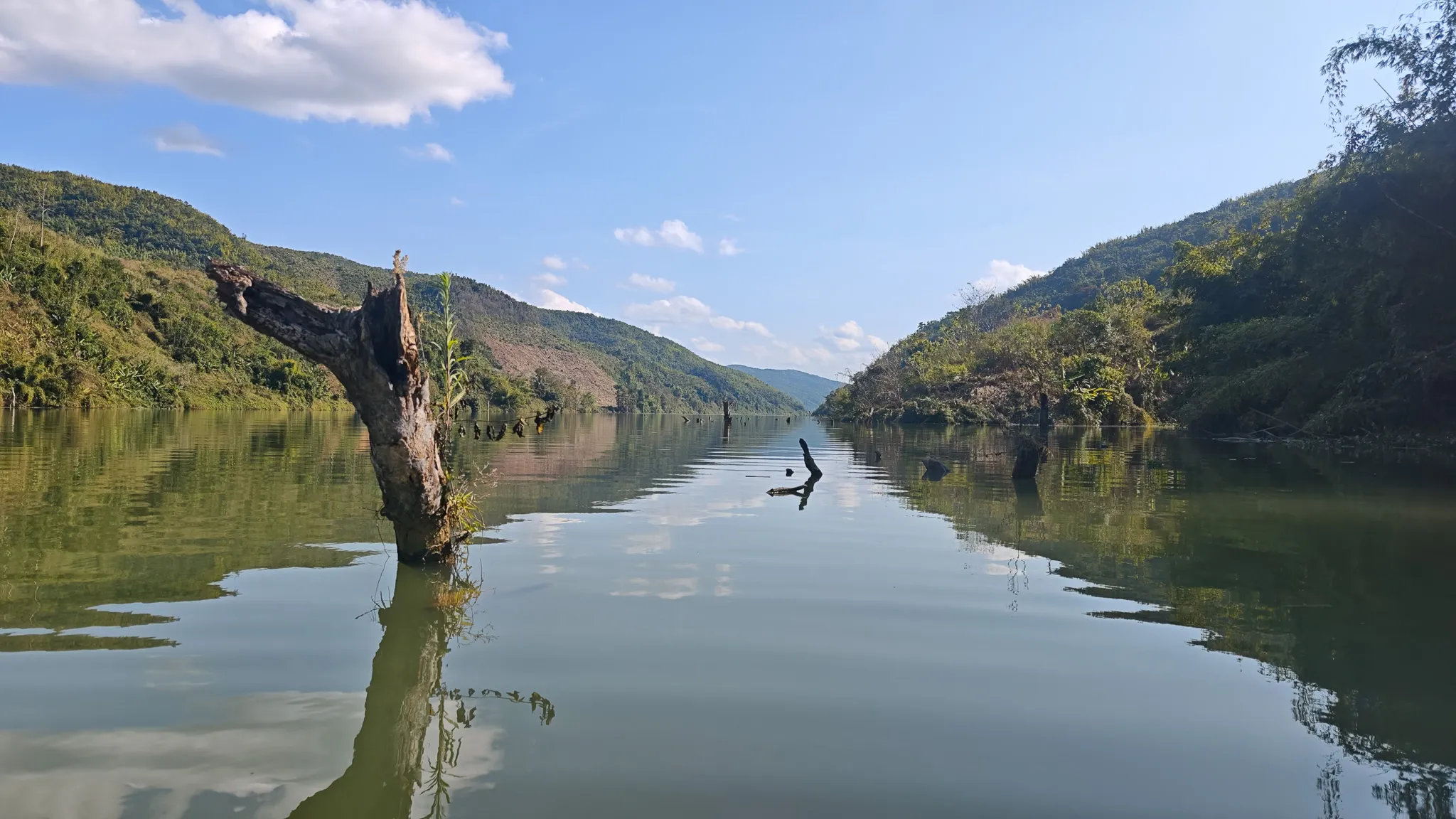
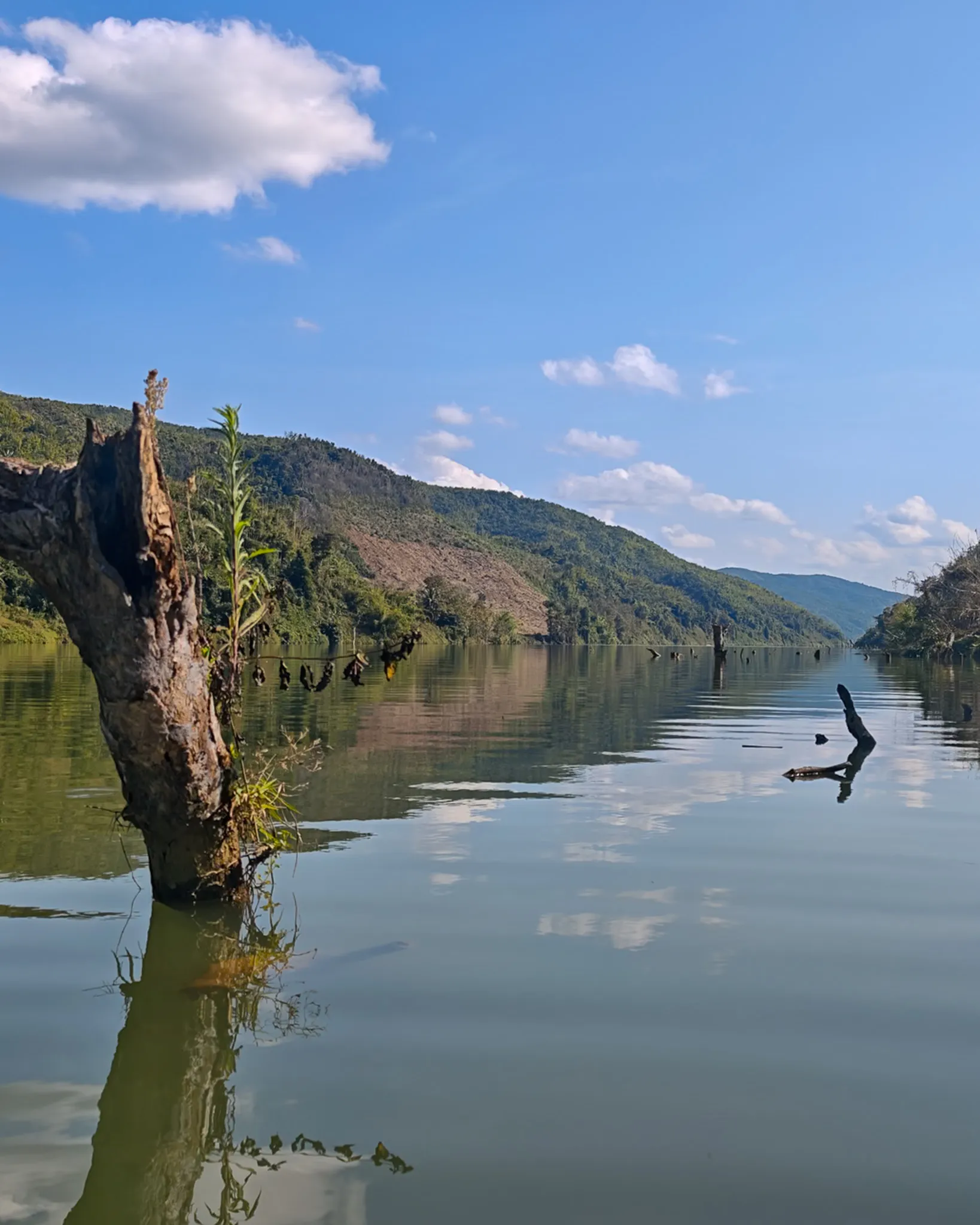
Submerged dead tree trunks rising from the still water of the Nam Ou river reservoir with green hills and blue sky reflected on the surface A weathered dead tree stump standing in the glassy Nam Ou river with cloud reflections and forested mountains in the distance A small Lao village seen from the water with houses among banana trees and dense vegetation on the hillside above the Nam Ou river

The Settlement

Abandoned

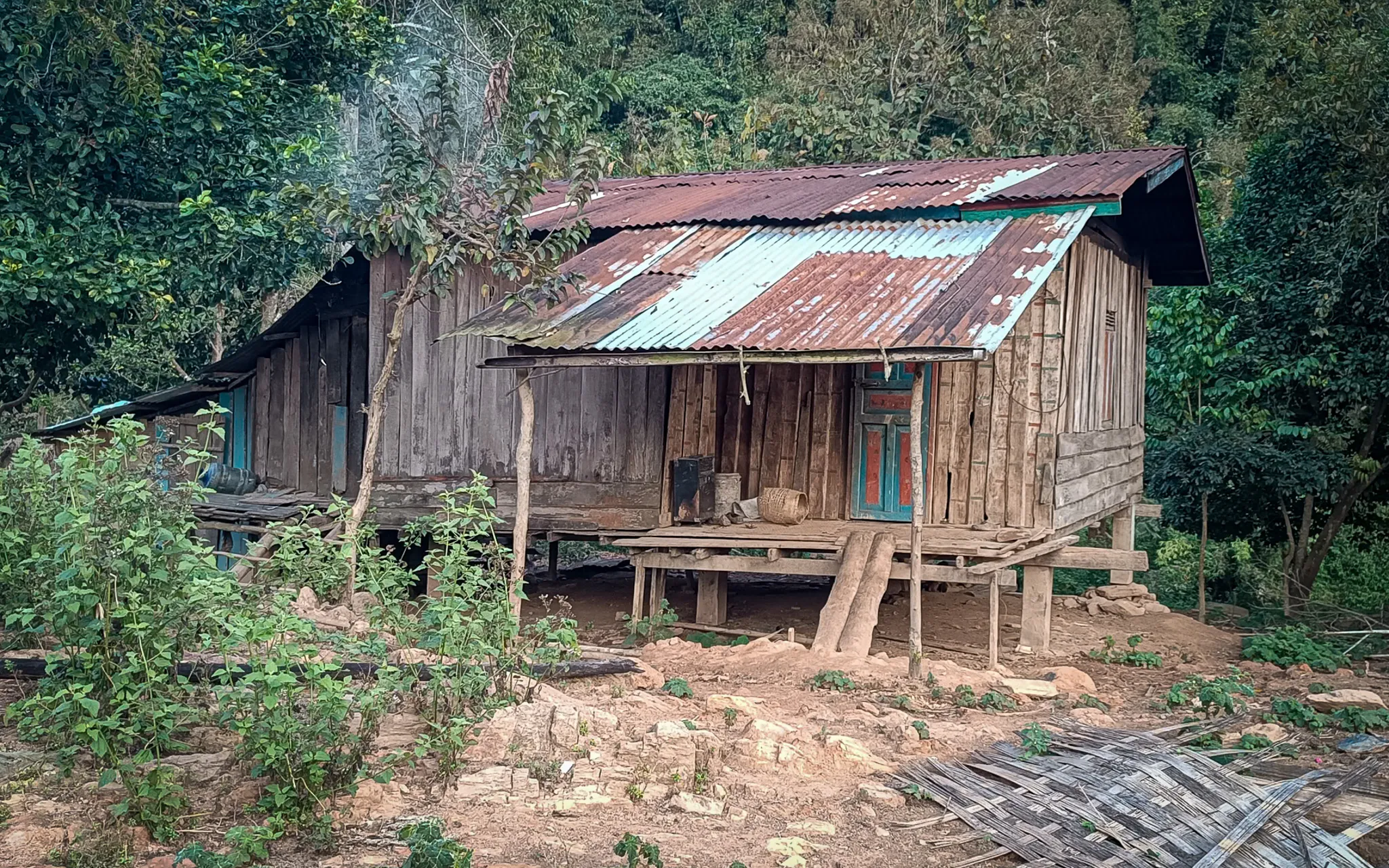
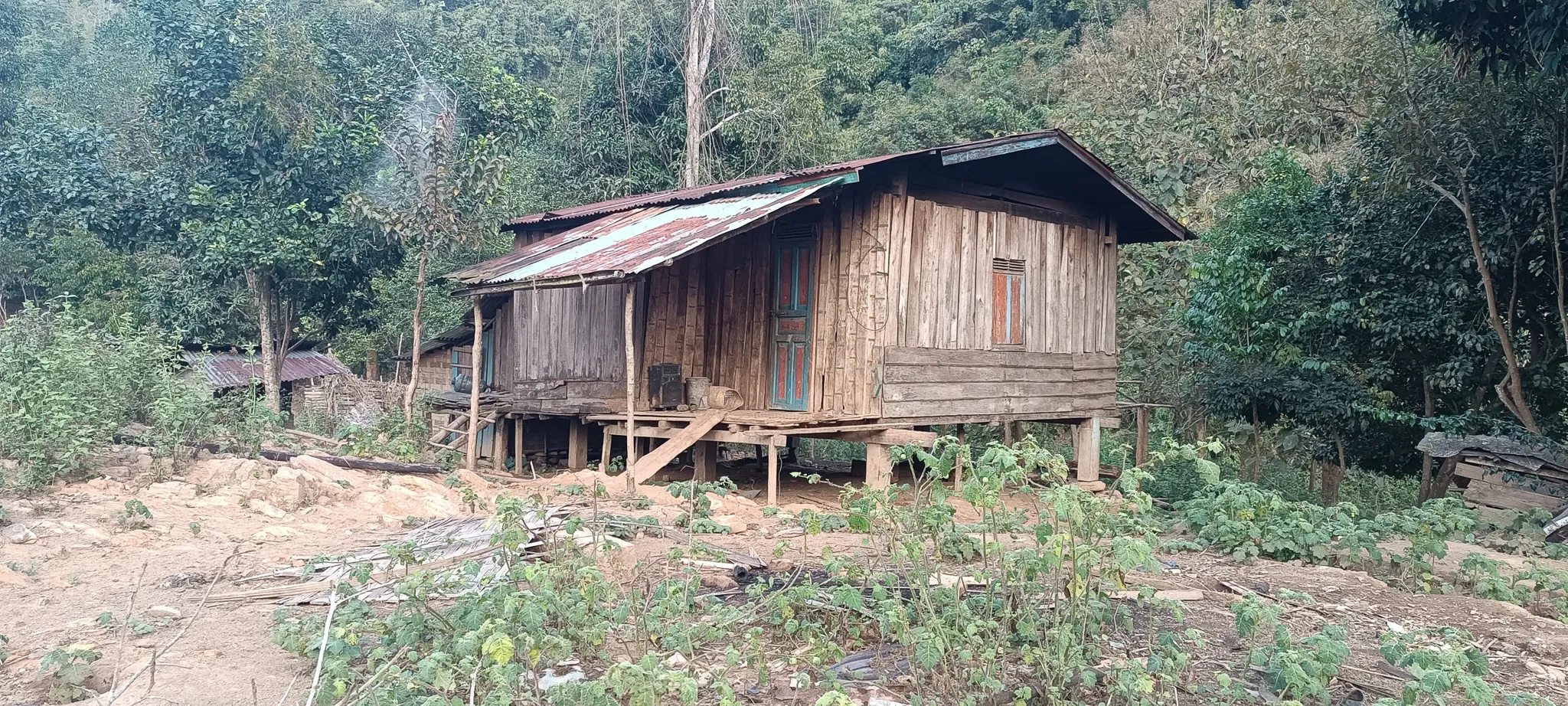
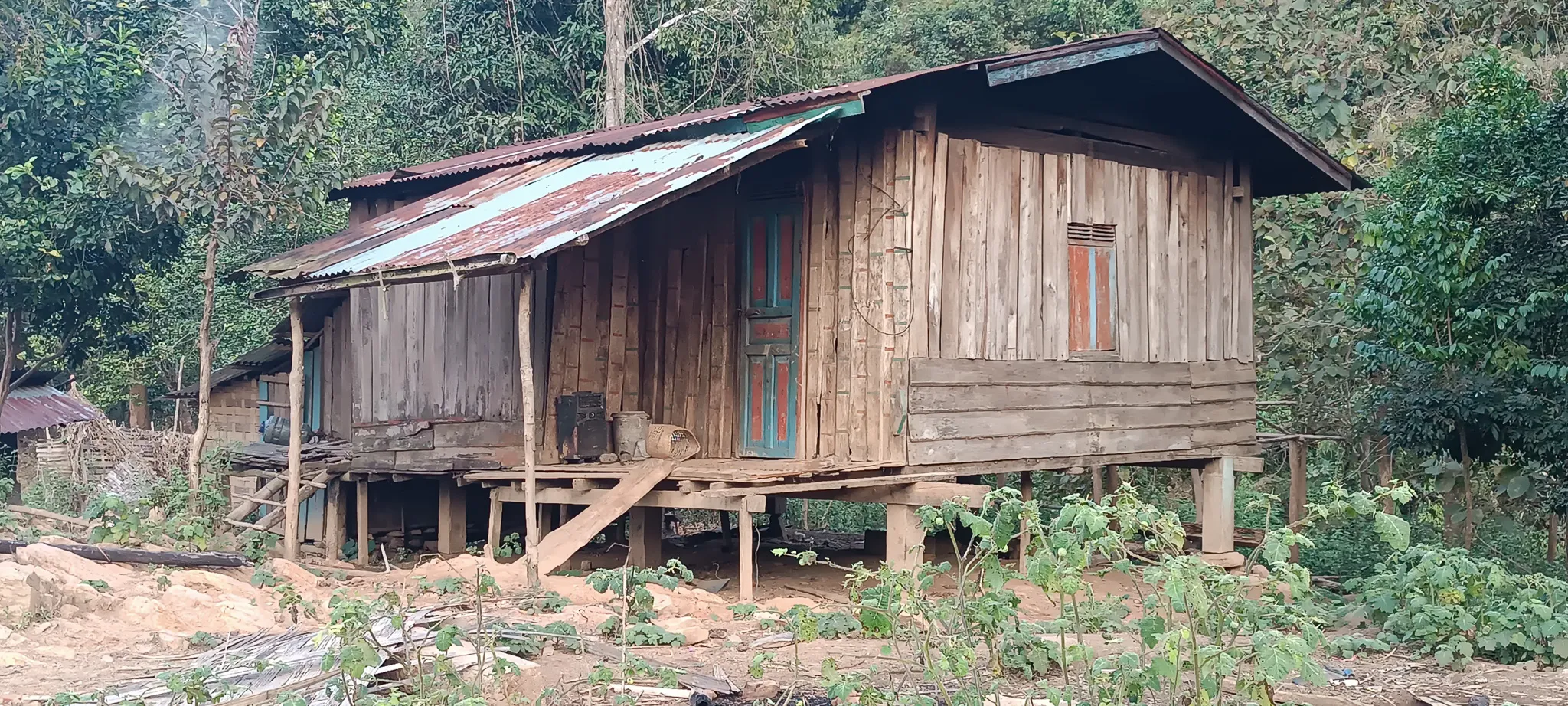
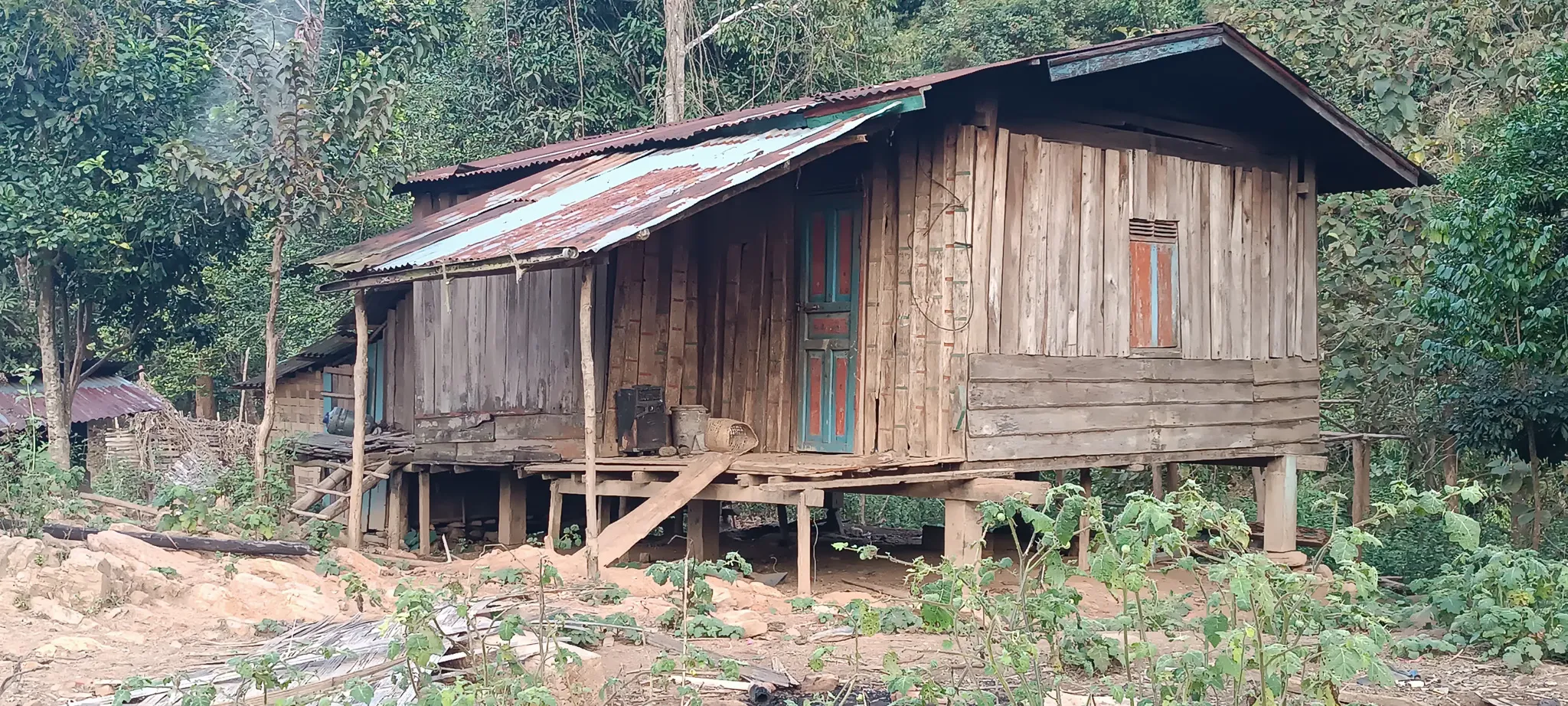
We arrived at a settlement with no people. Just oxen and cattle grazing between empty buildings. It felt like it used to be a village — the structures were still standing, wooden doors with Lao script, stilt houses with tin roofs — but everyone had left. Whether the dams displaced them or something else moved them on, we didn’t know. The silence was the loudest thing we’d heard in two days.

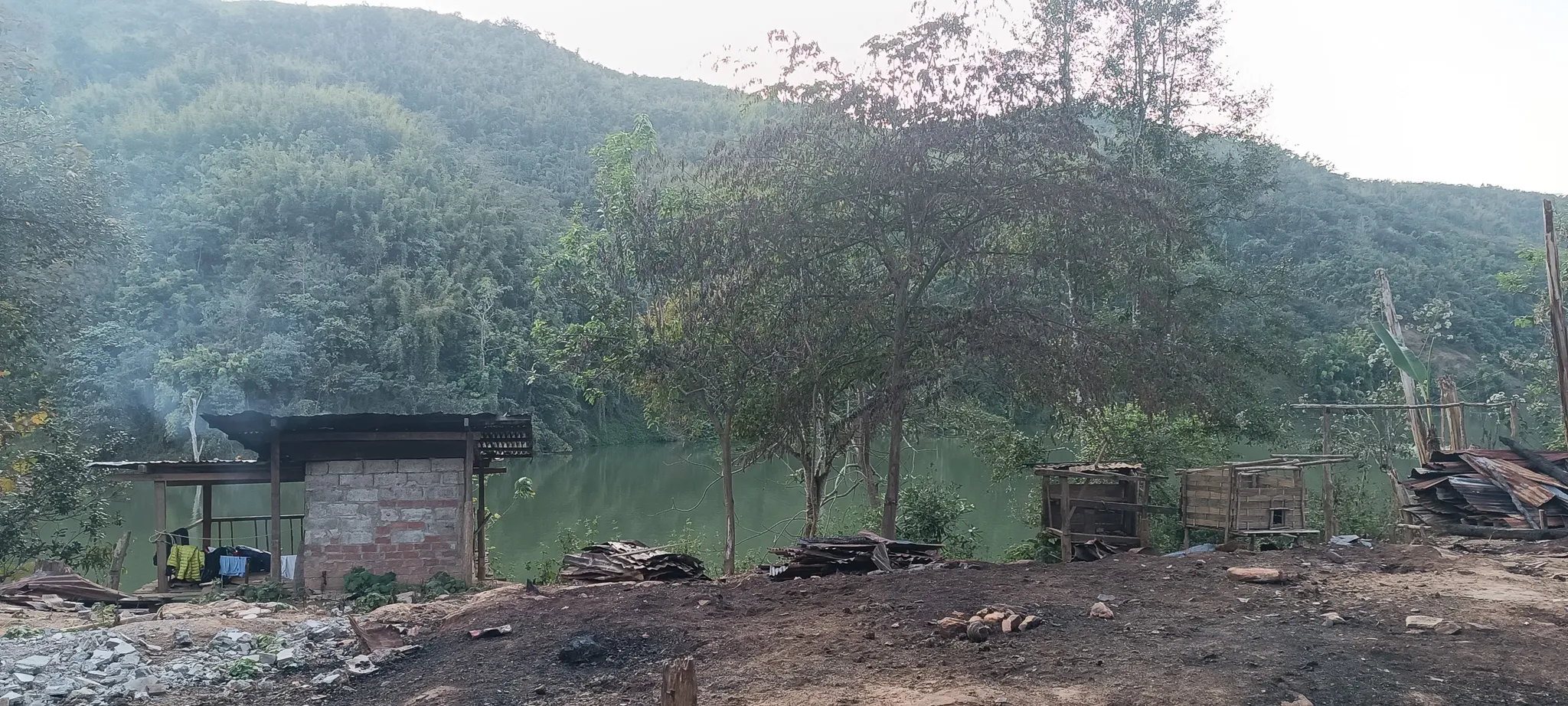
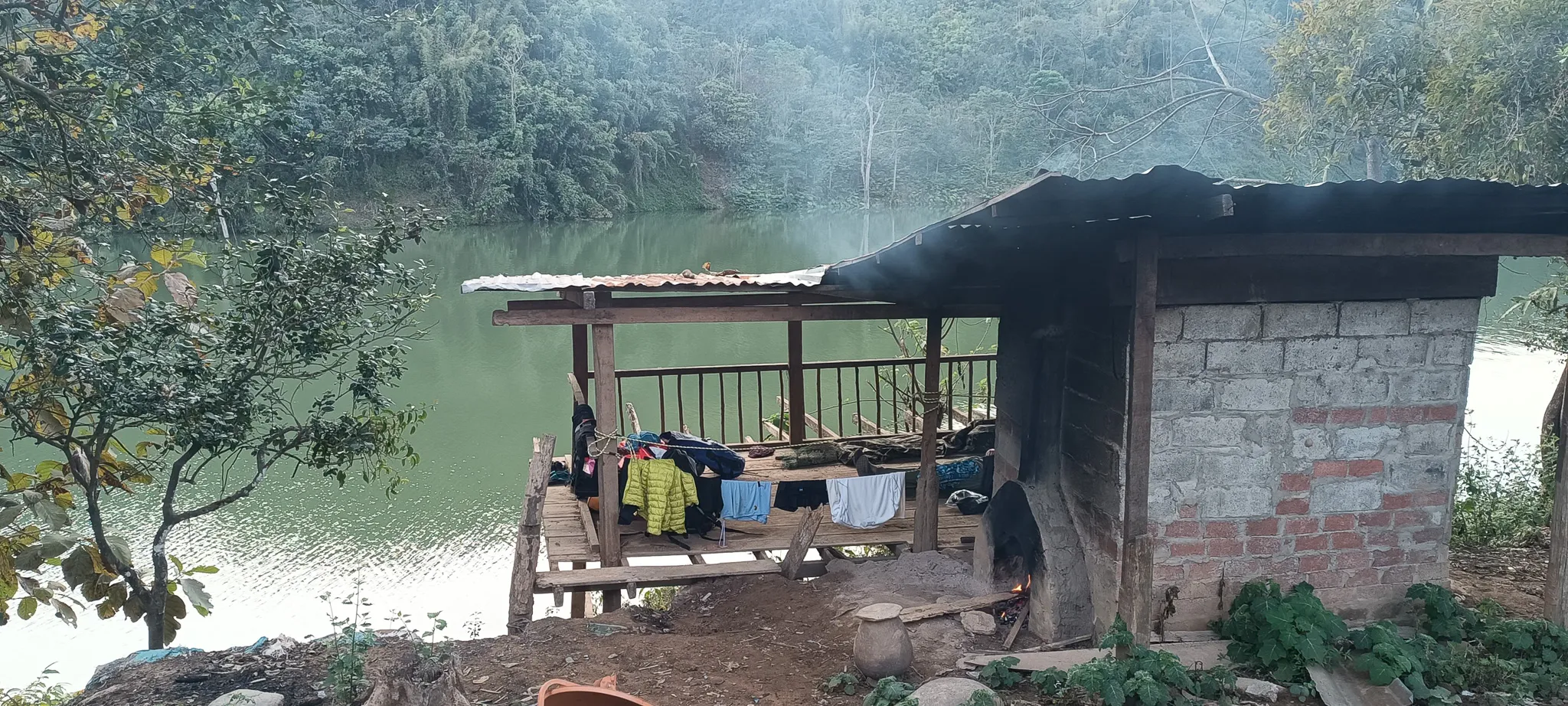
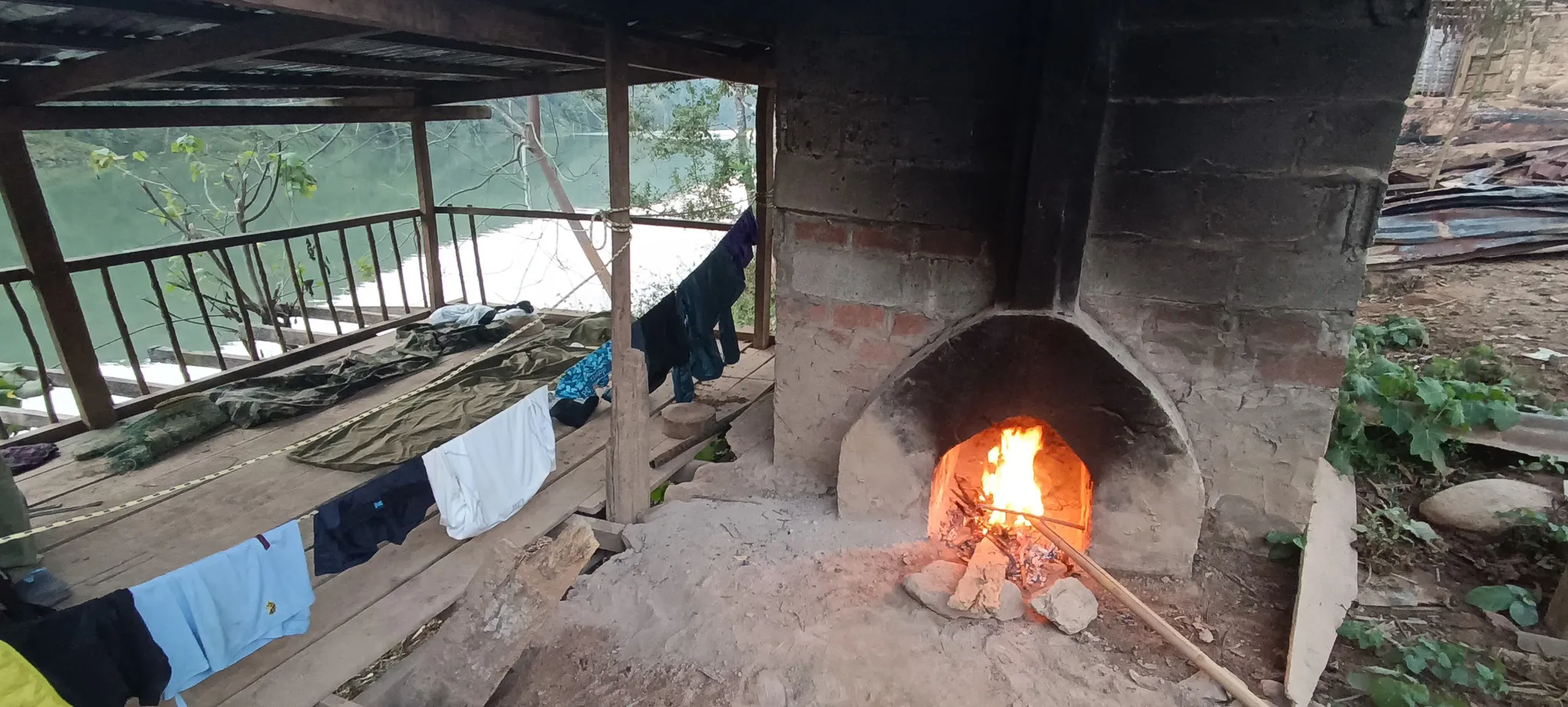
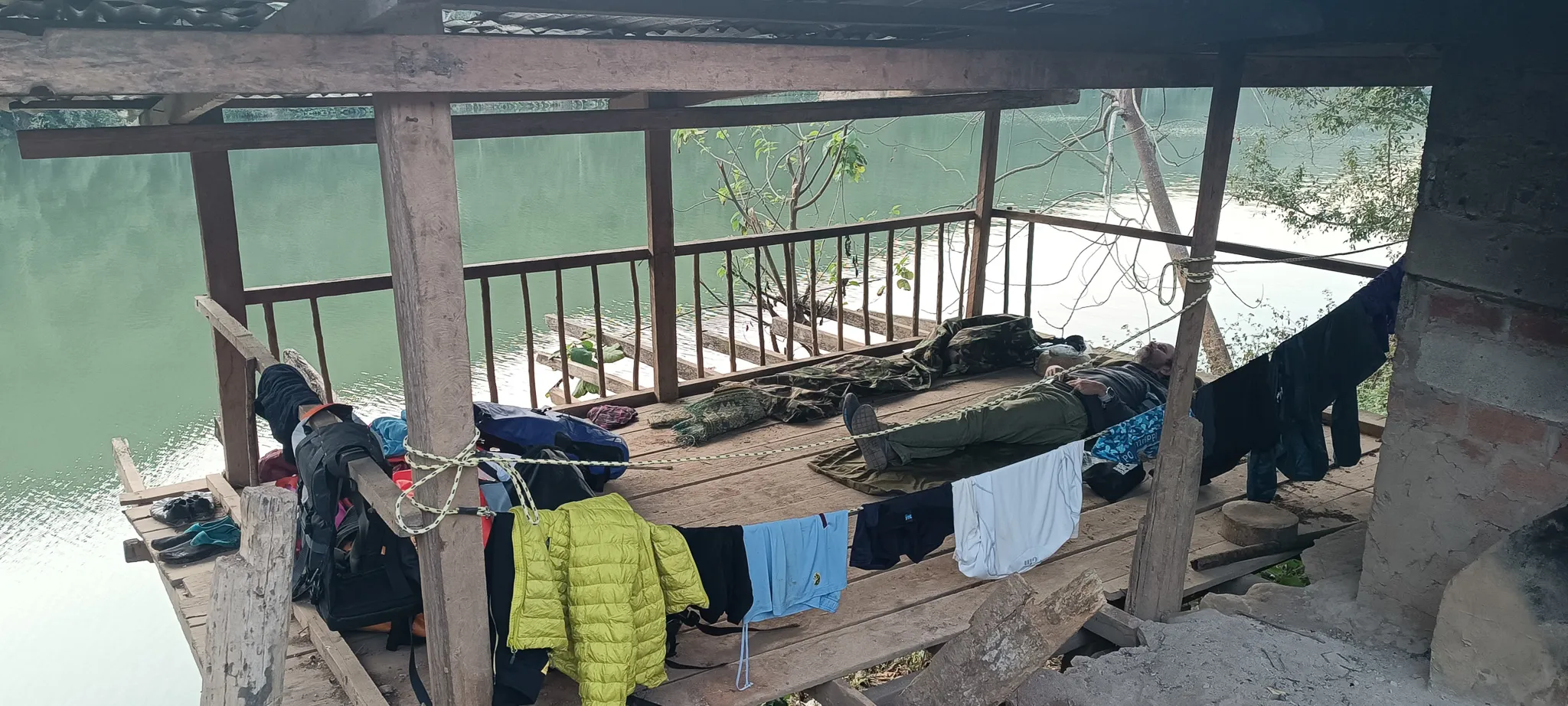
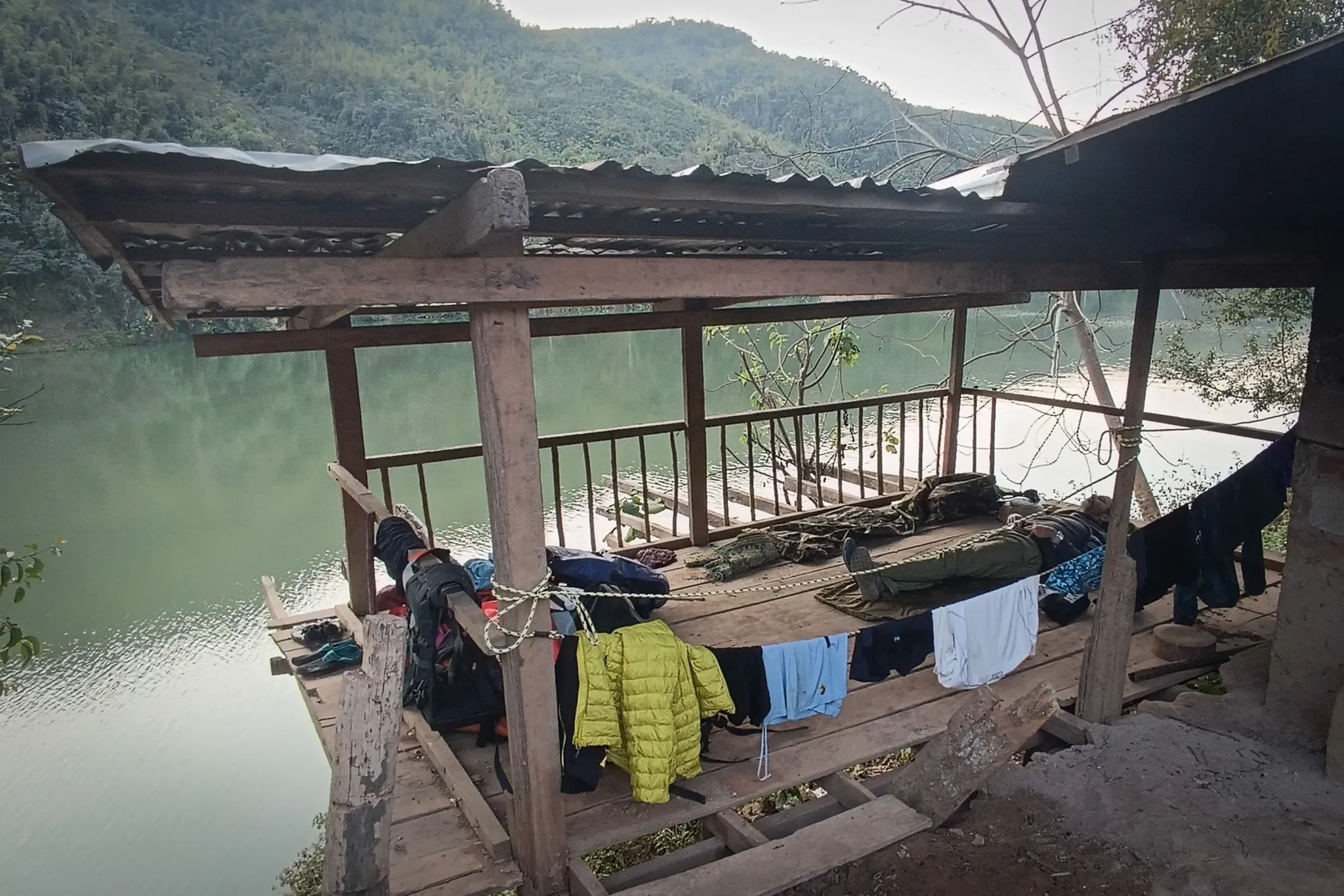
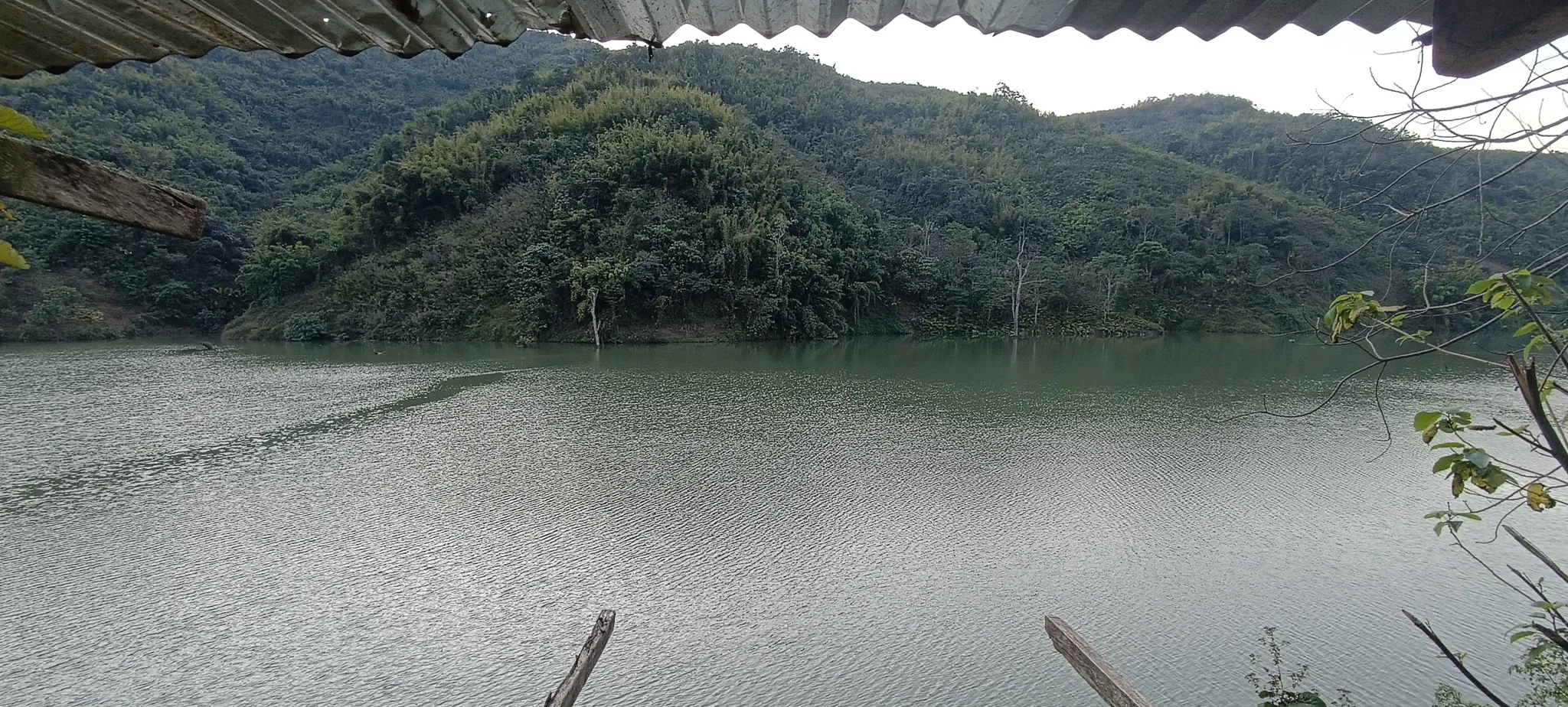
We set up camp in an open shelter. Built a campfire in a brick oven that someone else had used before us. Hung our clothes to dry. Laid out sleeping rolls on the concrete floor. The river was right there, visible through the gaps in the roof.
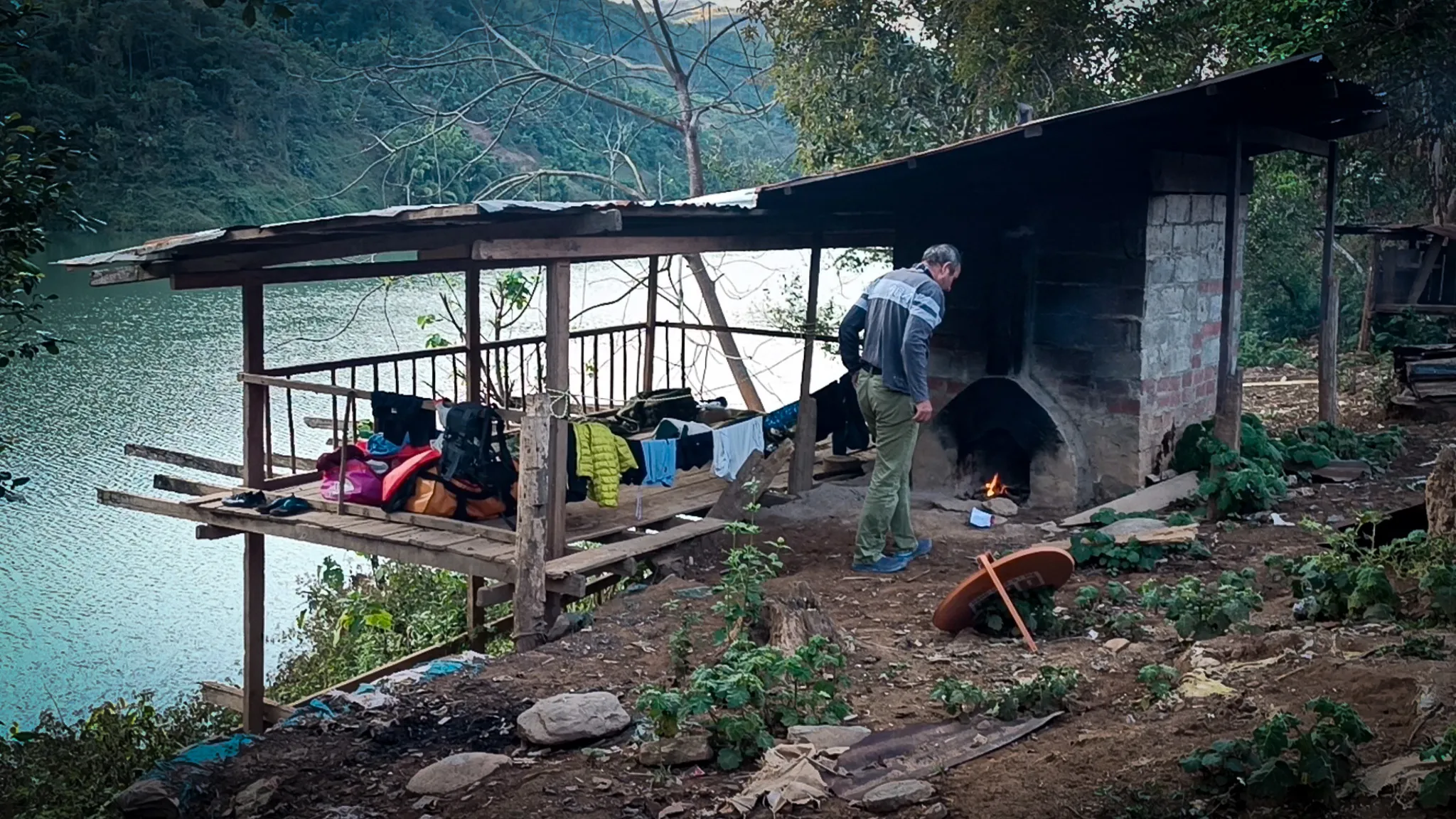
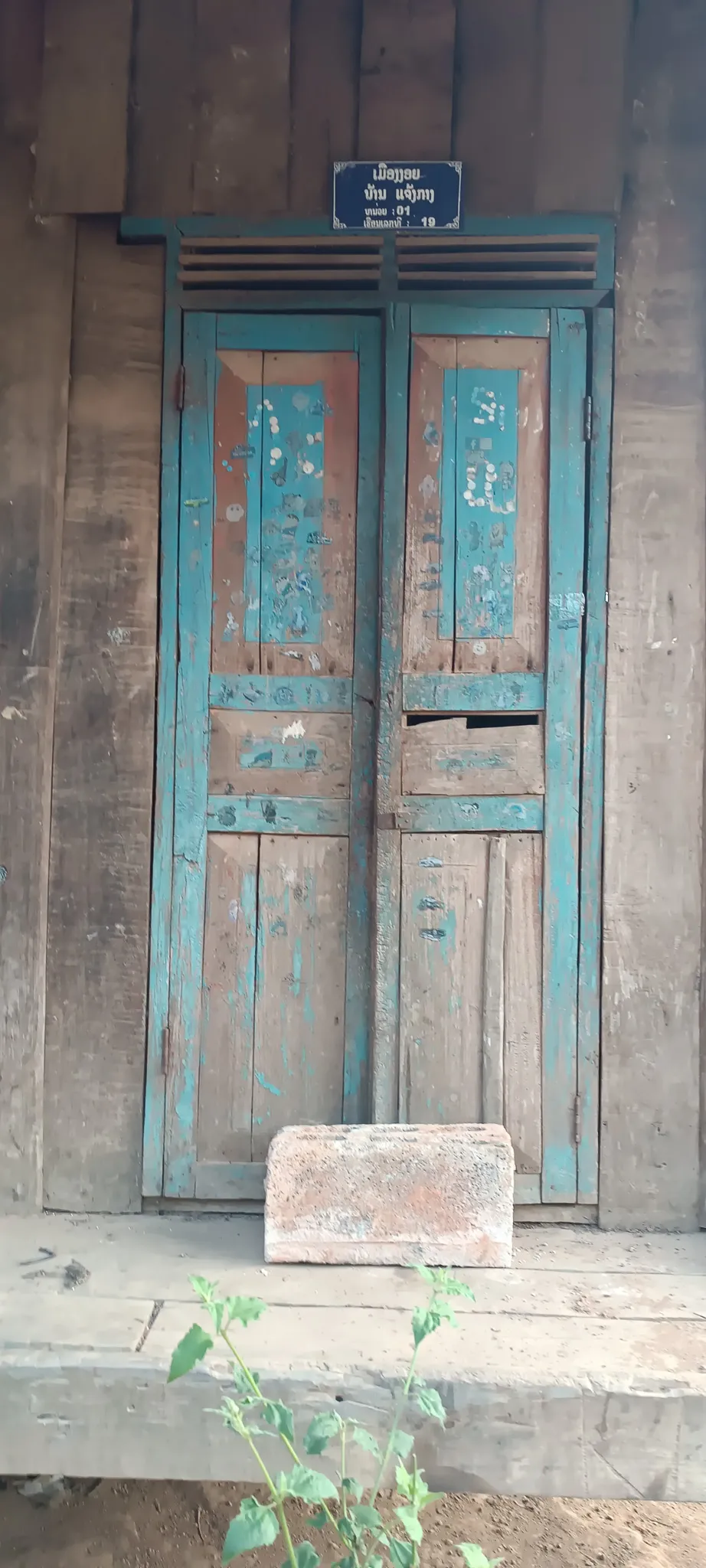
Abandoned open shelter with corrugated roof and brick oven being used as a campsite beside the Nam Ou river at dusk Weathered turquoise wooden door with Lao script address plaque on an abandoned building at a settlement along the Nam Ou river An abandoned wooden stilted house with a rusted tin roof surrounded by overgrown vegetation at a deserted settlement on the Nam Ou river
A deserted wooden house on stilts with jungle encroaching at an abandoned settlement along the Nam Ou river in Laos An empty wooden stilted house with blue-painted window frames being reclaimed by vegetation at the abandoned Nam Ou riverside settlement Close-up of a deteriorating wooden stilted house with rusty tin roof at an abandoned settlement beside the Nam Ou river
The abandoned settlement shelter and surrounding derelict structures being used as a campsite overlooking the Nam Ou river and mountains Open riverside shelter with clothes drying on a line and a brick oven with smoke rising, overlooking the misty Nam Ou river
Campfire at the abandoned settlement

Night

The Floor, the Fire, the Shots

A couple of fishing people came by after their boat broke down. They warmed up at our fire, ate, and set off again into the dark. In the distance, we could hear bullet shots — hunters, probably, though we never found out. The campfire cracked. The river moved. The oxen did whatever oxen do at night.

It was one of those nights where you’re very far from anything familiar — sleeping under open sky in a place that time left behind. No wifi, no electricity, no other humans for kilometres. And it was perfect.
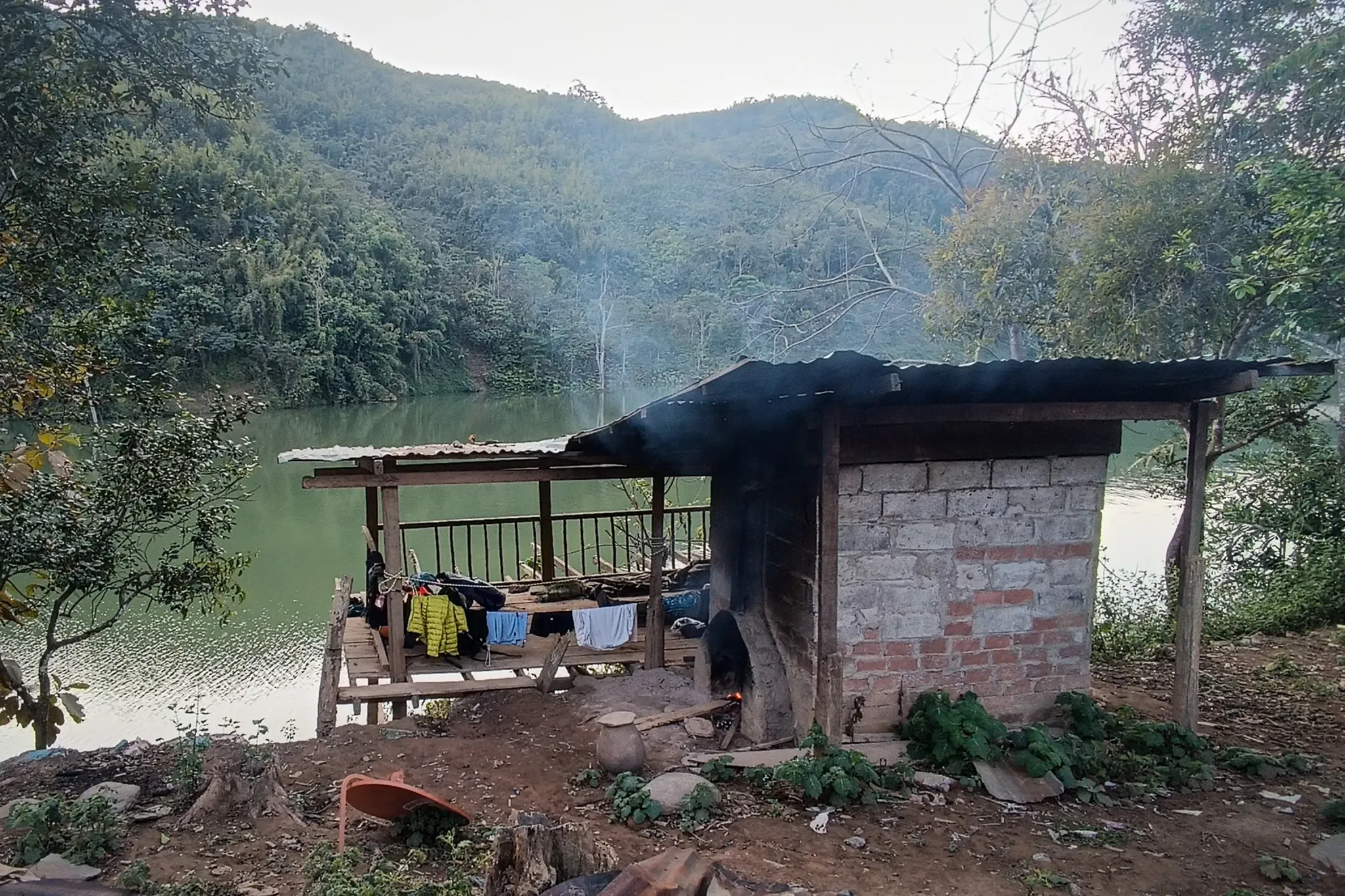
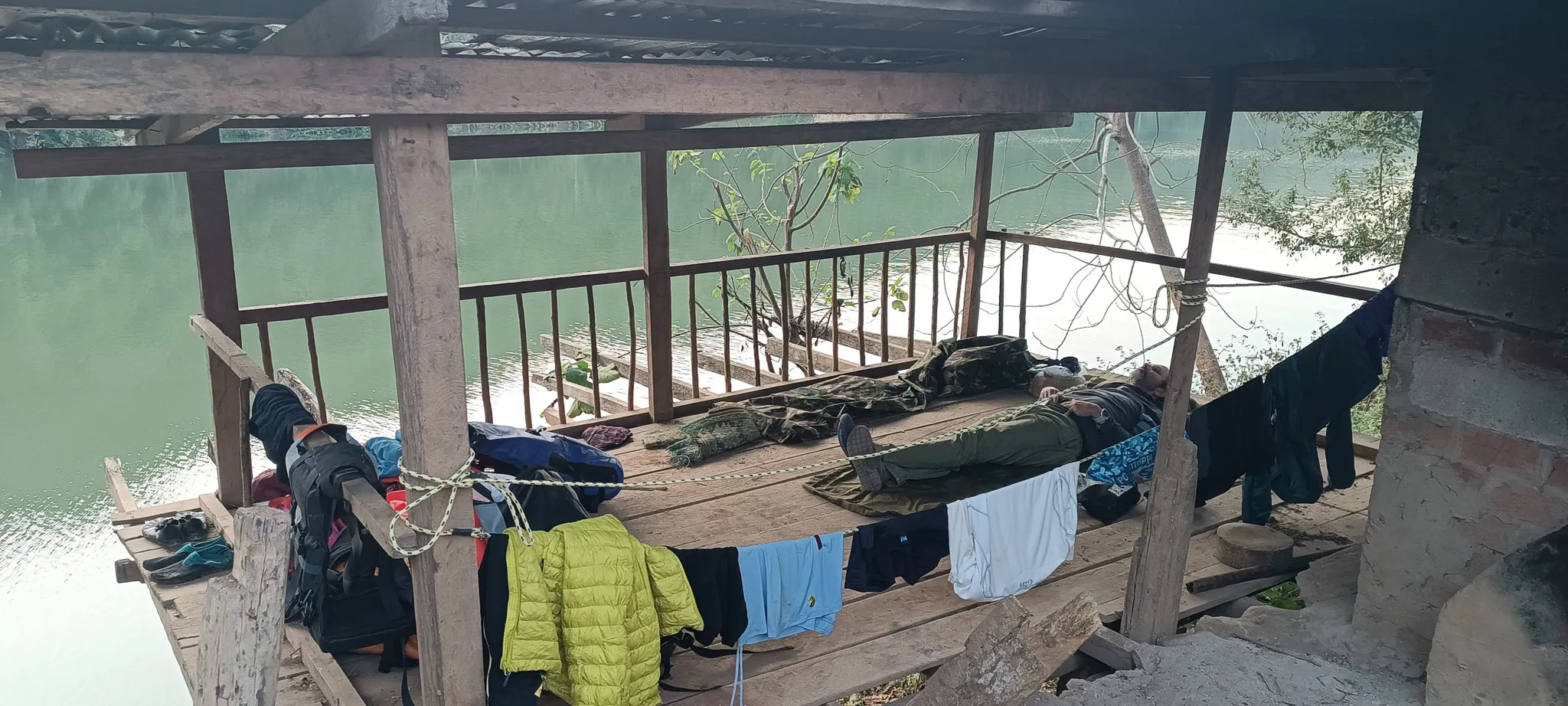
Abandoned shelter with brick oven and clothes hanging to dry overlooking the Nam Ou river surrounded by misty mountains Sleeping setup on the wooden floor of an open shelter with gear and clothes drying, overlooking the green Nam Ou river A fire burning inside a brick oven at the abandoned shelter camp with the Nam Ou river visible and clothes drying in the background
Bed rolls and sleeping bags laid out on the floor of a riverside shelter with the Nam Ou river visible through the railings Exterior view of the raised open shelter used as a camp with clothes drying and the calm Nam Ou river and forested hills behind
View of the Nam Ou river and jungle-covered hills from under the corrugated roof of an abandoned riverside shelter The Nam Ou river and forested hills framed by the tin roof of an abandoned shelter used as a camp on the riverbank

Next

Day 3 — Rapids, Dams & 87 Kilometres

A broken jetty, the first dam portage, grade 1 rapids, and 38 kilometres to Muang Ngoi.


Read Next →